
Reviewed · HISTORICAL TOURS
A private Historical Walking Tour in Vienna
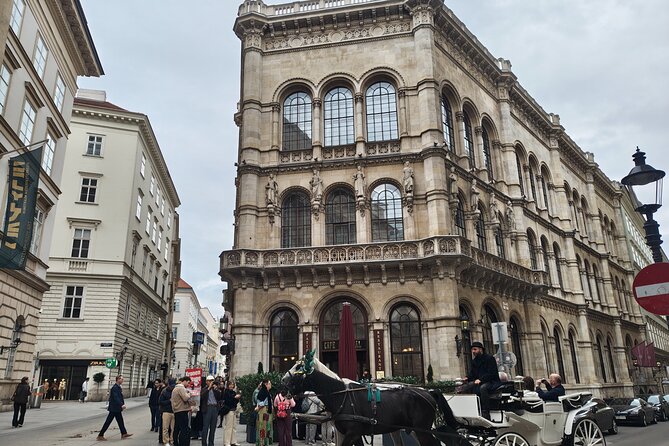
A real Vienna highlight is walking it with someone who can point out what matters. This private historical walk strings together imperial power sites, major art and music stops, plus classic Old Town squares in about 2.5 hours.
I like that it feels personal and flexible. You get a guide who can tailor the pace and what you focus on, and you’ll hear the story behind the places as you move. I also like the practical structure, the route makes sense for a first-time loop through the center.
One thing to consider: several top sights on the route have admission that is not included. So budget a little extra if you want to go inside Albertina, the State Opera, Stephansdom, or the Spanish Riding School.
In This Review
- Quick highlights you’ll notice right away
- A 2.5-hour Vienna loop that stays focused, not chaotic
- Meeting point at Albertinaplatz, then Vienna’s central spine
- Albertina and Vienna State Opera, where art and performance set the tone
- Hotel Sacher and the imperial garden rhythm
- Ringstrasse to Maria Theresien Square, the boulevard mindset
- Heldenplatz and Hofburg, Vienna’s power center in walking form
- Spanish Riding School to Graben and Kohlmarkt, culture plus daily life
- Stephansdom and Mozarthaus, Vienna’s two big symbols back-to-back
- Ankeruhr and Hohermarkt, clockwork and trade roots
- St. Rupert’s Church, a calmer old corner to close the loop
- What the private guide experience adds, especially for families
- Price, group value, and what to budget for entrances
- Who this Vienna walking tour suits best
- Should you book this private historical walking tour?
- FAQ
- How long is the private historical walking tour?
- What does the tour cost, and how many people can be in a group?
- Is this tour private?
- Where do we meet?
- Is pickup included?
- Is the tour in English?
- Do we get a mobile ticket?
- Are service animals allowed?
- Which stops include free admission versus admission not included?
- What is the cancellation policy?
Quick highlights you’ll notice right away
- Private group up to 15 makes it easier to ask questions and keep the walk moving at your speed
- Art and music in the same loop, with stops like Albertina and Vienna State Opera
- Imperial Vienna focus, centered on Hofburg, Heldenplatz, and the surrounding squares
- A perfect mix of major landmarks and calmer corners, including Hohermarkt and St. Rupert’s Church
- Some entrances are free, some are not, so you can plan your ticket time wisely
A 2.5-hour Vienna loop that stays focused, not chaotic
This is the kind of Vienna walk that helps you get your bearings fast. You start near Albertinaplatz and then move through the 1st district on a route that hits big names, but keeps the story connected as you go. With a duration of about 2 hours 30 minutes, you get a satisfying overview without feeling like you’re stuck in a lecture.
Because it’s private, your group stays together. That matters. It’s easier to move as one unit between squares, and your guide can slow down when someone wants details, or speed up when the group is hungry for the next landmark.
The tour runs in English, and you’ll get a mobile ticket, which is handy when you’re juggling maps and weather. Pickup is also offered, which can reduce the stress of being on time at a city corner you haven’t learned yet.
Other ways to round out a Vienna visit

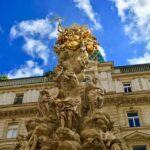
Meeting point at Albertinaplatz, then Vienna’s central spine
You meet at Tourist-Info Wien, Albertinaplat. 1, 1010 Wien. It’s a smart starting point because Albertinaplatz sits in the thick of the action, close to the areas you’ll walk anyway. You can use public transport nearby, so this is workable even if you’re coming from outside the center.
From there, Stop 1 is Albertinaplatz. Expect an introduction and a quick explanation of the surroundings. It’s the warm-up that helps the later stops click. You’re not just seeing buildings, you’re learning how the city’s layout pushes you toward certain viewpoints, squares, and institutions.
Timing-wise, Albertinaplatz is listed at about 10 minutes with free admission. That’s enough for orientation without dragging.
Albertina and Vienna State Opera, where art and performance set the tone
Next comes Albertina. This is one of Vienna’s major art museums, and it’s known for a world-class collection. It’s a big stop, but the tour only allocates about 5 minutes here, so think of it as a guided primer on what Albertina is and why it matters, rather than a deep time-consuming museum session.
Important budget note: the admission ticket for Albertina is not included. If you want to go inside, you’ll need to plan extra time and tickets separately. If your group is more into “see it, learn it, move on,” you’ll still get value from the framing and key points your guide provides.
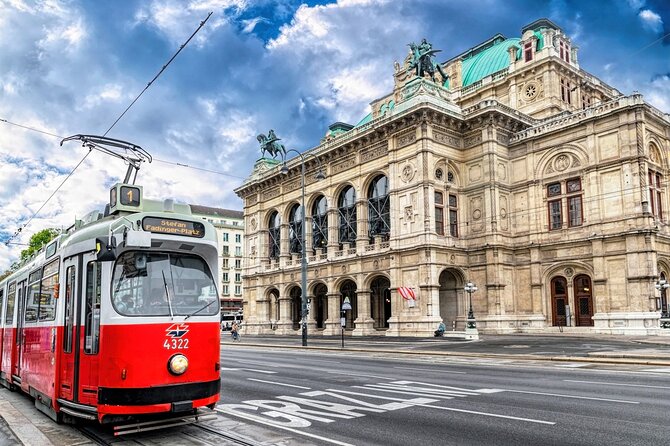
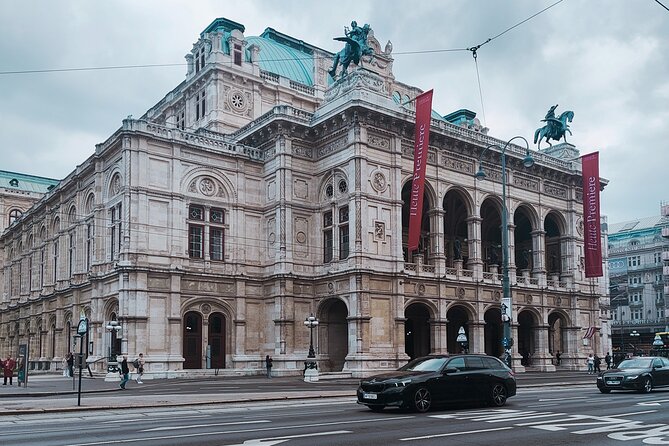
Then you head to Wiener Staatsoper, the Vienna State Opera. Even if you never catch a performance, it’s a cultural symbol for the city’s classical music identity. Like Albertina, the stop is short, around 5 minutes, and admission is not included. Still, it’s a great moment on the route because it shifts the story from art collections to the institutions that put those traditions on a stage.
Hotel Sacher and the imperial garden rhythm
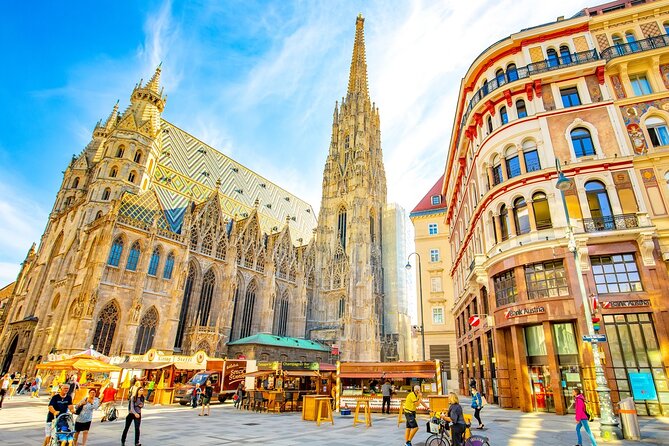
The next quick stop is Hotel Sacher Vienna. The listing points out its luxury and its founding year, 1876, plus the fact that it’s tied to the original Sachertorte created by Franz Sacher. Even without going inside, it’s a recognizable pivot between grand Vienna institutions and the hotel-world legend that still shapes the city’s food and hospitality reputation.
After that, you’ll get to Burggarten. This is a garden laid out in the 19th century as part of the Hofburg grounds. The description focuses on how it was designed for the imperial family and reflects the garden design style of the time. It’s listed for about 5 minutes with free admission.
I like this break in the walk because gardens and open spaces reset your eyes. After the dense cluster of landmark facades, you’re able to absorb the Hofburg area in a more human scale.
Beyond the palaces, the city keeps its own rhythm of coffee, concerts, and day trips nearby.
- Vienna: Vivaldi’s Four Seasons Concert in Karlskirche★ 4.7 · 14,951 reviews
- Vienna: Schönbrunn Palace & Gardens Skip-the-Line Tour★ 4.7 · 7,739 reviews
- Vienna: Light of Creation Votive Church Immersive Light Show★ 4.8 · 6,779 reviews
- Vienna Spanish Riding School Guided Tour★ 4.7 · 6,765 reviews
Ringstrasse to Maria Theresien Square, the boulevard mindset
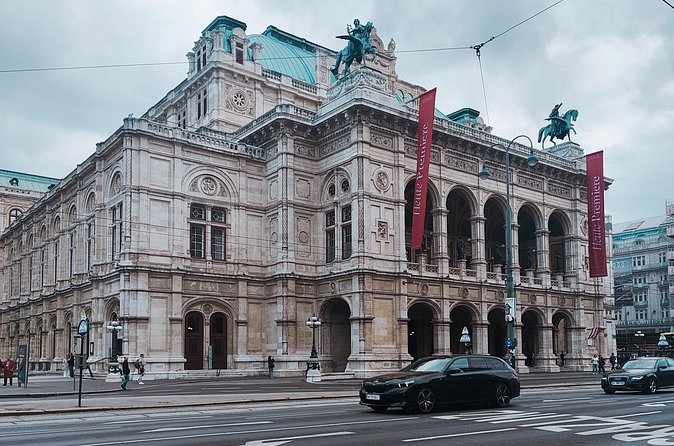
Then comes Ringstrasse, the grand boulevard created in the 1850s after the old city walls were demolished. This is where Vienna tells its modernization story in urban form. The stop is about 10 minutes, and admission is free.
If you’re the type who likes to understand how cities grow, Ringstrasse is key. It’s not just a street, it’s a design idea that reorganized the city into a prestige showpiece. A guide helps you see that transformation as you walk rather than as disconnected facts read on a sign.
Next is Maria Theresien Square. The listing specifically calls out the Museum of Art History and the Museum of Natural History that surround the square. It’s an easy stop, around 5 minutes, free admission. Still, it’s one of those moments where a guide can connect the dots for you: you’re seeing how Vienna built cultural institutions into the spaces people actually gather.
Heldenplatz and Hofburg, Vienna’s power center in walking form
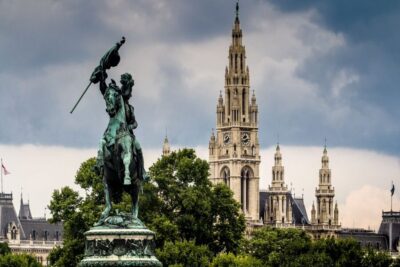
Heldenplatz is next, about 10 minutes, free admission. The description places it directly in front of the Hofburg, the former imperial palace and long-time center of Habsburg power. This is one of the best stops for the big-picture feeling. You get the square, then the palace complex context immediately.
Then you move to The Hofburg itself, also about 10 minutes, free admission. The description is clear about its role: residence of the Habsburgs and center of power in Austria. Even if your group only looks from the outside, it helps to have someone explain why the location, scale, and layout mattered.
After that, you’ll reach Josephplatz, listed at about 10 minutes, free admission. It’s described as a small but striking square in Vienna’s 1st district with notable architecture and historical significance. It’s a good palate cleanser between large monument moments. Squares like this often get ignored when people rush straight from landmark to landmark.
Spanish Riding School to Graben and Kohlmarkt, culture plus daily life
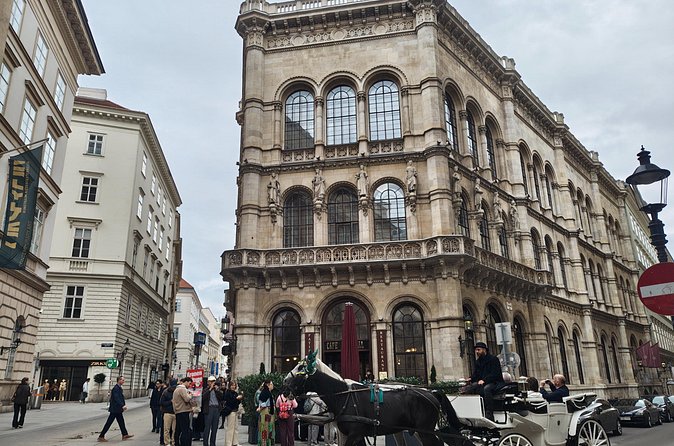
Stop 11 is the Spanish Riding School. The listing highlights its age and reputation, along with classical horsemanship and the training of Lipizzaners. It’s short, about 5 minutes, and admission is not included.
This stop is mostly about context. You’re learning why this tradition is treated as a serious part of Vienna’s identity, not just a tourist performance. If your group is into animals, choreography, or classical ritual, even a quick stop here can land well.
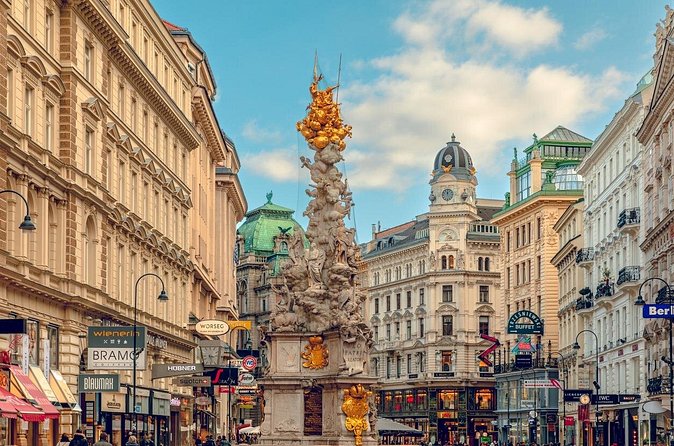
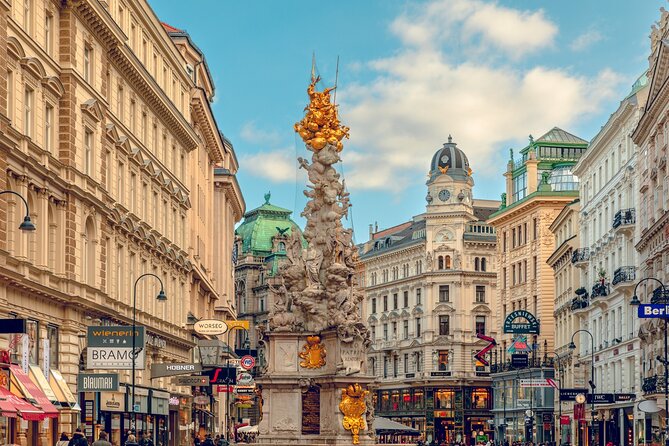
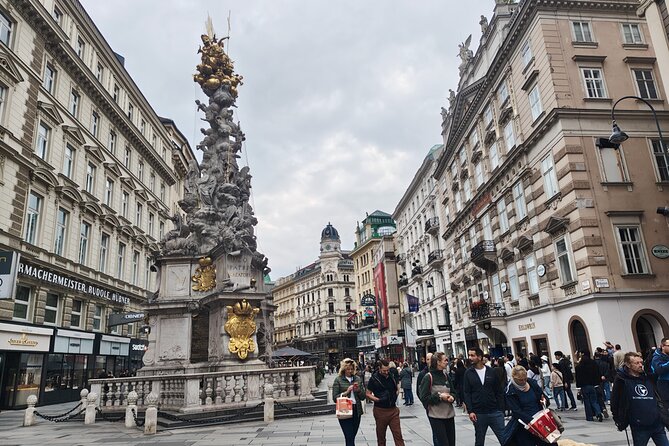
Then you transition to Graben and Kohlmarkt. The description notes that the moat was originally part of medieval town fortifications, and later the surrounding area developed into an important commercial and shopping district. It’s free admission and about 10 minutes.
I like this section because it shows Vienna wasn’t only palaces and opera houses. This is where historic defense infrastructure quietly turned into everyday movement and commerce.
Stephansdom and Mozarthaus, Vienna’s two big symbols back-to-back
Next is Stephansdom, St. Stephen’s Cathedral. It’s framed as Vienna’s landmark and one of Austria’s important Gothic cathedrals. The stop is about 10 minutes, but admission is not included.
Even with limited time, this is the moment that often makes first-time visitors exhale. A guide helps you see the cathedral as more than a photo spot by explaining why Stephansplatz is such a popular meeting place and how the square functions in the city.
Then comes Mozarthaus Vienna, described as the only surviving home of Wolfgang Amadeus Mozart in Vienna. It’s about 5 minutes, admission not included. This is a compact but meaningful change in tone from monumental cathedral vibes to one person’s lived history.
If you’re traveling with music lovers, this pair of stops tends to be a strong emotional sequence: world-class architecture, then Mozart’s actual address story.
Ankeruhr and Hohermarkt, clockwork and trade roots
After Mozart, you’ll stop at the Ankeruhr Clock. The listing describes it as an astronomical clock with colorful figures and moving representations. It’s about 5 minutes, free admission.
This is a perfect short break for groups because it’s fun without requiring tickets. Even if you usually skip clocks, it’s one of those Vienna details that feels uniquely specific.
Then you’ll reach Hohermarkt, about 5 minutes, free admission. The description says it’s one of Vienna’s oldest squares and an important trading center in the Middle Ages. Even better, the history dates back to Roman times, when Vienna was known as Vindobona. It’s another moment where a guide can connect layers of time in a way that feels natural while you’re standing there.
St. Rupert’s Church, a calmer old corner to close the loop
The final stop is St. Rupert’s Church, officially Pfarrkirche St. Ruprecht. The listing calls it one of the oldest churches in Vienna, located in the 1st district. It’s about 5 minutes, and admission is not included.
I like putting a smaller, older-feeling church at the end. It gives the route a natural taper. By the time you finish, your head is already full, so a short finish point helps you end on something historical and atmospheric without asking your group to sprint toward the next big attraction.
The tour ends in a different location than where it starts, so it’s worth saving some time for yourself after the last stop to grab a drink or find a nearby tram or metro connection.
What the private guide experience adds, especially for families
The biggest strength here is the guide. This kind of private route works when the guide can manage both storytelling and movement. The route has a lot of famous names, so your guide’s job is to make them feel connected, not like a checklist.
Based on how guides handle this walk, you can expect a friendly, conversational style. Guides such as Jeremy, Eszter, and Horst are described as attentive, fun, and easy to talk to. That shows up in practical ways: they help you navigate streets with clear direction, and they answer questions without making you feel rushed.
It also helps when you’re traveling with kids or teens. One guide experience included a focus on comfort during snowy, windy weather, including short breaks to warm up and keep everyone feeling okay. If your group includes children, this is the kind of tour where the pacing matters almost as much as the sights.
Price, group value, and what to budget for entrances
The price is $312.06 per group, up to 15 people. That pricing model can be a great deal when you travel as a group, especially if you’d otherwise pay separate guide fees. For families, friend groups, or small travel parties, the math is usually clearer than for per-person walking tours.
You do need to think about entrance tickets separately for some stops. On this route, admission is not included at several major attractions, including:
- Albertina
- Wiener Staatsoper
- Hotel Sacher Vienna
- Albertina-related museum time is separate by your choice
- Spanish Riding School
- St. Stephen’s Cathedral (Stephansdom)
- Mozarthaus Vienna
- St. Rupert’s Church
Free admission stops include the outdoor and square-based parts like Albertinaplatz, Burggarten, Ringstrasse, Maria Theresien Square, Heldenplatz, Hofburg, Josephplatz, Graben and Kohlmarkt, Ankeruhr Clock, and Hohermarkt.
If you want to go inside multiple ticketed stops, this tour is still a good orientation, but you’ll likely add extra time later. If you mainly care about walking the center, hearing the stories, and taking photos, you’ll be able to keep costs more controlled since many stops are free.
Who this Vienna walking tour suits best
This tour is a strong fit if:
- You want a first serious look at Vienna’s center without planning every turn
- You love art and music institutions as much as palaces and squares
- Your group likes a guided walk that keeps stopping points tight and purposeful
- You’re traveling with family and want someone to manage pacing and comfort
It might not be ideal if:
- Your priority is long time inside museums or cathedrals. The stops are brief, and several key indoor sights require separate admission.
- You hate walking. It’s a city-center loop, and the timing suggests steady movement through multiple sites in 2.5 hours.
Should you book this private historical walking tour?
I’d book it if you want your Vienna time to start with a clear storyline. The route covers art, opera, imperial power, and Old Town squares in one connected walk, and the private format makes the experience feel easier than trying to stitch it all together alone.
The best reason to choose it is the way the guide experience shapes the whole loop, with flexibility, clear navigation help, and a friendly style that works for different age groups. The main reason to hesitate is tickets. If your group plans to enter several ticketed places, think ahead about extra time and entrance costs.
If you’re aiming for a smart, efficient, story-led introduction to Vienna’s historic core, this private walk is a solid pick.
FAQ
How long is the private historical walking tour?
The tour runs for about 2 hours 30 minutes.
What does the tour cost, and how many people can be in a group?
The price is $312.06 per group, with up to 15 people.
Is this tour private?
Yes. It is a private tour, and only your group participates.
Where do we meet?
You meet at Tourist-Info Wien, Albertinaplatz 1, 1010 Wien, Austria.
Is pickup included?
Pickup is offered.
Is the tour in English?
Yes. The tour is offered in English.
Do we get a mobile ticket?
Yes. A mobile ticket is included.
Are service animals allowed?
Yes, service animals are allowed.
Which stops include free admission versus admission not included?
Free admission is listed for: Albertinaplatz, Burggarten, Ringstrasse, Maria Theresien Square, Heldenplatz, The Hofburg, Josephplatz, Graben and Kohlmarkt, Ankeruhr Clock, and Hohermarkt. Admission is not included for: Albertina, Wiener Staatsoper, Hotel Sacher Vienna, Spanish Riding School, Stephansdom, Mozarthaus Vienna, and St. Rupert’s Church.
What is the cancellation policy?
You can cancel for free up to 24 hours in advance for a full refund. If you cancel less than 24 hours before the start time, you do not get a refund.
Latest Additions
- Wachau Valley Private Wine Tour with Tasting and Gourmet Lunch
★ 5.0 · 1 review - Vienna: Danube Valley Tour with Melk, Dürnstein with wine tasting and boat.
★ 5.0 · 1 review - Private city tour in Vienna
★ 5.0 · 1 review - Hallstatt Small Group Day Trip from Vienna
★ 3.0 · 1 review - Inside Freud’s Mind: Self-Guided Mystery Walk in Vienna
★ 4.0 · 1 review - Private Transfer from Vienna to Prague
★ 5.0 · 1 review - Vienna’s Christmas Market Magic Tour
★ 5.0 · 1 review
Historical Tours, compared.

Vienna Historic Center Small Group Walking Tour
Read our review →
Time Travel-Magic Vienna History Tour Ticket
Read our review →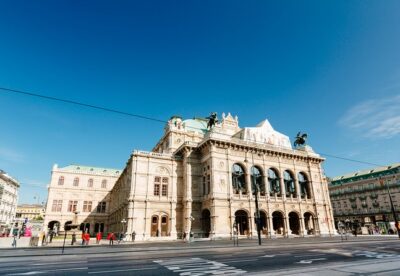
Skip-the-Line Schonbrunn Palace Guided Tour and Vienna Historical City Tour
Read our review →
Vienna Mozart Concert in Historical Costumes at the Musikverein
Read our review →
Browse the lists this tour appears in