
Reviewed · HISTORICAL TOURS
Historical Hitler Walking Tour of Vienna
Vienna can feel elegant and distant, until you follow its darker streets. This Historical Hitler Walking Tour of Vienna connects Hitler’s early story, Vienna’s changing arts scene, and surviving Jewish sites you can still see today, plus clear reminders of the war’s destruction and aftermath. I like that the route is anchored in major landmarks like the Vienna State Opera and Heldenplatz, and that it also reaches less obvious memorials and street-level details. One possible drawback is that the tour is not only about Hitler, it’s more about Vienna’s society and how the city changed around him.
You start at Albertinaplatz near the Albertina Museum and walk through the historical center toward Schwedenplatz, with a licensed English guide. From guides such as Dieter, Wolfgang, and Stefan, the strongest theme is clear pacing, strong storytelling, and space for questions, even when the day gets cold. Just know you are on your feet for about 2 hours 30 minutes, so comfy shoes and a weather plan matter.
In This Review
- Key highlights and what makes them worth your time
- Vienna, but with a missing piece you cannot ignore
- Meeting point at Albertinaplatz, then a walk that keeps you oriented
- Stop 1, Vienna State Opera: when the arts got politically rearranged
- Stop 2, Memorial Against War and Fascism: a square-sized pause
- Stop 3, Akademie der bildenden Kunste: Hitler’s rejection and the early story
- Stop 4, Heldenplatz: the 1938 balcony moment and what it meant
- Stop 5, Judenplatz Holocaust Memorial: a place for real remembrance
- Stop 6, Morzinplatz: the Gestapo inside a former luxury hotel
- Stop 7, Infopoint Jewish Vienna and the Seitenstettentempel behind tenements
- Finishing at Schwedenplatz: end with transit and dinner nearby
- Price and value: what $32.65 buys you in real terms
- What to wear, what to bring, and how to enjoy the cold part
- Who this tour suits best
- Should you book it?
- FAQ
- Where does the Historical Hitler Walking Tour in Vienna start and end?
- What time does the tour run?
- How long is the tour?
- What is the cost?
- Is the tour offered in English?
- What is included in the ticket price?
- Are there any entrance fees at the stops?
- What should I bring?
- How big is the group?
- Can I cancel for a full refund?
Key highlights and what makes them worth your time
Start at Albertinaplatz, then connect culture, power, and violence
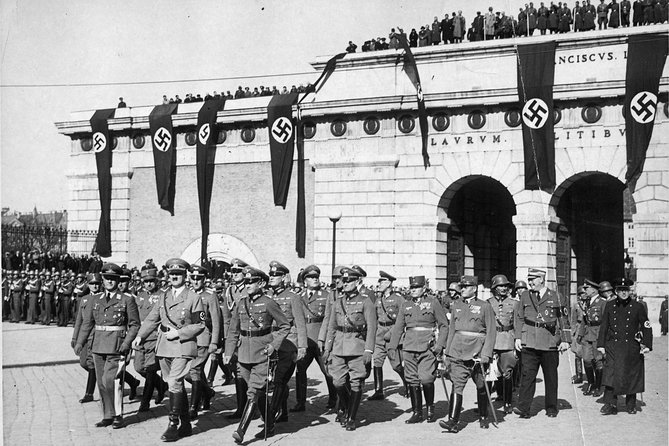
Vienna State Opera: see how the arts scene changed after 1938
Heldenplatz: understand the impact of the 1938 speech in the city itself
Judenplatz Holocaust Memorial: pay respects to Austrian Jewish victims of the Shoah
Morzinplatz: learn how a former luxury hotel became brutal Gestapo headquarters
Seitenstettentempel: spot why the main synagogue was hidden from street view
Vienna, but with a missing piece you cannot ignore
If you visit Vienna and only stay with the famous facades, you miss half the story. This walk takes you through the parts of the city where politics, antisemitism, and propaganda met real streets, real buildings, and real institutions. It’s a hard subject, but the tour approach is practical, organized, and focused on what you can actually see.
I especially like how the route avoids turning history into a blur of names. You get a sequence, a sense of cause and effect, and a clear link between Hitler’s rise and Vienna’s shifting social and cultural life. Another plus is the guide style. In the way Dieter, Wolfgang, Charles, Stephan, and Stefan are described, the best versions of this tour keep explanations balanced, pace relaxed, and questions welcome.
The big consideration is also the tour’s strength: it’s called a Hitler tour, but it keeps circling back to Vienna itself. If you want a pure nonstop Hitler biography, you might feel the emphasis is split between him and the city that enabled and endured the era.
Other ways to round out a Vienna visit

Meeting point at Albertinaplatz, then a walk that keeps you oriented
The tour meets at Albertinaplatz (near the Albertina Museum). That’s a smart starting spot because it gives you a central base and an easy mental anchor for the rest of the day. From there, you move toward the Vienna State Opera, then through Vienna’s historical core and across to the Jewish memorial area, before finishing at Schwedenplatz.
The total time is about 2 hours 30 minutes, and the group size is capped at 25 travelers. That matters. Smaller groups tend to stay together better on tight sidewalks, and the guide can manage questions without the whole route turning into a sprint.
Weather matters here. The guidance is simple: wear comfortable shoes, and bring what Vienna might demand, water, sunscreen, and a raincoat or umbrella. On colder days, you may also find brief indoor pauses built into the schedule, which is a real comfort during a history-heavy walk.
Stop 1, Vienna State Opera: when the arts got politically rearranged
The tour begins with a building that screams Vienna, the Vienna State Opera. You start with the opera’s famous opening context, then you move forward to a brutal turning point: after Anschluss, the National Socialist period reshaped cultural life.
What I like about starting here is that it forces a clear question. How does an ideology invade an institution that is supposed to represent art, talent, and public life? The guide frames it with concrete details, including Hitler’s visits to the opera in June 19, 1938, and October 27, 1938. After 1938, the period of National Socialism meant departure, persecution, and murder of artists and employees. There were also bans on performance for certain works.
Even if you do not care about opera, this stop gives you a ground-level way to understand how policy becomes everyday reality. And if you already love classical music, it hits harder, because you can picture what was being silenced.
Stop 2, Memorial Against War and Fascism: a square-sized pause
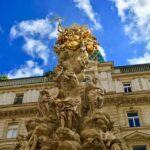
Next you visit the Memorial Against War and Fascism on Albertinaplatz. It’s a work by Austrian sculptor Alfred Hrdlicka, and it has stood since 1988. The memorial is dedicated to victims of war and fascism, with the intent to remind people of the darkest era in Austrian history.
This stop is short, but it works well as a “reset button.” When you move quickly through heavy material, you need a moment that is less about facts and more about reflection. If you tend to rush, I’d treat this like a required pause, not a quick photo stop.
Beyond the palaces, the city keeps its own rhythm of coffee, concerts, and day trips nearby.
- Vienna: Vivaldi’s Four Seasons Concert in Karlskirche★ 4.7 · 14,951 reviews
- Vienna: Schönbrunn Palace & Gardens Skip-the-Line Tour★ 4.7 · 7,739 reviews
- Vienna: Light of Creation Votive Church Immersive Light Show★ 4.8 · 6,779 reviews
- Vienna Spanish Riding School Guided Tour★ 4.7 · 6,765 reviews
Stop 3, Akademie der bildenden Kunste: Hitler’s rejection and the early story
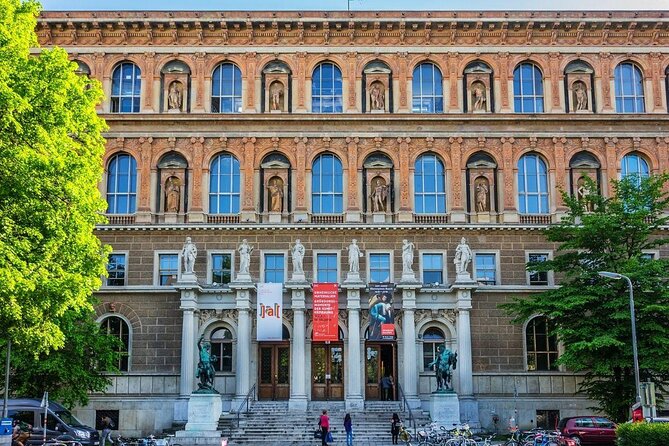
Then you reach the Akademie der bildenden Kunste, the art academy that rejected Hitler as a student. It’s a small stop in time, but it’s huge in meaning because it connects biography to institutions.
This is where the tour earns its name without getting stuck in trivia. You are learning about Hitler’s early days and why his path intersected with Vienna’s art world. The guide’s framing helps you understand that Vienna mattered, not just because of later politics, but because of the atmosphere and opportunity structures around young people chasing status.
In practical terms, this is also a good moment to check your group’s pace. It is brief and outdoors, so if you are sensitive to cold, you can prepare yourself for the rest of the walk.
Stop 4, Heldenplatz: the 1938 balcony moment and what it meant
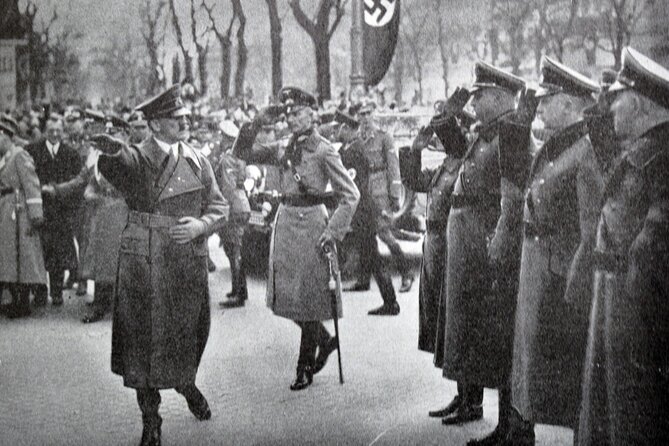
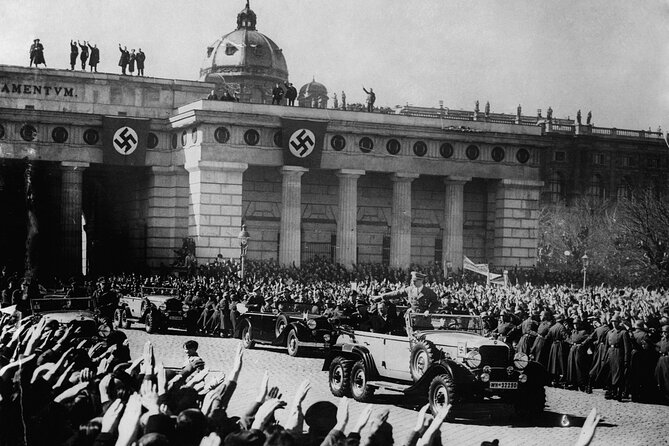
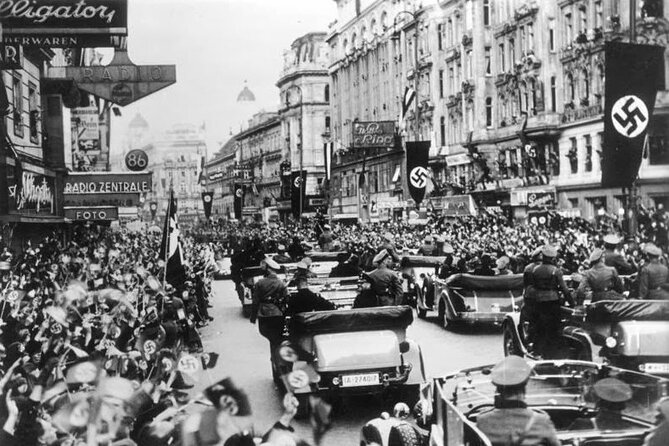
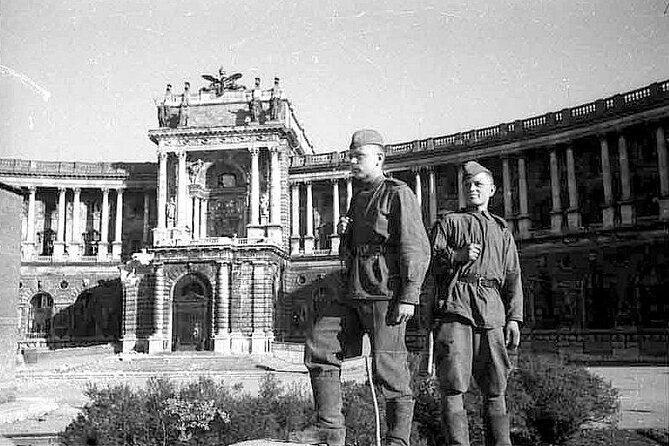
At Heldenplatz, you focus on March 15, 1938, and on Hitler’s speech from the balcony of the Neue Hofburg. The tour explains how the speech became an emblem of the seizure of power, as well as the trauma it created for the Second Republic.
This is one of those places where you should look around, not just at the memorial story. The square’s layout makes it easy to imagine crowds and shared belief. That’s exactly why it’s so important. Propaganda is not only radio and newspapers, it’s also space, sight lines, and mass participation.
I also like how the guide keeps the focus grounded in the city itself. Instead of treating the speech like a distant event, you connect it to the physical setting where it happened.
Stop 5, Judenplatz Holocaust Memorial: a place for real remembrance
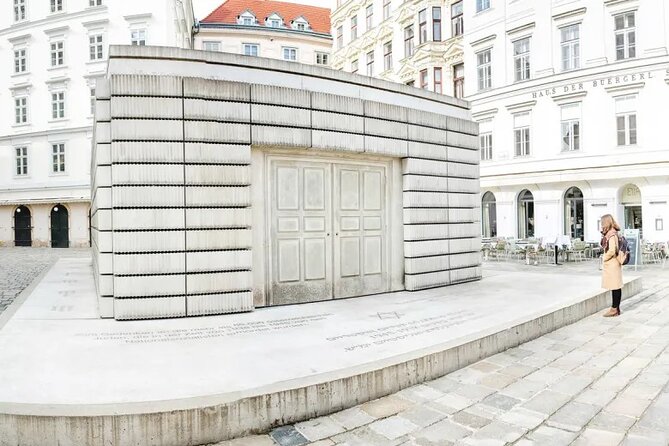
Then you arrive at the Judenplatz Holocaust Memorial, dedicated to the Austrian Jewish victims of the Shoah. The memorial honors more than 65,000 Austrian Jews murdered by National Socialists between 1938 and 1945.
This stop is one of the most emotionally direct points on the route. It gives you a place to pay respects, and it also helps explain the scale of what Austria endured and what Austrian society could not prevent. If you are the type who reads every plaque, you will likely take extra time here.
The tour also helps with a key understanding: the Holocaust was not an abstract horror that happened elsewhere. It happened with Vienna, with Austrian policy, and with Austrian people, including those who did not act.
Stop 6, Morzinplatz: the Gestapo inside a former luxury hotel
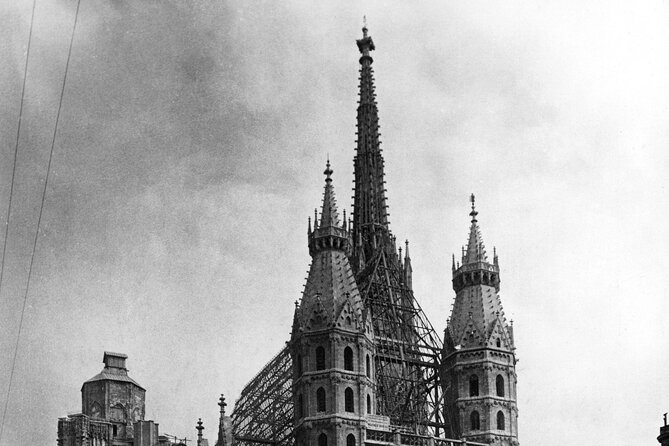
Next is Morzinplatz, where a former luxury hotel, the Metropole, became one of the most brutal Gestapo headquarters in the Third Reich. This is a stark lesson in how quickly a building’s purpose can be overwritten.
What I like about this stop is the way it turns your attention to everyday architecture. You can look at the streetscape and then let the guide explain what occurred behind doors that today may look ordinary. That mental switch is powerful, and it stays with you after the walking part ends.
It also makes the tour feel more “complete.” You are not only learning about Nazi ideology. You are learning about power structures and how they operated in real locations.
Stop 7, Infopoint Jewish Vienna and the Seitenstettentempel behind tenements
The tour ends with the Seitenstettentempel area, often described as hidden behind a tenement building. The main synagogue of Vienna is located at Seitenstettengasse 4, and the tour explains why it is positioned this way: non-Catholic places of worship had to be hidden from street visibility under the rules in force at the time.
So you get an “aha” moment while standing in a very normal-looking streetscape. The synagogue is not front and center. It’s folded into the city’s housing, which tells you something about how public religion was controlled.
The tour also stops near an Infopoint Jewish Vienna location. Even without going deep into exhibits, this part helps you understand that the Jewish presence in Vienna was both visible and constrained, depending on the era and the rules.
Finishing at Schwedenplatz: end with transit and dinner nearby
The tour finishes at Schwedenplatz, a short walk away from where you’ll find the U line 1 and 4. Schwedenplatz is also a common dinner area, which is a practical bonus after a heavy history route.
Timing-wise, ending near transit helps you avoid the “what now?” problem. You can get moving quickly or grab a meal nearby without negotiating a complex journey.
Price and value: what $32.65 buys you in real terms
At $32.65 per person, this tour is priced like a small guided walking session, not like a museum ticket day. You get a licensed guide, an organized route through multiple major and minor sites, and it’s offered in English. You also receive a mobile ticket.
What makes the value feel real is that several stops are admission ticket free at the specific sites listed on the route. So you’re paying mainly for interpretation, pacing, and connecting dots between buildings and events. For Vienna, that connection is the hard part. The city itself is gorgeous, but the meaning is in how the guide threads it together.
If you are visiting Vienna for a short time, this is also a time-efficient way to cover multiple anchors in one outing, from Albertinaplatz and the opera area to the Judenplatz and Schwedenplatz neighborhoods.
What to wear, what to bring, and how to enjoy the cold part
This walk lasts about 2.5 hours, and it is outdoors for most of the route. The guidance is clear: comfortable shoes and clothes. Bring water even if you think you will not need it, and add weather gear. Vienna can shift fast, and rain or wind can sap your energy mid-walk.
If you are hard of hearing or noise-sensitive, consider bringing a way to hear comfortably. Some people noted audio can be a factor depending on device setup and distance in a busy public area.
Also, help yourself emotionally. This is an emotionally heavy theme. Give yourself permission to slow down at memorial stops. You do not need to race to photos to have a good experience.
Who this tour suits best
This is a strong fit if you are:
- A history buff who wants Vienna tied directly to WWII-era events
- Someone who likes walking routes that connect architecture to social change
- Interested in Jewish Vienna, visible remnants, and memorial culture
It may not be ideal if you want a purely entertainment style walking tour or if you dislike long outdoor walks in the cold. And if you expected a strict Hitler-only storyline, you may feel the balance leans into Vienna’s broader context. The naming is a little marketing-y, the substance is more contextual.
Should you book it?
Book this tour if you want a guided way to see Vienna through the lens of what changed in 1938 and how that change touched the arts, public space, and Jewish life. The best version of this experience is the guide-led clarity, and the route covers the kind of sites you will not get from a casual stroll.
Skip it only if you want a light, upbeat walk, or if you have low tolerance for cold and standing outdoors for 2.5 hours. Otherwise, it’s a high-value way to understand a piece of Vienna most first-time visitors miss.
FAQ
Where does the Historical Hitler Walking Tour in Vienna start and end?
It starts at Albertinaplatz (Albertinapl., 1010 Wien) and ends a few minutes’ walk from Schwedenplatz (Schwedenpl., 1010 Wien).
What time does the tour run?
The start time is 2:30 pm.
How long is the tour?
The duration is approximately 2 hours 30 minutes.
What is the cost?
The price is $32.65 per person.
Is the tour offered in English?
Yes, it is offered in English.
What is included in the ticket price?
You get a licensed guide. The tour also uses a mobile ticket.
Are there any entrance fees at the stops?
The listed stops include free admission options, including the Vienna State Opera ticket free, and multiple memorial stops marked admission ticket free.
What should I bring?
Wear comfortable shoes and clothes. Bring water, sunscreen, and a raincoat or umbrella because Vienna weather is unpredictable.
How big is the group?
The tour has a maximum of 25 travelers.
Can I cancel for a full refund?
Yes. You can cancel for a full refund if you cancel at least 24 hours in advance of the experience start time. If you cancel less than 24 hours before, the amount paid is not refunded.
Latest Additions
- Wachau Valley Private Wine Tour with Tasting and Gourmet Lunch
★ 5.0 · 1 review - Vienna: Danube Valley Tour with Melk, Dürnstein with wine tasting and boat.
★ 5.0 · 1 review - Private city tour in Vienna
★ 5.0 · 1 review - Hallstatt Small Group Day Trip from Vienna
★ 3.0 · 1 review - Inside Freud’s Mind: Self-Guided Mystery Walk in Vienna
★ 4.0 · 1 review - Private Transfer from Vienna to Prague
★ 5.0 · 1 review - Vienna’s Christmas Market Magic Tour
★ 5.0 · 1 review
Historical Tours, compared.

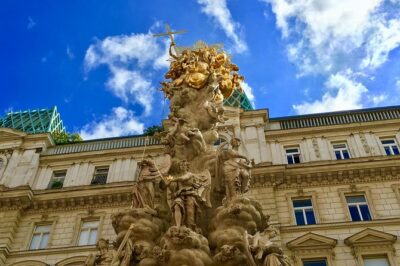
Vienna Historic Center Small Group Walking Tour
Read our review →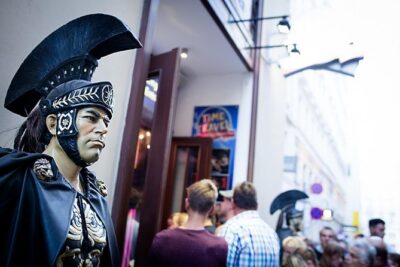
Time Travel-Magic Vienna History Tour Ticket
Read our review →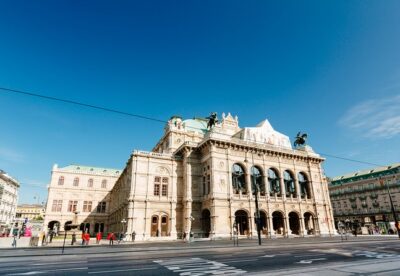
Skip-the-Line Schonbrunn Palace Guided Tour and Vienna Historical City Tour
Read our review →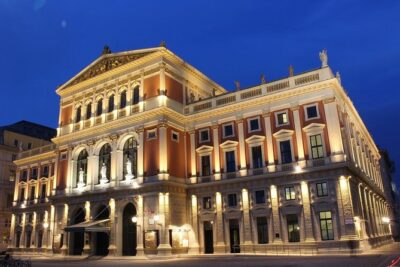
Vienna Mozart Concert in Historical Costumes at the Musikverein
Read our review →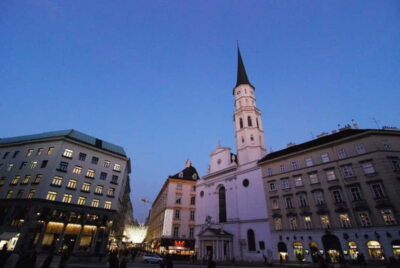
Browse the lists this tour appears in