
Reviewed · KUNSTHISTORISCHES MUSEUM TOURS
Unconventional Privat Tour of the Art History Museum (Kunsthistorisches Museum):”Masterpieces and Beauties. A Museum Tour Focused on Beauty”
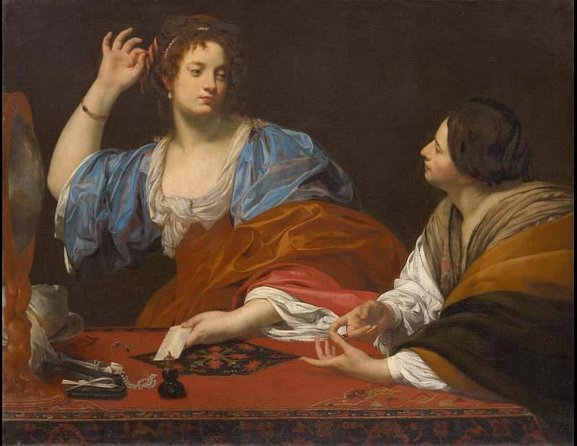
Beauty can feel personal, then art starts making rules. This private tour in the Kunsthistorisches Museum turns the world of Titian, Rubens, Raphael, Velázquez, and more into a conversation about human attractiveness. Before you even hit the paintings, you do short beauty perception tests so your own instincts become part of the story.
I especially like how the guide focuses you on a handful of standout works, instead of the usual I guess we should see everything scramble. I also like that the theme is not just looks for looks’ sake, it connects imagery to ideas like status, fashion, and even how “ideal” forms can get engineered over time.
One thing to consider: the museum is huge, and with the tour running about 2 hours 15 minutes, you will cover selected highlights rather than every room. Also, it is not stroller accessible, so plan accordingly if you’re traveling with mobility needs.
In This Review
- Key highlights you should care about
- Why this Kunsthistorisches Museum tour is about beauty, not checklists
- The unusual start: beauty perception tests before you even enter the galleries
- Entering the Kunsthistorisches Museum: how the guide keeps a huge place manageable
- Titian and Tintoretto: attraction as detail, not general beauty
- Rubens, body positivity themes, and the social meaning of clothing
- Ancient Egyptian sarcophagi: when beauty myths borrow from real objects
- Greek sculpture rules, the golden ratio, and the idea of measurable attractiveness
- What you’ll see beyond the named masterpieces
- Price and value for a private Vienna art tour
- Pacing, walking comfort, and who this tour suits best
- A real confidence boost: getting directed to the extraordinary parts
- Should you book this Masterpieces and Beauties tour?
- FAQ
- How long is the Art History Museum (Kunsthistorisches Museum) beauty-themed private tour?
- Is this tour private?
- What does the price include?
- Where do we meet for the tour?
- Is there a mobile ticket?
- Is the tour stroller accessible or suitable for pets?
- Can I cancel for a full refund?
Key highlights you should care about
- Beauty perception tests before the gallery, with you recording your intuitive impressions
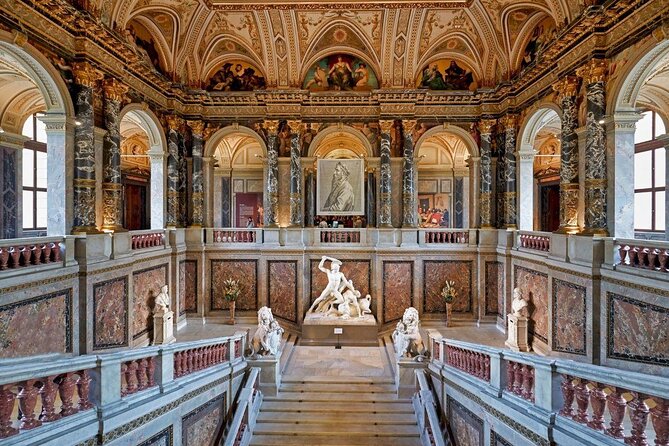
- A focused route through one of Europe’s biggest collections, so you don’t feel lost
- Cabinets of curiosities included, since about a quarter of the museum is that kind of display
- Old Masters tied to attraction myths, from feet to skin to body-shaping themes
- A private format where only your group participates, with the admission ticket included
- Golden ratio ideas connected across Greek sculpture, Dutch painting, and even plastic surgery
Why this Kunsthistorisches Museum tour is about beauty, not checklists
Vienna’s Kunsthistorisches Museum can make even seasoned museum people feel like they should be taking notes on everything. The building is stacked with paintings by the heavyweights, plus Egyptian, Greek, and Roman objects. It is the kind of place where you walk in and think, okay, I need a plan, or I will just drift.
This tour’s plan is refreshingly unusual. Instead of treating “masterpiece” as a label you tick off, the guide uses beauty as a thread you can follow. You look at how artists shaped bodies, faces, and symbolic figures, then you talk about why those choices land emotionally. The best part is that it does not pretend there is one universal answer. It keeps the question open, are these ideas purely taste, or do our brains respond to patterns we share?
And because the route is thematic, the museum stops being a museum of everything. It becomes a museum of arguments, visual persuasion, and social signals.
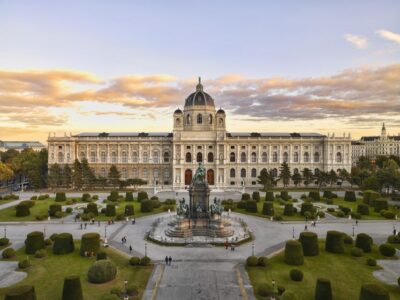
One of Europe's grandest art collections

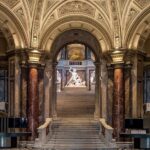
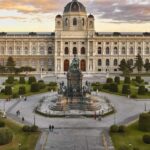
The unusual start: beauty perception tests before you even enter the galleries
A normal art tour starts with the first painting and a few facts. This one starts with you.
Before the museum viewing, you get tests designed to capture your own intuitive perceptions of beauty. The tour description says some of these tests are used by scientists to explore evolutionary assumptions about attractiveness. Practically, that means you are not just listening while someone lectures about beauty. You are participating in the experiment.
You record your impressions, then the gallery walk gives those notes something to respond to. When you later see a work that emphasizes a specific feature, you can ask yourself: did you react because the artwork is technically strong, because of cultural training, or because your brain recognizes patterns it has evolved to prefer?
If you like discussions that connect art history to psychology, this is a strong hook. If you come only for facts about dates and pigments, you might want to mentally adjust your expectations. This tour is built around your reactions as much as it is built around the artworks.
Entering the Kunsthistorisches Museum: how the guide keeps a huge place manageable
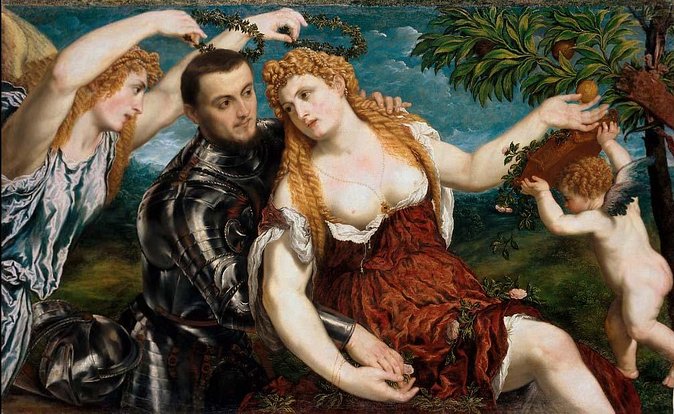
Once you’re inside Kunsthistorisches Museum, the tour turns into a guided route through selected collections. You are looking at masterpieces, but you are not wandering room to room. You have a point, and you have a guide to connect the dots.
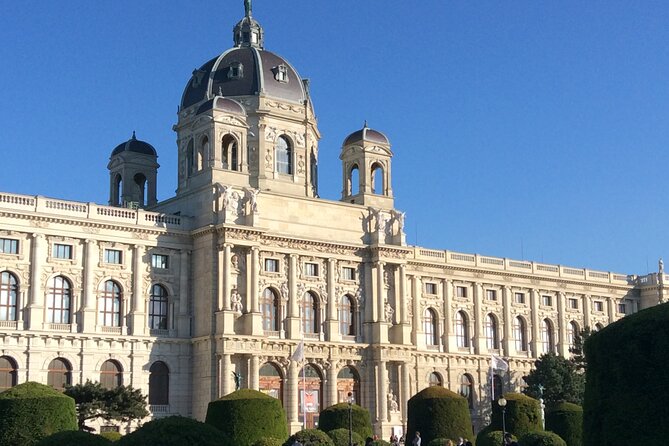
The meeting point is at the museum area by Maria-Theresien-Platz in Vienna, and the experience ends back at the same point. The tour is also described as near public transportation, which matters because you will likely be arriving by tram or train. I’d plan to arrive a few minutes early, not because it’s complicated, but because it’s nicer to start with your head fully on the experience.
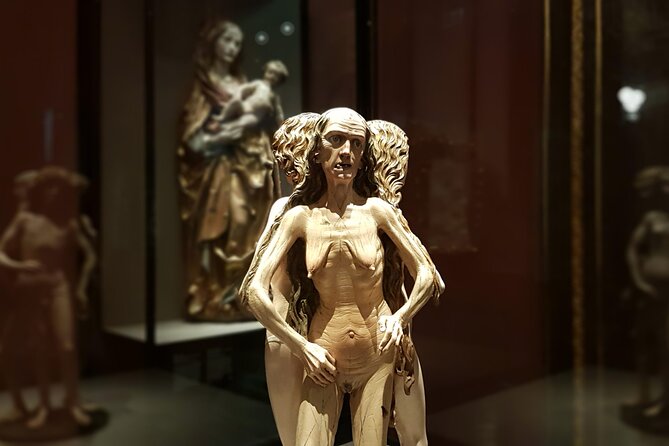
The museum itself includes not only painting galleries, but also Egypt, Greece, and Rome collections. You also visit the Cabinets of curiosities, which take up about a quarter of the exhibition space. That is a big deal because it widens your view beyond “fine art.” You see how people once collected wonders, symbols, and objects of knowledge, which changes how you interpret beauty and status in art.
One small practical note: it’s not stroller accessible. If you need a wheelchair, the data provided here does not confirm access, so you should check directly with the provider before booking.
Titian and Tintoretto: attraction as detail, not general beauty
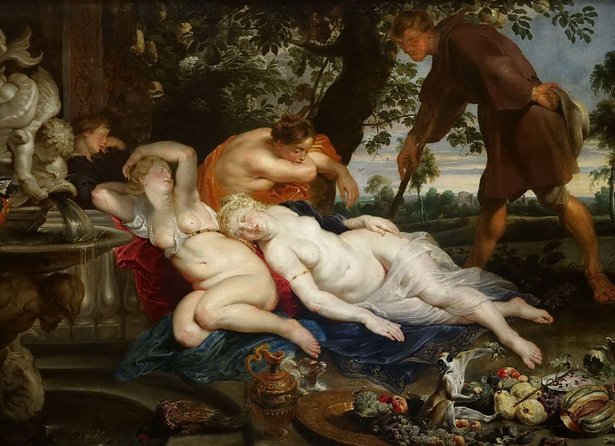
The tour’s theme gets really concrete with specific works. You start reading beauty as something that can be exaggerated, emphasized, and targeted.
With Titian’s Diana and Salypso, you focus on a detail that the tour frames as a “secret of attraction,” the little foot. This is a great lesson in how artists can steer the viewer’s attention. The eye follows what the painter insists on, and beauty becomes partly about placement and emphasis, not only about overall proportions.
Next comes Tintoretto’s Susanna in the Bath. Here the conversation turns to skin, described as a principle of attraction for flawless skin. Even if you already love Venetian color and Renaissance drama, this framing makes you watch differently. You start asking: what does the painting do to make softness and texture feel alive? How does the artist guide the viewer’s sympathy and gaze?
This is also where I think the tour earns its name in a satisfying way. Beauty is not treated like a vague feeling. The guide ties it to technique and artistic choices, then puts those choices next to an idea about attraction. That makes the art feel closer, not more distant.
Other ways to round out a Vienna visit
- Vienna: Time Travel and Magic Vienna History Tour★ 4.6 · 3,879 reviews
- Vienna: World War II Historical Walking Tour★ 4.8 · 1,772 reviews
- Vienna Historic Center Small Group Walking Tour★ 5.0 · 1,746 reviews
- Time Travel-Magic Vienna History Tour Ticket★ 4.5 · 1,099 reviews
Rubens, body positivity themes, and the social meaning of clothing
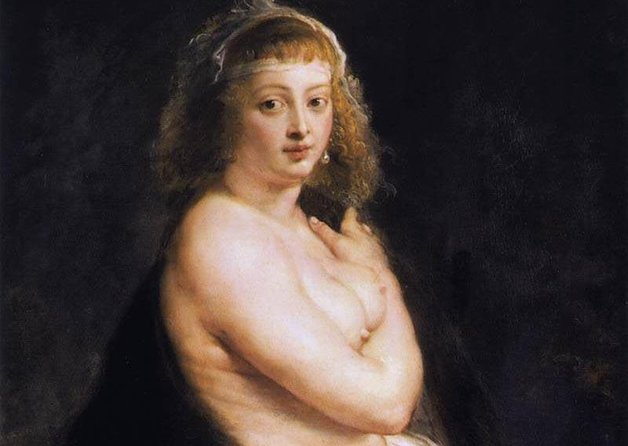
Peter Paul Rubens shows up with The Little Fur Coat. The tour uses it to discuss attitude and connection to ideas similar to the modern body positivity movement.
Even if you do not care about contemporary social movements, this is useful, because it reminds you that the body in art is never just a body. It is also a statement about class, comfort, desire, and how people want to be seen. Clothing, texture, and styling become part of the “beauty system.”
Rubens is an especially good choice for this theme. His figures often feel full of life, weight, and physical confidence. When the tour links that to body image ideas, it gives you a way to talk about representation without getting stuck in either shallow admiration or heavy-handed cynicism.
You are basically practicing a skill: seeing how an artist communicates through surfaces and symbolism. Once you start doing that, you notice it everywhere in the museum.
Ancient Egyptian sarcophagi: when beauty myths borrow from real objects
The tour does something clever here. It brings in ancient Egypt, not as separate archaeology for its own sake, but as a bridge to the theme of shaping ideals.
Ancient Egyptian sarcophagi are discussed in relation to the popularity of push-up bras. That comparison is not a literal claim about ancient fashion. It is a prompt to think about the long-running human habit of constructing form, enhancing silhouette, and using objects or structures to create a desired look.
Whether you agree with the analogy or not, it gives you a way to interpret beauty as behavior, not just aesthetics. People have always designed tools, supports, and display systems around how they want the body to read. Art is one of the most visible records of that impulse.
This section works best if you like playful, intelligent provocations. The guide keeps the discussion on theme and encourages you to connect visual culture across time.
Greek sculpture rules, the golden ratio, and the idea of measurable attractiveness
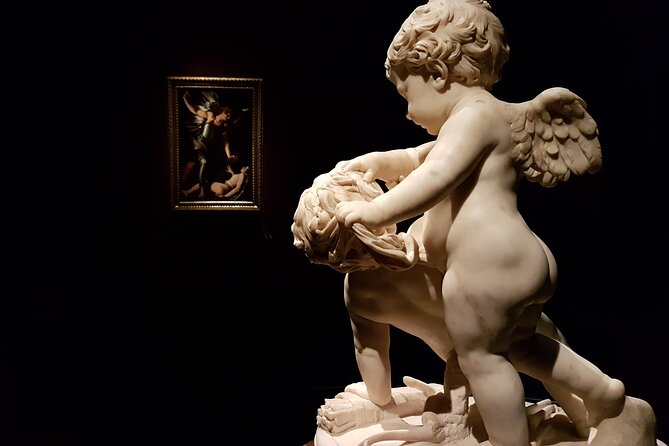
One of the most interesting parts of the tour is the talk about the golden ratio and Greek sculpture. The theme suggests rules of proportion appear in Greek sculpture, Dutch painting, and even in discussions about plastic surgery.
Here’s what makes it valuable: it teaches you that “beauty” often gets justified with math. That does not mean math is the only driver. It just means people love a story where the ideal can be measured and reproduced.
When you apply that lens inside the Kunsthistorisches Museum, you start noticing how artists use proportion to make figures feel stable, harmonious, and pleasing. Even when the work is not strictly classical, the cultural influence of “proper” proportions still lingers.
And because the tour began with your own perception tests, you have an extra layer. You can compare your intuitive reactions with the idea that beauty might be quantifiable. Do you feel pulled in by the supposed structure? Do you feel skeptical? Either reaction is part of what you’re meant to leave with.
What you’ll see beyond the named masterpieces
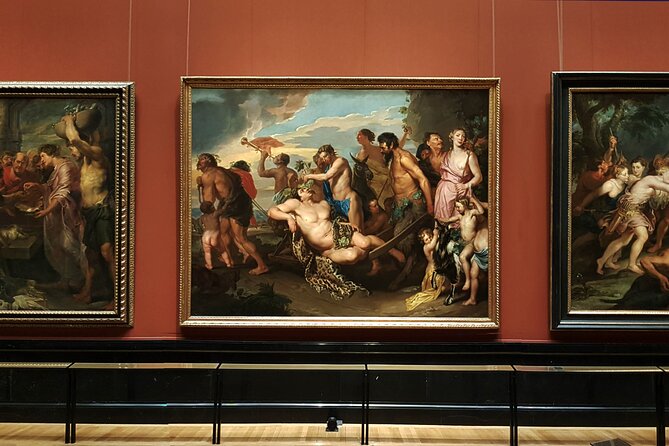
The tour summary mentions artists like Raphael, Velázquez, and Belini, plus a range of works tied to goddesses, courtesans, historical figures, and mythical heroines.
This matters for two reasons. First, it broadens the discussion beyond one school or one era. Beauty standards shift, and the people depicted often represent social roles, not only body types. Second, it helps you understand the museum’s collection as a connected conversation. In other words, you are not seeing “random famous paintings.” You are seeing a theme repeated, varied, and transformed.
Also, the museum’s collections include Egyptian, Greek, and Roman art, which means you get that long timeline where beauty is tied to myth, power, ritual, and public image. If you care about how societies projected ideals, this theme fits naturally.
Price and value for a private Vienna art tour
At $198.64 per person for about 2 hours 15 minutes, this is not a bargain-basement museum walk. But it does have a few value boosters.
Admission is included, which saves you the extra step of ticket planning for this specific experience. It’s also described as a private tour where only your group participates. That can be worth paying for if you want your questions answered and you prefer a quieter, more personal pace than large group tours.
There are also group discounts mentioned, which can make the total feel more reasonable if you have friends or family to share the cost. And since the tour uses a mobile ticket format, you avoid the hassle of paper tickets.
The biggest value question is whether you enjoy themed art discussions. If you’re the type who wants “what you’re seeing and why it mattered,” with a fresh angle, you’ll probably find the price easier to justify. If you want classic museum narration focused only on dates and biography, you might feel the emphasis on beauty psychology and modern analogies is a mismatch.
Pacing, walking comfort, and who this tour suits best
This tour is described as suitable for people interested in human beauty, especially through the lens of art and cultural messages. It is also suggested for moderate physical fitness level, and it is near public transportation.
That tells me two things. One, the route likely includes normal museum walking, plus the kind of stop-and-look pace where you do not rush but you also do not sit for long stretches. Two, if you have mobility limitations, it’s worth confirming how the guide handles your needs since stroller access is not available in the provided info.
Who will enjoy it most:
- Couples who want a meaningful art discussion without a heavy lecture vibe
- People who like psychology plus art history
- Visitors who already know a few famous names and want a new reason to look closely
- Anyone who finds the Kunsthistorisches Museum overwhelming and wants a plan
Who might not:
- Very young kids who need lots of short breaks and playtime (the provided data does not promise that kind of setup)
- Anyone who prefers a traditional, purely chronological tour style
A real confidence boost: getting directed to the extraordinary parts
One of the strongest signals from the experience feedback is the guide’s ability to make a massive museum feel navigable. When you walk into Kunsthistorisches Museum, it is easy to feel like everything is necessary. The value of a focused guide is getting you to the most interesting works without draining your time on everything else.
The highlight from the note tied to the experience was that the tour felt very interesting in a museum where it can seem like you must see everything. That is exactly what this kind of themed private tour should deliver: you leave with a clear sense of what to remember.
If you like a museum day with momentum, where you trust the route and you feel like you actually saw the most extraordinary parts for your interests, this tour seems built for that.
Should you book this Masterpieces and Beauties tour?
I think you should book it if you want more than a museum pass. This tour gives you a structured way to look at the Kunsthistorisches Museum through the lens of beauty, and it backs that theme with hands-on participation via perception tests. You’ll also get a mix of famous Old Masters and symbolic conversations that connect imagery to ideas about status, fashion, and how ideals get constructed.
I would skip it if your main goal is a traditional art history tour that sticks strictly to chronology and technique, with no experiments and no modern comparisons. Also skip if you need stroller access, since that is not available.
If you’re curious, flexible, and you enjoy asking why certain images attract attention, this is a smart, focused way to experience one of Vienna’s top museums without feeling lost in the crowds and the collection size.
FAQ
How long is the Art History Museum (Kunsthistorisches Museum) beauty-themed private tour?
It lasts about 2 hours and 15 minutes.
Is this tour private?
Yes, it is a private tour/activity, and only your group participates.
What does the price include?
The admission ticket is included.
Where do we meet for the tour?
The meeting point is at Kunsthistorisches Museum Wien, Maria-Theresien-Platz, 1010 Wien, Austria. The tour ends back at the meeting point.
Is there a mobile ticket?
Yes, a mobile ticket is listed as a feature.
Is the tour stroller accessible or suitable for pets?
It is not stroller accessible, and it is not suitable for pets.
Can I cancel for a full refund?
Yes. Free cancellation is available, and you can cancel up to 24 hours in advance of the experience for a full refund. If you cancel less than 24 hours before the start time, the amount paid is not refunded.
More Museums in Vienna
- Vienna: Skip-the-Line Sisi Museum, Hofburg and Gardens Tour
★ 4.8 · 5,918 reviews - Tickets for the Albertina Exhibitions
★ 4.7 · 2,126 reviews - Sigmund Freud Museum Ticket
★ 4.6 · 1,668 reviews - Vienna: St. Stephen’s Cathedral & Dom Museum Wien Tickets
★ 4.5 · 1,652 reviews - Vienna: Hofburg and Empress Sisi Museum Guided Tour
★ 4.7 · 1,460 reviews
Latest Additions
- Wachau Valley Private Wine Tour with Tasting and Gourmet Lunch
★ 5.0 · 1 review - Vienna: Danube Valley Tour with Melk, Dürnstein with wine tasting and boat.
★ 5.0 · 1 review - Private city tour in Vienna
★ 5.0 · 1 review - Hallstatt Small Group Day Trip from Vienna
★ 3.0 · 1 review - Inside Freud’s Mind: Self-Guided Mystery Walk in Vienna
★ 4.0 · 1 review - Private Transfer from Vienna to Prague
★ 5.0 · 1 review - Vienna’s Christmas Market Magic Tour
★ 5.0 · 1 review
Kunsthistorisches Museum Tours, compared.
Vienna Kunsthistorisches Museum Day Admission Ticket
Read our review →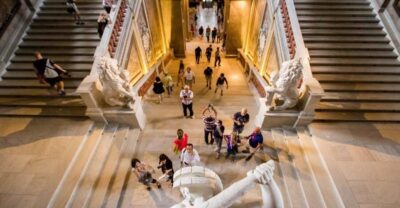
Combo Ticket: Kunsthistorisches Museum & Imperial Treasury
Read our review →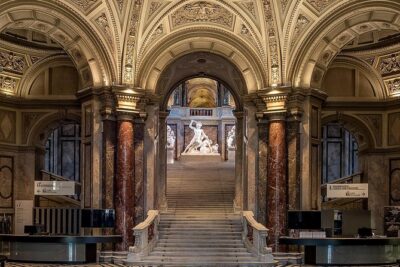
Skip the Line: Kunsthistorisches Museum Vienna Entrance Ticket
Read our review →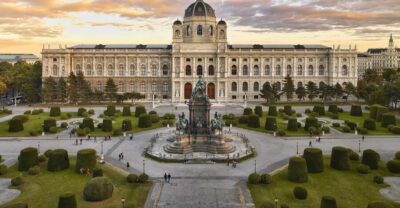
Kunsthistorisches and Leopold Museum Combo Ticket
Read our review →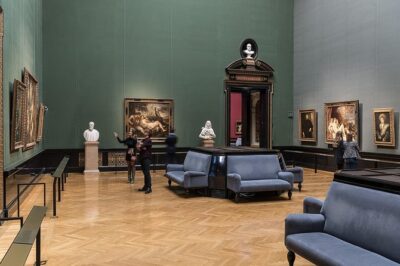
Kunsthistorisches Museum Vienna and Imperial Treasury of Vienna
Read our review →
Kunsthistorisches Museum Guided Tour incl. admission
Read our review →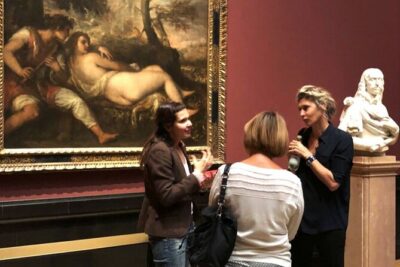
Private Tour of the Kunsthistorisches Museum: Secrets of Masterpieces | Tickets included
Read our review →
Kunsthistorisches Museum Wien Guided Tour including admission
Read our review →Browse the lists this tour appears in