
Reviewed · OLD TOWN DISCOVERY TOURS
World War II History Vienna Old Town Private Walking Tour
History hits hard in Vienna’s Old Town. I love how this tour pins major WWII themes to real street corners, starting at the Denkmal der Opfer des Faschismus in Morzinplatz, and I love the fact that you get a licensed expert who can answer questions as you walk. The one drawback to consider is that the material is emotionally heavy, especially around Nazi terror and the Holocaust, so plan for a calmer pace if you need it.
You’ll cover the “why” and the “what happened” in 2 hours, mostly on foot through Inner Stadt, with a private guide fluent in your chosen language. Group sizes are kept small per guide (up to 1-25), which matters here because details and context are the whole point.
In This Review
- Key things to know before you go
- Morzinplatz to Inner Stad, where the story starts on purpose
- The WWI to WWII timeline your guide turns into something you can track
- Gestapo-era Vienna, and how propaganda and daily life fit together
- Holocaust remembrance stops, and how to read memorials without rushing
- Hofburg and Heldenplatz: power, memory, and the war’s afterimage
- St. Stephen’s Cathedral and the Old Town you can connect to wartime events
- The finish near the Vienna State Opera, where 1945 damage becomes a lesson
- Language, private guide quality, and why it matters on tough topics
- Price and value: is $214 per person fair for what you get?
- Who this tour is best for, and who might want a different style
- Should you book this Vienna WWII Old Town private tour?
- FAQ
- Where is the meeting point?
- How long is the tour?
- Is this a private tour?
- What languages are available for the guide?
- What WWII and WWI-related places will we see?
- What’s included in the price?
- How big is the group?
- How much does the tour cost?
- Is there free cancellation and a flexible booking option?
Key things to know before you go
- Start at Morzinplatz, at the memorial to victims of Nazi terror, close to where the Gestapo set up shop in 1939
- A clear timeline that connects WWI roots, Austrofascism, Hitler’s annexation, and the bombing and liberation of Vienna
- Holocaust remembrance stops in the Old Town area, including a Holocaust memorial and remembrance stones
- Hofburg and Heldenplatz context, with exterior sights and the Memorial Crypt for WWI and WWII victims
- Imperial landmarks plus wartime meaning, including Franz Joseph I at Burggarten and WWII-related monuments near the Opera
- Private format, fluent guide, with language options from English to Arabic, plus room for questions
Morzinplatz to Inner Stad, where the story starts on purpose
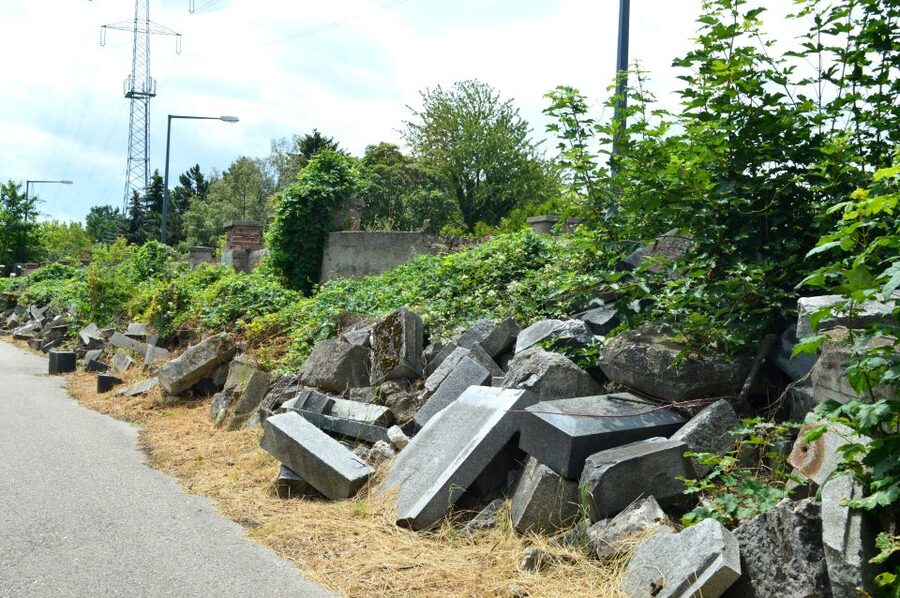
Vienna looks elegant and composed, but this tour uses that contrast. It begins in Morzinplatz at the Denkmal der Opfer des Faschismus, a memorial specifically tied to victims of Nazi terror. Starting here is smart, because it gives you a moral and historical baseline before you move into the rest of the Old Town.
You’re also in an area linked to the 1939 Gestapo headquarters at the former Hotel Metropol. The guide uses that proximity to explain how the machinery of terror became part of everyday life, not just something far away in other countries. If you only read names on plaques in museums, you miss the way these places functioned day to day. Here, the guide constantly ties the “place” to the “system.”
The route stays focused on Inner Stad, which is ideal if you want to walk, ask questions, and still cover a lot in just two hours. You won’t be wandering randomly through streets that happen to be historic. You’ll be moving along a guided thread.
Get your bearings in the old town
The WWI to WWII timeline your guide turns into something you can track
What makes this tour work is not just the WWII focus. You’re guided through the major events leading up to and after both World War I and World War II, and you get the cause-and-effect logic spelled out.
You start with the earlier shockwave connected to Franz Ferdinand’s assassination, then you move forward through the political developments that helped create the conditions for the next catastrophe. The tour also addresses Austrofascism, which matters because Austria’s path in the 1930s is not just a sidebar to Germany. It’s part of the story you need to understand why things unfolded the way they did.
Then comes the shift you’ll hear emphasized: Hitler and the annexation of his homeland, followed by German-occupied Austria. From there, the tour reaches the wartime realities for Vienna itself, including bombing and liberation.
I like how the guide builds a timeline you can follow in your head, not just facts you forget later. And since the tour is private, you can ask where you’re a bit lost. People often think history tours are one-way lectures, but this format is designed for back-and-forth, and that changes how much you retain.
Gestapo-era Vienna, and how propaganda and daily life fit together
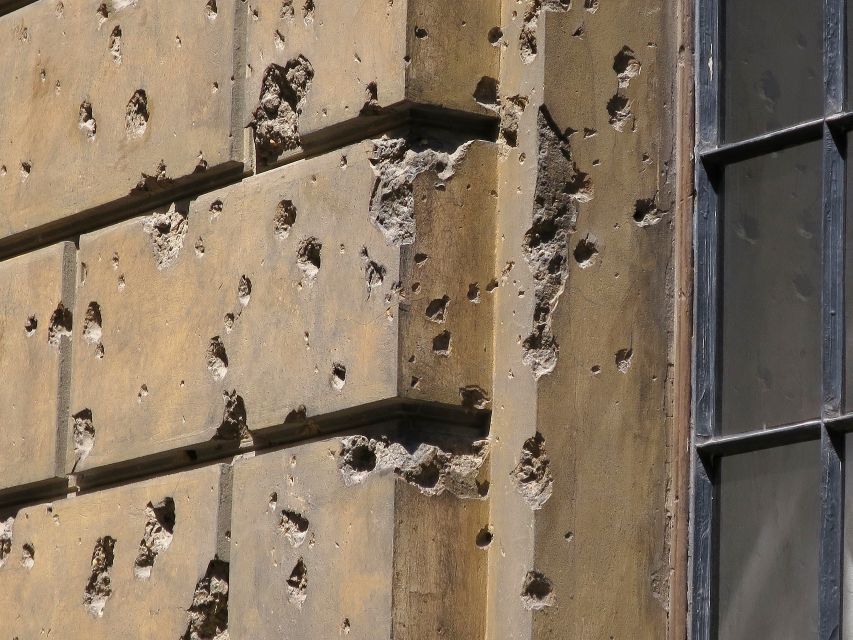
One of the most useful parts is how the guide talks about daily life and political propaganda in German-occupied Austria. This is where the tour stops being a list of events and becomes an explanation of how systems work on people.
As you walk through Inner Stad, you’ll hear about what occupation meant in practical terms, including the atmosphere created by surveillance and fear. The guide’s job is to translate big concepts into street-level understanding. That’s also why the starting point at Morzinplatz is more than symbolic. It’s a place where power became visible, and where terror was organized.
You also pass areas linked to remembrance and you’ll get guided framing around Jewish life under the Nazis. That pacing is important. If you jump straight into atrocity details without context, it can feel chaotic. Here, the guide builds the timeline first, then connects it to what happened to Vienna’s Jewish citizens and how persecution escalated.
Holocaust remembrance stops, and how to read memorials without rushing
The Holocaust Memorial and remembrance stones are part of the walk through the Old Town. These are not the kind of stops where you can just stand, take a photo, and move on. A good guide makes you notice what you might otherwise skip, and helps you understand why specific remembrance elements exist in that exact location.
I find these moments are the most “sticky” for travelers, because the visual elements force a pause. But they can also be the most emotionally demanding part of the tour. The advantage of a private guided walk is that you can ask for clarification on anything that feels confusing, or you can take a breath without feeling like you’re holding up a huge crowd.
Also, because the guide is fluent in your language, you’re not stuck translating the emotional and historical details on the fly. That matters. Holocaust education needs careful phrasing, and small misunderstandings can throw you off.
One more thing I really appreciate: the tour doesn’t treat remembrance like a separate chapter. It keeps tying remembrance back to the broader narrative of occupation, propaganda, and consequences across Austria and Vienna.
Have a guide keep the pace
- Vienna: Private Walking Tour with a Local★ 4.6 · 1,446 reviews
- Vienna: Private Walking Tour with a Guide★ 4.7 · 962 reviews
- Private Day Tour Trip Salzburg Hallstatt and Melk from Vienna★ 5.0 · 388 reviews
- Private Day Tour of Hallstatt and Salzburg from Vienna★ 5.0 · 263 reviews
Hofburg and Heldenplatz: power, memory, and the war’s afterimage
Vienna’s Hofburg complex is an obvious landmark, and this tour uses it correctly. You’ll see Hofburg from the outside, and the guide uses imperial space to talk about what surrounded people during different eras. Even without going inside, the setting helps you feel how different ruling systems shaped daily life.
Then you reach Heldenplatz, where the Memorial Crypt is dedicated to WWI and WWII victims. This is one of those stops where you realize remembrance in Vienna isn’t only about Germany or only about one war. It’s layered. WWI and WWII victims are honored in the same memory space, which encourages you to see the continuity between the conflicts.
Near Burggarten, you’ll also see a monument to Emperor Franz Joseph I. This is a useful contrast point. The tour uses landmarks like this to help you understand what it means when empires and regimes fade, and how the political story shifts from old monarchy symbols into the modern violence of the 20th century.
If you like turning monuments into meaning, you’ll probably enjoy this section most. If you’re hoping for a quick photo tour, it may feel slower, because the guide wants you to actually process what you’re seeing.
St. Stephen’s Cathedral and the Old Town you can connect to wartime events
Vienna’s Inner Stad is packed with iconic sights, and this tour works because it ties famous architecture to the wartime story you came for. St. Stephen’s Cathedral is listed as part of what you’ll see, and it’s the kind of landmark that people already recognize.
The trick is using that familiarity to help you remember the timeline. When the guide links the cathedral area to the broader experience of wartime Vienna, it turns a classic tourist stop into a reference point.
This is also where you get a better sense of scale. Vienna’s Old Town is walkable, and the tour keeps you moving just enough to feel momentum, while stopping at key moments so the meaning lands.
A practical note: because you are walking through the center, comfortable shoes matter. If you’re planning to wear something stylish but uncomfortable, swap it out. You’ll be glad you did after the first hour.
The finish near the Vienna State Opera, where 1945 damage becomes a lesson
The tour ends at the Monument Against War and Fascism near the Vienna State Opera. That location matters. The Opera area sits at the crossroads of major public life and major destruction in 1945.
The guide connects the monument to the fact that the State Opera was heavily damaged by the 1945 bombing. This makes your ending feel grounded, not abstract. You’ve been learning about causes and consequences, and then you see how war literally affected one of Vienna’s cultural icons.
I like endings like this because they bring the lesson back to Vienna, not just to a distant timeline. You’re left with a concrete question that the guide’s story has been answering the whole time: how did Europe get to this point, and what does remembrance ask of us afterward?
Language, private guide quality, and why it matters on tough topics
This is a private walking tour, with a 5-star licensed expert guide fluent in your chosen language. Options include English, German, Italian, French, Spanish, Russian, Polish, Chinese, Japanese, Croatian, Portuguese, Arabic. That list is not just a convenience perk. For this topic, language quality affects how well the historical framing lands.
The tour is also flexible to your interests, which helps if you care more about political mechanisms, specific events, or the human impact on Vienna’s Jewish citizens. And because the guide can manage questions in a small group, you get more interaction than you would on a larger group tour.
You’ll also want to consider how the guide handles pacing. In previous experiences shared under this tour format, guides such as Peter and Sanda have been highlighted for explaining details clearly and handling questions professionally. Alexander has been mentioned for being super, and Frau Heuberger stood out for balancing guided storytelling with breaks, including managing heat by moving from shade to shade.
Those are small details, but they matter. On a topic this intense, good pacing helps you absorb information without feeling overwhelmed.
Price and value: is $214 per person fair for what you get?
At $214 per person for a 2-hour private walking tour, the price isn’t cheap, but it also isn’t random. You’re paying for a licensed expert, a private format, and a tight two-hour structure built around meaningful stops.
Here’s what you get for the money, in practical terms:
- A guide fluent in your language, with expert commentary on WWII, WWI, Austrofascism, and the Holocaust
- Direct access to specific sites and monuments you can’t easily interpret on your own
- A private group size that supports questions, which is a big deal on complicated, sensitive history
If you’re the type who enjoys history when it has context and explanation, this value usually holds up. If you prefer browsing alone and reading at your own speed, you might feel this is pricier than it needs to be. But for heavy topics, guided framing often makes the difference between collecting facts and actually understanding the story.
Also, the group-size cap (1-25 per guide) matters. Smaller groups tend to keep the tour feeling interactive rather than like a slow march with no room to ask anything.
Who this tour is best for, and who might want a different style
This is a great fit if you:
- Want a structured, timeline-based explanation of WWI and WWII as they connect to Austria and Vienna
- Prefer monuments and street-level learning over a pure museum day
- Like asking questions, especially on sensitive topics like Nazi terror and the Holocaust
- Want a private guide in the language you’re most comfortable with
It might be less ideal if:
- You’re hoping for a light sightseeing walk with minimal emotional content
- You get overwhelmed by heavy historical topics and prefer a calmer pace with fewer remembrance-focused stops
One underrated benefit is that it’s only two hours. You still get a strong story arc without turning your day into a full-history marathon.
Should you book this Vienna WWII Old Town private tour?
If you want to understand Vienna during the 20th century and connect WWII monuments to a clear, guided narrative, I think this is a smart booking. The start at Morzinplatz, the attention to occupation and propaganda, and the ending near the Opera give you a strong before-to-after structure. Plus, the private, language-specific guide format helps you process details instead of guessing them.
If you’re sensitive to Holocaust-related content, go in prepared for emotions. But if you can handle it, you’ll come away with a much sharper grasp of how WWI conditions, Austrofascism, Nazi occupation, and Vienna’s wartime experience connect.
FAQ
Where is the meeting point?
Meet your guide in front of the Denkmal der Opfer des Faschismus (Memorial to the Victims of Nazi Terror), Morzinpl. 4, 1010 Wien, Austria.
How long is the tour?
The tour lasts 2 hours.
Is this a private tour?
Yes, it is a private walking tour with a private group format.
What languages are available for the guide?
The guide is available in English, German, Italian, French, Spanish, Russian, Polish, Chinese, Japanese, Croatian, Portuguese, Arabic.
What WWII and WWI-related places will we see?
You’ll visit WWII and Holocaust-related monuments and memorials, including stops connected to Nazi terror, the Holocaust Memorial and remembrance stones, exterior views of the Hofburg, the Memorial Crypt at Heldenplatz, and the Monument Against War and Fascism near the Vienna State Opera. You also see St. Stephen’s Cathedral and other related sites in the Old Town.
What’s included in the price?
Included are the private walking tour of WWII sites in Vienna, a 5-star licensed guide fluent in your chosen language, expert commentary on WWII, WWI, and the Holocaust, and sightseeing of WWII-related places and monuments.
How big is the group?
The tour limits group size to 1-25 people per guide so everyone can hear and ask questions well. Larger groups are handled with additional guides.
How much does the tour cost?
The price is $214 per person.
Is there free cancellation and a flexible booking option?
Yes. You can cancel up to 24 hours in advance for a full refund. You can also reserve now and pay later, meaning you pay nothing today.
More Walking Tours in Vienna
- Vienna: Guided Walking Tour of City Center Highlights
★ 4.7 · 4,989 reviews - Vienna: Vienna Central Cemetery Guided Walking Tour
★ 4.8 · 3,307 reviews - Vienna: Guided Walking Tour of City Highlights & Hidden Gems
★ 4.9 · 2,180 reviews - Vienna: Viennese Underworld Guided Walking Tour
★ 4.7 · 1,865 reviews - Vienna: 1.5-Hour Underground Walking Tour
★ 4.9 · 1,146 reviews
More Historical Tours in Vienna
- Vienna: Time Travel and Magic Vienna History Tour
★ 4.6 · 3,879 reviews - Vienna: World War II Historical Walking Tour
★ 4.8 · 1,772 reviews - Time Travel-Magic Vienna History Tour Ticket
★ 4.5 · 1,099 reviews - Skip-the-Line Schonbrunn Palace Guided Tour and Vienna Historical City Tour
★ 3.5 · 940 reviews - Vienna Mozart Concert in Historical Costumes at the Musikverein
★ 4.5 · 888 reviews
Latest Additions
- Wachau Valley Private Wine Tour with Tasting and Gourmet Lunch
★ 5.0 · 1 review - Vienna: Danube Valley Tour with Melk, Dürnstein with wine tasting and boat.
★ 5.0 · 1 review - Private city tour in Vienna
★ 5.0 · 1 review - Hallstatt Small Group Day Trip from Vienna
★ 3.0 · 1 review - Inside Freud’s Mind: Self-Guided Mystery Walk in Vienna
★ 4.0 · 1 review - Private Transfer from Vienna to Prague
★ 5.0 · 1 review - Vienna’s Christmas Market Magic Tour
★ 5.0 · 1 review
Old Town Discovery Tours, compared.
Vienna Historic Center Small Group Walking Tour
Read our review →
Old Town Sightseeing Tour in a Vintage-Style E-Car
Read our review →
Exclusive Vienna Old Town Highlights Walking Tour (max. 6 persons)
Read our review →

Browse the lists this tour appears in