
Reviewed · WALKING TOURS
Vienna Walking Tour with Audioguide on Your Smartphone
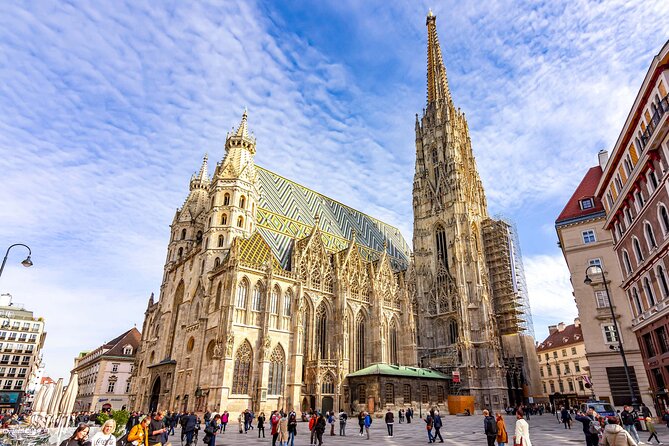
Vienna turns into a story in your headphones. This smartphone walking tour strings together major sights around Vienna’s center, starting at Stephansplatz and winding through landmarks like St. Stephen’s Cathedral and Hofburg. It’s interesting because the route is built for self-paced exploring, not a rigid group march.
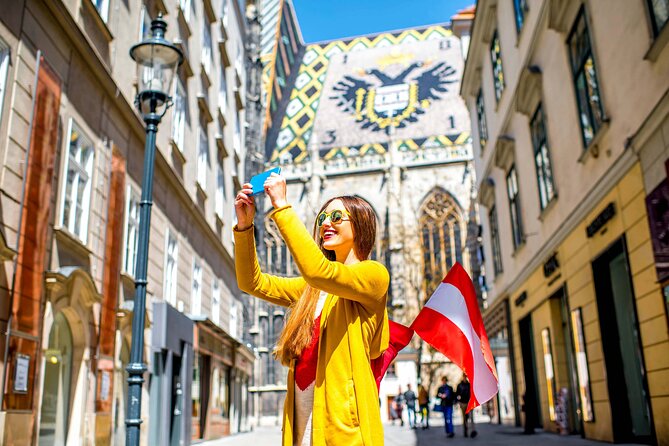
I love the professional historian narration for turning famous buildings into clear, human-scale stories. I also love the offline map and landmark icons, because you can keep moving without constantly re-orienting yourself.
The main drawback is navigation. GPS can be wonky at certain street corners, and some stop-to-stop directions can feel less obvious than you’d hope, so you’ll want a charged phone and to use the app map as your main guide.
In This Review
- Key highlights
- How this Vienna smartphone tour really works at Stephansplatz
- Price and time: what $8.40 gets you, and what to expect on your feet
- Stop-by-stop: St. Stephen’s Cathedral, plague column, and the classic church trio
- St. Stephen’s Cathedral, the Gothic opener
- Church of the Teutonic Order, Baroque style in a calmer pocket
- Colonna della Peste (Pestsäule), the plague column you can stand in front of
- Peterskirche, dome views and fresco details
- Café Demel to Michaelerplatz: cake breaks and imperial street-level archaeology
- Café Demel, a timed snack stop that actually fits the route
- Michaelerplatz, Hofburg views plus visible history under your feet
- Emperor Joseph II Monument, Enlightenment ideals in bronze
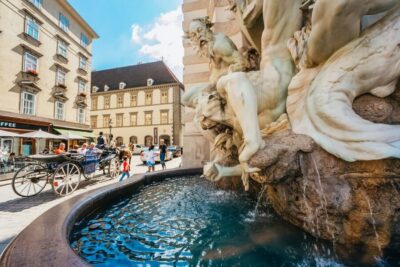
- Donnerbrunnen, mythological sculpture fountain time
- Josefplatz to the Opera and Albertina: big art, big rooms, and serious monuments
- Imperial Crypt, Habsburg final resting place
- Memorial Against War & Fascism, the shattered-column reminder
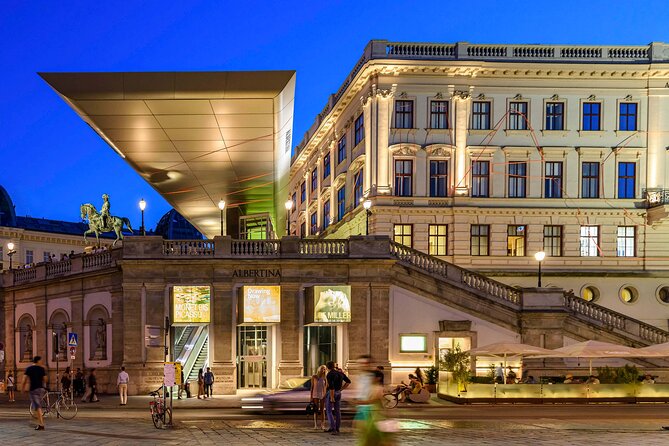
- Albertina Gallery, art spanning centuries
- Vienna State Opera, architecture first, performances second
- Mozart Monument, Burggarten Park as a breather
- Maria Theresien Square, Hofburg, and City Hall: the imperial core in human terms
- Maria Theresien Square
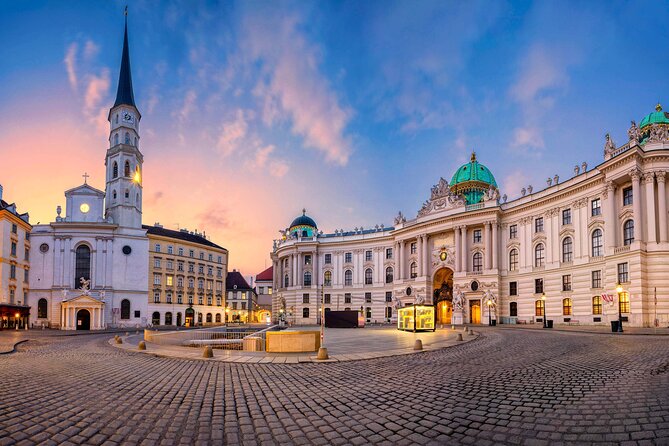
- Hofburg Palace, the place where Vienna keeps repeating itself
- Monument to Empress Elisabeth (Sisi)
- Vienna City Hall (Rathaus)
- University streets to Beethoven’s House: where Vienna’s ideas feel physical
- University of Vienna
- Beethoven’s House
- Café Central, Collalto Palace, and a couple of quirky stops that keep it fun
- Café Central
- Collalto Palace
- Vermahlungsbrunnen at Schönbrunn Palace courtyard
- Ankeruhr Clock
- Practical tips to avoid the app frustrations and enjoy the pacing
- Should you book this Vienna Walking Tour with Audioguide on Your Smartphone?
Key highlights
- 29 audio recordings by a professional historian covering the big names and a few lesser-noticed corners
- Offline route map with GPS support plus landmark illustrations to help you find each stop
- Smart, flexible pacing so you can pause for coffee or take extra time at a site
- High concentration of central highlights in a single loop, from Stephansplatz to Hofburg
- Great value at $8.40 compared with the cost of guided tours, especially for first-time orientation
How this Vienna smartphone tour really works at Stephansplatz
You start where most first-timers begin, at Stephansplatz. From there, you follow a route tied to the app, not a human guide. Your “ticket” is mobile, and you access the audio through the app for iPhone and Android, with one year access to the tour in your chosen language at checkout.
You’ll want to plan for a basic tech setup before you head out:
- download the app and activate your purchase first
- allow location/GPS so the map can show where you are
- bring your own headphones (they are not included)
- keep your phone battery healthy, because the tour is phone-led
The format is simple. Each stop triggers an audio segment as you approach the landmark, and you can pause when you want. The app includes an offline map and uses on-screen cues to help you stay on the route.
Set your own pace through the center
Price and time: what $8.40 gets you, and what to expect on your feet
At $8.40 per person, this is priced like a budget “orientation tool,” not like a full guided tour experience. The value comes from what’s included: 29 narrated audio recordings, landmark illustrations, and an offline route map you can use for navigation.
That said, your time investment will depend on how you travel.
- The listed duration is about 2 hours 30 minutes.
- In real life, plan for it to take longer if you stop inside churches, climb viewpoints, read plaques closely, or just get distracted by pastry windows.
Also plan for walking. One key thing to know is that the route loop is substantial, roughly 7 km for the circuit. If your legs are fine, this feels like a satisfying day of city walking. If your legs are not fine, you’ll need to cut stops or split the walk across two days.
Stop-by-stop: St. Stephen’s Cathedral, plague column, and the classic church trio
St. Stephen’s Cathedral, the Gothic opener
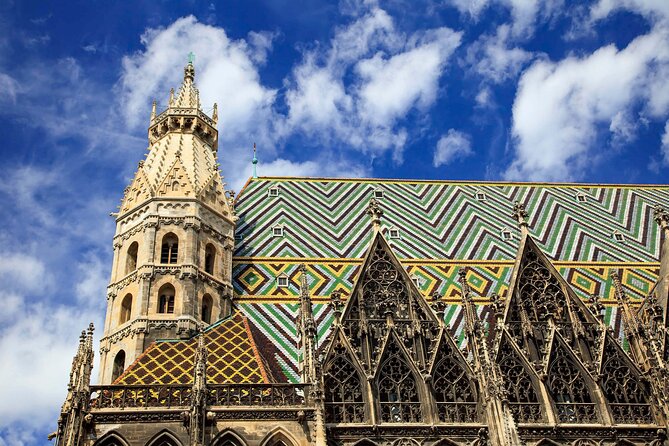
This is the headline start. The audio frames St. Stephen’s Cathedral as Vienna’s Gothic showpiece, pointing out the towering spires and the carved façade. Inside, you’re guided through the ornate High Altar, plus mention of the catacombs. The narration also highlights the idea of reaching the South Tower for views over Vienna.
Practical note: entrance fees are not included. So if you want paid areas like towers or special access, you should be ready to buy those on site.
Other ways to round out a Vienna visit
- Vienna: Guided Walking Tour of City Center Highlights★ 4.7 · 4,989 reviews
- Vienna: Vienna Central Cemetery Guided Walking Tour★ 4.8 · 3,307 reviews
- Vienna: Guided Walking Tour of City Highlights & Hidden Gems★ 4.9 · 2,180 reviews
- Vienna: Viennese Underworld Guided Walking Tour★ 4.7 · 1,865 reviews
Church of the Teutonic Order, Baroque style in a calmer pocket
Next up is the Church of the Teutonic Order. The focus here is the Baroque look and the sense of history tied to the 17th century. You’re directed to appreciate the interior details, including frescoes and decorative sculptures.
Why this stop works on an audio walk: it’s the kind of building where the story helps you slow down. Even if the exterior is not as instantly dramatic as some big-name sights, the interior payoff is usually worth it.
Colonna della Peste (Pestsäule), the plague column you can stand in front of
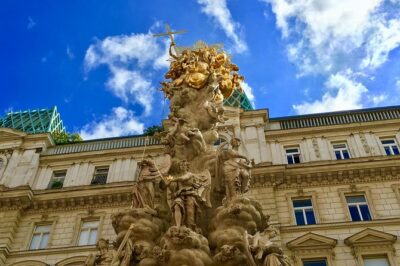
Then comes the Plague Column, also known as the Pestsäule. This is a powerful “pause and read” moment. The audio sets it up as a Baroque masterpiece created in gratitude after surviving the plague, and it explains the symbolism of the sculptures on the column.
This is one of those stops where you might spend 10 minutes, or you might spend 20, depending on how much you like weighing art and history side by side. Either way, it’s a good reset from the more church-heavy early stretch.
Peterskirche, dome views and fresco details
The final church in this first trio is Peterskirche. Expect a Baroque look, with an emphasis on the dome and the ornate interior frescoes. The audio also mentions that classical concerts sometimes happen in this kind of setting, which is helpful for planning if you want to add music to your itinerary later.
A small strategy tip: if you’re doing this tour on a day when you plan to enter multiple interiors, consider grouping your time so you don’t rush through any one church.
Café Demel to Michaelerplatz: cake breaks and imperial street-level archaeology
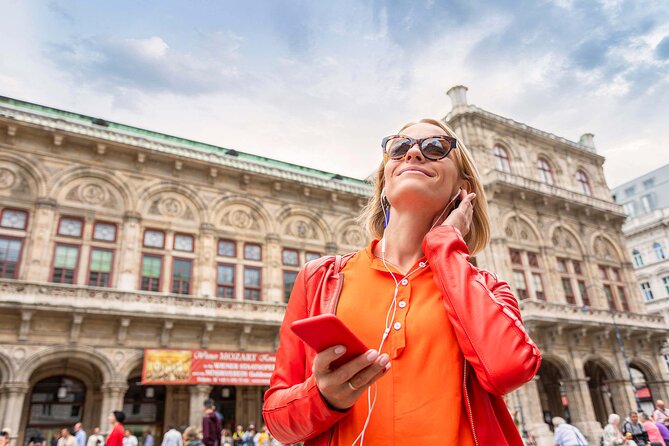
Café Demel, a timed snack stop that actually fits the route
You get a sweet break at Café Demel. It’s famous enough that the narration doesn’t need to over-sell it: this café dates to 1786, and the audio encourages you to try Vienna classics, especially Sachertorte.
This is not just a food stop. It’s a pacing tool. Taking 10 minutes here helps you avoid the “straight-line slog” feeling that can happen when an audio tour tries to pack too much into too little time.
Michaelerplatz, Hofburg views plus visible history under your feet
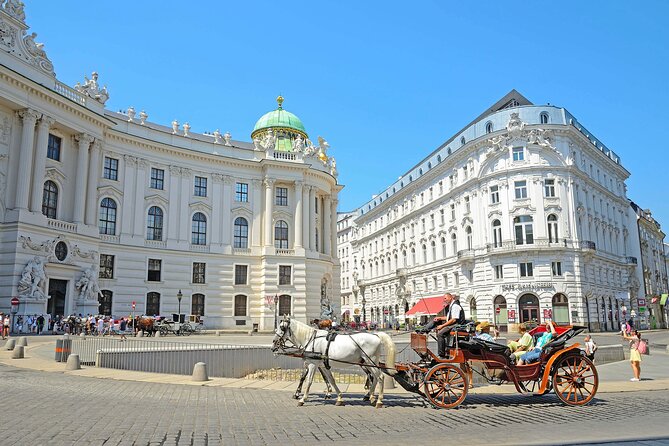
Then the route turns toward Michaelerplatz, a square with a direct line of sight to the Hofburg Palace and the Michaelerkirche. The standout detail is the Michaelerplatz Archaeological Excavations, which you can see as part of the square’s story.
On an audio tour, this kind of spot is gold because it teaches you what you’re looking at. Without the narration, you might just treat the square like a place to walk through.
Emperor Joseph II Monument, Enlightenment ideals in bronze
Next is the Emperor Joseph II Monument at Josefsplatz. The audio highlights him as a reformist ruler associated with Enlightenment ideals. It’s a quick stop, but it helps connect Vienna’s artistic identity with its political and intellectual changes.
Donnerbrunnen, mythological sculpture fountain time
Finish this segment at Donnerbrunnen in Neuer Markt. The audio points out the fountain’s sculptural scenes with mythological figures. The practical win is that it gives you a more “outdoors and breathing room” moment before you move into heavier cultural stops.
Josefplatz to the Opera and Albertina: big art, big rooms, and serious monuments
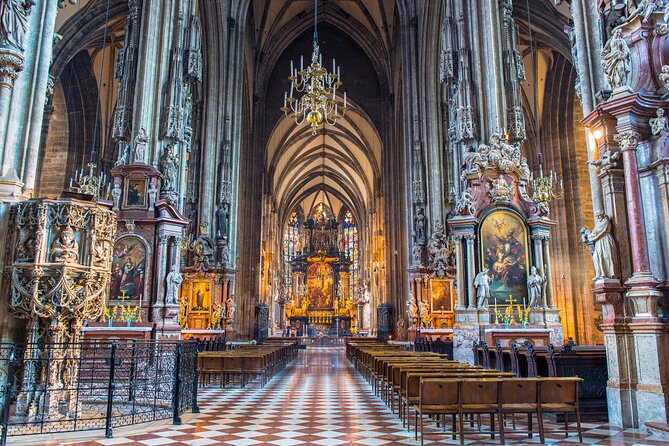
Imperial Crypt, Habsburg final resting place
At some point on your route, you’ll hit the Imperial Crypt. The audio describes it as the final resting place of emperors, empresses, and other royalty, with opulent tombs and intricate artwork.
This stop tends to feel solemn, and that’s exactly why it belongs on a walking route. It’s not just another landmark photo. It asks you to slow down and take in the tone of the place.
Memorial Against War & Fascism, the shattered-column reminder
Then comes the Memorial Against War and Fascism. The audio calls attention to the sculpture of a shattered column, meant to symbolize the destruction caused by war. If you like history that carries moral weight, this is one of the more grounding stops.
Because this is emotionally heavy compared with fountains and cafés, it’s a good one to do when you’re not rushing.
Albertina Gallery, art spanning centuries
Next, you’ll reach the Albertina Gallery. The narration frames it as an art treasure with collections from Renaissance to contemporary and mentions artists like Dürer, Monet, and Picasso.
Important practical note: gallery entrance is not included. So the best use of this tour is as a “what to see where” map, not as a guaranteed ticket to every interior.
Vienna State Opera, architecture first, performances second
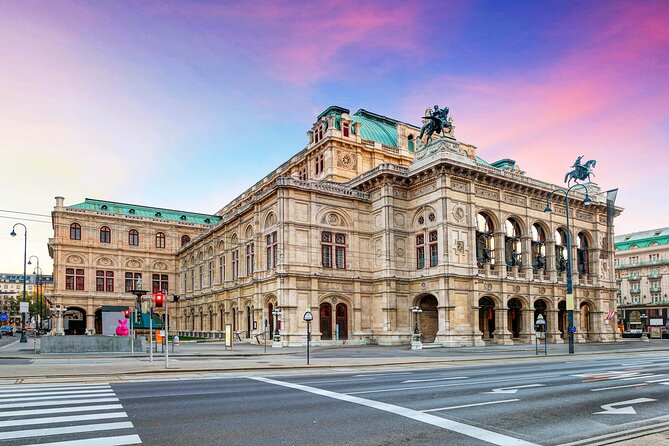
The route also brings you to the Vienna State Opera, described as a pinnacle of classical music and opera. The audio encourages you to appreciate the grand architecture and opulent interiors, and it also signals that world-class performances happen here.
If you want to actually attend a show, you’ll need to buy tickets separately. But this audio stop is still helpful for understanding why the building matters, even from the outside.
Mozart Monument, Burggarten Park as a breather
Then comes the Mozart Monument in Burggarten Park. The audio describes the bronze statue and gives you a reason to walk the nearby gardens instead of treating it like a quick photo.
This is a nice break because it’s art and music in a calmer setting. It’s also a good moment to pause and reset your energy level before the tour leans harder into imperial sights.
Maria Theresien Square, Hofburg, and City Hall: the imperial core in human terms
Maria Theresien Square
At Maria Theresien Square, the audio directs you to the statue of Empress Maria Theresa and reminds you that the plaza works well for an easy stroll or a reflective pause. This is a “big name, open space” stop, and those are useful on a self-guided route.
Hofburg Palace, the place where Vienna keeps repeating itself
You then reach Hofburg Palace, which the audio describes as the heart of imperial splendor. It specifically points you toward key areas and experiences tied to the complex, like the Sisi Museum and the Imperial Apartments. It also notes the Spanish Riding School and the National Library as part of the larger Hofburg story.
Because this area is so important, you’ll feel the temptation to rush. Don’t. Even if you only get time for a short walk through the complex’s exterior spaces and major viewpoints, the narration helps you understand what you are looking at.
Monument to Empress Elisabeth (Sisi)
After Hofburg, you visit the Monument to Empress Elisabeth in Volksgarten. The audio frames it as honoring the beloved Sisi, using the graceful statue as your visual anchor. It’s quick, but it gives the imperial narrative a more personal, human angle.
Vienna City Hall (Rathaus)
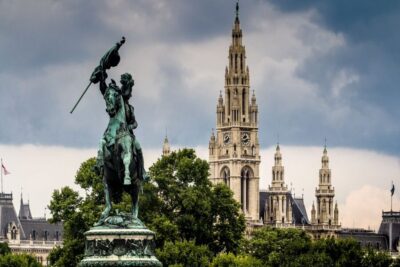
Next is Vienna City Hall, a Gothic Revival landmark with towering spires and an intricate façade. The audio points out the Rathausmann statue, and notes that cultural events or concerts can happen in the square.
This is a helpful stop because it widens the story from monarchy to civic life. It also feels like a natural transition if you’re tired of palace walls.
University streets to Beethoven’s House: where Vienna’s ideas feel physical
University of Vienna
The tour includes the University of Vienna, described as a hub of academic life since 1365. The narration guides you to notice the architecture of the main building and the University Library.
This is one of those stops where an audio guide gives you context fast. Without it, you might see a historic building and move on. With it, you start to connect Vienna’s big cultural output to education and ideas.
Beethoven’s House
Then you land at Beethoven’s House, noting that Beethoven lived here from 1804 to 1815. The audio describes the museum focus on his life and work, including original manuscripts and personal belongings.
Even if you don’t go inside, the “lived in” framing changes how you view the address. It’s a good reminder that Vienna’s musical greatness wasn’t built in a vacuum.
Café Central, Collalto Palace, and a couple of quirky stops that keep it fun
Café Central
You get another classic café moment at Café Central, established in 1876. The audio calls it a historic hotspot where intellectuals and artists once gathered, and it encourages you to try pastries and coffee while you sit and reset.
Tip: pick a seat with a view of the room, not the door. This is one of those places where your break feels like part of the sightseeing.
Collalto Palace
The route also includes Collalto Palace, framed as a Baroque structure from the 17th century. The audio nudges you to look for the elegant architectural details and interior artworks.
This stop is useful when you want a change of pace from the heavyweights. You’re still in “palace Vienna,” but the narration helps you appreciate it without needing a full interior visit.
Vermahlungsbrunnen at Schönbrunn Palace courtyard
You also get the Vermahlungsbrunnen (Marriage Fountain) in the courtyard of Schönbrunn Palace. The audio describes it as a Baroque fountain representing the union of two rivers and a romantic theme.
Practical consideration: this part of the route may require extra planning because it’s tied to Schönbrunn Palace grounds. If you are walking every segment, keep your expectations realistic and don’t feel guilty about skipping it if your day is already maxed out.
Ankeruhr Clock
Finally, there’s the Ankeruhr Clock at Hoher Markt, described as an Art Nouveau engineering marvel with whimsical figures that appear every hour. This is a fun close because it’s visual, it’s quick, and it gives you something memorable that isn’t just another statue.
Practical tips to avoid the app frustrations and enjoy the pacing
A smartphone tour is great when the basics go smoothly. To increase your odds, I’d do these:
- Use GPS on and keep permissions allowed. If the map can track your blue dot, the whole experience gets easier.
- Download and start early. Even with an offline map, you want everything ready so you are not troubleshooting on the street.
- Use the app map as your primary wayfinding tool. Some people find street signs too small for quick decision-making, but the app route line and on-screen cues help.
- Bring spare energy. Headphones and GPS both drain battery.
- Give yourself permission to skip. If you are tired, cut the last few stops and come back later. The audio format is meant for your pace, not a forced sprint.
One more honest note: if you end up hitting trouble like the app losing your exact location, restarting can happen. Don’t treat that as a disaster. Treat it as a reminder to rely on the map and landmark illustrations while you get back on track.
Should you book this Vienna Walking Tour with Audioguide on Your Smartphone?
Book it if:
- you want a low-cost, self-paced way to see Vienna’s center highlights
- you like structured storytelling, but not a big group
- you’re comfortable using a phone map and don’t mind bringing your own headphones
- you want an “overview pass” that helps you plan what to see more deeply later
Skip it or switch plans if:
- you dislike tech-based navigation or your phone battery is usually a risk
- you want step-by-step directions like a live escort, because GPS can be imperfect
- you cannot handle a walk that may be closer to 7 km than 2 hours
My take: for $8.40, this is a strong deal for orientation and for making famous landmarks easier to understand. Just go in prepared, charge your phone, and let the cafés and the quieter monuments slow you down instead of racing the route.
Latest Additions
- Wachau Valley Private Wine Tour with Tasting and Gourmet Lunch
★ 5.0 · 1 review - Vienna: Danube Valley Tour with Melk, Dürnstein with wine tasting and boat.
★ 5.0 · 1 review - Private city tour in Vienna
★ 5.0 · 1 review - Hallstatt Small Group Day Trip from Vienna
★ 3.0 · 1 review - Inside Freud’s Mind: Self-Guided Mystery Walk in Vienna
★ 4.0 · 1 review - Private Transfer from Vienna to Prague
★ 5.0 · 1 review - Vienna’s Christmas Market Magic Tour
★ 5.0 · 1 review
Walking Tours, compared.
Guided Walking Tour of City Center Highlights
Read our review →
Guided Walking Tour of City Highlights & Hidden Gems
Read our review →
Vienna Historic Center Small Group Walking Tour
Read our review →
Browse the lists this tour appears in