
Reviewed · OLD TOWN DISCOVERY TOURS
Vienna: Walking Tour of the Historic Ringstrasse
Vienna’s Ringstrasse hits you fast. In just two hours, you get the big sweep of 19th-century architecture plus the human stories behind it, from emperors to bankers, and from artists to people who worked under brutal conditions. I especially like how the walk uses the buildings as clues, not just scenery, and I also like the way the guide connects details you might miss to the bigger picture.
One heads-up: if you want a very deep, technical architecture lesson, the tour may feel more story-driven than lecture-heavy.
You’ll start near Liebenberg-Denkmal at Mölker Bastei and end by the Opera House, so you can stitch this walk into the rest of your day without wasting time. The tour runs as a private group, and the guide communicates in Polish, German, or English. It is also wheelchair accessible, which matters because parts of the Ring area can be surprisingly uneven.
In This Review
- Key Highlights You’ll Feel On This Walk
- Why the Ringstrasse Makes Vienna Feel Like a Living Museum
- Where the Walk Starts at Liebenberg-Denkmal, Mölker Bastei
- Palais Ephrusi and the Story of Vienna’s Banking Elite
- Votive Church to University of Vienna, Public Faith and Public Learning
- City Hall, Burgtheater, and the Power of 19th-Century Display
- Parliament, Heldenplatz, and Statues You’ll Actually Notice
- Museums, Volksgarten Gardens, and the Pause You’ll Be Glad You Got
- Opera House Finish, Then Easy Moves for the Rest of Your Day
- Price and Logistics, What You’re Paying For and How to Get Value
- Who This Tour Suits Best
- Should You Book This Tour?
- FAQ
- Where is the meeting point for the tour?
- When should I arrive?
- How long is the walking tour?
- What is the price?
- Is this tour private?
- Which languages are available for the live guide?
- Is the tour wheelchair accessible?
- Do I need public transport, and what ticket should I bring?
- Is hotel pickup or drop-off included?
- Where does the tour end?
- Is there free cancellation and can I pay later?
Key Highlights You’ll Feel On This Walk
- A 2-hour circuit packed with the Ringstrasse’s top landmarks, without turning it into a slog
- Short garden stops where you can slow down and actually take in the statues and flower arrangements
- Palaces with personal fates, including the story behind Palais Ephrusi and the family linked to The Hare with the Amber Eyes
- Better site-spotting, because the guide points out what to look for beyond the obvious façade
- One guide, big range of questions, with time for you to ask about the people and power behind the buildings
Why the Ringstrasse Makes Vienna Feel Like a Living Museum

The Ringstrasse is Vienna’s grand rewrite of the city. About 150 years ago, Emperor Francis Josef commissioned the demolition of the city walls, with a plan to create a single, recognizable ensemble of public buildings. Instead of one-off monuments, you get a coordinated statement: culture, civic life, education, and government all lined up along a wide boulevard.
What I love is how quickly you can “read” the city once someone gives you the right starting idea. You’re not just looking at pretty façades. You’re seeing a 19th-century plan for status and public identity. The same avenue that shows ornate palaces also hints at the cost: industrialists and bankers buying prestige, and poor workers arriving for work and facing incredible hardship.
If you’re the kind of traveler who likes meaning behind the photos, this tour plays to that. The guide weaves stories into what you see, so the architecture feels like it has a pulse.
Get your bearings in the old town

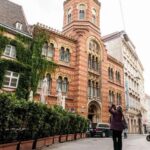
Where the Walk Starts at Liebenberg-Denkmal, Mölker Bastei
You meet at Liebenberg-Denkmal, Mölker Bastei 8, 1010 Wien. Plan to arrive about 10 minutes early so you are not rushed and can start listening right away. This matters because the first stretch sets the tone: you begin with the Ring’s “system” thinking, how Vienna planned a showcase and then filled it with ambition.
Since the tour is private, you get a more personal pacing than a big mass group. That means the guide can adjust for your questions, your speed, and how often you stop to look up. It is also wheelchair accessible, but still bring the basics you would for any city walk, sturdy shoes for stone and curb edges, plus a rain layer if the forecast looks questionable.
And do not forget the one practical item that makes the tour smoother: you’ll want a public transport ticket. The tram ticket itself is not included, so have your ticket ready if you hop on transit.
Palais Ephrusi and the Story of Vienna’s Banking Elite

One of the best reasons to do this walk is Palais Ephrusi. You will see the most representative part of the Ring tied to the rich Jewish banker family behind it. This stop is not just about admiring scale. It is about recognizing how wealth built identity in 19th-century Vienna.
The tour connects the family story to The Hare with the Amber Eyes. Even if you know the book already, hearing the context beside the building makes it easier to understand why people were drawn to the Ringstrasse project. The palaces were a kind of public announcement: titles, influence, and a level of decoration meant to signal that the owner had arrived.
I like this stop because it balances the admiration with the reality check. Vienna’s Ring pulled in the powerful, but it also depended on people who did not have power at all. While you are near a showpiece palace, you also get the lesson that the city’s transformation came with inequality built into the system.
If you enjoy story-based sightseeing, this is the moment where the tour really earns its keep.
Votive Church to University of Vienna, Public Faith and Public Learning
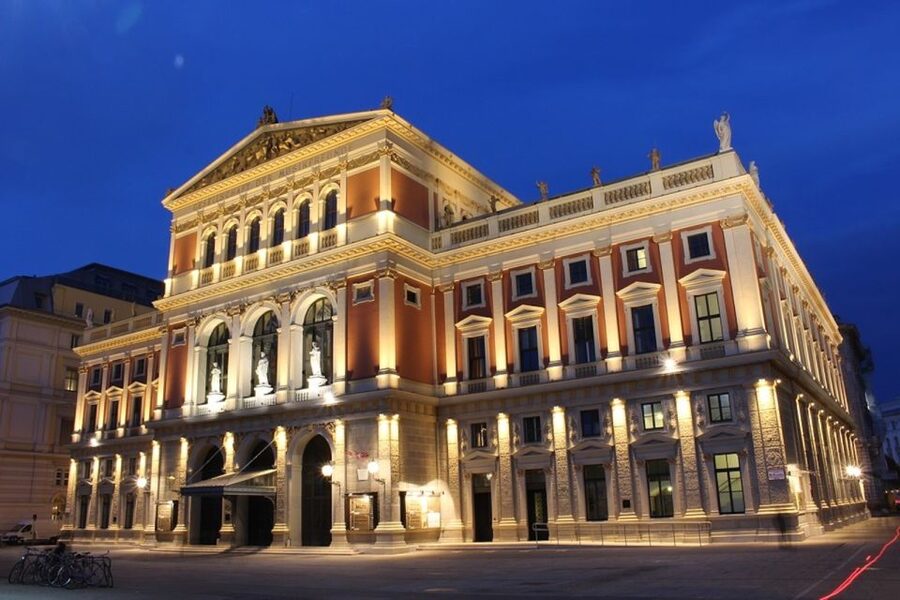
From palaces and power, the walk shifts into public institutions. You will encounter the Votive Church, a major stop on the Ring route, and then the main building of the University of Vienna.
These are not random landmarks. They represent the same big idea from the Ringstrasse plan: cultural things and public life under one coordinated vision. The Votive Church adds the sense of faith and civic meaning, while the university shows education treated as part of the city’s identity, not something hidden away.
What makes these stops worth your time is how the guide frames them. You learn to look for the visual language of each building, the heavy decoration and the combined styles that made the Ring feel overwhelming in the best way. It is a lot to take in solo, especially if you are moving quickly. On this walk, you slow down at the right moments and get background that helps everything click.
A possible drawback to consider: if you are hoping for a lot of free time for photos at every stop, the pace is still a walking tour. You will see a lot, but not everything can be lingered over equally.
Other ways to round out a Vienna visit
- Vienna: Time Travel and Magic Vienna History Tour★ 4.6 · 3,879 reviews
- Vienna: World War II Historical Walking Tour★ 4.8 · 1,772 reviews
- Time Travel-Magic Vienna History Tour Ticket★ 4.5 · 1,099 reviews
- Skip-the-Line Schonbrunn Palace Guided Tour and Vienna Historical City Tour★ 3.5 · 940 reviews
City Hall, Burgtheater, and the Power of 19th-Century Display
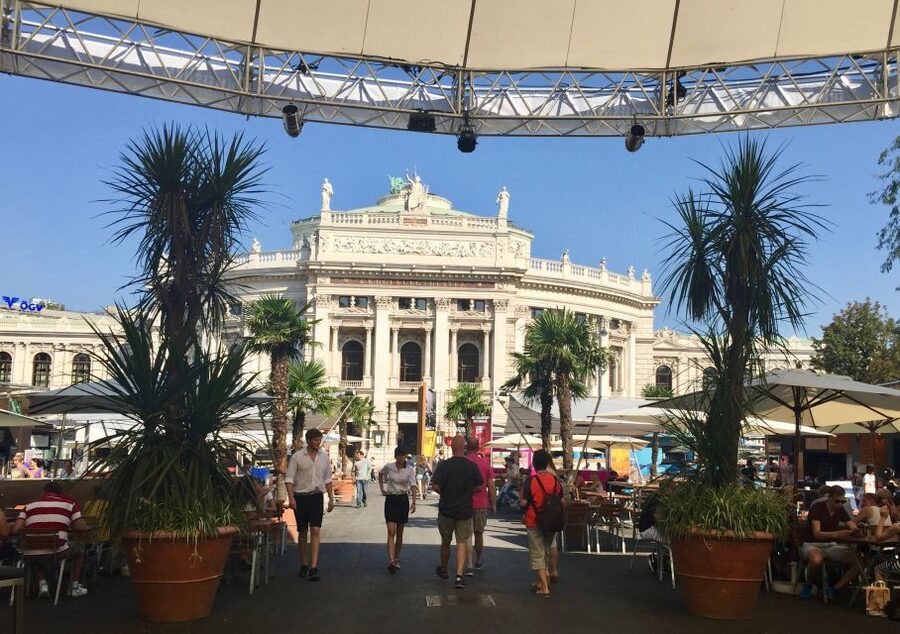
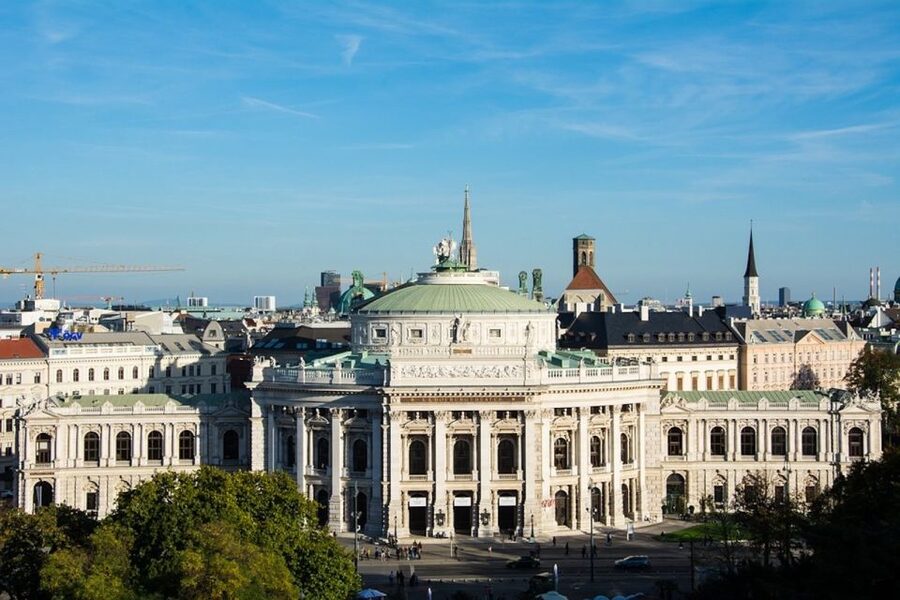
Next come civic and cultural showpieces: City Hall and the Burgtheater, plus other major landmarks in the same grand zone of the Ring. This is where the architecture starts to feel like theater itself. The façades are ornate, the materials and details ask you to look closer, and the scale keeps reminding you this was meant to impress.
I like how the tour treats these buildings as parts of one storyline. The Ring was designed as a modern stage, with wide boulevard space, tree-lined promenades, and special paths for carriages, riders, and pedestrians. That planning detail matters because it explains why the streets feel ceremonial. This was not just a wall replacement project. It was a new choreography for how people moved and how the city displayed itself.
As you pass monuments, you get background about the architects, artists, and planners who were attracted to Vienna for the project. The idea that people from across Europe came to work on the Ring makes the whole scene feel bigger than local tourism. You are walking a crossroads of ambition.
If you like cultural stops more than palaces, this section often lands best. You get both the spectacle and the context.
Parliament, Heldenplatz, and Statues You’ll Actually Notice
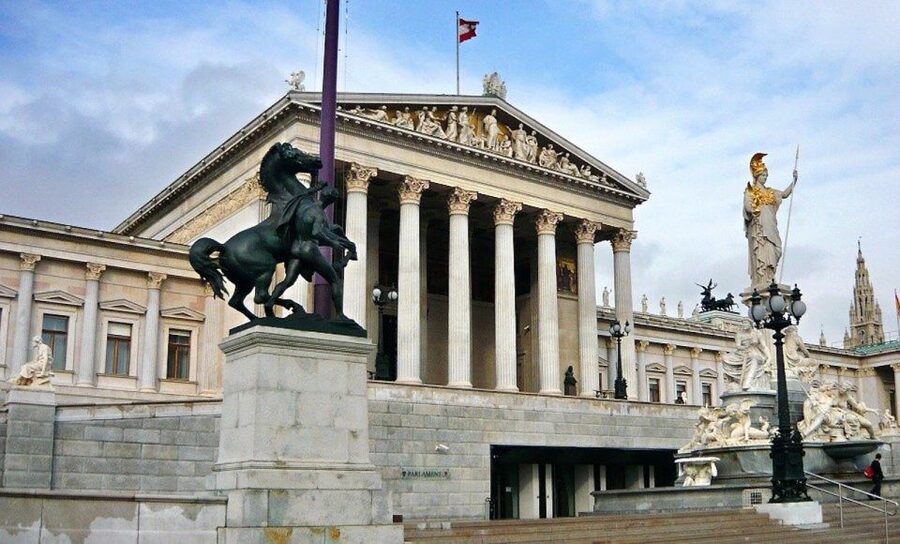
The tour includes the Parliament and Heldenplatz, two parts of the Ring that reward your attention if you know what to look for. This is also where you’ll encounter statues, including Pallas Athene and a statue connected to the mayor Liebenberg.
Here is the practical value: on your own, statues can blend together. On this walk, the guide gives you story anchors so you can translate the artwork into meaning. You will understand why the figures were placed where they were and what they were meant to represent in that era of public display.
Heldenplatz, in particular, becomes easier to appreciate once you connect it to Vienna’s civic identity. The Ringstrasse plan brought government, culture, and public art into one broad visual language, and these statues are the punctuation marks.
I also appreciate that the tour does not treat art like decoration only. It treats it like messaging. That is why the monuments feel more alive by the end of the walk.
Museums, Volksgarten Gardens, and the Pause You’ll Be Glad You Got
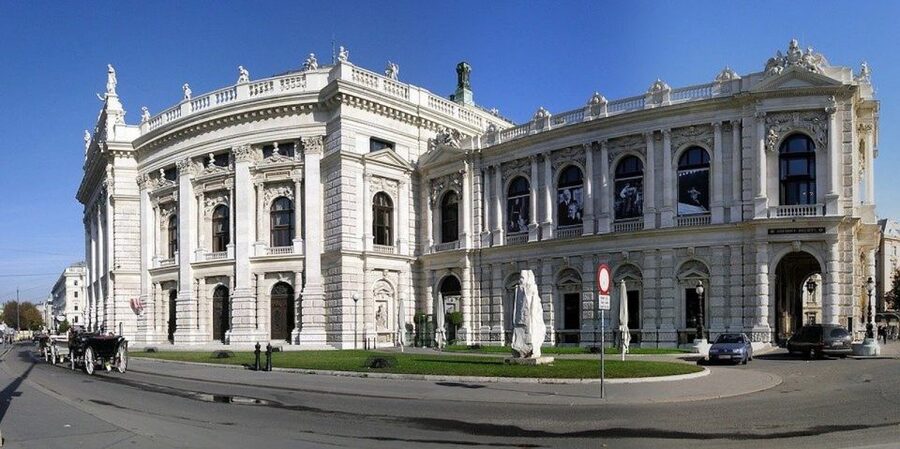
No Ring walk should be nonstop. This tour builds in space to breathe, including stops in spacious gardens with flower arrangements and statues. You will also see museums and Volksgarten along the way.
This matters because the Ring can feel like sensory overload, especially if it is your first day in Vienna and you are already packing in sights. Garden breaks reset your eyes and give you time to process what you just saw. You also get a chance to notice the smaller sculptural details that often get missed when you rush straight from one façade to the next.
The garden stops also give you a way to handle weather. In one instance from a past participant, the tour still felt entertaining despite rain. That tells me the guide likely knows how to keep momentum even when conditions are less than ideal. Still, you should bring a rain layer or umbrella if you travel in wetter months.
Opera House Finish, Then Easy Moves for the Rest of Your Day
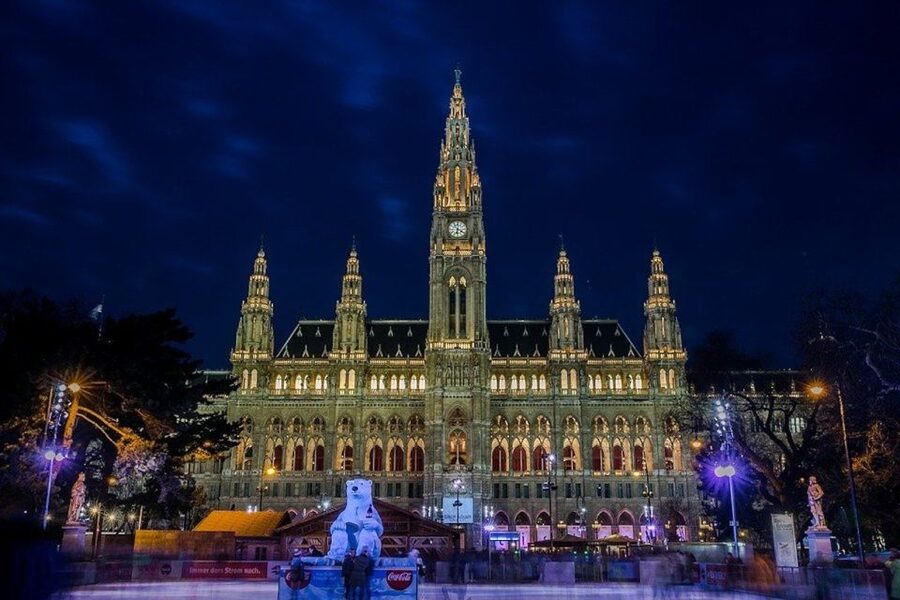
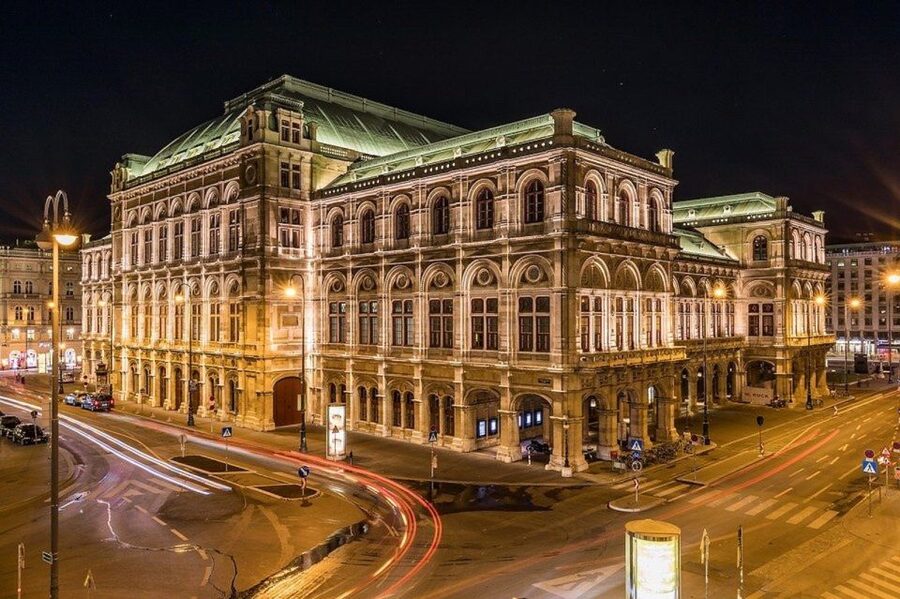
Your tour ends next to the Opera House. That is a smart finish because it places you in one of Vienna’s most flexible zones for continuing on your own.
From there, you can either stay in the area for more architecture walking, move toward nearby museums, or pivot to an evening plan around the Ring. Ending at the Opera House is also a psychological win. You start with broad city planning and end with a cultural icon that represents the Ring’s ambition most clearly.
If you have the energy, use the last minutes to look back down the boulevard. When you do that, the Ringstrasse stops feeling like a list of stops and starts feeling like the coherent idea it was built to be.
Price and Logistics, What You’re Paying For and How to Get Value

The price is $353 per group, up to 8 people, and the tour runs about 2 hours. For a private group, that is the key value story: you are not paying for a crowd, you are paying for attention and pacing. With up to 8 people, you generally get more back-and-forth than on larger public tours.
Is it “cheap”? No, not in the sense of a budget walking tour. But it can be good value if you care about learning who made these buildings, why they were built, and how wealth and work shaped Vienna. This is the kind of tour where a good guide can turn a façade into a story, and you are paying for that time.
One practical item: hotel pickup and drop-off are not included, so build your route to the meeting point. Also, tram ticket is not included, so keep your public transport ticket ready.
Time-wise, 2 hours is enough to see many major highlights without destroying your day. It is also short enough that you can tack on an indoor stop afterward if the weather turns.
And one more balanced note from experience: one earlier participant felt the tour content was thin. That tells me the tour probably prioritizes highlights and narrative rather than deep architectural analysis. If you want every detail of style, materials, and dates, you might pair this with a museum visit or a second, more specialized tour.
Who This Tour Suits Best
This is best for you if you:
- Like your sightseeing with stories, especially people behind buildings
- Want a first-day overview of the Ringstrasse that helps you orient quickly
- Enjoy contrasting power and hardship, the glitter and the cost
- Prefer a private group pace with time to ask questions
- Travel with someone in a wheelchair or want a wheelchair-accessible option
It is less ideal if you want only technical architecture details or you need a long, slow photo session at every stop. Think of it as a guided “Ring storyline” in walking form.
Should You Book This Tour?
If you want a smart, efficient way to understand Vienna’s Ringstrasse, I would book it. You are getting the big monuments, garden pauses, and the most memorable palace moment with Palais Ephrusi, plus context about the demolition project, the public building mission, and the people pulled into it from all over Europe.
My deciding factor is the mix of sights and meaning. When a guide can point out what you would miss and share stories about owners, artists, and planners, your photos end up better and your mental map becomes clearer.
So, book it if you are aiming for orientation and story, not a purely academic architecture seminar. If that is your goal, this two-hour walk gives you a lot for your money and sets you up to enjoy the rest of Vienna with your eyes fully turned on.
FAQ
Where is the meeting point for the tour?
You meet at Liebenberg-Denkmal, Mölker Bastei 8, 1010 Wien.
When should I arrive?
Please arrive 10 minutes before the activity starts.
How long is the walking tour?
The tour lasts 2 hours.
What is the price?
It is $353 per group, for up to 8 people.
Is this tour private?
Yes, it is a private group.
Which languages are available for the live guide?
The live guide offers Polish, German, and English.
Is the tour wheelchair accessible?
Yes, it is wheelchair accessible.
Do I need public transport, and what ticket should I bring?
You should bring a public transport ticket. A tram ticket is not included.
Is hotel pickup or drop-off included?
No, hotel pickup and drop-off are not included.
Where does the tour end?
The tour ends next to the Opera House.
Is there free cancellation and can I pay later?
Free cancellation is available up to 24 hours in advance for a full refund, and you can reserve now and pay later.
More Walking Tours in Vienna
- Vienna: Guided Walking Tour of City Center Highlights
★ 4.7 · 4,989 reviews - Vienna: Vienna Central Cemetery Guided Walking Tour
★ 4.8 · 3,307 reviews - Vienna: Guided Walking Tour of City Highlights & Hidden Gems
★ 4.9 · 2,180 reviews - Vienna: Viennese Underworld Guided Walking Tour
★ 4.7 · 1,865 reviews - Vienna: Private Walking Tour with a Local
★ 4.6 · 1,446 reviews
Latest Additions
- Wachau Valley Private Wine Tour with Tasting and Gourmet Lunch
★ 5.0 · 1 review - Vienna: Danube Valley Tour with Melk, Dürnstein with wine tasting and boat.
★ 5.0 · 1 review - Private city tour in Vienna
★ 5.0 · 1 review - Hallstatt Small Group Day Trip from Vienna
★ 3.0 · 1 review - Inside Freud’s Mind: Self-Guided Mystery Walk in Vienna
★ 4.0 · 1 review - Private Transfer from Vienna to Prague
★ 5.0 · 1 review - Vienna’s Christmas Market Magic Tour
★ 5.0 · 1 review
Old Town Discovery Tours, compared.
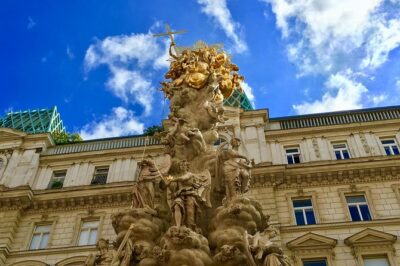
Vienna Historic Center Small Group Walking Tour
Read our review →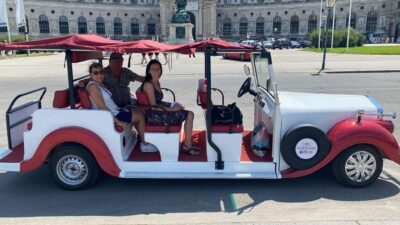
Old Town Sightseeing Tour in a Vintage-Style E-Car
Read our review →
Exclusive Vienna Old Town Highlights Walking Tour (max. 6 persons)
Read our review →

Browse the lists this tour appears in