
Reviewed · WALKING TOURS
Vienna: Vienna under the Nazis, Private Walking Tour
Vienna under Nazi rule tells a different story. This private walk skips the usual imperial postcard stops and points you to the places where the regime’s impact is still visible, from Heldenplatz to the Albertina. I like the no-soft-focus approach to Nazi-era realities and the way the guide can tailor the route to your interests. One drawback to keep in mind, based on past bookings, is that there have been reports of a guide not showing up, so you should confirm details close to your start time.
What makes this tour genuinely useful is that it’s built around questions you may be carrying already: who supported the Nazis, who didn’t, and what daily life felt like in a city that went from annexation triumph to mass destruction. You’ll hear the story in English from the live guide, David Sterrer, and you get a context-driven walk rather than a lecture. Since the subject is heavy, it is not a light stroll through scenery, and you’ll want to be mentally ready for Holocaust and persecution themes.
In This Review
- Key things I found most compelling
- Why this Nazi-era Vienna walk is not your typical sightseeing loop
- The timeline you need before you step into the streets
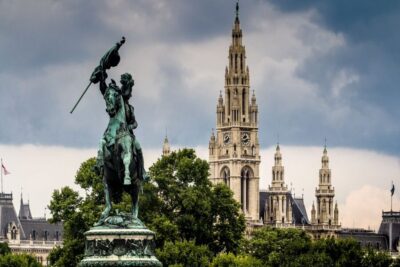
- Meeting at the Archduke Charles monument, then getting oriented fast
- Heldenplatz and the Hofburg balcony tied to the annexation speech
- Kohlmarkt stops where aryanization hit local doorways
- Am Hof: a memorial for executed firefighters who resisted terror
- Judenplatz Holocaust memorial, and the city remembering victims
- Near the Danube Canal: the Hotel Metropole destruction and Gestapo HQ remains
- Hoher Markt and the visible damages from World War II
- St. Stephen’s Cathedral area: reminders of war and the Nazi regime
- A building linked to organizing the old town
- Albertina finish: the main monument against war and fascism
- Price and value for a private 150-minute walk up to 15 people
- Who this tour suits best, and who might want a different day
- The one logistical caution I’d take seriously
- Should you book Vienna Under the Nazis, Private Walking Tour?
- FAQ
- Where do we meet for the tour?
- How long is the Vienna under the Nazis private walking tour?
- What is the price, and how big is the group?
- Is the tour private and guided in English?
- Can I cancel for a full refund?
- Is there an option to reserve and pay later?
Key things I found most compelling
- Heldenplatz and the balcony: where Hitler’s annexation speech was delivered, framed in the city’s wartime arc
- Concrete reminders: memorials and surviving traces placed in today’s streets, squares, and facades
- Judenplatz Holocaust memorial focus: a clear stop for the people targeted by Nazi policy
- Aryanization stories at Kohlmarkt: business theft tied to specific locations in the center
- Gestapo HQ site near the Danube Canal: the Hotel Metropole destruction links directly to later terror
- Private format with input: you can steer the emphasis toward what you want to learn
Why this Nazi-era Vienna walk is not your typical sightseeing loop
If you’ve been to Vienna before, you know the city can feel wrapped in gold. This tour breaks that spell on purpose. Instead of saving you for after lunch with a few nice views, it takes you into the parts of the center where Nazi power showed itself, and where memory is marked in stone and street space.
Two choices make it stand out for me. First, you get visible reminders rather than abstract history. Second, it’s described as insight, not a moral sermon. That matters, because when you walk the city with context, you spend more time thinking and less time being told what to feel.
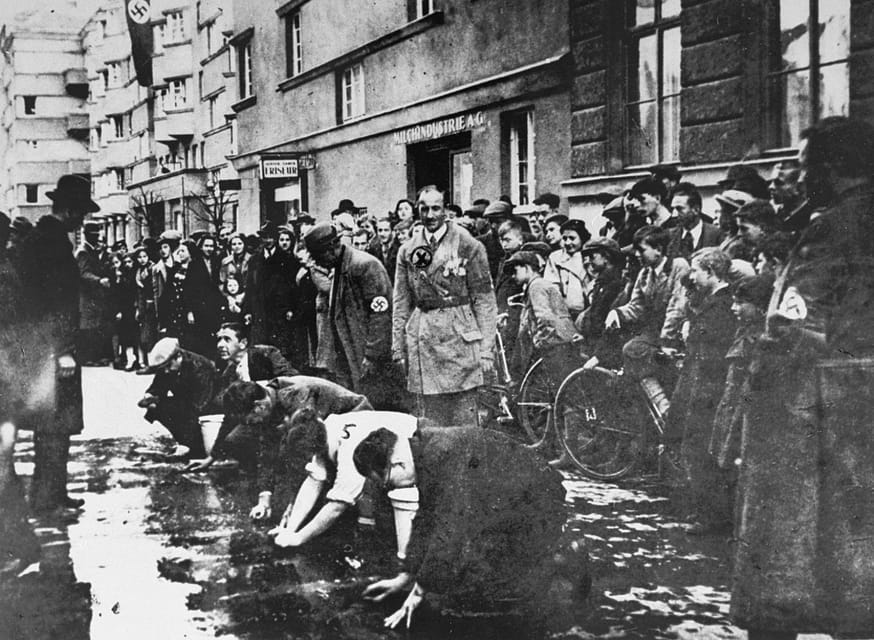
The trade-off is obvious. The tour is about persecution and wartime violence, including the murder of around 70,000 people in Vienna’s Jewish community. You should expect a sobering pace, and you may not want this right after a big day of museums.
Have a guide keep the pace

The timeline you need before you step into the streets
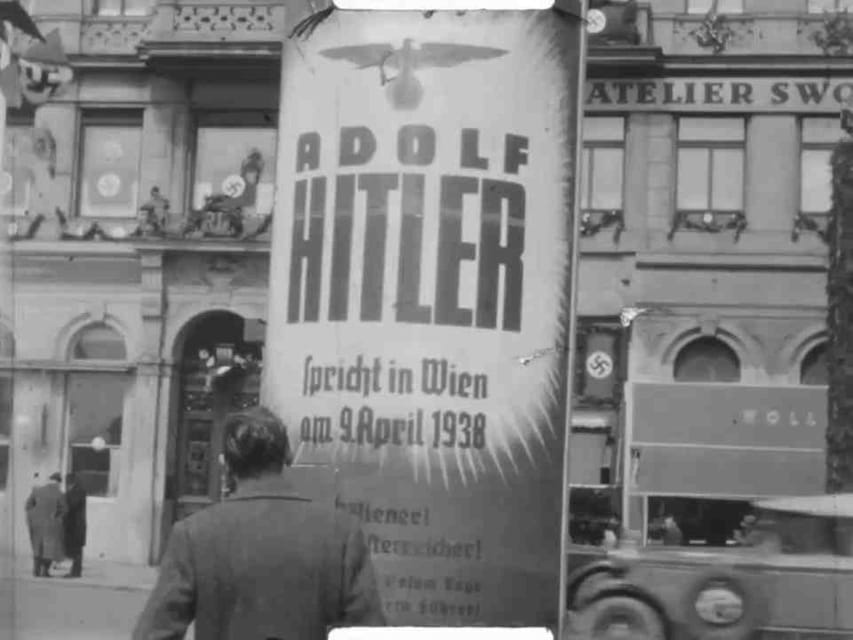
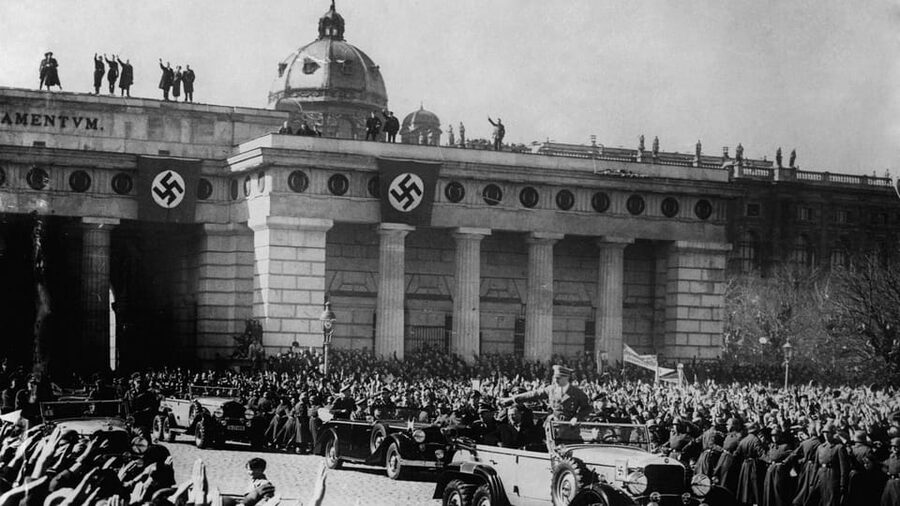
Vienna was part of Hitler’s German Empire from March 1938 until April 1945. The guide is ready to explain the contrast you’re walking through: how the regime sold the annexation as a kind of triumph, then collapsed into devastation by the end.
A key framing point is that Hitler called Vienna the Pearl of the Reich. The tour uses that line for a reason. You’re not just hearing propaganda. You’re watching how that idea was bolted onto real places, then followed by real destruction, including the fact that a third of the city was destroyed and many thousands died.
When you understand that arc, the memorial stops feel less like separate monuments and more like a continuous story. You start to notice how the city absorbed occupation and terror, and how it has chosen to mark that history afterward. If you enjoy asking hard questions, this is built for you.
Meeting at the Archduke Charles monument, then getting oriented fast
You meet at the archduke Charles monument, the rider holding a flag. It’s a clear landmark, and it helps you start with your bearings rather than wandering for the guide.
The timing is also right for attention. It runs 150 minutes, about two and a half hours, which means you can cover several central squares without turning it into a sprint. Because it’s a private group, the guide can keep the pace comfortable and respond if your focus shifts.
One practical note. This is a walking tour through central Vienna, so you’ll want decent shoes and a willingness to pause for context. The stops include squares and memorials, not just points you glance at from the street.
Heldenplatz and the Hofburg balcony tied to the annexation speech
The walk starts at Heldenplatz, and the first moment is about the announcement itself. You’ll see the sight connected to Hitler’s speech announcing the annexation of Austria to Nazi-Germany, delivered from a historic balcony tied to the imperial Hofburg setting.
This stop works because it forces you to hold two images in your mind at once. The Hofburg area is associated with imperial authority. The balcony story is about how that kind of center stage was repurposed for Nazi power.
The guide’s job here is not to turn it into a dramatic reenactment. It’s to place the speech in the bigger timeline of occupation and then destruction. If you’re the type who likes cause and effect, you’ll appreciate that the tour keeps returning to how decisions made in the center shaped lives across the city.
Other ways to round out a Vienna visit
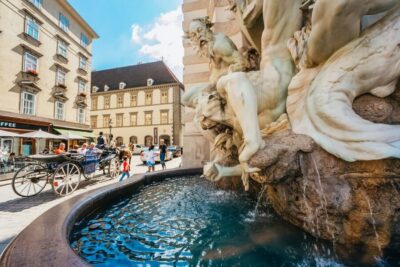
- Vienna: Guided Walking Tour of City Center Highlights★ 4.7 · 4,989 reviews
- Vienna: Vienna Central Cemetery Guided Walking Tour★ 4.8 · 3,307 reviews
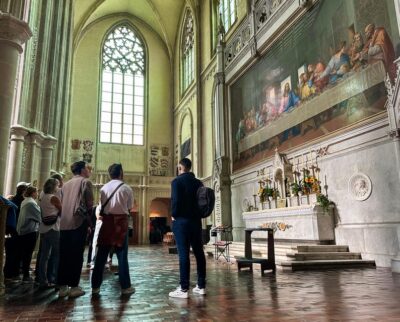
- Vienna: Guided Walking Tour of City Highlights & Hidden Gems★ 4.9 · 2,180 reviews
- Vienna: Viennese Underworld Guided Walking Tour★ 4.7 · 1,865 reviews
Kohlmarkt stops where aryanization hit local doorways
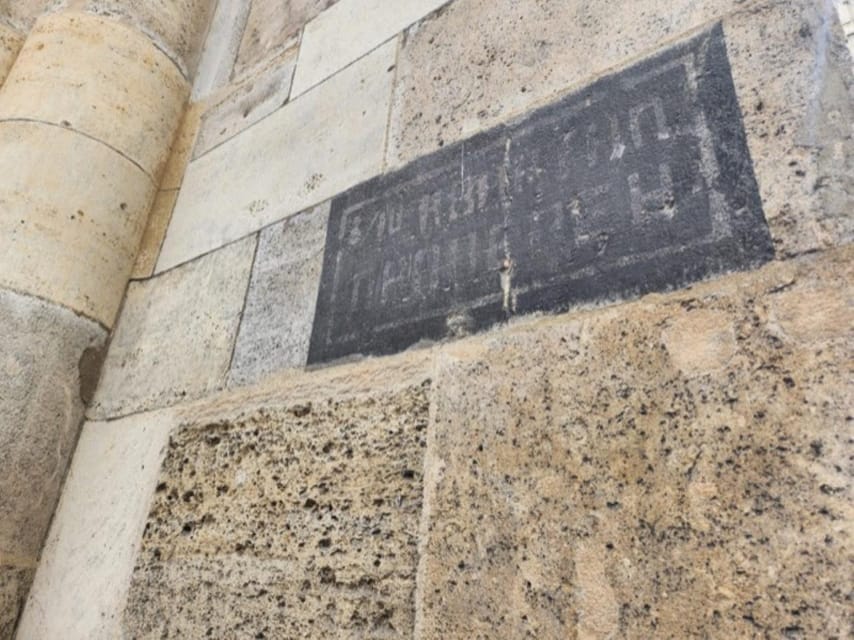
Next you move through the Hofburg area toward Kohlmarkt. Here, the focus shifts from speeches to consequences you could feel in daily life.
At Kohlmarkt you’ll see history embedded in houses, tied to the practice of aryanization. The basic idea is simple and brutal: Nazi policy enabled the stealing of Jewish businesses and property, often by stripping owners and transferring control.
Why this matters for you as you walk. It turns the abstract word policy into something more tangible, because the tour connects theft and persecution to specific locations. You’re not only hearing about victim groups. You’re seeing how the city’s commercial center became part of the mechanism.
If you want to ask questions, this is a good segment. It’s also where you can start tailoring. If your interests lean toward economic persecution, you can lean in here and ask the guide to keep that thread going.
Am Hof: a memorial for executed firefighters who resisted terror
On Am Hof, the tour includes a memorial to the firemen who were executed for resisting Nazi terror. This is one of those stops that changes your understanding of how resistance could look at ground level.
It also adds balance. Nazi rule often gets presented as total control. A memorial to people who resisted signals that not everyone complied, and some people paid with their lives.
The value of this stop is that it’s specific and human. You’re standing at a place where the city chose to remember people, not just events. That makes the subsequent stops hit harder, because you’re already thinking about choice: who acted, who refused, and what it cost.
Judenplatz Holocaust memorial, and the city remembering victims
The tour continues to Judenplatz, where you’ll see the memorial monument to the Holocaust in Vienna. The timing and placement matter. This isn’t a random stop on a route. It’s a deliberate point where the story becomes explicitly about mass murder.
The guide frames the early days of Nazi rule, including the treatment of the Jewish population. Even without drowning you in statistics beyond the Vienna total mentioned, the stop is designed to anchor the narrative in what happened to real people in this city.
For me, this is a key reason the tour is worth doing even if you’ve read some history already. It gives your brain a place to attach meaning while you’re walking. Instead of remembering dates, you start remembering the shape of places and the permanence of memorials.
Near the Danube Canal: the Hotel Metropole destruction and Gestapo HQ remains
Down by the Danube Canal, the tour points you to a square created after the Hotel Metropole was destroyed at the end of World War II. That area is infamous because it was Vienna’s Gestapo headquarters, and a monument remains.
This stop is powerful because it connects three layers. First is wartime destruction, linked to the end of the conflict. Second is the building’s function in the machinery of terror. Third is how remembrance was kept alive through a remaining monument.
When you walk here, you’re seeing how Vienna marks the dark parts of its modern center. That is exactly what the tour promises: you’ll see what people are not always happy to show, because in plain sight the city still carries traces of occupation.
If you like to understand how fear is implemented, you’ll likely find this one especially clarifying. The tour isn’t just about perpetrators and victims. It’s also about systems, headquarters, and how terror becomes organized.
Hoher Markt and the visible damages from World War II
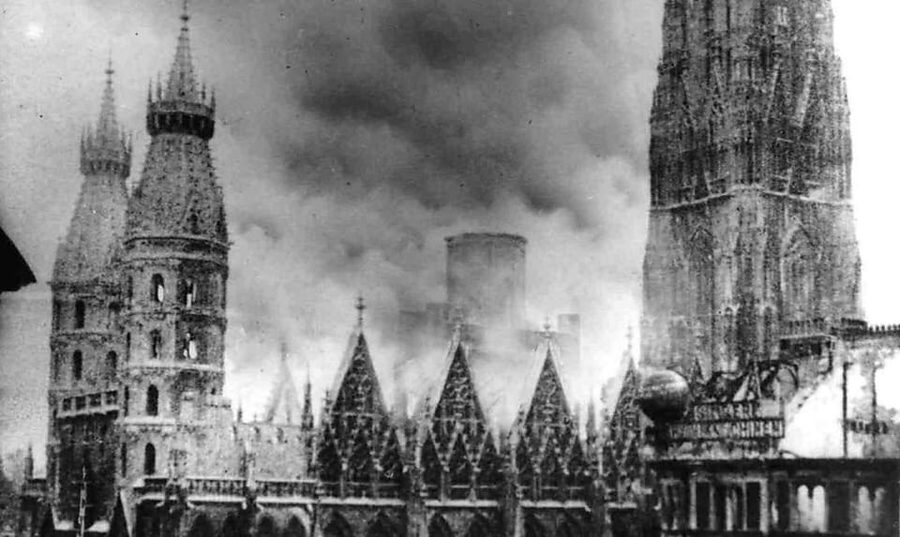
At Hoher Markt, you can still clearly see damages from World War II before heading toward St. Stephen’s Cathedral. The city’s scars are not only in museums here. The tour gives you a way to notice them while you still have the broader Nazi and wartime story fresh in your mind.
This stop makes history feel less like a chapter ending in a book. You’re seeing it in architecture and street space. And you’re being reminded that by April 1945, Vienna wasn’t just occupied. It had been hammered by war, and a third of the city was destroyed.
That context also explains why memorials and commemorations matter so much. The city had to rebuild physically, and it also had to decide how to rebuild memory.
St. Stephen’s Cathedral area: reminders of war and the Nazi regime
Near St. Stephen’s Cathedral, the tour includes more reminders of the war and the Nazi regime. The area can feel like it belongs to older Vienna, so the inclusion is intentional.
This is where you get a sense of how a city continues living around its own historical layers. The guide doesn’t treat reminders as isolated facts. They’re signals in the urban fabric.
One thing you should do for yourself here. Slow down. Don’t rush from one square to another. If you take a moment to look around, you’ll understand how easy it is for ordinary life to coexist with dark history in the same view.
If you’re the type who loves architecture, you might also ask the guide how the building and nearby spaces fit into the broader story the tour is telling.
A building linked to organizing the old town
Nearby, the tour includes a building from which the Nazis organized the old town of Vienna. This segment helps connect Nazi power to planning and coordination, not only to violence.
You’ll likely notice how the route gradually shifts from iconic speech sites toward operational and administrative spaces. That’s a useful lesson. Total control often depends on paperwork, organization, and logistics as much as it depends on uniforms.
This part also helps answer your personal question about who supported the Nazis and how the system functioned. Even if you never leave the center of Vienna, you start seeing occupation as a network.
If you want more discussion on how control played out locally, this is a good time to request more context from the guide.
Albertina finish: the main monument against war and fascism
The tour ends at the Albertina at the main monument against war and fascism in Vienna. Finishing here gives the walk a strong closing note.
Instead of ending on a grim historical detail alone, you move into a space designed to express rejection of war and fascism. That matters after a route full of occupation, persecution, and death.
It also helps you hold the entire experience together. You start with announcement and power, and you end with refusal and memory. It’s not a neat fairy tale ending, but it feels like a complete arc.
If you’re hungry for more after the walk, you’ll be in a central area where it’s easy to keep going at your own pace. Just don’t treat this like a quick stop. Give it time, and let it land.
Price and value for a private 150-minute walk up to 15 people
At $258 per group up to 15, you’re paying for a private guide session, not a per-person mass-tour ticket. That can be good value if you’re traveling with friends or family who want the same focus.
The “value” angle here is not only the route. It’s the promise that the tour is adjusted to your interests. If you already know what you want to learn, you can steer the emphasis, and the guide can spend more time where your questions are strongest.
You’re also getting a live English guide, David Sterrer, and a format described as an insight rather than a moral lecture. That approach can be more respectful and more effective, because it leaves room for your own thinking.
Still, I’ll be honest about the value risk. The overall rating is low, and there are reports of a guide not showing up or a lack of guidance. That doesn’t mean it will happen to you. It does mean you should verify the plan clearly before you set off.
Who this tour suits best, and who might want a different day
This tour fits you if you like history with direct place-based evidence. You want to see the balcony at Heldenplatz tied to the annexation speech. You want memorials at Judenplatz. You want Nazi-era infrastructure like the Gestapo HQ site by the Danube Canal.
It’s also a good match if you prefer a guide who can explain not only events but how life and work in Vienna changed under occupation. One strong review highlighted exactly that, praising David for insight beyond the usual historic points.
Where this might not fit is with travelers who want a relaxed, light day or who are not comfortable with Holocaust and persecution material. Even if you’re a history fan, you should be emotionally ready for the subject matter and the tone.
If you’re traveling with younger kids, you might decide against it. The data doesn’t specify age suitability. And with this topic, you’ll likely want to judge carefully based on your child and your own comfort.
The one logistical caution I’d take seriously
Two recent negative experiences are tied to failures in the session itself: a guide not appearing, and a booking that did not include a guide. That’s not a small thing. It changes the value from informative walk to wasted time.
My practical advice: treat this like a tour you confirm, not a tour you assume. Before you start, I’d make sure you have the correct meeting details, you know where you’ll meet at the archduke Charles monument, and you have a working way to contact the provider if anything seems off.
If you’re flexible, you can also build in a plan B nearby so you are not stuck. That’s not about fear. It’s about making sure your day in Vienna still works, even if the tour has a glitch.
Should you book Vienna Under the Nazis, Private Walking Tour?
I’d book it if you want a Vienna tour that is honest about the Nazi years and grounded in places you can stand on. The route from Heldenplatz through Kohlmarkt, Am Hof, Judenplatz, the Danube Canal area tied to the Metropole and Gestapo HQ remains, then onward to St. Stephen’s Cathedral reminders, and finishing at the Albertina monument against war and fascism gives you a structured arc.
I’d hesitate if you hate heavy topics or if you cannot risk a no-show situation. Based on the recorded low rating and reports of guide absence, you should confirm your details carefully.
If you do book, go in with the right mindset: this is not imperial glamour. It’s a walk through uncomfortable memory, with a chance to understand how systems worked in real streets.
FAQ
Where do we meet for the tour?
You meet at the archduke Charles monument, the rider with the flag in his hand.
How long is the Vienna under the Nazis private walking tour?
The tour duration is 150 minutes.
What is the price, and how big is the group?
The price is $258 per group, up to 15 people.
Is the tour private and guided in English?
Yes. It is a private tour with a live guide in English.
Can I cancel for a full refund?
Yes, you can cancel up to 24 hours in advance for a full refund.
Is there an option to reserve and pay later?
Yes, you can reserve now and pay later.
Latest Additions
- Wachau Valley Private Wine Tour with Tasting and Gourmet Lunch
★ 5.0 · 1 review - Vienna: Danube Valley Tour with Melk, Dürnstein with wine tasting and boat.
★ 5.0 · 1 review - Private city tour in Vienna
★ 5.0 · 1 review - Hallstatt Small Group Day Trip from Vienna
★ 3.0 · 1 review - Inside Freud’s Mind: Self-Guided Mystery Walk in Vienna
★ 4.0 · 1 review - Private Transfer from Vienna to Prague
★ 5.0 · 1 review - Vienna’s Christmas Market Magic Tour
★ 5.0 · 1 review
Walking Tours, compared.
Guided Walking Tour of City Center Highlights
Read our review →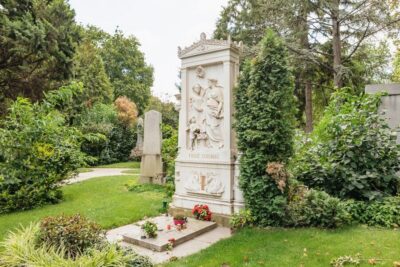
Guided Walking Tour of City Highlights & Hidden Gems
Read our review →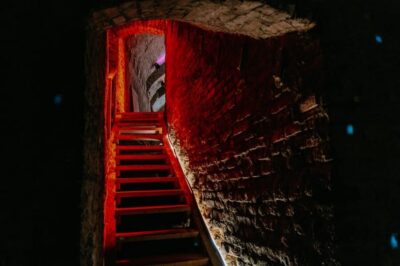
Vienna Historic Center Small Group Walking Tour
Read our review →
Browse the lists this tour appears in