
Reviewed · WALKING TOURS
Vienna: Guided Walking Tour of City Highlights in a Small Group
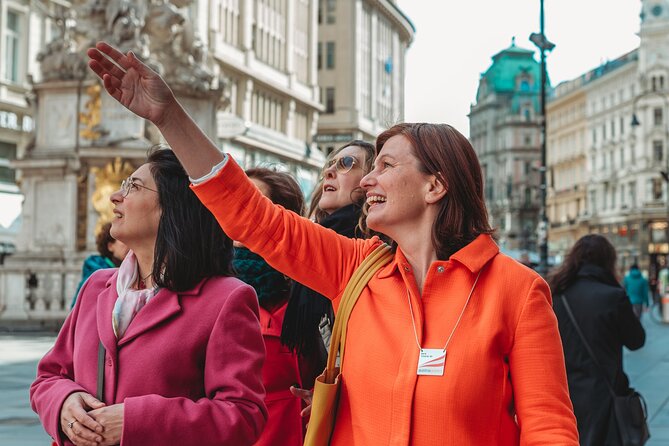
Vienna hits you fast on this walk. This small-group highlights tour is built for getting your bearings quickly, with Maria bringing the stories behind the Ringstraße, the Hofburg, and the grand cathedral finale. I especially like the practical local tips she shares, plus the photo-and-map support that keeps you oriented even when the city feels like a palace maze.
One thing to consider: this is an exterior tour. You see big interiors and famous institutions from the outside, and you should not expect museum or opera-house entry.
In This Review
- Key points I think you’ll care about
- Where the tour starts: Maria-Theresien-Platz to get your bearings
- The Habsburg arts pair: exterior views of Kunsthistorisches and Naturhistorisches
- Ringstraße crossing: seeing Vienna’s grand circle boulevard
- Burgtor and Heldenplatz: Napoleon’s impact, plus the view to the palace
- Hofburg, the Imperial Chapel, and the palace as a living complex
- Albertina’s drawings and prints: how conservation shapes what you see
- Vienna State Opera and the institutions you can recognize fast
- Spanish Riding School and St. Michael’s: classic Vienna, up close
- Graben, Kohlmarkt, and a classic church stop for music lovers
- Stephansdom finale: the cathedral heart of the city
- How long is this, really, and how to walk it comfortably
- Small group, big attention: what you gain from max 10 people
- Value check: $42.05 for two hours of Vienna hits the sweet spot
- Who this tour is best for
- Should you book this Vienna City Highlights walk?
- FAQ
- What is the duration of the Vienna City Highlights walking tour?
- Where do I meet the guide, and where does the tour end?
- Is this tour inside museums?
- What language is the tour guide?
- How big is the group?
- Does the tour run in bad weather?
Key points I think you’ll care about
- Max 10 people (very small-group feel) keeps the walk calm and the Q and A real
- Maria’s local restaurant and market tips help you eat like a Vienna regular
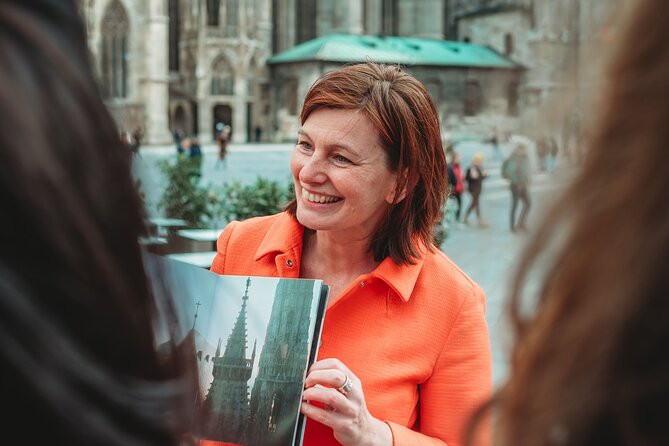
- Photo and map handouts make architecture make sense fast
- No museum entry, mostly outside views saves time, but limits what you can go inside
- Stairs and steps included so plan footwear and take it at a steady pace
- All-weather tour means pack a rain layer and bring a light umbrella if you can
Where the tour starts: Maria-Theresien-Platz to get your bearings
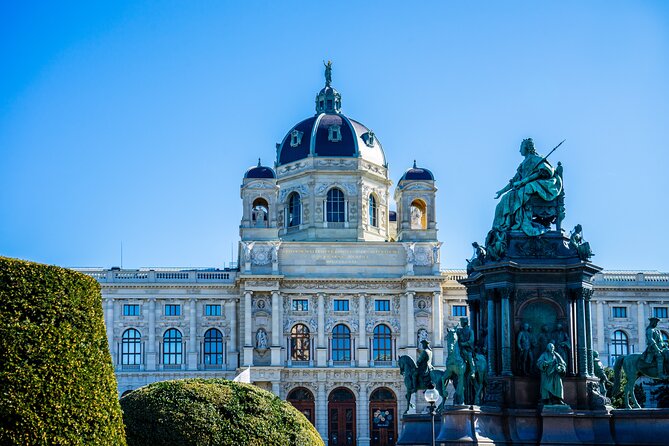
You meet at the Maria Theresia Memorial on Maria-Theresien-Platz, right in Vienna’s central grid. It is easy to find: the guide stands directly in front of the big monument and holds an orange sign. The tour also starts at 10:00 am, and the guide is punctual and easy to spot.
This first stop matters because it sets the tone for the entire walk. Maria Theresia is one of those names you hear everywhere in Austrian history, but it is hard to connect the dots if you only read plaques. Standing at the monument first gives you a starting point for understanding how Vienna thinks about power, architecture, and public space.
A practical tip before you head out: there are public restrooms about 5 minutes away from the meeting point. The tour does not include water, but there is an option to buy coffee. If you need a caffeine boost or a bathroom stop, do it right before you begin. Also, the walk includes steps, so wear shoes you can trust on uneven pavement.
Other ways to round out a Vienna visit
The Habsburg arts pair: exterior views of Kunsthistorisches and Naturhistorisches
Early in the tour, you get a quick look at Vienna’s famous museum axis through the lens of the imperial collections. You pass by the Museum of Fine Arts, which grew from the art collections of the Habsburg House, and you hear why the picture gallery is considered one of the most important in the world. You also get names that matter here: Bruegel the Elder, plus artists like Vermeer, Rembrandt, Raphael, Caravaggio, Velázquez, and Italian Baroque painters.
Then the tour shifts to the Natural History Museum. Even from the outside, it is worth it because the building itself is part of the story. The museum traces roots back to imperial collections from the 18th century, and it is framed as a kind of dedicated “kingdom of nature” for exploration.
Now the important catch: there is no museum entry. You cannot go inside these halls on this tour. The value is how the guide helps you recognize what you are looking at, so if you later decide to visit one museum in depth, you know what you are actually seeking.
If you hate lines and still want context, this works. If you want to spend real time in grand interiors on day one, you will likely need a separate ticketed museum plan.
Ringstraße crossing: seeing Vienna’s grand circle boulevard
Next comes the Ringstraße crossing. This is Vienna’s famous ring road, a broad boulevard that frames the historic center. It is one of the best places to get that big-picture feeling for the city because it wraps key landmarks into a single visual sweep.
On this stop, the tour keeps it short, but you get a usable explanation of what the Ringstraße is for and why it looks the way it does. The payoff shows up later when you connect buildings you saw from across the street to the imperial story the guide is building.
This is also where the small-group size helps. With a group capped at 10, you can actually hear. You are not doing the usual “listen from the back while a guide gets swallowed by crowds” thing. You can also ask quick questions and get answers on the spot without the whole line stopping.
Burgtor and Heldenplatz: Napoleon’s impact, plus the view to the palace
From the Ringstraße you move toward the palace area, with a stop focused on the palace gate known as the Burgtor. The story here is sharp and specific: when Napoleon’s forces arrived in 1809, they caused serious damage to Vienna’s city walls. Later, between 1821 and 1824, a new gate was built for the Hofburg, and today it is the only remaining gate from the city wall system.
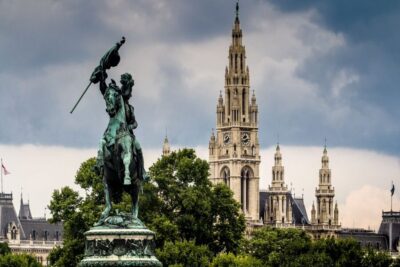
Then the walk lands at Heldenplatz, or Hero’s Place. This square is dominated by massive equestrian statues of Prince Eugen and Archduke Karl. The guide also points out the best view angle toward the Imperial Palace and the adjacent Volksgarten.
Heldenplatz is one of those places that can feel like a photo-op trap if you rush it. A guided pause helps you notice the planning behind the space, not just the objects sitting in it. You start seeing how Vienna uses open squares as political stage sets.
Admission is free for these exterior views, so you get the payoff without needing extra tickets. You do need to keep moving, though. This tour is built to cover a lot in about two hours, so expect short stop times rather than long hangouts.
Beyond the palaces, the city keeps its own rhythm of coffee, concerts, and day trips nearby.
- Vienna: Vivaldi’s Four Seasons Concert in Karlskirche★ 4.7 · 14,951 reviews
- Vienna: Schönbrunn Palace & Gardens Skip-the-Line Tour★ 4.7 · 7,739 reviews
- Vienna: Light of Creation Votive Church Immersive Light Show★ 4.8 · 6,779 reviews
- Vienna Spanish Riding School Guided Tour★ 4.7 · 6,765 reviews
Hofburg, the Imperial Chapel, and the palace as a living complex
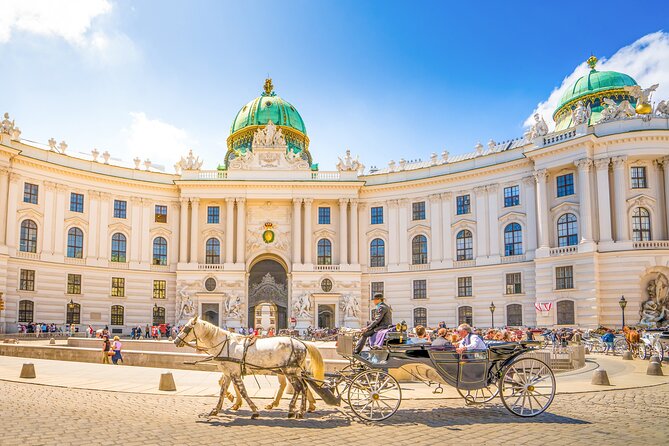
The next big chapter is the Hofburg area. The Hofburg began as a 13th-century castle and expanded into the Habsburg residence as their power grew. That matters, because you start to see the Hofburg less like one building and more like a whole complex that evolved over time.
The tour keeps the focus practical: you get a guided look at the palace exterior, then you learn about a key remnant from the medieval palace days, the Gothic Imperial Chapel. You also hear how this chapel connects to the Vienna Boys’ Choir, who perform during High Mass on Sunday.
Even outside, this is a meaningful stop because it helps you understand why Vienna’s religious and political power often share the same address. You are not just watching architecture. You are learning how different institutions intertwined.
Then the Burggarten follows. The Hofburg Palace Gardens were created in 1819 and were once called the Emperor’s Garden. The guide also points out that it sits atop older fortified foundations. So even greenery has layers here.
You get a quick stop at the Palm House in the Burggarten, which is also known as the Butterfly House area in the middle of town. It is a nice visual pause, especially if the morning has been a lot of stone and statues.
Albertina’s drawings and prints: how conservation shapes what you see
After the gardens, the tour touches on the Albertina Museum’s graphic art collection. This is one of those art facts that turns into a useful decision tool later: the collection includes over one million drawings and prints, spanning late Gothic to the present.
The guide explains why so much of it is not permanently displayed. Light sensitivity matters. Many masterpieces cannot be shown all the time, so special exhibitions are how you access major works in a conservation-safe way.
That explanation is valuable even if you are not going inside on this tour. It helps you avoid a frustrating guess-and-check approach if you later buy a ticket. Instead of thinking, I wonder if this museum has the thing I want, you start thinking, I should check what their current exhibition highlights.
Again, it is an exterior viewing stop on this walk, so you are mainly taking in context. If you want actual gallery time, plan a separate museum visit.
Vienna State Opera and the institutions you can recognize fast
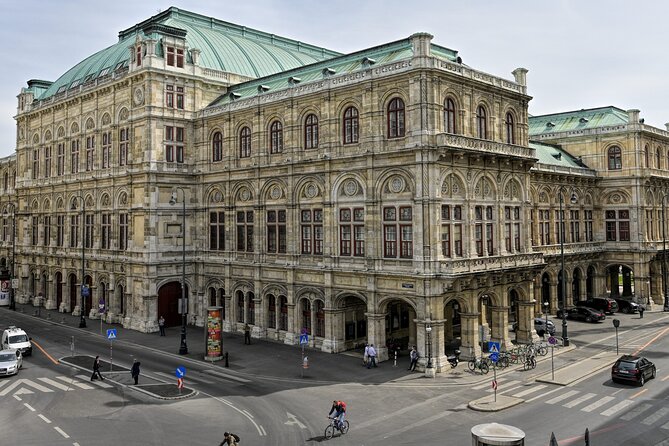
One of the best things about a guided highlights walk is learning what to look at. The tour passes by the Wiener Staatsoper, one of the most famous opera houses in the world. It is famous enough that many people recognize it on instinct, but it helps to hear where it fits in Vienna’s cultural identity.
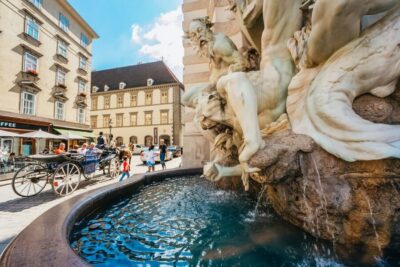
Then you shift to the Austrian National Library area, with stops for the Augustinerkirche and the baroque State Hall. The guide also points out Redoutensäle at Joseph square. These are big names, but without context they can blend together. With a guide, you start picking out the style and the role: Vienna treats learning and state power like part of the same machine.
This tour does not include entry to these buildings. You are seeing them as landmarks and learning how they connect. If you do want to go inside any of them, budget time for a follow-up ticketed stop.
Spanish Riding School and St. Michael’s: classic Vienna, up close
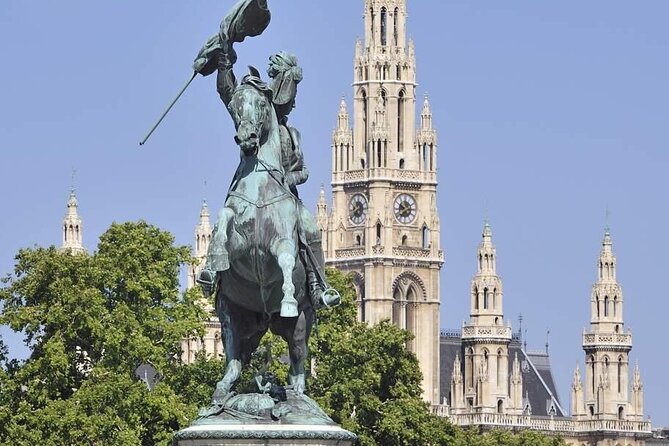
The walk continues toward the Spanish Riding School, focusing on the Stallburg, the horse stables for the elegant white Lipizzans. Even without riding school entry, the exterior view plus the framing of what happens inside helps the location feel real.
Then there is a stop at St. Michael’s Church, dating back to the year 1220. That age number helps you shift your mindset. You are not just walking through a beautiful tourist center. You are walking past religious architecture with medieval roots.
This section works well because it adds variety. You go from palace politics to equestrian tradition to church history, all within a compact area.
Graben, Kohlmarkt, and a classic church stop for music lovers
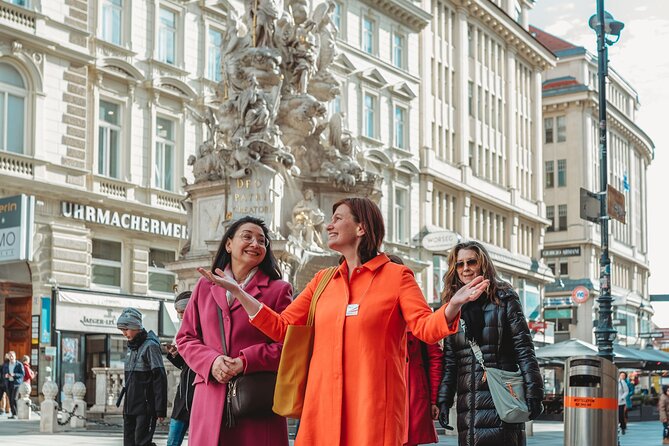
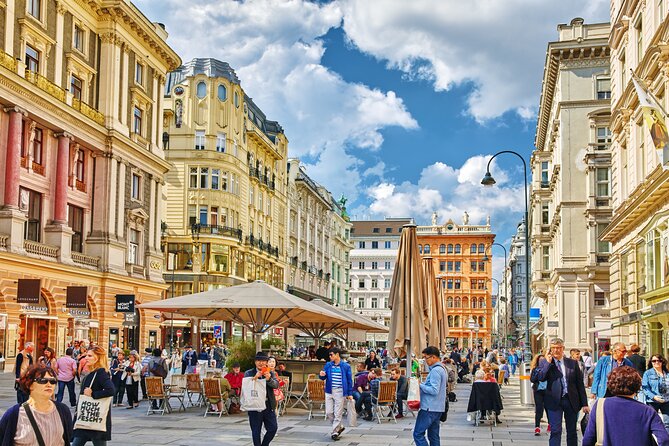
The tour reaches Graben and Kohlmarkt, two of Vienna’s most exclusive shopping miles. The streets are a stage too, not just retail. You learn how these corridors fit into the city’s center and why people still treat them as an important address.
Right near here, you also get a look at a Catholic church that is about 300 years old, famous for classical concerts. The key practical point is that you will know what to seek if you decide to attend a concert later, because the guide points out the location in context.
If you are traveling with a shopping itch, this is a good moment to notice which direction you want to return. If you are not, it is still a useful stop to understand how the historic center has turned into a daily-life corridor for both locals and visitors.
Stephansdom finale: the cathedral heart of the city
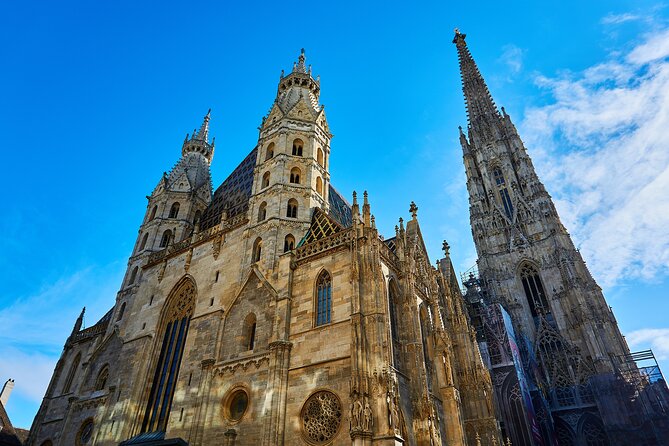
The tour ends at St. Stephen’s Cathedral, Stephansdom. This is the heart of the city center, and it is a strong closer for a highlights walk because it is easy to build your next day around it.
You also get practical help from the way the tour finishes. After this walk, you are already located at the main historic hub where you can branch out for museums, cafés, and evening plans. The walk ends right next to Stephansdom at Stephansplatz 3.
If you want one photo that feels like Vienna, this is it. But the guide’s framing helps more than the postcard view. You start understanding why people keep returning to this spot as a civic symbol.
How long is this, really, and how to walk it comfortably
The total time is about 2 hours. The guide keeps most stops around the 10-minute mark, with a couple of shorter segments. That pacing is ideal for jet lag mornings and first-time visitors because you cover a lot without losing your attention.
Still, it is not a sit-and-stare tour. There are stairs and steps, and the route is not designed for baby strollers. The tour is best with a moderate physical fitness level. If you have walking disorders, you should reconsider, because the tour focuses on movement between closely spaced sights.
Footwear matters. Vienna sidewalks are a mix of smooth areas and older uneven pavement. Bring comfortable walking shoes. If it is hot or rainy, the guide handles weather by finding better dry spots and keeping you moving.
Small group, big attention: what you gain from max 10 people
This is the part that makes the tour feel different from the usual “walk with 25 strangers” model. The group is limited to 10 people or fewer, and the max listed is up to 6 travelers. Either way, the point stays the same: you are heard.
In practice, that means quick questions actually get answered, and the guide can adjust the pace for the group. In the real world, that matters when someone needs a slow-down moment for photos or mobility. You are not stuck just following the flow.
It also helps with learning. When the guide uses pictures and maps, you can hold the map without elbowing your way through a crowd. You can actually look at what is being pointed out.
Value check: $42.05 for two hours of Vienna hits the sweet spot
At $42.05 per person for around two hours, the value comes from focus. You are paying for three things: a smart route through the center, clear explanations that connect buildings to stories, and practical local advice that goes beyond the official script.
Because the tour does not include museum entries, you are not paying for admission you might not want. Instead, you get a guided orientation of the sights, plus context that helps you decide which interiors to ticket later.
If you only want exterior sightseeing, you might wonder why pay at all. The answer is the guide’s linking of each stop to the bigger Vienna picture, plus the small-group ability to ask questions. If you like to do research, this saves time. If you hate planning, it prevents the classic mistakes like walking past major landmarks without knowing why they matter.
Who this tour is best for
This fits first-timers who want a clean overview of Vienna’s core sights without committing to museum tickets on day one. It also works well for people who enjoy architecture and public squares, and for anyone who likes history explained in plain words.
If you are a concert person, opera fan, or museum planner, you will still get value because the walk points you toward the right areas and gives you a heads-up on what to investigate further.
If you want lots of indoor time, this is not your tour. It is an exterior highlights walk, so people who want to spend hours inside major attractions should pair it with at least one separate ticketed visit.
Should you book this Vienna City Highlights walk?
Yes, if you want an efficient, small-group way to understand central Vienna. I like it as an early-day anchor because it helps you recognize what you will see later, and it drops you in the right neighborhood for the rest of your trip.
I would skip it or consider an alternate format if you strongly prefer indoor museum time, or if walking steps and sustained pavement are difficult for you. Also, if you dislike guided tours and prefer total self-guided wandering, you might feel a bit guided.
FAQ
What is the duration of the Vienna City Highlights walking tour?
The tour is listed as about 2 hours.
Where do I meet the guide, and where does the tour end?
You meet at the Maria Theresa Memorial on Maria-Theresien-Platz, 1010 Wien, and the tour ends next to St. Stephen’s Cathedral at Stephansplatz 3.
Is this tour inside museums?
No. The tour includes external visits only, and museum entries are not included.
What language is the tour guide?
The tour is offered in English.
How big is the group?
The tour is limited to 10 people or fewer, and it also lists a maximum of 6 travelers.
Does the tour run in bad weather?
Yes, it operates in all weather conditions. You should dress appropriately.
Latest Additions
- Wachau Valley Private Wine Tour with Tasting and Gourmet Lunch
★ 5.0 · 1 review - Vienna: Danube Valley Tour with Melk, Dürnstein with wine tasting and boat.
★ 5.0 · 1 review - Private city tour in Vienna
★ 5.0 · 1 review - Private Transfer from Vienna to Prague
★ 5.0 · 1 review - Hallstatt Small Group Day Trip from Vienna
★ 3.0 · 1 review - Inside Freud’s Mind: Self-Guided Mystery Walk in Vienna
★ 4.0 · 1 review - Vienna’s Christmas Market Magic Tour
★ 5.0 · 1 review
Walking Tours, compared.
Guided Walking Tour of City Center Highlights
Read our review →
Guided Walking Tour of City Highlights & Hidden Gems
Read our review →
Vienna Historic Center Small Group Walking Tour
Read our review →
Browse the lists this tour appears in