
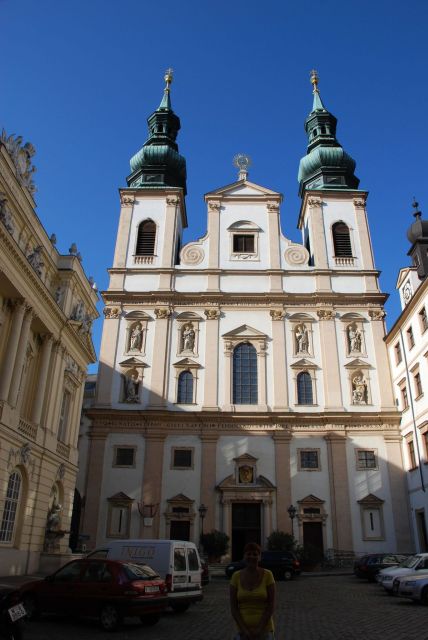
Reviewed · WALKING TOURS
Vienna: Courtyards & Hidden Places Walking Tour
Courtyards in Vienna have stories if you listen. This 2-hour walk turns the usual sightseeing loop into a tour of courtyards and side streets, where architecture comes with legends and place-based tales. I like the balance here, big-name sights plus quieter stops that you might otherwise miss, and I especially like how the guide ties Vienna culture to specific locations, including Mozart’s final residence and traditional Viennese cuisine. One possible drawback: it is not a fit if you need accessibility, because the tour is not suitable for wheelchair users or people with mobility impairments, and it also does not allow large bags.
In practice, you get a guided stroll through the historical center, with stops that include St. Stephen’s Cathedral, Stephansplatz, and the older university area. I also like the storytelling approach that shows the city in layers, with courtyards, monasteries, and university streets linked to how Vienna lived. You’ll also spend time on the smaller streets around Ballgasse and Blutgasse, plus the Franciscan Church and Monastery, so the tour feels like a real walk through old Vienna rather than a rapid photo stop.
Before you book, consider that it runs in all weather, so you’ll want gear for rain or cold. Also, the focus on narrow streets and courtyards matters if you’re traveling with anything bulky, because luggage or large bags are not allowed. Finally, it’s for adults and older teens, with a minimum age of 12.
In This Review
- Key highlights at a glance
- Why Vienna’s courtyards matter more than the main streets
- Getting oriented: meeting near Bankomat and moving through the center
- St. Stephen’s Cathedral and Stephansplatz: the main attraction with context
- Palais Neupauer-Breuner, Deutsches Haus, and the courtyard-style architecture you’ll remember
- Blutgasse and Domgasse: street names that carry Vienna’s legends
- Mozart’s final residence and the truthier story of his life
- The house called Where the cow plays on the board
- University of Vienna, the Jesuit Church, and old city walls
- Franciscan Church and Monastery: a calmer stop with a different mood
- Traditional Viennese cuisine talk: why food fits a courtyard walk
- Price, time, and group size: is $34 worth it?
- If you are connecting from Part 1, you can still join Part 2
- What to pack and what to leave behind
- Who should book this Vienna courtyards tour, and who should skip it
- Should you book Vienna: Courtyards and Hidden Places Walking Tour?
- FAQ
- How long is the Vienna Courtyards & Hidden Places Walking Tour?
- What does the tour cost?
- What languages are offered?
- What is the meeting and drop-off information?
- Is the tour offered in bad weather?
- Is it suitable for children or for wheelchair users?
- Are luggage and audio recording allowed?
Key highlights at a glance
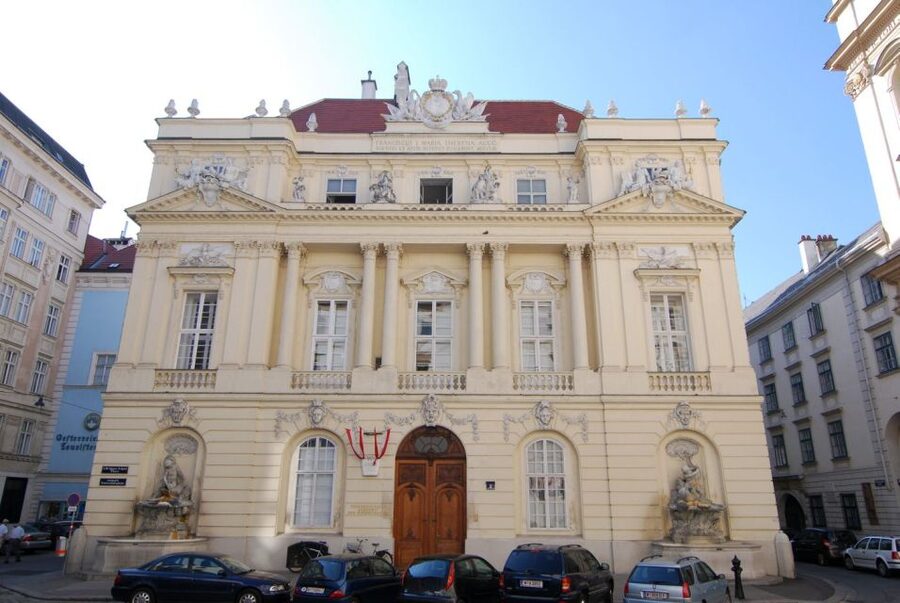
- St. Stephen’s Cathedral and Stephansplatz, with context beyond the postcard view
- Mozart’s final residence, plus the truthier story of his life
- Courtyards around Palais Neupauer-Breuner and Deutsches Haus, where details matter
- Ballgasse, Blutgasse, and Domgasse, streets known for their names and legends
- The University of Vienna area, with stops that connect to Jesuit Church and old city walls
- Franciscan Church and Monastery, adding a calmer, reflective pace near the middle
Why Vienna’s courtyards matter more than the main streets
Vienna’s historical center is famous for grand façades, but the real magic often hides a few steps sideways. That is exactly what this tour leans into: you’re walking through the parts of the city where courtyards, passageways, and enclosed spaces shape daily life.
I like that this kind of route helps you read the city. You start noticing how buildings relate to each other, how a monastery or palace creates its own little world, and why names of streets like Blutgasse or Domgasse became part of Vienna’s folklore. A normal walking tour can rattle off facts at the big monuments, but courtyards slow you down, so the stories stick.
The other plus is pacing. Two hours sounds short, yet the tour tries to cover both famous hits and smaller corridors, so you leave with a sense of what Vienna feels like at street level, not just what it looks like on postcards.
Other ways to round out a Vienna visit
Getting oriented: meeting near Bankomat and moving through the center
You meet at a starting point that can vary by the option you select, and the information you get lists Bankomat as one of the starting references. Since meeting points can change, treat this as a tour where you show up a few minutes early so you can match the exact group and guide.
From the start, the tour is set up for a small group, which matters. In small groups you can ask quick questions, and you’re more likely to actually hear the guide’s story without it getting swallowed by street noise. The tour also runs with a live guide in German or English, so you can expect real-time explanation at each stop, not just a signboard checklist.
One practical note: the tour does not include pickup or drop-off from your hotel. You’ll be walking from the meeting point and finishing at drop-off locations listed for Dr.-Karl-Lueger-Platz 3, 1010 Wien. That is a useful detail for planning your onward tram or metro ride.
St. Stephen’s Cathedral and Stephansplatz: the main attraction with context
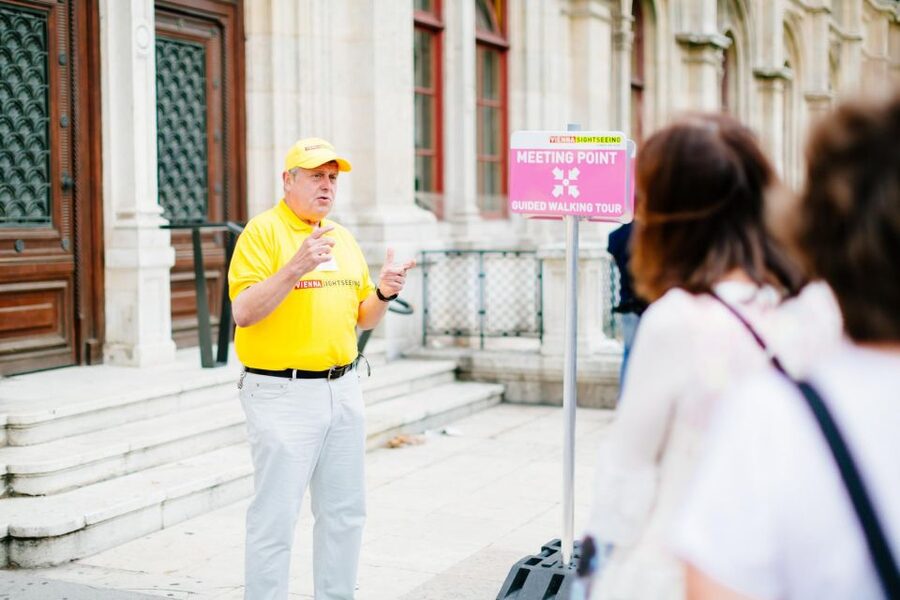
The tour includes St. Stephen’s Cathedral and guides you through the surrounding area at Stephansplatz. This is a smart move, because it gives you a fast orientation point. Even if you’ve seen cathedral photos before, being there in person helps you understand why Vienna rallies around this space.
What makes the stop work on this specific walk is that you are not treated to a single lecture and then rushed away. The tour’s structure links the cathedral to the broader historical center, including nearby streets and the feel of older Vienna. That connection turns St. Stephen’s from a standalone landmark into a part of the city’s living geography.
Also, it sets a contrast. You start with a major highlight, then you move to less obvious places that feel quieter and more intimate, like courtyards and side streets. That contrast is what makes the walk satisfying, instead of just another “see the big thing” outing.
Palais Neupauer-Breuner, Deutsches Haus, and the courtyard-style architecture you’ll remember
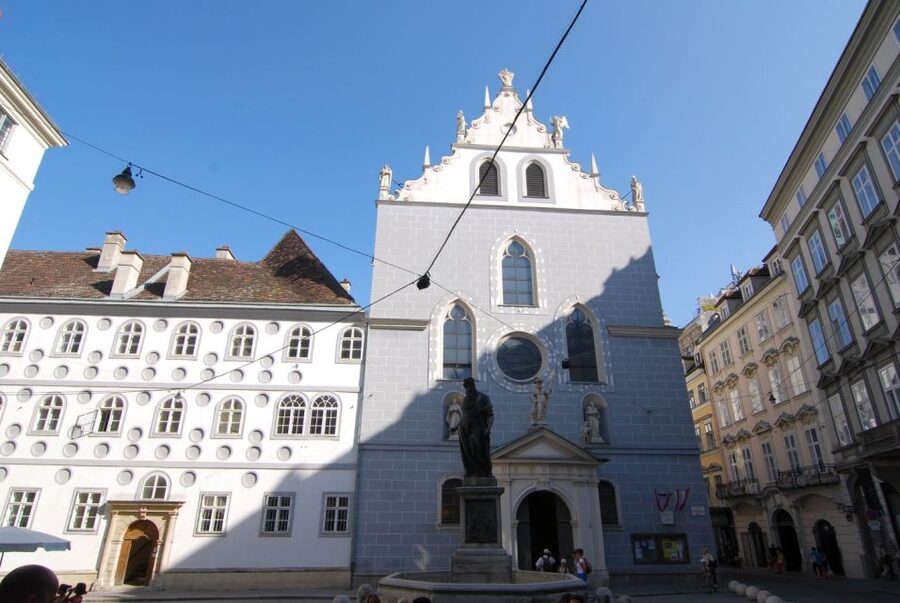
As you continue through the historical center, you get a stop at Palais Neupauer-Breuner. You also see the Deutsches Haus. These aren’t just name drops. In this kind of courtyard-focused tour, palaces and historic buildings are the stage sets where Vienna’s social life played out.
I like how the route uses architecture as storytelling. Courtyards can look quiet from the street, but they often explain how a building functioned: where people gathered, where servants moved, where private space existed in the middle of a dense city. The guide’s job here is to help you look at details you’d normally ignore, like the way entrances relate to inner spaces.
If you love buildings but get bored by long monument speeches, this is a good fit. Courtyard walks tend to keep your eyes busy, so you stay engaged even when the conversation is historical.
Beyond the palaces, the city keeps its own rhythm of coffee, concerts, and day trips nearby.
- Vienna: Vivaldi’s Four Seasons Concert in Karlskirche★ 4.7 · 14,951 reviews
- Vienna: Schönbrunn Palace & Gardens Skip-the-Line Tour★ 4.7 · 7,739 reviews
- Vienna: Light of Creation Votive Church Immersive Light Show★ 4.8 · 6,779 reviews
- Vienna Spanish Riding School Guided Tour★ 4.7 · 6,765 reviews
Blutgasse and Domgasse: street names that carry Vienna’s legends
The tour includes Blutgasse and Domgasse. It also mentions Ballgasse earlier in the highlights list. These street stops are where the tour leans most into legends, not just architectural facts.
Street names in older European cities often came from guilds, trades, churches, or local stories that became fixed in everyday speech. In this tour format, you’re not just reading signs, you’re getting the why behind them, plus the way those places connect to the historical center’s social fabric.
One consideration: if you expected a strictly monument-heavy itinerary, you might find these sections more story-led than photo-led. But that is also the point. The tour feels more like “learning Vienna’s language” than “checking landmarks.”
Mozart’s final residence and the truthier story of his life
One highlight is Mozart’s final residence, along with learning the truth of Mozart’s life. That phrasing is doing a lot of work in a good way. It suggests you’ll get beyond the simplified fame version of Mozart and focus on how his real life played out in specific places.
When a tour ties Mozart to an actual address, it changes the listening experience. You can picture the rooms and the street outside, and the story stops being an abstract timeline. This kind of stop is especially valuable if you’ve read about Mozart in books but want to connect the dots to Vienna as a city.
I also like that the tour pairs this with other cultural anchors. Traditional Viennese cuisine and other historical sites help you see Mozart inside a broader living Vienna, not as a single genius floating above the city.
The house called Where the cow plays on the board
The tour mentions a house called Where the cow plays on the board. That is exactly the sort of odd, memorable detail that makes a walking tour better than a museum visit.
You don’t need to know the background ahead of time. The charm of this stop is that it sounds like a local story you’ll want to hear, and it gives you something to remember later when you’re wandering on your own. Name-based landmarks also help you keep track of where you are, which matters in a dense historical center.
If you like whimsical Vienna, or if you enjoy those small clues that make a city feel like a character, this is worth paying attention to. It adds personality to a route that also includes heavier historical layers.
University of Vienna, the Jesuit Church, and old city walls
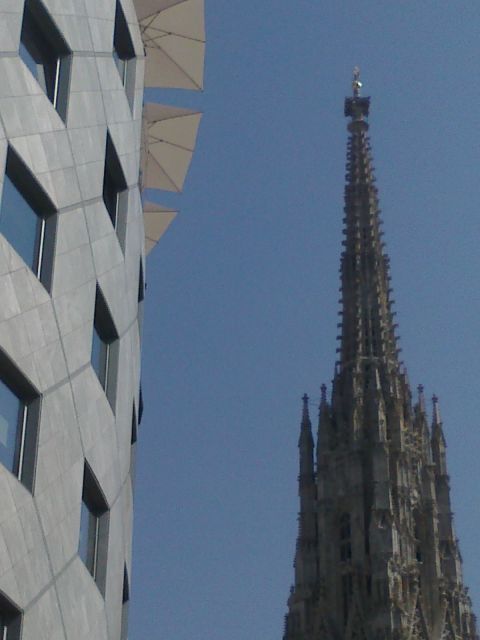
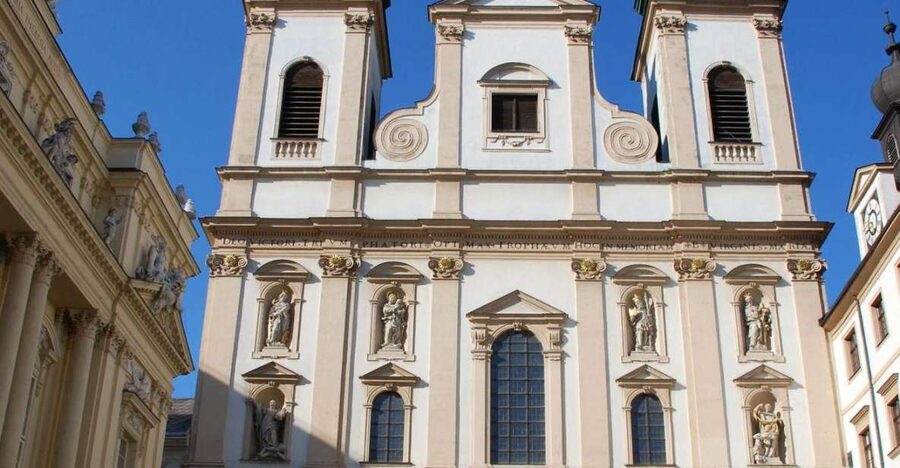
The itinerary includes the University of Vienna, plus the old university district. It also includes the Jesuit Church and the old city wall area. This part of the walk tends to feel like Vienna thinking out loud, because you’re moving through places tied to learning, religion, and civic boundaries.
Here’s why this section is valuable: it helps you understand why the historical center looks the way it does. Universities and churches shaped land use, street patterns, and how people moved. City walls, even when only partially visible, remind you that Vienna used to be more constrained and controlled.
A practical tip for this segment: pause and look around, not just at the next façade. The old city wall and institutional areas can be easy to skim past if you treat them like generic streets. This tour’s guided pace is set up to make you actually notice the transitions between eras.
Franciscan Church and Monastery: a calmer stop with a different mood
The tour includes the Franciscan Church and Monastery. After the cathedral area and the university district, this is a nice shift. Monastery spaces tend to feel quieter and more inward, even when you’re standing in the middle of the city.
This stop also broadens the story. Vienna isn’t only palaces and composers. It is also religious life, community structures, and long-running institutions that influenced daily routine for centuries.
If you like variety in your day, this is a good mid-tour emotional reset. It can make the final stretch feel more satisfying, rather than like you’re just stacking major sites back-to-back.
Traditional Viennese cuisine talk: why food fits a courtyard walk
The tour includes learning about traditional Viennese cuisine, plus references to how it fits into historic life. Even if there is no stated tasting, the value is in the explanations. Food stories connect to markets, social class, and the daily rhythms of older Vienna.
I find this matters because it changes what you notice later. When you read a menu after this kind of tour, you’re more likely to understand what people were eating, not just what the dish is called. It’s also a way to make Vienna feel lived-in, not just decorative.
The best part is that food can tie into many stops on this walk, from historic neighborhoods to cultural institutions. That gives the city a thread you can follow.
Price, time, and group size: is $34 worth it?
At $34 per person for a 2-hour small-group walking tour, this is priced in the value zone for guided city experiences. The time is tight enough to be efficient, but long enough to cover multiple neighborhoods and still let the guide explain what you’re seeing.
The biggest reason I think it’s good value is the mixture of stops. You get famous anchors like St. Stephen’s Cathedral and Mozart’s final residence, plus additional context-heavy sites like Palais Neupauer-Breuner, Deutsches Haus, and the Franciscan Church and Monastery. You’re also promised the courtyard legends angle, which is often what people remember most because it feels like real Vienna rather than “rapid monument hopping.”
The guide is certified and the tour is led live in German or English, which is what you want at this price point. For many visitors, the best benefit is not just information, but interpretation, meaning you walk away knowing how the city connects.
If you are connecting from Part 1, you can still join Part 2
The tour continues from Part 1 by the same operator, but the information says it is not a problem if you haven’t taken Part 1 beforehand. That is important for your planning. You can treat this as a self-contained experience, even if it is designed as a continuation.
I like that it lowers the pressure to do everything in sequence. You can pick the parts that fit your schedule and still get a coherent walk.
What to pack and what to leave behind
The tour is not allowed to carry luggage or large bags, and audio recording is not allowed. That means you should travel light, with a day bag that’s easy to hold while walking through narrow areas and courtyards.
It also runs in all weather conditions. So you’ll want a jacket or rain protection and comfortable walking shoes. Since the group is small, you’ll be close enough to hear the guide clearly most of the time, so weather can really affect your comfort. Plan to look up at façades, step into courtyards, and keep moving.
Finally, it is live guided in German or English, so if you’re sensitive to language switching, choose the language option before you go.
Who should book this Vienna courtyards tour, and who should skip it
This tour is a great match if you like history that connects to places, and if you enjoy stories as much as sights. It is also ideal if you want a short, guided route through Vienna’s center without spending half a day piecing together stops on your own.
You’ll probably be happiest if you fall into one of these groups:
- You want architecture with context, not just facts at a monument
- You enjoy Mozart and want a more grounded story tied to Vienna addresses
- You like courtyards, street legends, and smaller stops like the Franciscan Church and Monastery
You should skip it if you:
- Need wheelchair access or mobility support, because it is not suitable for wheelchair users or people with mobility impairments
- Are traveling with children under 12, because the minimum age is 12
- Need to bring luggage or a large bag, because those are not allowed
- Want to record audio, because audio recording is not allowed
Should you book Vienna: Courtyards and Hidden Places Walking Tour?
If your goal is to see Vienna through its courtyards, legends, and real place-to-story connections, this tour is a strong choice. The mix of St. Stephen’s Cathedral, Mozart’s final residence, the university area, and the Franciscan Church and Monastery gives you both iconic and quieter Vienna in just 2 hours.
If you need full accessibility, or if you plan to arrive with bulky luggage, look for another option. But if you can walk light and enjoy guided storytelling, this one is a good way to get oriented and leave with more than just photos.
FAQ
How long is the Vienna Courtyards & Hidden Places Walking Tour?
It lasts 2 hours.
What does the tour cost?
The price is $34 per person.
What languages are offered?
The live tour guide speaks German and English.
What is the meeting and drop-off information?
Meeting point may vary depending on the option booked. The drop-off locations are listed as Dr.-Karl-Lueger-Platz 3, 1010 Wien.
Is the tour offered in bad weather?
Yes, the tour takes place in all weather conditions.
Is it suitable for children or for wheelchair users?
Children under 12 are not suitable. The tour is also not suitable for people with mobility impairments or wheelchair users.
Are luggage and audio recording allowed?
No. Luggage or large bags are not allowed, and audio recording is not allowed.
Latest Additions
- Wachau Valley Private Wine Tour with Tasting and Gourmet Lunch
★ 5.0 · 1 review - Vienna: Danube Valley Tour with Melk, Dürnstein with wine tasting and boat.
★ 5.0 · 1 review - Private city tour in Vienna
★ 5.0 · 1 review - Hallstatt Small Group Day Trip from Vienna
★ 3.0 · 1 review - Inside Freud’s Mind: Self-Guided Mystery Walk in Vienna
★ 4.0 · 1 review - Private Transfer from Vienna to Prague
★ 5.0 · 1 review - Vienna’s Christmas Market Magic Tour
★ 5.0 · 1 review
Walking Tours, compared.
Guided Walking Tour of City Center Highlights
Read our review →
Guided Walking Tour of City Highlights & Hidden Gems
Read our review →
Vienna Historic Center Small Group Walking Tour
Read our review →
Browse the lists this tour appears in