
Reviewed · WALKING TOURS
Vienna Art Nouveau Walking Tour
Vienna’s metro can look like a museum. This 3-hour Art Nouveau walk ties Otto Wagner’s bold transit vision to the Jugendstil buildings you’ll pass along the way, so you see style and city planning as one story. I like how the tour explains the why behind the ornament, not just the what.
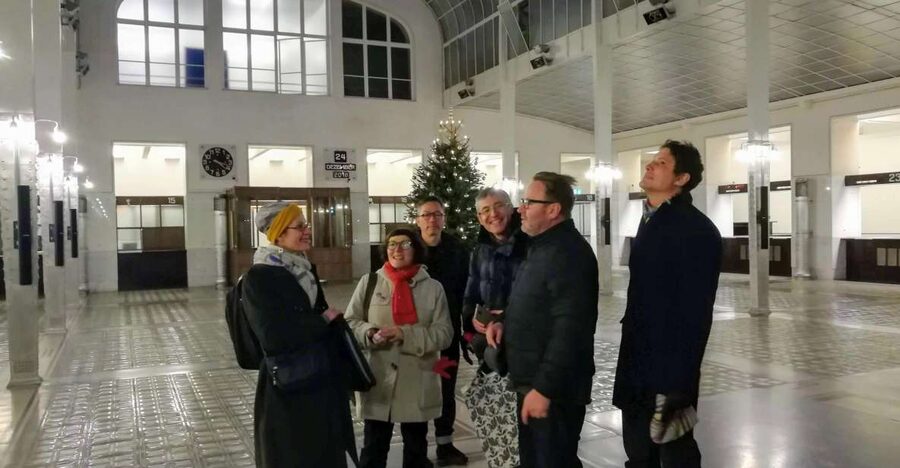
Two things really land. First, you get plenty of time at the stops where the details matter, especially the metro architecture that still works today. Second, the guiding style is a big part of the value, with guides like Wolfgang, Peter, and Giuseppina highlighted in past groups, and that same calm, Q and A friendly approach is exactly what makes the walk feel tailored even when you are just two people.
One consideration: some of the ticketed highlights cost extra. Entry for the Secession House (including Klimt’s Beethoven Frieze on Tuesday to Sunday) is not included, and admission to the Wagner pavilion is also not included. So pack in comfortable shoes and a little cash for add-ons.
In This Review
- Key things you will notice on this Vienna Art Nouveau metro walk
- Vienna’s Metro as Art Nouveau propaganda, and why it matters
- Starting at Café Museum, then stepping into the Wagner universe
- Karlsplatz to Stadtpark: the station you can still ride
- The Kettenbrücke stop and a walk past Jugendstil icons
- Secession House and Klimt’s Beethoven Frieze, with an extra ticket
- Hietzing’s Hofpavillon and Postsparkasse: Art Nouveau goes official and everyday
- The imperial station finale: when the metro became politics
- Guides that make the details stick, and small-group perks
- Price and value: is $176 worth it for 3 hours?
- Who should book this Art Nouveau metro tour?
- Should you book this Vienna Art Nouveau walking tour?
- FAQ
- How long is the Vienna Art Nouveau Walking Tour?
- Where do I meet for the tour?
- Is the Secession House included in the tour price?
- Will I see Klimt’s Beethoven Frieze?
- Does the tour include admission to the Otto Wagner Pavillon?
- What language is the tour guide?
Key things you will notice on this Vienna Art Nouveau metro walk
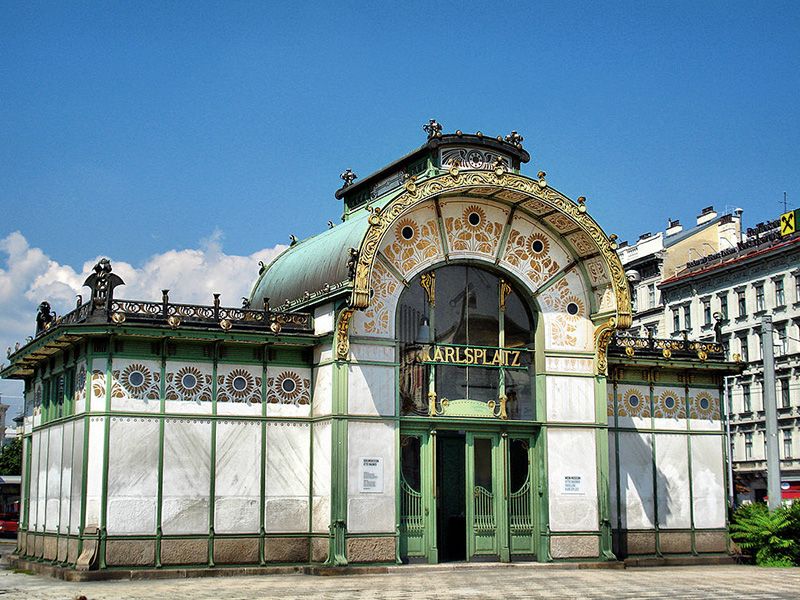
- Otto Wagner’s metro design mission, made easy to recognize and built to project a modern Vienna
- Stadtpark station as one of the best-preserved original stations still in service
- Secession House stops with a close look at Viennese Jugendstil, often featuring Klimt’s Beethoven Frieze on Tuesday to Sunday
- Wagner buildings outside the subway, including apartment houses, the Hofpavillon in Hietzing, and more Art Nouveau street architecture
- The imperial station finale, where architecture signals political support for the metro line
Vienna’s Metro as Art Nouveau propaganda, and why it matters
Vienna at the turn of the 20th century grew fast. With suburbs filling in and people commuting to the city center, public transit stopped being a convenience and became a necessity. But the city did not treat the metro like a boring utility project. They wanted it to be a visible upgrade, a modern system with a very specific identity.
That is where Otto Wagner enters. He was picked to design the metro and he had a clear goal, make the stations recognizable and iconic, and reflect Vienna’s place in the wider European world. The style he chose was the international avant-garde you now associate with Art Nouveau, known locally as Jugendstil. This tour helps you see that as more than decoration. It is about a city trying to reinvent itself, while still signaling pride and authority.
You also learn something practical from the story. Once you understand how Vienna positioned the metro as a symbol of the modern capital, the architecture reads differently. You start noticing how materials, shapes, and motifs guide your eye and communicate status, even in everyday spaces like stations.
Other ways to round out a Vienna visit
Starting at Café Museum, then stepping into the Wagner universe
You meet at Café Museum, Operngasse 7. Even before you reach the architecture, the beginning matters because it frames what you are about to see. The guide sets up the Vienna angle first: rapid growth, the Ringstrasse context, and how planners connected suburbs to the center. That matters because Art Nouveau in Vienna is not random. It is tied to how people wanted the city to look in the future.
From there, you move toward the Wien Museum Otto Wagner Pavillon Karlsplatz. The tour includes a guided look here, and you will also see the small Wagner Museum. This is a great place to reset your brain. Stations and buildings can feel like separate sights if you rush. Starting with Wagner’s own design logic helps you connect the ornament to the mission.
What I like about this early phase is the tone. You are not just collecting facts. You are learning how to look. You pay attention to symbols, the way lines flow, and how Vienna’s Art Nouveau practitioners favored certain materials and visual language. Even if you are not an architecture nerd, this is the part that makes later stops click.
Karlsplatz to Stadtpark: the station you can still ride
One of the biggest thrills on this walk is how it treats the metro as something living. From the Karlsplatz pavilion area, you walk to Stadtpark station, described as the best-preserved of the original metro stations still in use. That phrase is important. It is not just a pretty relic. It is a functioning piece of design history.
Here is what you should do to get more out of it: slow down at the elements that repeat. Art Nouveau loves pattern, but Vienna often uses it to guide movement and frame space. On the metro platform, you can see how the station design supports readability, even while staying artistic.
The tour also gives you the ideological underpinnings. That means you get help understanding why Art Nouveau in Vienna looked the way it did. It was not only aesthetic. It was a statement about modern life, cosmopolitan identity, and what the city wanted to broadcast.
The Kettenbrücke stop and a walk past Jugendstil icons
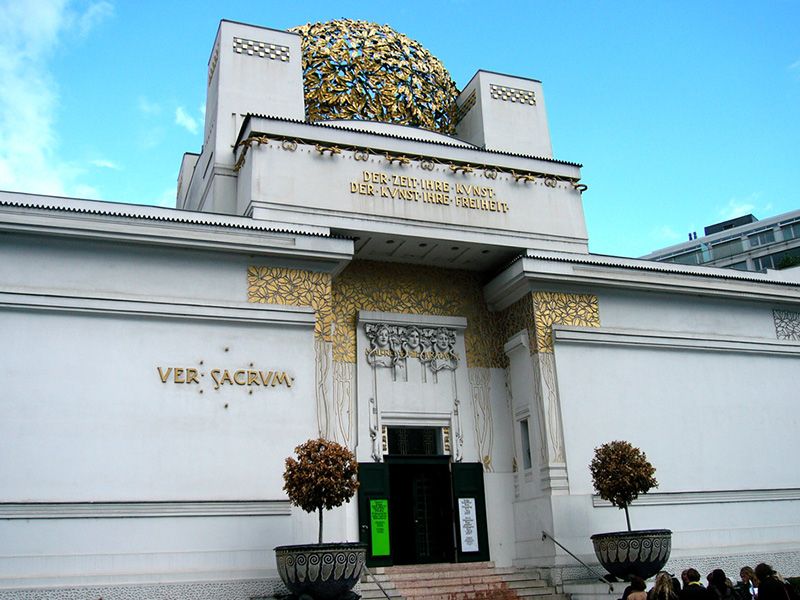
Next comes Kettenbrücke station. This is a key part of the metro design story because you are no longer only seeing a pretty station. You are stepping deeper into what made Wagner’s metro feel like a Vienna brand.
Between the station points, you see major Art Nouveau landmarks on foot. The headline is the Secession House, a landmark of Viennese Jugendstil. If you have ever seen pictures of it, you know it immediately by its bold, distinctive presence. In person, it feels like a design manifesto, not just a building.
This part of the tour also includes other architectural sights tied to Wagner. You will see two apartment houses designed by Otto Wagner. That is smart. Many people only associate Jugendstil with museums and famous facades, but Vienna’s Art Nouveau also lived in daily streets and housing. You get a sense of how the style was meant for more than one kind of building.
One more practical note. This is a walking segment, and past groups have mentioned walking miles. Plan for it. Bring shoes that work on city pavement, not just comfortable for a café stop.
Beyond the palaces, the city keeps its own rhythm of coffee, concerts, and day trips nearby.
- Vienna: Vivaldi’s Four Seasons Concert in Karlskirche★ 4.7 · 14,951 reviews
- Vienna: Schönbrunn Palace & Gardens Skip-the-Line Tour★ 4.7 · 7,739 reviews
- Vienna: Light of Creation Votive Church Immersive Light Show★ 4.8 · 6,779 reviews
- Vienna Spanish Riding School Guided Tour★ 4.7 · 6,765 reviews
Secession House and Klimt’s Beethoven Frieze, with an extra ticket
On Tuesday to Sunday, your tour includes a visit to the Secession House to see Gustave Klimt’s Beethoven Frieze. The good news is that the guide helps you handle the extra payment. The cost is €9.50 for adults and €6 for students and seniors.
This is a worthwhile add-on if you have any interest in Vienna’s art scene. Klimt’s work is tied to the Secession movement’s message, and seeing the building plus the frieze gives you the full cultural punch of the stop. But it is still a consideration because it is not included in the base price.
If you are booking and your day falls outside Tuesday to Sunday, you might miss the frieze portion. The building visit is still part of the experience, but plan your schedule if Klimt is the main reason you are doing this tour.
Hietzing’s Hofpavillon and Postsparkasse: Art Nouveau goes official and everyday
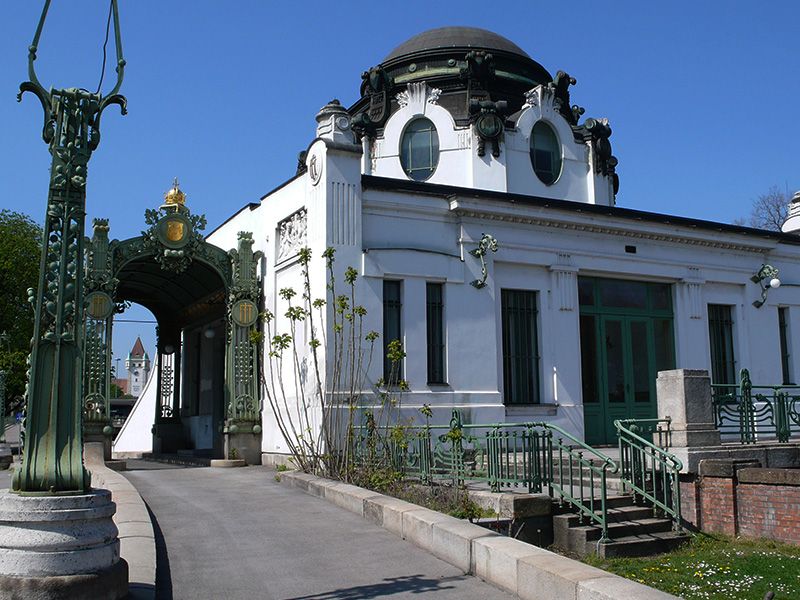
The tour does not keep you stuck in one mood. It moves between symbols of power and places that feel tied to regular life.
One highlighted stop is the Otto Wagner Hofpavillon Hietzing. A “hofpavillon” matters because it links Wagner’s design language with the world of the court. In other words, the style is not just modern for the sake of modern. It is also used to make authority look modern.
Another stop is the Österreichische Postsparkasse. This building gives you a different angle on Art Nouveau. Instead of only thinking about galleries and grand facades, you get to see how the style works for an institution tied to public life and finance. The visual language stays confident, but the purpose feels grounded.
You also keep hearing the guide connect details to the bigger story. That connection is where the tour earns its place. If you only walked between buildings with a brochure, you might see beautiful shapes. With a historian guide, you understand what the shapes were trying to say.
The imperial station finale: when the metro became politics
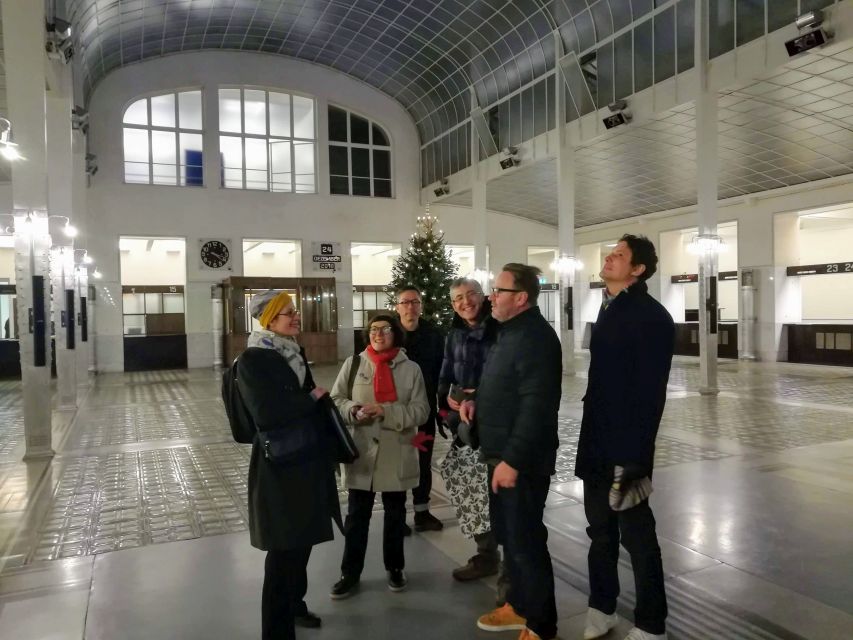
The crown jewel in the experience is the final visit to the imperial station, built outside Schönbrunn solely for the emperor to use. This is one of those details that instantly changes how you think about metro architecture. You are not just looking at a transit system. You are looking at a public project that had private, top-level support.
The tour also explains the station’s symbolic role. Wagner and the project team needed to win critics. The emperor using the line was the messaging. The architecture helped translate a style that might have felt bourgeois into something with imperial grandiosity.
What to do here, so it feels meaningful instead of just another stop: compare your reaction to earlier station details. Ask yourself what looks simpler or more formal. Which elements feel geared to public use, and which feel designed for ceremonial presence? The tour nudges you to read those contrasts, and it works.
This ending is also a strong payoff for the time spent earlier. When you reach the imperial station, you finally see how the same design philosophy scales from everyday transit to elite symbolism.
Guides that make the details stick, and small-group perks
The quality of the guiding is one of the most praised parts of this experience. Past groups have singled out guides like Wolfgang, Peter, and Giuseppina, with comments that they are enthusiastic and easy to engage with, including answering lots of questions about Austrian context and architecture.
I love that this tour encourages questions. If you are the kind of person who likes to stop and ask why something is shaped a certain way, this format will reward you. It also sounds like the guides adjust the route and pace when the group is small. One review noted that the tour was tailored and that the group walked a lot, which is exactly the tradeoff you want from a walking architecture tour.
A practical bonus: if you get paired with a guide who talks clearly about what to look for, you will come away with a mental checklist you can use in Vienna on your own. That makes the tour spill into the rest of your trip.
Price and value: is $176 worth it for 3 hours?
At $176 per person for about 3 hours, this is not a budget filler. But it can be good value if you care about context and design, not only selfies.
Here is why the price can work:
- You get a historian guide, which changes how you read the buildings.
- You cover multiple major Art Nouveau sites connected by the metro theme.
- You get guided time at several architectural stops rather than just quick photo pauses.
The “watch-outs” for value are the extra admissions. Secession House entry is not included, and on Tuesday to Sunday it is especially relevant because of the Beethoven Frieze. Admission to the Otto Wagner Pavillon is also not included. If you plan to add both, your final spend will be higher than the base price.
Still, if you enjoy architecture enough to take notes, this tour often feels like a strong spend rather than a generic guided walk. The fee buys you interpretation, plus help seeing details most people miss.
Who should book this Art Nouveau metro tour?
Book this if you want:
- Art Nouveau with a direct link to how Vienna built a modern city
- Metro architecture and what makes it different from typical station design
- A guide who can explain the ideological side, not just point and click
It is also a nice choice for couples and small groups. Reviews point to the experience feeling better when the group is small, with the guide able to tailor what you want to emphasize.
If you are only after a quick highlight list, this may feel like more walking than you want. But if you like architecture and ideas, you will likely enjoy the pace.
Should you book this Vienna Art Nouveau walking tour?
I think this is a smart booking if you want Vienna Art Nouveau with a purpose. The combination of Wagner’s metro vision, real surviving station design like Stadtpark, and the culture power of Secession House makes it more than a pretty circuit. Add in the imperial station finale and you get a story with a beginning, middle, and payoff.
Do book it if you are comfortable paying extra for the Secession House and you like spending time looking closely at details. If you want everything included for one flat price, or you hate paying for timed art tickets, then you should weigh those extras before committing.
FAQ
How long is the Vienna Art Nouveau Walking Tour?
The tour lasts about 3 hours.
Where do I meet for the tour?
You meet at Café Museum, Operngasse 7, A-1010 Vienna.
Is the Secession House included in the tour price?
Admission to the Secession House is not included. The guide will help you pay for entry. The price is €9.50 for adults and €6 for students and seniors.
Will I see Klimt’s Beethoven Frieze?
If your tour runs Tuesday to Sunday, you will visit the Secession House to see Klimt’s Beethoven Frieze. Entry is not included in the tour price.
Does the tour include admission to the Otto Wagner Pavillon?
No. Admission to the Otto Wagner Pavillon is not included.
What language is the tour guide?
The tour is guided in English.
Latest Additions
- Wachau Valley Private Wine Tour with Tasting and Gourmet Lunch
★ 5.0 · 1 review - Vienna: Danube Valley Tour with Melk, Dürnstein with wine tasting and boat.
★ 5.0 · 1 review - Private city tour in Vienna
★ 5.0 · 1 review - Hallstatt Small Group Day Trip from Vienna
★ 3.0 · 1 review - Inside Freud’s Mind: Self-Guided Mystery Walk in Vienna
★ 4.0 · 1 review - Private Transfer from Vienna to Prague
★ 5.0 · 1 review - Royal Route VIP Journey from Vienna to Bratislava and Budapest
★ 5.0 · 1 review
Walking Tours, compared.
Guided Walking Tour of City Center Highlights
Read our review →
Guided Walking Tour of City Highlights & Hidden Gems
Read our review →
Vienna Historic Center Small Group Walking Tour
Read our review →
Browse the lists this tour appears in