
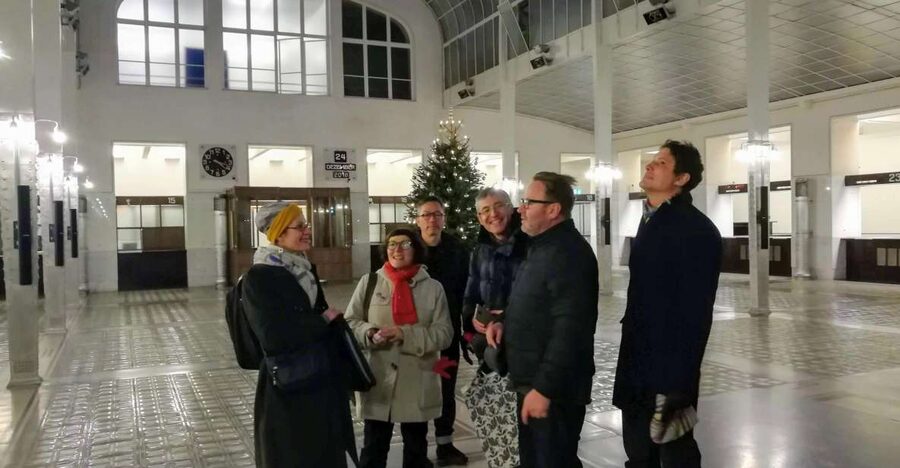
Reviewed · WALKING TOURS
Vienna Art Nouveau Walking Tour
Vienna can look like one big museum, but this tour gives it a map. I love how it turns Art Nouveau into something you can spot quickly, not just admire from far away. I also like that it uses Vienna’s metro stations as the backbone, so you learn the style while seeing real city architecture in action. The only real drawback is weather and outdoor time, because you are walking and standing around for viewpoints and building details.
I came away with a strong feel for how Vienna’s turn-of-the-century artists shaped everyday spaces, from Otto Wagner’s building logic to the Sezession’s bold visual ideas. You should also budget a little for optional entrances, because some of the big indoor highlights have extra tickets depending on when you go.
This is a small-group tour, capped at 8 people, and it runs about 2 hours 30 minutes. Expect English commentary, a mobile ticket, and an itinerary built to get you oriented fast without turning your day into a museum marathon.
In This Review
- What You’ll Notice Most on This Tour
- Vienna Art Nouveau and the Metro, A Clever Pairing
- Price and Value: Is $180.04 Worth It?
- Meeting Point, Timing, and How to Plan Your Day
- Stop 1: Otto Wagner Pavillon Karlsplatz and the Small Wagner Museum
- Stop 2: Stadtpark Station, Art Nouveau Meets Engineering
- Stop 3: The Sezession Building, Kettenbrücke, and Otto Wagner Apartments
- The Imperial Station Finale Outside Schönbrunn
- Guides, Pacing, and What Makes the Experience Feel Worth It
- Who Should Book This Tour (and Who Might Skip It)
- Should You Book the Vienna Art Nouveau Walking Tour?
- FAQ
- How long is the Vienna Art Nouveau Walking Tour?
- Where does the tour start?
- What languages is the tour offered in?
- Are any entrance fees included?
- What is the group size limit?
- What is the cancellation policy?
What You’ll Notice Most on This Tour
- Art Nouveau through metro architecture: you learn the style from the inside of the city, not just postcards
- Otto Wagner’s fingerprints: pavillions, stations, and apartments show his practical take on design
- Sezession and Jugendstil ideas: you connect the building’s symbols and materials to the movement
- The imperial station finale: a message from the emperor, built into the metro story
- Small group energy (max 8): easier conversation and faster questions
Vienna Art Nouveau and the Metro, A Clever Pairing
Vienna loves design. But it is easy to lose the thread if you only hit the famous facades. This tour solves that problem by using Art Nouveau buildings and metro stops as your guideposts. The result is that you start seeing patterns, like how materials, curves, and decorative logic link one site to the next.
The 2.5-hour format matters because it is long enough to create connections, but short enough that you are not wiped out by the time you want to explore more on your own. And since the tour is capped at 8, you are not stuck shouting over a crowd.
English is offered, and you’ll get a professional guide. In past departures, the tour has been led by guides such as Jan, Stephan, Suzanne, Angelina, Ilse, and Wolfgang Augsten, and the common theme is clear: they focus on explaining how and why the architecture works, not just naming buildings.
Other ways to round out a Vienna visit
Price and Value: Is $180.04 Worth It?
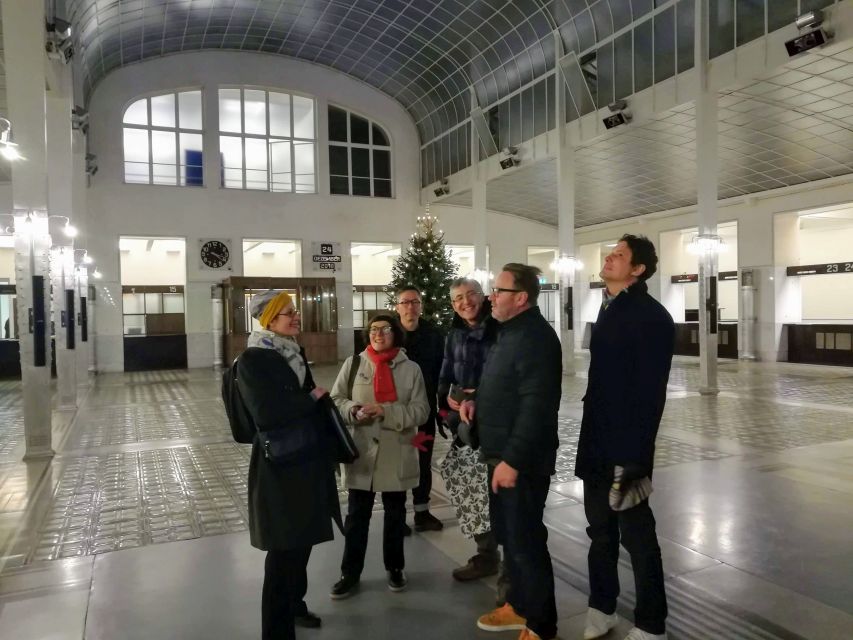
At $180.04 per person, this is not a bargain-basement walking tour. You are paying for expert guidance plus a tight itinerary that hits the key Jugendstil and Otto Wagner stops in one go.
Here’s where the value shows up:
- You get context, not just stops. The tour is structured around design concepts and symbolism, so you leave with more than photos.
- It’s a small group (up to 8), which usually means you can ask questions and actually hear answers.
- Several major stops are listed with free admission, including the Wagner Museum at Karlsplatz and the Stadtpark station visit.
One thing to watch: entrance fees are sometimes not included for certain interior highlights. The Otto Wagner Pavilion can involve admission costs in the months when it is open, and the Sezession House Beethoven Frieze can require paid entry depending on day and time. If you are the kind of person who cares about going inside those iconic interiors, you’ll want to factor that in so the “walk-only” part does not surprise you.
Meeting Point, Timing, and How to Plan Your Day
The tour starts at Operngasse 7, 1010 Wien and ends back in Vienna (the exact end point is not specified beyond that). It runs for about 2 hours 30 minutes.
Because it is a walking route with station changes, you’ll want to treat it like a real half-day activity. Wear shoes you trust. Bring a layer. Even if the day starts bright, Vienna weather can turn quickly.
From the booking pattern, it also helps to plan ahead. This tour is often booked about 36 days in advance on average, which is a good signal that the best time slots can fill.
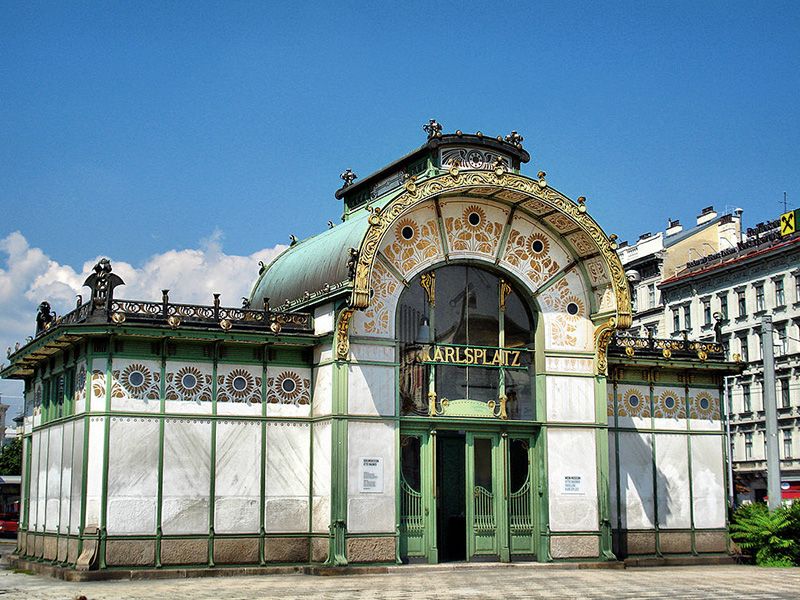
Stop 1: Otto Wagner Pavillon Karlsplatz and the Small Wagner Museum
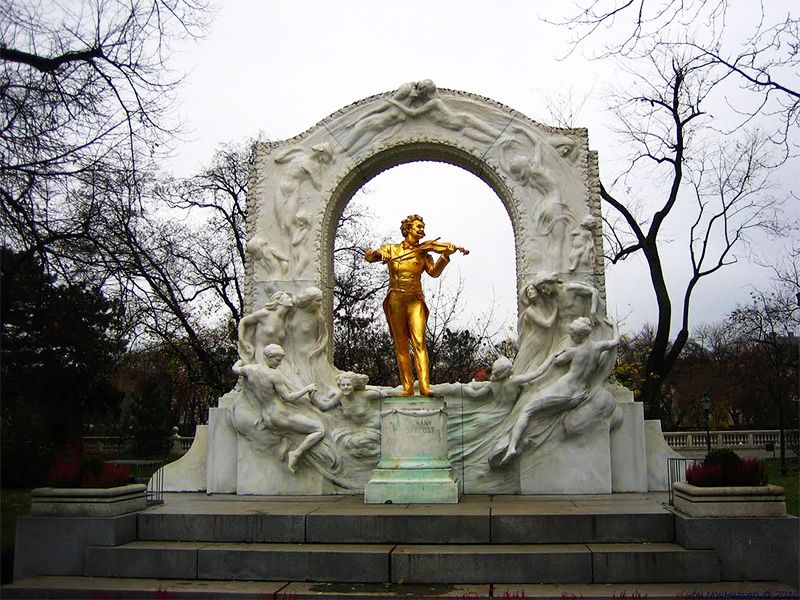
You begin at the Otto Wagner Pavillon at Karlsplatz, a smart place to start because it immediately frames the story of Vienna’s modern design coming in through a very physical object. The tour includes time at the pavilion to visit the small Wagner Museum, which is listed as free.
Why this opening works:
- It anchors you in Otto Wagner early, so later buildings make more sense.
- You get a foundation for how his thinking translates into ornament, structure, and public-facing design.
What to consider:
- Depending on the season, there may be additional pavilion-related entry fees for some parts of the site. The data notes that from April to October, when the museum is open, there are listed admission prices for general admission, seniors/students, and holders of a Vienna Card, plus people with disabilities.
If you are trying to minimize costs, it is worth thinking about whether you want every interior opportunity or if you are happy with the exterior architecture and guide explanations.
Beyond the palaces, the city keeps its own rhythm of coffee, concerts, and day trips nearby.
- Vienna: Vivaldi’s Four Seasons Concert in Karlskirche★ 4.7 · 14,951 reviews
- Vienna: Schönbrunn Palace & Gardens Skip-the-Line Tour★ 4.7 · 7,739 reviews
- Vienna: Light of Creation Votive Church Immersive Light Show★ 4.8 · 6,779 reviews
- Vienna Spanish Riding School Guided Tour★ 4.7 · 6,765 reviews
Stop 2: Stadtpark Station, Art Nouveau Meets Engineering
From Karlsplatz, you walk toward Stadtpark station. This stop is famous for being one of the best preserved original metro stations still in use. That alone gives you a sense of how Jugendstil-era design was built for daily life, not just for museum displays.
The highlight here is the artificial riverbed connected to the little Vienna river. When the city train was built, the waterway needed to be rechanneled. The station area had to solve the practical problem of integrating the redirected river into the new city landscape. That is the core Vienna trick: design is not only about decoration, it is about making systems work together.
What you’ll learn from this stop:
- How infrastructure decisions can shape architectural style.
- How water, stone, and the station’s visual design become part of a single planning story.
Also, this stop is listed with free admission, which makes it a strong value point in the itinerary.
A practical tip for this segment: use the station time to look closely at transitions. In Art Nouveau, the join between functional spaces and decorative elements often tells you as much as the decoration itself.
Stop 3: The Sezession Building, Kettenbrücke, and Otto Wagner Apartments
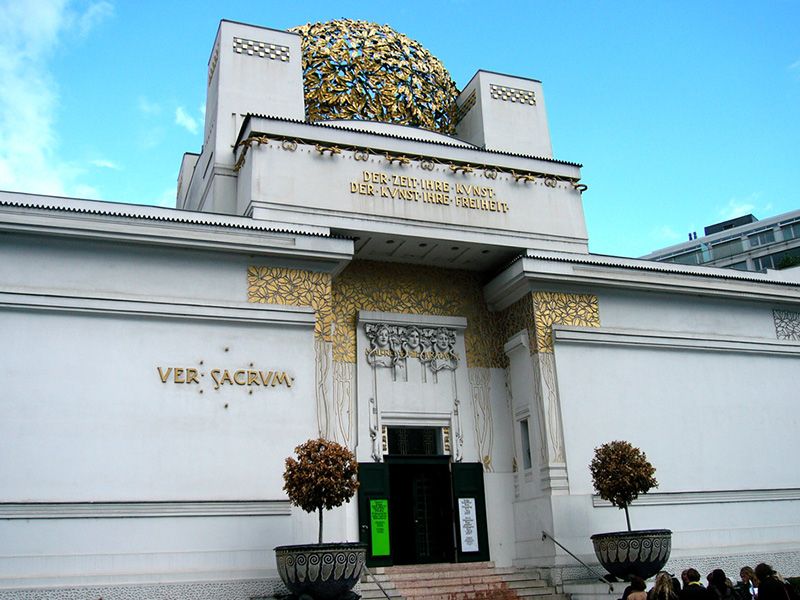
Next up is the Sezession area. You visit the Sezession art building on the way from Kettenbrücke station, and it is described as the icon example of Viennese Jugendstil.
This part of the tour is where the movement becomes more than shapes. The guide helps you connect the philosophy behind Jugendstil to the specific things you are seeing, including:
- symbols used by practitioners
- materials favored by the artists and architects
- how visual language creates a message
On this stretch, you also see two beautiful apartment houses by Otto Wagner. That matters because it shows that Jugendstil was not limited to grand cultural institutions. It also shaped everyday buildings, including housing for regular city life.
Why this is a high-value portion for art lovers:
- You get a bridge between style theory and real architecture.
- You learn what to look for when you see similar buildings in other cities, even if you cannot name the architect on the spot.
One consideration: the Sezession interior highlight, the Beethoven Frieze by Gustav Klimt, can require a separate ticket. The data notes that if you tour Tuesday to Sunday, admission to see the Beethoven Frieze at Sezession House is €9.50 for adults and €6 for students and seniors. Your guide will help you pay.
If Klimt is a priority for you, you should plan your day around being ready to add that ticket cost.
The Imperial Station Finale Outside Schönbrunn
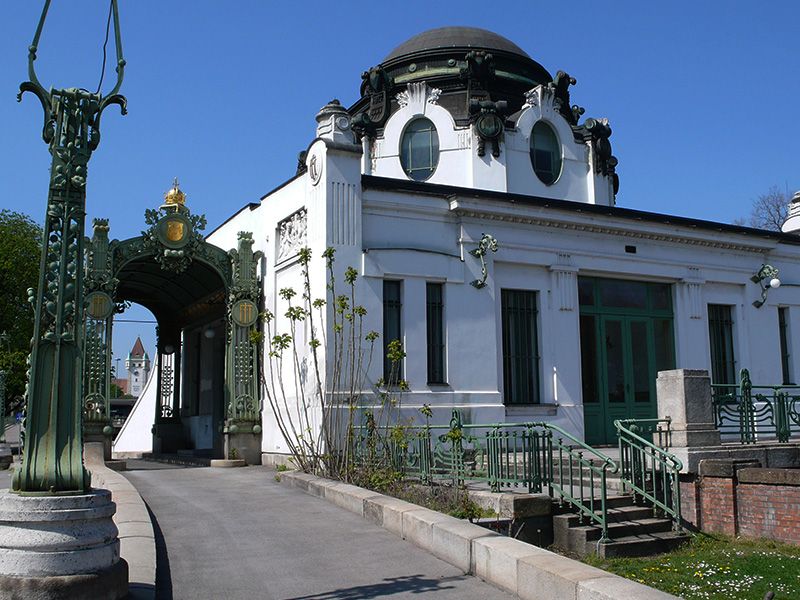
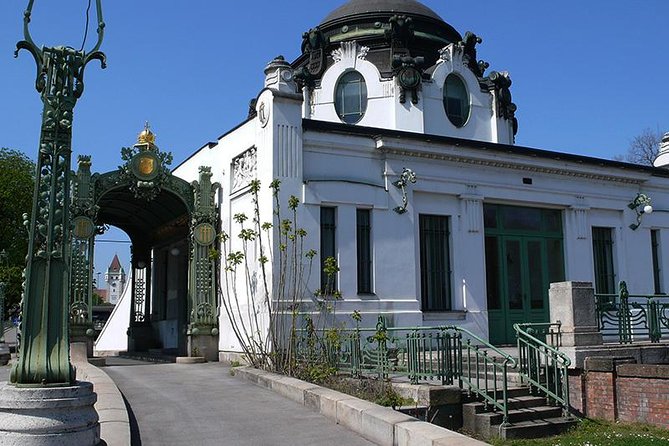
The last segment is a short metro ride from Kettenbrücke station to the tour’s “crown jewel,” the imperial station.
This stop is special for two reasons. First, the building was erected outside Schönbrunn Castle solely for the Emperor to use. Second, it had a symbolic mission, built to show critics that the emperor supported the metro line.
That mix of power and practicality is what makes the station a great closing act. In the guide’s framing, you start recognizing the same elements you saw earlier in the walk, but now they are translated into an aesthetic with imperial grandiosity. The message is that Art Nouveau and related styles were flexible, capable of speaking both to public street culture and to high-status authority.
What you should do at the end of the tour:
- Take a few minutes to compare what you saw at Karlsplatz and Stadtpark with what you see here.
- Look for repeating design choices, then ask yourself why they feel more “official” in this context.
If you only have time for one guided architecture moment in Vienna, this is the kind of ending that helps it stick.
Guides, Pacing, and What Makes the Experience Feel Worth It
The best part of this tour tends to be the guide. In prior departures, people have highlighted guides like Jan, Stephan, Suzanne, Angelina, Ilse, and Wolfgang Augsten as being passionate and able to answer questions. The tone is not academic for its own sake. It is about seeing, understanding, and connecting ideas.
You can also count on flexibility. Some departures have adapted to cold or rainy weather, including offering ways to avoid getting soaked. I would not rely on that happening every time, but it’s a reminder that a good guide will look for practical solutions when the city weather has other plans.
The small group size also keeps the pacing from feeling rushed. You get time at each stop to look up, not only forward. And because the itinerary uses metro locations, you also learn how Vienna’s transport fits into sightseeing, which can make the rest of your trip easier.
Who Should Book This Tour (and Who Might Skip It)
This tour is a strong fit if you:
- love architecture and want more than a surface-level tour
- are interested in Otto Wagner and Jugendstil design logic
- want a fast orientation to Vienna using places that are still part of daily life
- plan to explore on your own after, because the route teaches you how to move around
You might skip it if you:
- only care about classical palaces and churches, with little interest in design trends from around 1900
- hate walking and standing around for building details
- want purely free entries, since some interior highlights like the Beethoven Frieze have extra ticket costs depending on day
Should You Book the Vienna Art Nouveau Walking Tour?
Yes, I think you should book it if you want a smarter way to see Vienna’s Art Nouveau side. The key reason is the structure: stations plus buildings, connected by design themes. That makes the time feel “spent,” not just “spent walking.”
If you are budgeting tightly, plan for the possible add-on entrance fees for the Otto Wagner Pavilion (seasonal) and the Sezession House Beethoven Frieze (day-dependent). But if you are even somewhat curious about how Jugendstil works in real city spaces, this tour gives you the right tools and the right buildings in one clean package.
If you want, tell me your travel month and whether Klimt is a must-see. I can help you anticipate the likely extra ticket costs and pick the best day to do it.
FAQ
How long is the Vienna Art Nouveau Walking Tour?
It lasts about 2 hours 30 minutes.
Where does the tour start?
The meeting point is Operngasse 7, 1010 Wien, Austria.
What languages is the tour offered in?
The tour is offered in English.
Are any entrance fees included?
Some museum visits are listed as free (including the Wagner Museum at the Karlsplatz stop and the Stadtpark station visit). Other indoor highlights may have separate entrance fees, including the Otto Wagner Pavilion in April to October and the Sezession House Beethoven Frieze on Tuesday to Sunday.
What is the group size limit?
The maximum group size is 8 people per booking.
What is the cancellation policy?
You can cancel for a full refund if you cancel up to 24 hours in advance of the experience start time.
Latest Additions
- Wachau Valley Private Wine Tour with Tasting and Gourmet Lunch
★ 5.0 · 1 review - Vienna: Danube Valley Tour with Melk, Dürnstein with wine tasting and boat.
★ 5.0 · 1 review - Private city tour in Vienna
★ 5.0 · 1 review - Hallstatt Small Group Day Trip from Vienna
★ 3.0 · 1 review - Inside Freud’s Mind: Self-Guided Mystery Walk in Vienna
★ 4.0 · 1 review - Private Transfer from Vienna to Prague
★ 5.0 · 1 review - Vienna’s Christmas Market Magic Tour
★ 5.0 · 1 review
Walking Tours, compared.
Guided Walking Tour of City Center Highlights
Read our review →
Guided Walking Tour of City Highlights & Hidden Gems
Read our review →
Vienna Historic Center Small Group Walking Tour
Read our review →
Browse the lists this tour appears in