
Reviewed · WALKING TOURS
Private Vienna Art Nouveau Walking Tour
Vienna’s stations are secret art galleries. This private, 3-hour Art Nouveau walk is a smart way to read the city, since you move through metro stations and architecture with a guide who connects the style to real history and real places. I especially liked how the route blends “big-name” moments with practical city navigation, so you finish feeling like Vienna’s design has a map.
What I like even more is the focus on the artists and architects behind the look, with stops tied to Joseph Maria Olbrich and Otto Wagner. One thing to keep in mind: some of the most famous interiors have extra entrance fees, and those costs can change a bit depending on the day and the season.
In This Review
- Key Reasons This Private Art Nouveau Walk Works So Well
- Entering Vienna Through Art Nouveau, Not Just Postcards
- The Secession Building and Klimt’s Beethoven Frieze (Your First Big Anchor)
- A Quick Stadtpark Break Where You Can Actually Reset
- Karlsplatz Station Buildings and the Jugendstil You Can Spot Instantly
- Otto Wagner Pavillon Karlsplatz, When the Museum Is Open
- Postsparkasse, the Postal Savings Bank, and Secession-Style Brilliance
- Naschmarkt for a Real-Life Vienna Moment (Even If You Don’t Eat)
- Ending at Two Metro Stations and That Emperor-Only Touch
- Price and Value: Is $490 Per Group a Good Deal?
- Who This Tour Fits Best, and Who Might Want a Different Style
- Quick Planning Tips Before You Go
- Should You Book This Private Vienna Art Nouveau Walking Tour?
- FAQ
- How long is the private Vienna Art Nouveau walking tour?
- What is the price and maximum group size?
- Is this a private tour?
- What is included in the tour price?
- Are entrance fees included?
- Where do I meet, and where does the tour end?
- What is the cancellation policy?
Key Reasons This Private Art Nouveau Walk Works So Well
- Expert-led private pacing lets you ask questions and linger when something clicks
- Art Nouveau done at eye level, using metro stations as your main “gallery”
- Klimt’s Beethoven Frieze at the Secession Building gives you a true anchor point
- Otto Wagner’s station architecture, including the Karlsplatz station buildings and Pavillon when open
- Real Vienna stops like Stadtpark and Naschmarkt, not just photos from the sidewalk
- A tiny Emperor-related metro stop helps you see how special access shaped the city
Entering Vienna Through Art Nouveau, Not Just Postcards
If you’ve only seen Vienna as imperial palaces and grand museums, this tour gives you a second lens. You start with landmark Art Nouveau architecture and then keep walking through the city’s everyday spaces, especially the metro and station buildings that many people rush past.
You also get the kind of format that makes sense for design nerds and casual curious folks at the same time. It is private, priced per group (up to 10), and run for about three hours. That combo matters, because a tour like this lives or dies by the guide’s ability to explain why the details matter without turning it into a lecture you tune out.
Most of all, I like that the route is structured around places where Art Nouveau is not just a decoration. It is part of the building purpose, the city’s movement system, and the story of modern life in late 19th-century Vienna.
Other ways to round out a Vienna visit
The Secession Building and Klimt’s Beethoven Frieze (Your First Big Anchor)
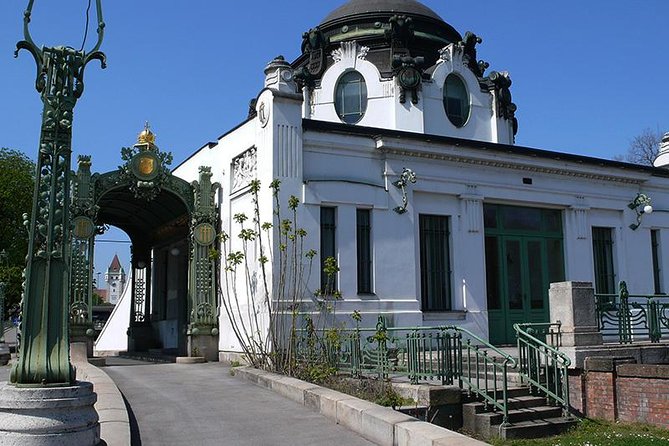
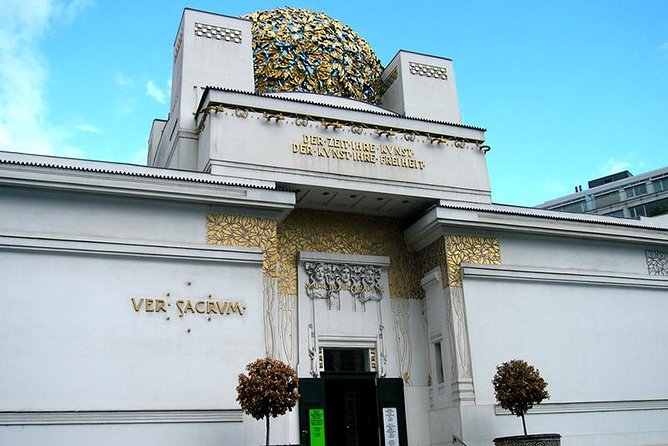
Your first stop is the Secession Building (Secessionsgebaude), completed in 1898 by Joseph Maria Olbrich. This is not a random hall. It was meant as an architectural manifesto for the Vienna Secession, a group of rebel artists that broke away from the long-established fine art institution.
Plan on about 30 minutes here. The outside is already persuasive, but the main draw is what’s inside: the famous Beethoven Frieze by Gustav Klimt, created for one of the original exhibitions.
Two practical things to know:
- Admission is not included, so you should expect to pay at the site. If you go Tuesday to Sunday, the admission price listed for adults is €9.50, and for students and seniors it is €6. Your guide helps you handle it.
- Timing matters. If you want good time to look and read, arrive ready to slow down for a few minutes.
This is where the tour earns its reputation with architecture fans. One guide I heard about, Barbara, was praised for bringing the movement to life and answering all kinds of history and art questions without brushing anything off.
A Quick Stadtpark Break Where You Can Actually Reset
After the intensity of the Secession, the tour takes you to Stadtpark (City Park) for about 15 minutes. It runs from the Ringstraße area up toward Heumarkt, so it gives you a breather between the buildings.
This short stop is more than a pause on a map. It lets you notice how Vienna’s design ideas connect to public space and city rhythm. You get out of “tight indoor viewing mode,” stretch your legs, and then get back to stations and facades with fresher eyes.
Stadtpark entry is listed as free. So this is a good moment to grab a quick water bottle if you need one and keep energy for the Otto Wagner portions ahead.
Karlsplatz Station Buildings and the Jugendstil You Can Spot Instantly
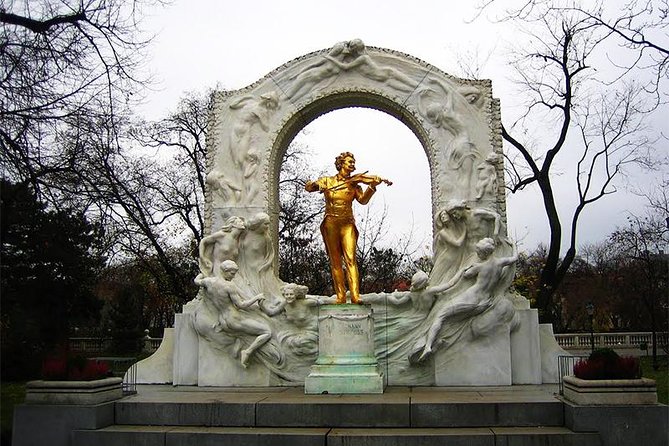
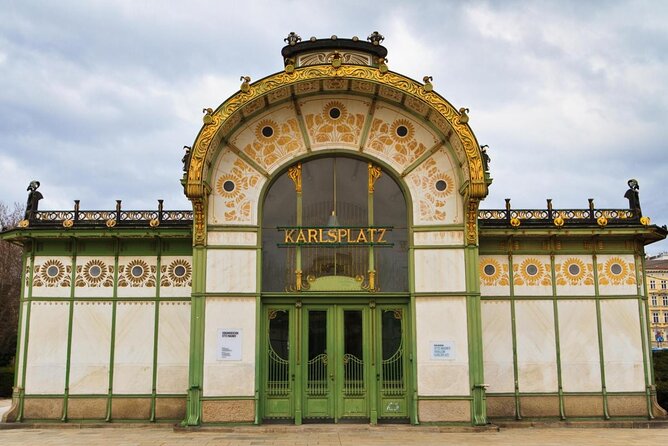
Then you hit Karlsplatz, with a visit connected to the Karlsplatz Stadtbahn Station. This is a former station of the Viennese Stadtbahn, and what makes it special is what sits above ground.
The buildings here are a well-known example of Jugendstil architecture, designed by Otto Wagner with Joseph Maria Olbrich involved. In other words, this is where the “Art Nouveau look” becomes architectural infrastructure. It is not just pretty ornament. It is a statement about modern design applied to daily transit.
You spend about 20 minutes in this zone. Admission is not included for this stop.
If you enjoy spotting details, this is a great section to do it slowly. The tour setup helps, because the guide frames what to look for before you stare at a facade for ten minutes pretending you are reading it.
Also, the tour timing is realistic. You are not sprinting from one stop to the next. You are walking with purpose.
Beyond the palaces, the city keeps its own rhythm of coffee, concerts, and day trips nearby.
- Vienna: Vivaldi’s Four Seasons Concert in Karlskirche★ 4.7 · 14,951 reviews
- Vienna: Schönbrunn Palace & Gardens Skip-the-Line Tour★ 4.7 · 7,739 reviews
- Vienna: Light of Creation Votive Church Immersive Light Show★ 4.8 · 6,779 reviews
- Vienna Spanish Riding School Guided Tour★ 4.7 · 6,765 reviews
Otto Wagner Pavillon Karlsplatz, When the Museum Is Open
Next comes Otto Wagner Pavillon Karlsplatz, an art nouveau station building he designed. You get about 15 minutes here, and the admission piece is seasonal.
The important detail: from April to October, when the museum is open, the tour incorporates this visit. The listed admission fees are €5 for general admission and €4 for senior citizens, students, holders of the Vienna Card, and persons with disabilities. (Exact eligibility depends on what you qualify for, so have your card or document ready.)
If you are traveling outside those months, the schedule may shift because the Pavillon visit ties to museum opening dates. This is the one part of the experience where planning around season can matter.
In the reviews, guides were credited with explaining why these buildings look the way they do and how Vienna’s designers thought about modern city life. I’d treat this as part of that same skill, because the Pavillon works best when you understand what Wagner was trying to solve.
Postsparkasse, the Postal Savings Bank, and Secession-Style Brilliance
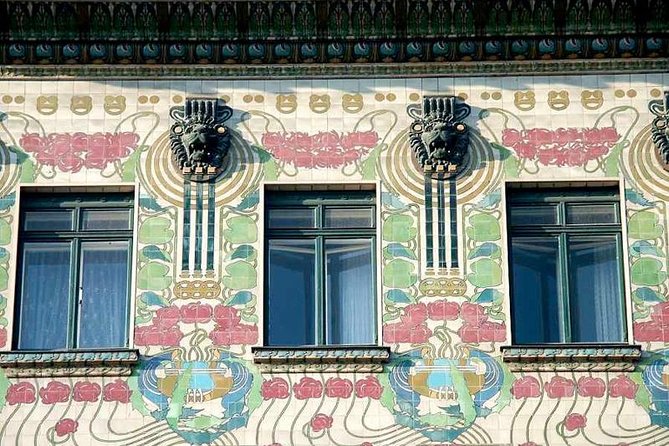
Postsparkasse is one of Vienna’s famous Otto Wagner buildings, and you visit it for about 25 minutes. This is the Austrian Postal Savings Bank building, designed and built by Otto Wagner, and it is widely regarded as an important Secession branch of Art Nouveau.
Admission is listed as free for this stop, so it is one of the easiest wins on the itinerary. You get solid time here too, which is key. With buildings like this, you need a few minutes to let your eyes adjust to the structure and ornament.
If you like architecture that mixes function and flair, you’ll probably enjoy this segment the most. Postal and financial buildings might sound boring on paper, but Wagner’s approach turns everyday bureaucracy into something you can study like a public monument.
Naschmarkt for a Real-Life Vienna Moment (Even If You Don’t Eat)
You finish with a short stop at Naschmarkt, Vienna’s best-known culinary market. It is lively and visual, with around 120 colorful market stands and plenty of places to grab something to eat.
The time here is about 10 minutes, and admission is free. Food and drinks are not included, so you can browse without pressure and decide if you want a snack later.
This is also where a few extra architecture hits can appear along the way. One review highlighted seeing Majolikahouses near the Naschmarkt and another mentioned the Zacherl-house downtown. Even if you are focused on the main Art Nouveau beats, these “bonus sightings” can make the walk feel more like Vienna than a set itinerary.
Also, Naschmarkt works as a palate cleanser. After stations and ornate facades, you get a different kind of Vienna energy, the kind you can’t fully recreate in photos.
Ending at Two Metro Stations and That Emperor-Only Touch
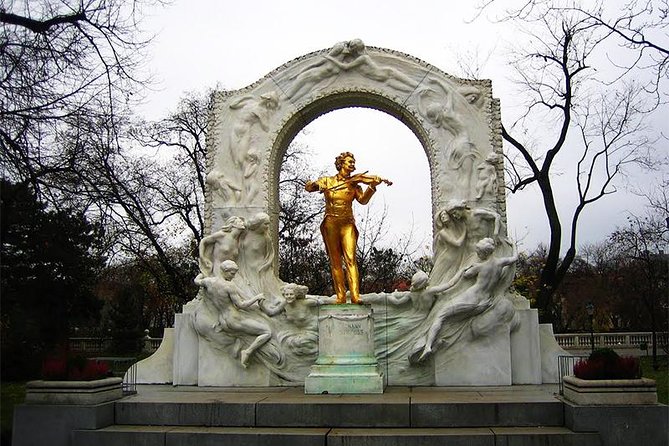
You wrap up at a pair of metro stations, including a tiny stop built just for the Emperor. That last detail is a fun way to close the loop: you started with a manifesto building, you moved through designers who shaped modern transit, and you end with a reminder that access, power, and mobility were always part of the city’s planning.
While your exact final station names are not specified here, the concept is clear: you are finishing in the transit world that this architecture movement helped redefine.
This ending also makes the tour useful. When you leave, you are not stuck with “I saw buildings.” You have also seen how Vienna’s metro infrastructure can be part of the design story.
Price and Value: Is $490 Per Group a Good Deal?
This tour is $490 per group, up to 10 people. That pricing model changes the math fast. If you are traveling as a couple, it may feel pricey. If you have a small family or a group of design-minded friends, it starts to look like a smart spend for the amount of guided time you get.
What you get for that money is a lot of guide labor, not just sightseeing:
- about 3 hours of private walking
- a professional guide
- a route focused on Art Nouveau metro stations and iconic buildings
- a mobile ticket
Then there are the extra costs, since entrance fees are not included:
- Secession House (for Klimt’s Beethoven Frieze), with listed pricing for Tuesday to Sunday
- Otto Wagner Pavillon Karlsplatz, with listed pricing from April to October when open
So the real value depends on how you like to tour. If you enjoy paying for context and conversation, this price can feel fair. If you prefer self-guided walking where you pay only for entrances you choose, you might compare to a DIY route and accept you will miss the guide’s connections.
One more practical note: pickup is mentioned as offered, but hotel pickup and drop-off is listed as not included. I’d confirm what pickup, if any, means for your exact starting point and transport plan.
Who This Tour Fits Best, and Who Might Want a Different Style
This is best for:
- people who like design, architecture, and the Art Nouveau story in Vienna
- visitors who want a private guide who can answer follow-up questions
- anyone who wants to see Vienna beyond the obvious stops, using the metro as the framework
It may feel less ideal if:
- you hate walking even at a gentle city pace
- you dislike paying separate entrance fees for interior highlights
- you want purely exterior photos and do not care about interior masterpieces like the Beethoven Frieze
The good news is that it is still only about three hours. It is not a full-day commitment, and the pacing is built around short, intentional stops.
Quick Planning Tips Before You Go
A few things will make your tour smoother:
- Bring comfortable shoes. This is a walking route across multiple sites.
- If you are visiting between April and October, expect the Pavillon portion to be part of your experience, since that is when the museum is open.
- If you are going Tuesday to Sunday, budget for Secession House admission for Beethoven Frieze and let your guide handle the payment steps.
- If your group includes people who are less into architecture, the Stadtpark and Naschmarkt breaks give everyone a breath and something different to enjoy.
One theme in the reviews was how guides were praised for being thorough and pleasant, and for adapting to mixed interest levels. That kind of flexibility matters on a private tour.
Should You Book This Private Vienna Art Nouveau Walking Tour?
If Art Nouveau in Vienna is even a little bit on your must-see list, I think this is a strong booking choice. You get a private format, a tight design-focused route, and enough structure that you will not wander around wondering what you are actually looking at.
I’d book it if you want:
- Klimt’s Beethoven Frieze at the Secession Building
- Otto Wagner’s station architecture as part of the story, not just a name you heard once
- a guided approach that helps you connect details to the bigger Vienna picture
I would hesitate if:
- you want a no-extra-fees tour, since entrance tickets are not included
- you are traveling in a season where you may miss the Pavillon museum opening and you feel strongly about that specific stop
Bottom line: this tour is for people who like their Vienna with context. If that sounds like you, the private pacing and Art Nouveau focus are exactly the right match.
FAQ
How long is the private Vienna Art Nouveau walking tour?
The tour lasts about 3 hours.
What is the price and maximum group size?
The price is $490 per group, with up to 10 people.
Is this a private tour?
Yes. It is private, meaning only your group participates.
What is included in the tour price?
You get a guided 3-hour tour and a professional guide. The tour also uses a mobile ticket.
Are entrance fees included?
No. Entrance fees are not included. Secession House has listed admission prices for Tuesday to Sunday, and Otto Wagner Pavillon Karlsplatz has listed admission prices when the museum is open from April to October. Your guide will help with paying for Secession House.
Where do I meet, and where does the tour end?
The start point is Operngasse 7, 1010 Wien, Austria. The tour ends in Vienna.
What is the cancellation policy?
Free cancellation is available up to 24 hours in advance for a full refund. If you cancel less than 24 hours before the start time, the amount paid is not refunded.
Latest Additions
- Wachau Valley Private Wine Tour with Tasting and Gourmet Lunch
★ 5.0 · 1 review - Vienna: Danube Valley Tour with Melk, Dürnstein with wine tasting and boat.
★ 5.0 · 1 review - Private city tour in Vienna
★ 5.0 · 1 review - Hallstatt Small Group Day Trip from Vienna
★ 3.0 · 1 review - Inside Freud’s Mind: Self-Guided Mystery Walk in Vienna
★ 4.0 · 1 review - Private Transfer from Vienna to Prague
★ 5.0 · 1 review - Vienna’s Christmas Market Magic Tour
★ 5.0 · 1 review
Walking Tours, compared.
Guided Walking Tour of City Center Highlights
Read our review →
Guided Walking Tour of City Highlights & Hidden Gems
Read our review →
Vienna Historic Center Small Group Walking Tour
Read our review →
Browse the lists this tour appears in