
Reviewed · WALKING TOURS
Private Hidden Vienna Walk — Stories Behind Quiet Corners
Vienna without the crowd line. This private 3-hour walk threads from Stubentor gate to the Judenplatz Holocaust Memorial, with stories that explain what you are actually looking at. I love how the route mixes big names with quiet side streets, and I also love the payoff of a secret rooftop view.
The one catch is simple: this is a walking tour. Plan for a moderate fitness level and real time on your feet, plus some stairs around older buildings.
In This Review
- What You’re Really Paying For in This Private Vienna Walk
- Key Moments You Can Expect on the Route
- Pickup, Mobile Ticket, and the Best Meeting Point Strategy
- Stop 1: Stubentor and the Feeling of Vienna’s Old Walls
- Stop 2: The Church of the Jesuits and the Language of Architecture
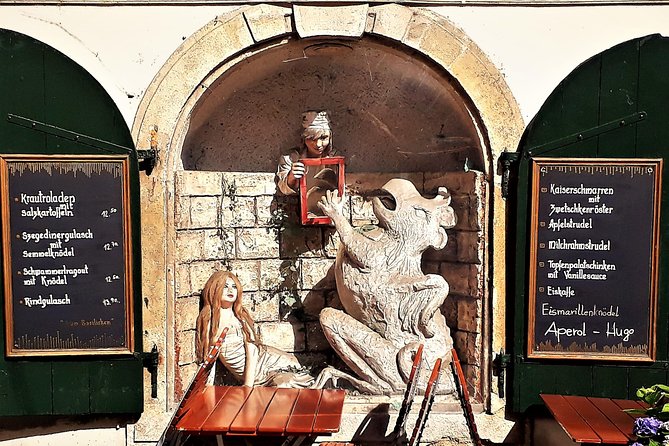
- Schönlaterngasse Stories: The Basilisk Mural and Schnitzel Since 1905
- Stop 3: Deutschordenshaus and the Sala Terrena Room for Mozart-Linked Music
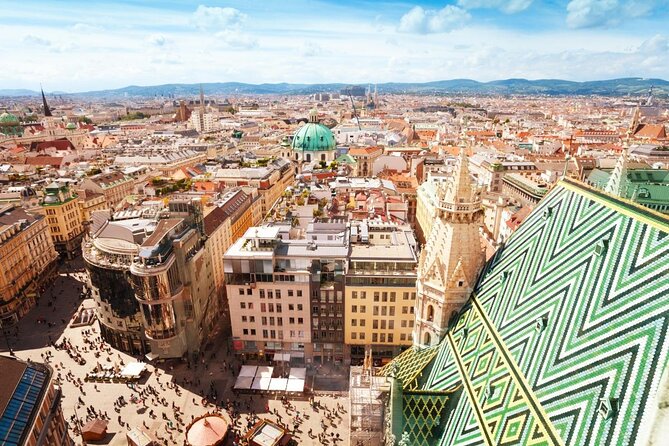
- Stop 4: St Stephen’s Cathedral, Outside Details Then Time Inside
- Stop 5: Judenplatz and the Holocaust Memorial in One Atmospheric Square
- Café Central, Ferstel Passage, and Political Stories You Hear in Vienna
- Stop 6: Palais Daun-Kinsky, Hildebrandt, and a Birthdate You Can Anchor
- Stop 7: Rathausplatz, Café Landtmann, and Freud’s Favorite
- The Secret Rooftop View: Why the Walking Pays Off
- Pace, Stairs, and How Flexible This Tour Tends to Be
- Price and Value: Is $344.80 Worth It?
- Who Should Book This Tour, and Who Should Skip It
- Should You Book the Private Hidden Vienna Walk?
- FAQ
- How long is the private hidden Vienna walk?
- How many people are included in the private group?
- Is pickup included, or where do we meet?
- What language is the tour offered in?
- Are there any admission fees at the stops?
- What should I know about fitness and mobility, and are service animals allowed?
What You’re Really Paying For in This Private Vienna Walk
This isn’t a checklist tour. You are paying for a licensed Austria guide to get you through the city with a story in hand, not a map in the dark.
The group is private, up to 10 people, and you can usually choose a morning or afternoon departure. That matters because Vienna has rhythms, light, and crowd patterns, and timing your walk makes the difference between looking at landmarks and actually understanding them.
At $344.80 per group, it can be a standout value if you travel with friends. If you have 4 people, you are roughly paying $86 per person for a guide’s time, a focused route, pickup options, and stop-by-stop framing. If it is just 2 people, it is a bigger spend, but it still can be worth it for a first or second visit when you want the context fast and in one clean session.
Key Moments You Can Expect on the Route
- Stubentor Gate Start: see how massive Vienna’s walls were at an eastern entry point
- Jesuit Church Explained: architecture and decoration turned into a clear spiritual concept
- Schönlaterngasse Stories: a Vienna basilisk mural, plus schnitzel lore tied to the address
- St Stephen’s Cathedral Inside Time: outside details first, then a chance to step in
- Judenplatz Holocaust Memorial in Context: a heavy story placed in one of the city’s most atmospheric squares
- Secret Rooftop Views: a tucked-away viewpoint that rewards the walking
Other ways to round out a Vienna visit
Pickup, Mobile Ticket, and the Best Meeting Point Strategy
Pickup is offered, including meetups near your hotel or station, and the tour notes doorstep or pier/train station options. That is useful if you arrive by cruise or want to avoid the stress of finding a specific street corner.
If you are docking on the Danube, there is an A-Rosa meet point listed at Pier Handelskai 265, 1020 Wien. For everyone else, they also say other meeting points can be arranged within Vienna. Translation: you should tell them what is easiest for you, then show up and let the guide handle the rest.
You’ll get a mobile ticket, which keeps day-of logistics simple. The route is also “near public transportation,” so if you need a short reset at any point, the city is built to get you back on track.
Stop 1: Stubentor and the Feeling of Vienna’s Old Walls
You start at Stubentor, an eastern gate area. This is a strong opening because it gives you scale. Vienna’s center is compact, but when you begin with how the walls once worked, everything else makes more sense.
At this stop, you get about 10 minutes. That is just enough time to look, absorb, and move on before the tour tempo changes. It’s the kind of beginning that helps you stop treating the city as postcard images and start treating it as a defended place that kept changing shape.
Stop 2: The Church of the Jesuits and the Language of Architecture
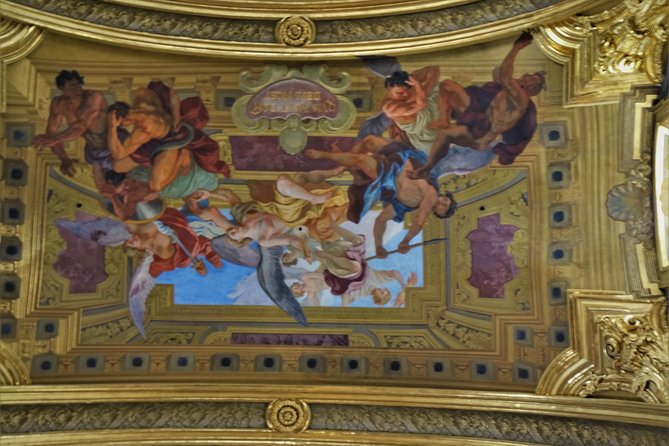
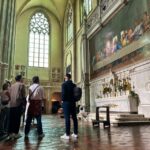
Next is the Church of the Jesuits. The key promise here is decoding the spiritual concept in architecture and decoration, not just admiring a façade.
You’ll get about 10 minutes, and the focus is interpretive. Expect the guide to connect elements you can actually see, like how form, detail, and ornament work together to communicate a message. This is one of those “your eyes learn something new” stops.
It also helps that you’re not spending most of your time staring at one landmark. You’re training your attention for the rest of the walk.
Beyond the palaces, the city keeps its own rhythm of coffee, concerts, and day trips nearby.
- Vienna: Vivaldi’s Four Seasons Concert in Karlskirche★ 4.7 · 14,951 reviews
- Vienna: Schönbrunn Palace & Gardens Skip-the-Line Tour★ 4.7 · 7,739 reviews
- Vienna: Light of Creation Votive Church Immersive Light Show★ 4.8 · 6,779 reviews
- Vienna Spanish Riding School Guided Tour★ 4.7 · 6,765 reviews
Schönlaterngasse Stories: The Basilisk Mural and Schnitzel Since 1905
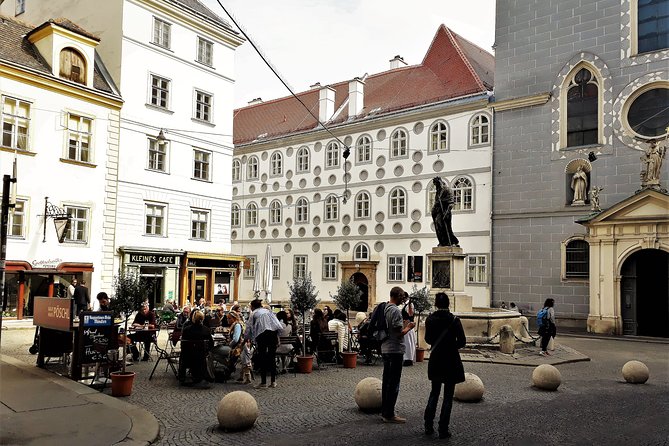
Then you move into the Schönlaterngasse area, where the tour brings in two very Vienna-flavored stories.
First is the legend of the Vienna basilisk, illustrated by a mural. It’s the sort of detail tourists miss because it looks like art until someone explains why it is there and what it is pointing to in the neighborhood’s folklore.
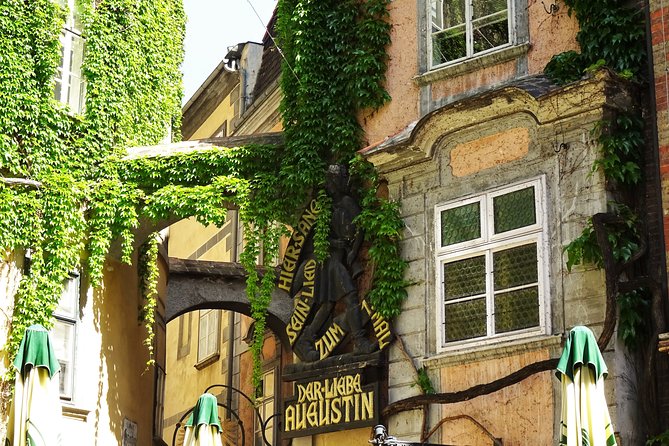
Second is food lore. The tour includes a reference to a spot on Schönlaterngasse that has been home to the most famous schnitzel since 1905. Even if you do not eat there that day, the point is the continuity. Vienna is full of places where a tradition outlives the building.
This stop is designed to feel like you are walking through a city that remembers. Short, specific, and easy to carry afterward when you order schnitzel and realize you are eating inside a story.
Stop 3: Deutschordenshaus and the Sala Terrena Room for Mozart-Linked Music
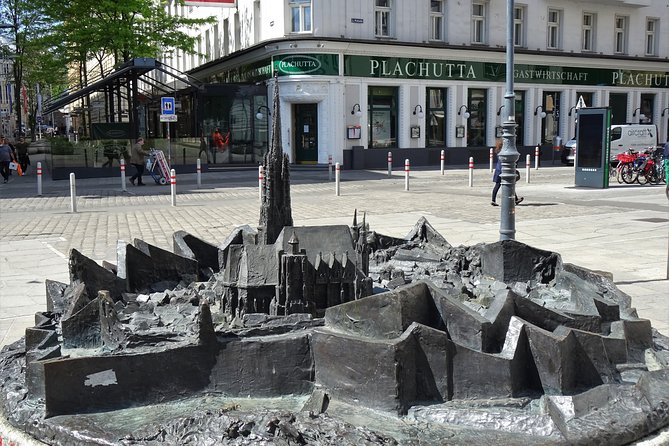
The tour then heads to Sala Terrena im Deutschordenshaus. Here, you get a snapshot of the “sala terrena” space and the idea of music playing there during the period connected to Mozart in 1781.
Even without getting too technical, this is a memorable stop because it reframes a location as something lived in, not just something preserved. Vienna’s story is not only kings and wars. It is also rooms, routines, and what people did with sound in everyday life.
You get about 10 minutes, so it is more about understanding the significance than it is about wandering.
If you are a music fan, this part pairs nicely with the later Vienna-at-large talk about Mozart and Beethoven. The tour uses these references to keep the city’s cultural timeline from feeling like a pile of names.
Stop 4: St Stephen’s Cathedral, Outside Details Then Time Inside

St Stephen’s Cathedral is next, and the approach is practical. You start with outside details, then you are given time to look inside.
This is one of the stops where pacing matters. The itinerary allots about 15 minutes. That usually works best if you go in knowing you want to see key areas, not do a slow museum-style circuit.
If you have mobility concerns, pay attention here. Older city centers often include stairs and uneven spots near historic entrances. The tour’s negative review included a reminder that you should be clear about your physical limitations ahead of time, because this is a walking tour with some vertical parts.
That said, many people love how this stop is handled because you do not just photograph. You learn how to look at the exterior details first, so the interior feels more meaningful when you step in.
Stop 5: Judenplatz and the Holocaust Memorial in One Atmospheric Square
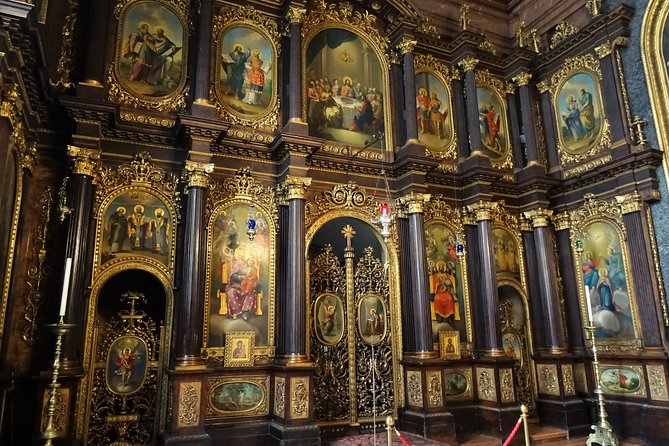
Judenplatz is heavy, and the memorial here is not the kind of thing you can treat like another photo stop. The tour frames it as a story embedded in a square that has carried weight for about seven hundred years.
You get around 10 minutes. In that short window, the guide’s job is to keep the tone respectful while helping you understand why the location matters.
I like this stop because it gives Vienna a full-spectrum view. You get the beauty, the artistry, and the music stories, but you also get the city’s responsibility to remember.
This is also one of the reasons a private guide is useful. In a group, people sometimes rush past memorials. A good guide slows you down in the right way.
Café Central, Ferstel Passage, and Political Stories You Hear in Vienna
After the memorial, the tour shifts to another layer of city character: cafés, passageways, and the idea that some famous political figures never became friends.
The tour includes Café Central and the Ferstel Passage, with a prompt to find where Trotsky and Stalin did not become friends. You should treat this as a narrative hook the guide uses to connect people, ideology, and the Vienna atmosphere around them.
This is also a great example of why the “quiet corners” theme works. Passageways and café-adjacent streets do not look like they matter until someone connects them to how people moved, met, and argued.
And yes, you are likely to get practical food and coffee recommendations too. In the tour’s feedback, guides were praised for pointing people to local coffee shops and bread shops, not just famous addresses.
Stop 6: Palais Daun-Kinsky, Hildebrandt, and a Birthdate You Can Anchor
Next comes Palais Daun-Kinsky, which is where the walk starts feeling like an architectural timeline you can hold in your head.
You learn that the palace was commissioned by Count Wirich Philipp von Daun. Construction started in 1713 under architect Johann Lucas von Hildebrandt. Then there is a very specific anchor detail: Prince Józef Poniatowski was born there on 7 May 1763.
You get about 10 minutes. That is enough to absorb the main facts and to notice details on the building without making the walk turn into a lecture marathon.
The value here is that you finish the stop with a name and a date in your memory. Vienna is full of palaces, but dates make the stories stick.
Stop 7: Rathausplatz, Café Landtmann, and Freud’s Favorite
At Rathausplatz, the tour points you toward Café Landtmann, described as Freud’s favorite. Even if you are not a psychoanalysis deep dive, it is a useful association because it places intellectual history into a real street-level setting.
You get about 10 minutes at this stop, which again favors looking, understanding, and moving on. The goal is not to sit in a café for an hour. The goal is to make you notice Vienna’s habit of turning ideas into places.
This section also tends to be where conversation starts to flow. Many guides on this kind of walk are strong on Q and A, including cultural context and how Austria views current issues. You can ask, and if you feel like it, you can just listen.
The Secret Rooftop View: Why the Walking Pays Off
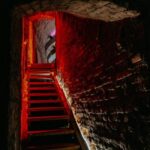
The highlight list includes a secret rooftop stop for views. That is a big reason I like tours like this, because it gives you a “yes, I get it now” moment.
Rooftops do something street level cannot. They show how neighborhoods relate to each other, where sight lines open, and how the city’s geometry creates the sense of intimacy Vienna is famous for.
If you plan your timing well, the rooftop can also feel like a payoff for the morning or afternoon you have already spent. The tour lets you choose morning or afternoon departure, and light changes the effect.
Pace, Stairs, and How Flexible This Tour Tends to Be
On paper, this is a 3-hour walk with multiple short stops. In real life, that means each location is brief and your guide keeps you moving.
That can be perfect for people who want structure. But if you need extra time to linger, you should communicate that early.
One part of the tour’s feedback was a reminder to be explicit about mobility limitations, including stair difficulty and long walking. The guide response also mentioned that the walk can average around 8,000 steps. So I recommend you treat that as a good planning benchmark.
On the positive side, multiple people praised guides for tailoring the route to interests. Names that showed up in the tour experience include Walter, Sabine, Brigitte, Hannes, and Danielle. The pattern is consistent: attentive guides who adjust within the time frame, and who answer lots of questions without making you feel rushed.
My practical takeaway: you can expect flexibility, but you should not assume the tour will become a slow-paced sightseeing afternoon. It stays a walking tour.
Price and Value: Is $344.80 Worth It?
Let’s do the simple math. This is $344.80 per group for up to 10 people.
- If you have 2 people, you are paying about $172 per person.
- If you have 4 people, about $86 per person.
- If you have 6 people, about $57 per person.
- If you have 8 to 10 people, it gets very competitive for a private licensed guide.
What you get for that price is not just time with a guide. You get a focused route that hits major landmarks like St Stephen’s Cathedral and the Jesuit Church, plus meaningful stops like Judenplatz Holocaust Memorial, plus stories that link Mozart, Beethoven, and Vienna’s intellectual life to specific addresses.
You also get free admission noted for the stops listed, so you are not paying extra ticket fees at each step. The tour does not include transport to and from attractions, but since it is a walking route with pickup options, that is usually not a dealbreaker.
If you are in Vienna for a first pass and you want context quickly, this can be a smart use of one afternoon or morning.
Who Should Book This Tour, and Who Should Skip It
Book it if you want:
- A guided walk that mixes big sights with off-main-street stories
- Architectural and cultural explanations tied to specific places
- A private pace with time to ask questions and get local recommendations
- A rooftop viewpoint that changes how you see the city
Skip it or reconsider if:
- You have trouble with stairs or long walking days and cannot comfortably handle it
- You want long entries into multiple interiors with lots of sitting time
- You are looking for a self-paced tour where you control every stop length
This tour also tends to fit second-time visitors well, or anyone with more than just one shot at Vienna. The route is built to feel like you are learning new layers, not repeating the same center-loop.
Should You Book the Private Hidden Vienna Walk?
I think this tour is a strong choice if you want Vienna with context and you are comfortable walking for about 3 hours.
If you are traveling as a small group, it can be excellent value for the amount of story density you get per stop. The standouts for me are the way the tour handles the Jesuit Church architecture, the serious weight of Judenplatz, and the payoff of the secret rooftop views.
Just be honest about your mobility before you go. If you do, you will get the private, human version of Vienna that this tour is built for, not a mismatch of pace and needs.
FAQ
How long is the private hidden Vienna walk?
It lasts about 3 hours.
How many people are included in the private group?
The tour is private, and it runs for your group only, with up to 10 people.
Is pickup included, or where do we meet?
Pickup is offered from a doorstep or pier or train station. The operator says other meeting points within Vienna can be arranged, including an A-Rosa pier meeting point at Pier Handelskai 265, 1020 Wien.
What language is the tour offered in?
The tour is offered in English.
Are there any admission fees at the stops?
The provided stop details list admission as free for the locations included on the route.
What should I know about fitness and mobility, and are service animals allowed?
The tour states a moderate physical fitness level is recommended. Service animals are allowed, and pets are not permitted in certain areas visited.
Latest Additions
- Wachau Valley Private Wine Tour with Tasting and Gourmet Lunch
★ 5.0 · 1 review - Private city tour in Vienna
★ 5.0 · 1 review - Vienna: Danube Valley Tour with Melk, Dürnstein with wine tasting and boat.
★ 5.0 · 1 review - Hallstatt Small Group Day Trip from Vienna
★ 3.0 · 1 review - Inside Freud’s Mind: Self-Guided Mystery Walk in Vienna
★ 4.0 · 1 review - Private Transfer from Vienna to Prague
★ 5.0 · 1 review - Vienna’s Christmas Market Magic Tour
★ 5.0 · 1 review
Walking Tours, compared.
Guided Walking Tour of City Center Highlights
Read our review →
Guided Walking Tour of City Highlights & Hidden Gems
Read our review →
Vienna Historic Center Small Group Walking Tour
Read our review →
Browse the lists this tour appears in