
Reviewed · SELF-GUIDED TOURS
Hitler’s Vienna: A Self-Guided Tour
Streets can teach more than museums. This self-guided Vienna audio tour follows Hitler’s early footsteps, using real locations tied to his poverty, rejection, and rise. It is GPS-driven and focused, so you do not just stroll randomly through the city.
I especially like the offline audio and maps. You can download everything and keep moving even with spotty cell service. The other big win is the sheer practicality: you can pause, walk faster, or slow down without coordinating with anyone.
One thing to consider: the narration may jump across time periods while you move from stop to stop. If you like a perfectly linear story, you may need a little patience, especially in the middle sections.
In This Review
- Key takeaways before you start
- Hitler’s Vienna on foot: why a self-guided audio walk works
- Price and value: what $14.99 buys you in real terms
- Getting oriented: start at Wien Westbahnhof, finish near the Academy
- How the audio GPS experience actually feels on the street
- The walking route, stop by stop: from early poverty to Heldenplatz
- Start outside Wien Westbahnhof: your trailhead
- Stumpergasse area: the multicultural neighborhood and former digs
- Stumpergasse 13: the Sisters of Mercy Hospital and soup
- His first home and failed Academy applications
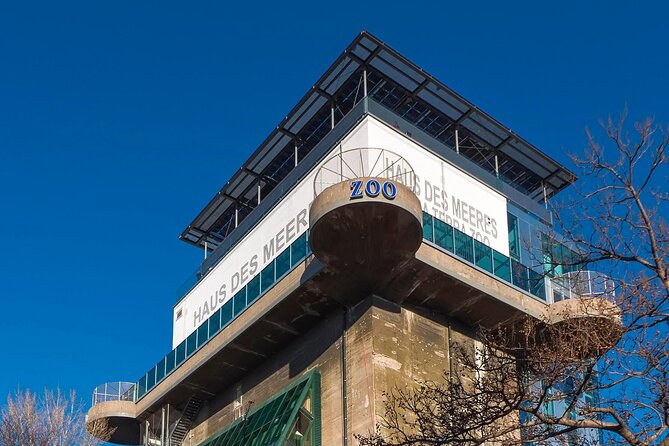
- Haus des Meeres: a 154-foot flak tower
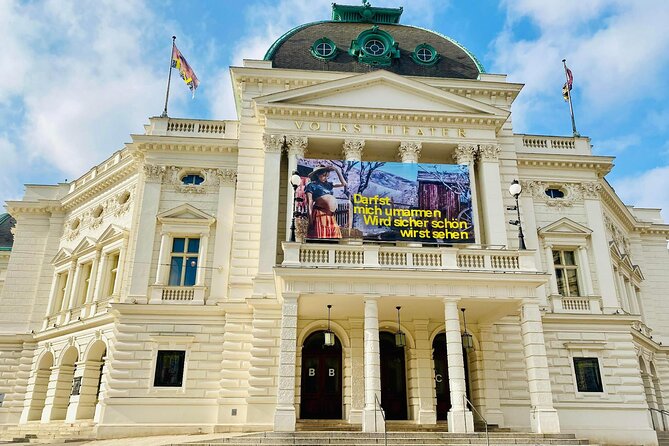
- Volkstheater: frequent performances and an obsession with art
- Austrian Parliament: anti-Semitism, poverty, and rejection
- Volksgarten: downfall and the tyrant transformation
- Heldenplatz: the reunification speech with 200,000 people
- End at the Academy of Fine Arts: rejected three times
- What I like most: navigation ease and a story you did not know you needed
- Where the narration can feel a little tricky
- Practical planning: shoes, headphones, and timing
- Who should book this tour, and who might prefer something else
- Should you book Hitler’s Vienna?
- FAQ
- How long is the self-guided tour?
- What language is the tour available in?
- Where does the tour start and end?
- Do I need headphones?
- Can I use it offline?
- Is there free cancellation?
Key takeaways before you start
- Starts at Wien Westbahnhof and ends by the Academy of Fine Arts so you finish right where the story comes back to art
- Offline audio, maps, and geodata help you stay on track without relying on data
- A 2 to 3 hour route that works well as a focused half-day plan
- Stop-by-stop links to poverty, anti-Semitism, and rejection to help you connect locations to ideas
- Easy to follow self-guided format that still feels like a guided walk
- A few time jumps that can feel confusing if you prefer strict chronology
Hitler’s Vienna on foot: why a self-guided audio walk works
This is not a quick bus tour with lots of faces you never remember. It is a walk through specific places tied to one of history’s darkest chapters, and the audio is built to keep you moving and thinking as you go. You are in charge of pacing, which matters here. You can pause when something hits, or simply keep going when you need momentum.
I also like that the route is designed around movement. The city becomes the lesson. You see how different parts of Vienna connect, from the neighborhoods associated with a struggling young man to the grand civic spaces tied to political power later on.
Set your own pace through the center

Price and value: what $14.99 buys you in real terms
At $14.99 per person for a 2 to 3 hour self-guided experience, you are paying mainly for two things: guidance and friction-free navigation. You get an app for Android and iOS, plus offline access to audio, maps, and geodata. That is worth real money in Vienna, where going off track is easy and expensive in time.
You also get lifetime access to the English tour audio before your booking date and after it. That means you are not stuck with one single shot. If you miss a stop the first time, you can rerun the route and try again later without paying twice.
Because it is self-guided, there is no need to match schedules with a group leader. If you like independence, this price feels fair. If you strongly prefer a live historian to answer questions on the spot, you might want a guided option instead.
Getting oriented: start at Wien Westbahnhof, finish near the Academy
You begin outside Wien Westbahnhof, Europaplatz 2/3, 1150 Wien. That is a practical starting point because it is a hub area, and it makes it easier to build your own day around the tour.
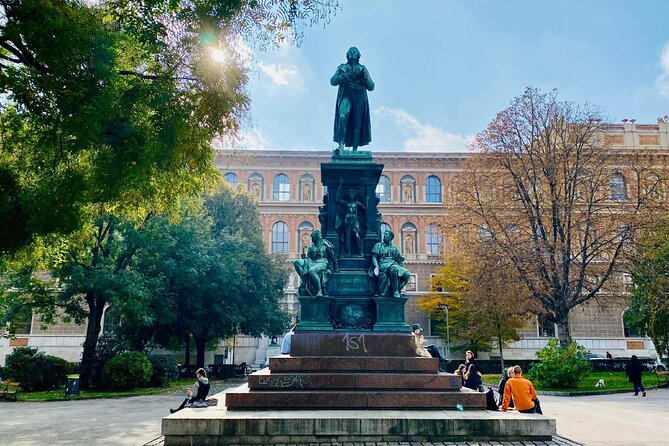
The walk ends outside the Academy of Fine Arts Vienna near Schillerpark, Schillerplatz, 1010 Wien. Ending there is a smart narrative move, because the audio brings you back to the artist’s application story tied to the Academy.
The tour is designed for private use for your group only, so you will not be sharing audio space with strangers. One more practical point: you will need your smartphone and headphones, since those are not included. If you show up without headphones, your plan will stall.
How the audio GPS experience actually feels on the street
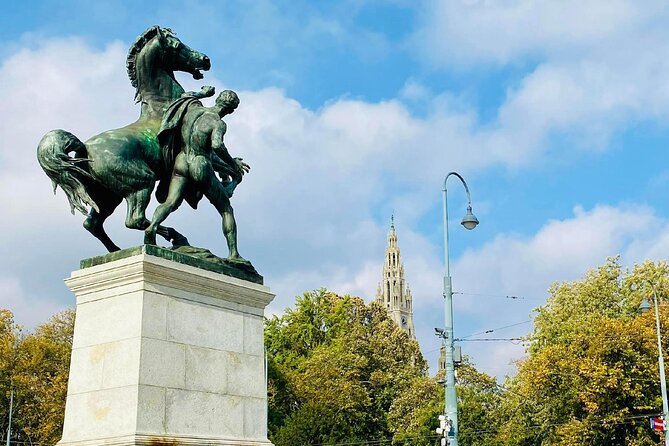
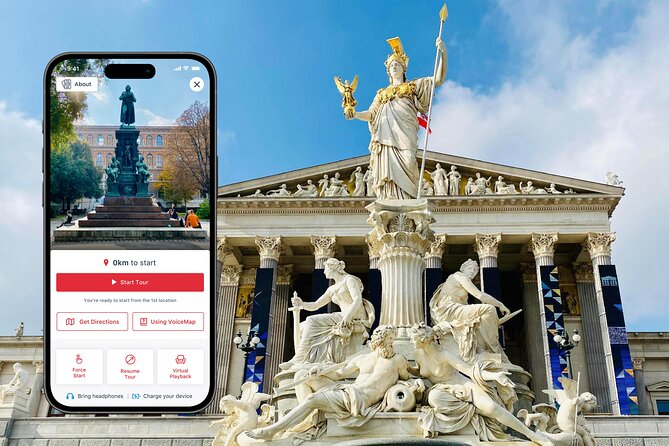
This tour runs through a VoiceMap Audio Tours app. It is built for self-paced walking with GPS guidance, and you get downloaded materials so you are not constantly fighting with your signal.
The best part of this format is control. You can linger near a building that grabs your attention, then speed up when you just want to keep the story moving. That control also helps with a topic like this, where you may want a moment to process and then decide whether to continue right away.
Also note the duration: you should plan for about 2 to 3 hours. That is enough time to read the locations, absorb the audio, and still have energy left for a nearby dinner or a quick museum stop after.
Other ways to round out a Vienna visit
- Vienna Spanish Riding School Guided Tour★ 4.7 · 6,765 reviews
- Vienna: Guided Walking Tour of City Center Highlights★ 4.7 · 4,989 reviews
- Vienna: Vienna Central Cemetery Guided Walking Tour★ 4.8 · 3,307 reviews
- Day trips from Vienna: Hallstatt & Salzburg Guided Tour★ 4.7 · 2,202 reviews
The walking route, stop by stop: from early poverty to Heldenplatz
Below is the story path you will follow. The narration is tied to place, and each stop is meant to explain a piece of how the early years fed the later rise.
Start outside Wien Westbahnhof: your trailhead
You kick things off outside Wien Westbahnhof. From there, you follow in Hitler’s footsteps and visit key locations connected to formative years. Starting with a major train station is practical, because it helps you get your bearings fast and gives you a clear beginning even if you are new to the area.
Stumpergasse area: the multicultural neighborhood and former digs
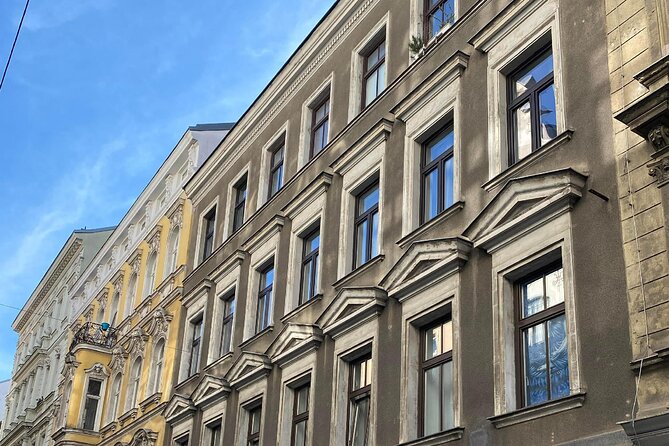
Next, you walk through the multicultural neighborhood where Hitler lived as a failed art student. The audio highlights his former digs outside Stumpergasse 31. This section is where the tour shifts from “facts about a person” into a sense of daily setting.
If you like understanding people through their environment, this part is strong. Streets like these help you picture what life felt like during rejection and uncertainty, not just the final political outcome.
Stumpergasse 13: the Sisters of Mercy Hospital and soup
You also pass Stumpergasse 13, where the Sisters of Mercy Hospital used to be. The audio explains how they provided soup to a young, destitute Hitler.
This stop is emotionally heavy, and that is exactly why it matters. A grand political storyline can turn abstract. Here the tour brings the story back to basic survival. You are seeing how charity, poverty, and humiliation can be part of a human timeline.
His first home and failed Academy applications
As you continue, you pass Hitler’s first home in Vienna and hear about unsuccessful applications to Vienna’s Academy of Arts. The route reinforces that art was not just a hobby. It became a repeated point of rejection, and the audio ties that rejection to how his worldview formed.
A practical tip here: if you are taking photos, keep them quick. The audio is the point. Let the narration connect the buildings in your mind instead of turning the walk into a camera marathon.
Haus des Meeres: a 154-foot flak tower
Then comes a striking visual: the gigantic 154-foot tall Haus des Meeres. The tour explains that the imposing structure was once a World War 2 flak tower.
This is one of those stops where your brain has to shift gears. The building’s size makes it hard to ignore, and the audio adds a second layer. You are watching how Vienna’s architecture can hide a military past in plain sight.
Volkstheater: frequent performances and an obsession with art
You pass the grand Volkstheater, where Hitler frequently attended performances, according to the audio.
This is a useful counterpoint. After poverty and rejection, you see that fascination and public exposure were part of the picture too. The story becomes less tidy, which is often more realistic. His art interest was not only an idea. It showed up in his behavior.
Austrian Parliament: anti-Semitism, poverty, and rejection
The tour passes by the Austrian Parliament. Along the way, the audio connects Vienna’s anti-Semitic environment to Hitler’s experiences of poverty and rejection, and how these shaped his worldview.
This section matters because it links personal experience with political ideas. It is not only about where he lived. It is about the broader atmosphere around him, and the way an environment can steer someone toward specific beliefs.
You may find it helpful to walk a little slower here. This is where the narration does more explanation than sightseeing.
Volksgarten: downfall and the tyrant transformation
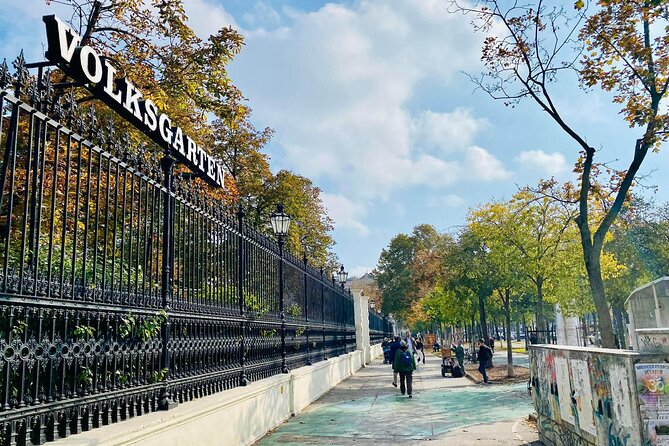
Next you stroll past Volksgarten as you learn about Hitler’s downfall and subsequent transformation into a tyrannical leader.
The garden space helps with pacing. You have been moving through civic and historical markers, and this creates a moment to reset your attention before the final dramatic stop.
Heldenplatz: the reunification speech with 200,000 people
The tour reaches the very spot on Heldenplatz where Hitler gave his triumphant reunification speech to over 200,000 people.
This is the climax of the walking story. By the time you reach Heldenplatz, the earlier stops have set up the emotional and ideological path the audio is drawing. It is not a cheerful ending, and it should not feel like one.
Take a moment here if you need it. You are standing in a space meant for mass impact, and the narration gives context for why scale mattered to his message.
End at the Academy of Fine Arts: rejected three times
Finally, your self-guided tour ends outside the Academy of Fine Arts Vienna, which rejected the aspirant artist’s application three times, according to the audio.
Ending where the rejection story returns makes the tour feel closed-loop instead of random. You started with place, moved through a timeline, and landed back at the institution at the heart of the artist dream.
What I like most: navigation ease and a story you did not know you needed
Two things tend to make or break self-guided audio tours: clarity and pacing. This one is designed to be easy to follow, with GPS guidance so you are not constantly checking maps like a homework assignment. That helps, especially when you are trying to focus on difficult content without getting lost.
I also like that it surfaces locations you would not automatically find yourself. Vienna is full of sights, but this route points you toward the smaller, more specific anchors tied to the early chapters of the story. That makes your walk feel intentional, not like you are just ticking boxes.
Where the narration can feel a little tricky
One potential drawback is that the audio can jump across years. The tour is location-based, so the narration naturally connects present-day buildings to multiple moments in the past, which can make chronology feel less straight.
If that bothers you, you can still manage it. When the audio starts talking about a different time period, slow down for 30 seconds. Let the new detail register before you move on. You will get more out of it, and the time shifts will feel like connections rather than interruptions.
Practical planning: shoes, headphones, and timing
Plan for 2 to 3 hours of walking time. If you stop for coffee, build extra time. A self-guided route moves at your pace, but the city spacing still adds up.
Bring headphones and make sure they work before you leave your room. Also, download any audio and maps early if the app gives you that option. The whole experience depends on being able to listen without interruptions.
As for timing, the tour availability shown runs across the full day within the listed date window. Practically, that means you can fit it into many schedules. Late afternoon often works well in Vienna because you get softer light for exterior stops, but any time of day can work if you keep your phone battery in mind.
Who should book this tour, and who might prefer something else
This tour is a good fit if you:
- Want an affordable, self-paced way to explore Vienna
- Like walking with audio guidance rather than a group schedule
- Prefer learning through place, not just a lecture
It may not be the best fit if you:
- Strongly dislike narration that shifts time periods
- Want a live guide to provide immediate context or answer questions
Also, because the subject matter involves some of the darkest themes in modern history, you should choose it intentionally. If you are looking for a light, carefree stroll, this is not that. If you want a structured way to understand how people and ideas can emerge from specific environments, it can be worthwhile.
Should you book Hitler’s Vienna?
I would book it if your goal is a focused, location-based audio walk that you can control end to end. The value is strong for the price because you get offline navigation support, lifetime access, and a route that keeps moving rather than stalling in the same spot.
You should skip it or consider another format if you need strict chronological storytelling or if you do not want to walk through emotionally difficult content without a live guide. And do not underestimate the importance of headphones and phone readiness, because this is built for your device.
If you want a practical way to connect Vienna’s streets to a painful historical storyline, this route is easy to start, easy to follow, and designed to keep you engaged.
FAQ
How long is the self-guided tour?
It takes about 2 to 3 hours to complete, depending on your walking pace and how long you pause at each stop.
What language is the tour available in?
The tour audio is offered in English.
Where does the tour start and end?
You start outside Wien Westbahnhof at Europaplatz 2/3, 1150 Wien, Austria. You end outside the Academy of Fine Arts Vienna in Schillerpark at Schillerplatz, 1010 Wien, Austria.
Do I need headphones?
Yes. A smartphone and headphones are not included, so you will need to bring your own.
Can I use it offline?
Yes. The tour includes offline access to audio, maps, and geodata.
Is there free cancellation?
Yes. You can cancel for a full refund up to 24 hours in advance of the experience start time.
Latest Additions
- Wachau Valley Private Wine Tour with Tasting and Gourmet Lunch
★ 5.0 · 1 review - Vienna: Danube Valley Tour with Melk, Dürnstein with wine tasting and boat.
★ 5.0 · 1 review - Private city tour in Vienna
★ 5.0 · 1 review - Hallstatt Small Group Day Trip from Vienna
★ 3.0 · 1 review - Inside Freud’s Mind: Self-Guided Mystery Walk in Vienna
★ 4.0 · 1 review - Private Transfer from Vienna to Prague
★ 5.0 · 1 review - Vienna’s Christmas Market Magic Tour
★ 5.0 · 1 review
Self-Guided Tours, compared.
Tickets for Mozarthaus Vienna with Audio Guide
Read our review →
New Hofburg Palace Audio-Guided Tour & Entry Ticket
Read our review →
Schlumberger Wine Cellar Guided or Self-Guided Tour
Read our review →

Vienna Walking Tour with Audioguide on Your Smartphone
Read our review →

The Heart of Vienna: A Self-Guided Audio Tour
Read our review →Browse the lists this tour appears in