
Reviewed · SCAVENGER HUNTS & PUZZLE WALKS
Vienna: The Great Plague Exploration Game
A smartphone scavenger hunt beats the usual Vienna loop.
What makes this one interesting is the self-paced format and the fact you use your smartphone for audio stories and clue puzzles instead of following a traditional guide around. I love that it’s truly built for real wandering, where you can slow down, look closer, and keep going when you feel like it.
This is also a very good fit for families who want something to do besides just standing and listening. One drawback to consider: you get less straight-from-the-mouth narration, so if you want a guide to explain every detail, you may feel you wanted more history facts than the game provides.
In This Review
- Key Highlights
- Price and what you actually get for $7.23
- Self-paced and family-friendly, without the tour-bus pressure
- Starting at Ruprechtskirche: the game’s first puzzle sets the tone
- From Griechenbeisl to the Hasenaus mural: history you can spot with your own eyes
- Stephansplatz, Stock im Eisen, and the nails tree you’ll never forget
- St. Stephen’s Cathedral: go for the tower view if you want the big payoff
- Café Frauenhuber: the coffeehouse break that fits the “look closer” theme
- Albertina: art and prints after the puzzle workout
- Hofburg finish line: where the game ends and your pace starts again
- App, puzzles, and one practical warning before you start
- How long it takes, and how to plan your Vienna afternoon
- Who this is best for, and who should skip it
- Should you book the Great Plague Vienna quest?
Key Highlights
- Private-by-your-party route means you are not mixed into a big group shuffle
- Smartphone, no physical guide keeps things flexible and family-friendly
- Audio stories and clue puzzles turn sightseeing into active exploring
- Some major sights are included at no cost, while a few museums or tower rooms cost extra
- Free for kids makes it easier to justify the outing for a mixed-age crew
Price and what you actually get for $7.23
At about $7.23 per person, this feels like one of the more affordable ways to do a structured “walk and discover” in Vienna. You are paying for the game engine, audio stories, and clue-based routing, not for a guide’s labor or a bundle of paid admissions.
Here is the key value point: several stops are marked as admission-free within the flow of the quest (church exterior or free-access moments, the mural area, and outdoor sights). But a few big-name attractions still require separate tickets if you want the full experience, like the tower room at St. Stephen’s Cathedral and museum visits later on.
That split matters. If you like the idea of checking boxes quickly and keeping costs down, you can treat the paid-ticket sections as optional depth. If you plan to do the interior highlights, budget a bit more for those admissions.
Turn the Ringstrasse into a puzzle

Self-paced and family-friendly, without the tour-bus pressure
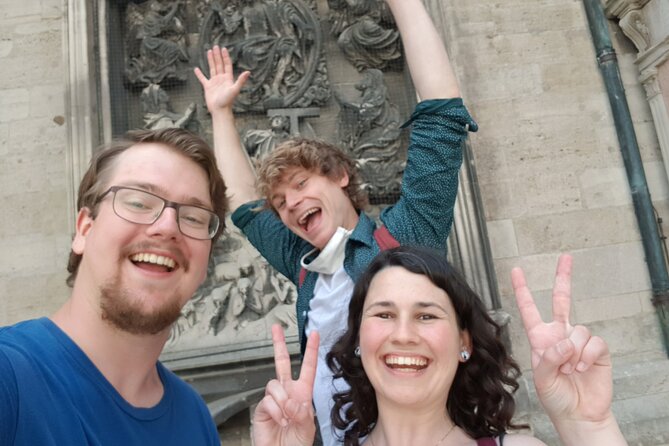
The biggest reason this works is the format. You start at Ruprechtskirche and end at the Hofburg, and you follow clue prompts from stop to stop. The app does the guiding, so there is no need to stay with a human in a hurry.
I like the practical flexibility for two situations. First, it helps when you are traveling with kids, since the tasks give them something to do besides drifting off. Second, it helps when you are tired or jet-lagged and want an activity that does not depend on perfect timing.
There is also a “break and resume” vibe built in. The experience is designed so you can pause for coffee or just wander a side street, then continue later without needing a new schedule.
One more practical note: the experience is offered in English, and it is labeled private, so it is just your group. That matters in Vienna, where mixed tours can sometimes feel like you are being managed more than you are exploring.
Starting at Ruprechtskirche: the game’s first puzzle sets the tone
You begin at Ruprechtskirche (St. Rupert’s Church) at Ruprechtspl. 1. This church is a smart opening stop because it gives you a pile of “wait, I didn’t know that” details before you even get to the more famous sights.
Expect to look closely. The church is described as 13 centuries old, built from stone taken from an ancient Roman settlement. That Roman connection is a great early hook if you like the idea of Vienna layering itself over older layers.
Inside, the story gets even better: you have the oldest stained-glass window in Vienna and the oldest bells. One specific stained-glass image you are encouraged to notice depicts Christ on the cross, with the Madonna and Child beneath it, and it has reportedly been in place since the 13th century.
How the quest moves you forward: you are asked to look around to find an answer to advance to the next location and learn the story behind the nearby “cafe” reference in the game. It is a fun way to train your eyes right away.
Drawback to plan for: churches can have changing access patterns and quiet rules, and you still have to work the puzzle while you look. If you hate tasks or you are rushed, this style might feel like homework. If you like playful attention, it is a solid start.
From Griechenbeisl to the Hasenaus mural: history you can spot with your own eyes
Next up is Griechenbeisl, one of Vienna’s iconic taverns. This stop works especially well if you enjoy the human side of history, because the game frames the place through its famous diners.
The key details to look for: at different points, Mozart, Beethoven, and Schubert dined here. You can also find references to famous names in rooms connected to the tavern, including the Mark Twain room, where signatures and guest references are displayed.
The origin story is also part of the fun. The name is tied to Greek tradesmen and Levant travelers who settled around that area, and it connects to the nearby Holy Trinity Greek Orthodox Church.
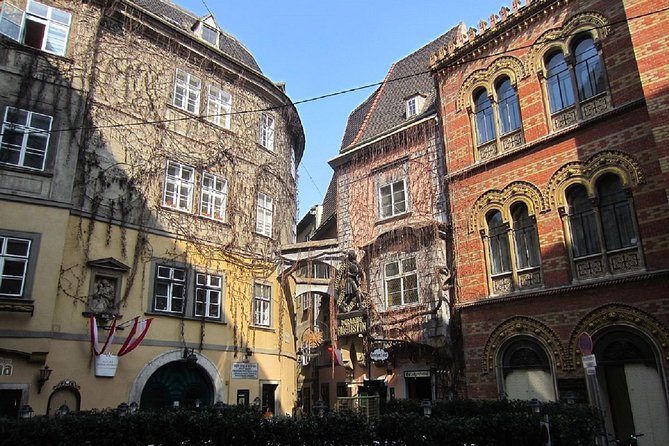
Then you head into Bäckerstrasse territory, which is where this quest starts to feel like “Vienna you only see when you wander.” The highlight is the mural on Bäckerstrasse 2, on the façade of the Hasenaus (Hare House).
The mural shows a wolf and a cow wearing spectacles playing backgammon. Interpretations vary, and the game encourages you to consider how the imagery might relate to medieval life or religious conflict themes. Either way, it is a reminder that Vienna’s streets can be playful, not just postcard-perfect.
What I like about these two stops back to back: they create contrast. A famous old tavern, then a quirky street façade scene in a less crowded lane. It keeps your brain awake, and it breaks the rhythm of “major sight, major sight, major sight.”
Set your own pace through the center
- Vienna: Tickets for Mozarthaus Vienna with Audio Guide★ 4.2 · 2,344 reviews
- Vienna: New Hofburg Palace Audio-Guided Tour & Entry Ticket★ 4.1 · 566 reviews
- Vienna: Schlumberger Wine Cellar Guided or Self-Guided Tour★ 4.8 · 285 reviews
- Vienna Walking Tour with Audioguide on Your Smartphone★ 4.0 · 52 reviews
Stephansplatz, Stock im Eisen, and the nails tree you’ll never forget
At Stephansplatz, you get to switch gears from interior-looking to plaza-level observation. You follow a clue and solve a puzzle, then receive directions for the next stage of the game. The design goal here is simple: you learn about what you are seeing while you stay in motion.
Then comes Stock im Eisen, known as the Nails Tree Vienna. The story is classic Vienna folklore: in the past, people thought it was the work of Satan because of the nails. The reality is more practical and surprisingly comforting.
The nails come from a tradition. Hammering nails into the tree trunk was believed to bring good luck. Today, you will see hundreds of nails packed into the trunk over generations. The trunk stands on a 1.5-meter high pedestal, and it is surrounded by an iron ring with a lock dummy.
The quest method here is also flexible. You arrive by clue and puzzle, and once there you can spend as much time as you want before moving on. That is useful because the Nails Tree invites you to pause and stare like a small museum display in the open air.
St. Stephen’s Cathedral: go for the tower view if you want the big payoff
The game brings you to St. Stephen’s Cathedral (Stephansdom), one of Vienna’s signature Gothic landmarks. It has been standing since the 12th century, and the architecture is a serious reason to show up even if you skipped everything else.
This part of the experience leans into “look up” Vienna.
A few standout details to keep in mind while you are exploring:
- the cathedral’s tower room offers a breathtaking view and includes 13 bells
- the roof is 38 meters high and covered with 230,000 glazed tiles arranged in patterns
- mosaics feature a double-headed eagle, linked to the Austrian empire during Habsburg rule
- additional eagles carry coats of arms for Vienna and the Republic of Austria
Important cost note: the admission ticket is not included for the cathedral stop, at least for the tower-room style experience described in the game. If you only plan to enjoy the exterior or general areas, you might spend less. If you want that full view, budget for the ticket.
Café Frauenhuber: the coffeehouse break that fits the “look closer” theme
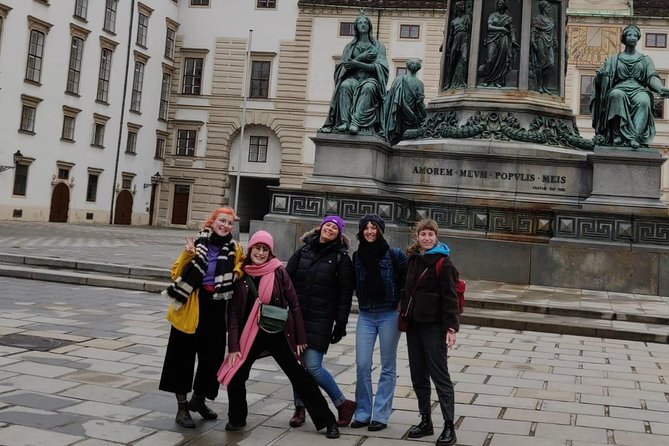
Right after St. Stephen’s, the game inserts a café stop at Café Frauenhuber on Rauhensteingasse. You get a taste of Viennese coffeehouse culture, which is a big part of why Vienna feels like Vienna.
This place is noted as the oldest coffeehouse in Vienna, dating back to 1746. It also has a musical connection: Mozart and L. van Beethoven played table music for diners several times between 1782 and 1791.
Even if you do not turn this into a full meal stop, it is a smart pause. The quest’s earlier sections are very visual and puzzle-driven. A café reset helps you recharge before the art and power-halls portion later.
Practical tip: if you want to keep the quest moving, do a quick order and settle in for a short break. If you want the full atmosphere, plan extra time, since coffeehouse linger is part of the culture.
Albertina: art and prints after the puzzle workout
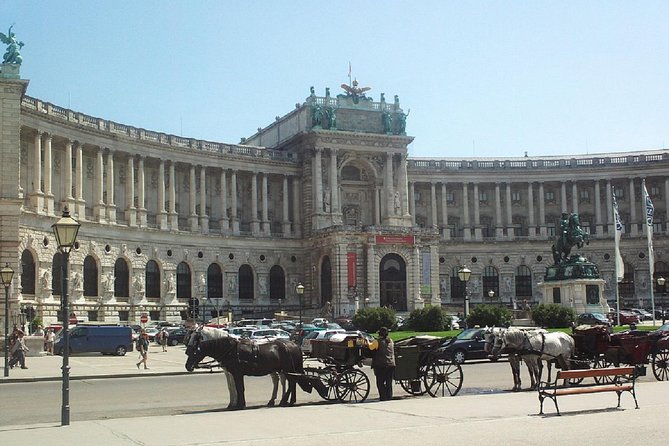
Next you reach Albertina, a major art stop that ties into Vienna’s Habsburg setting. The museum is set in the Hofburg Palace, and the collection focus is worth knowing before you go in.
The game frames Albertina through the scale of its prints and drawings:
- over 50,000 drawings
- over 1 million master prints displayed on rotation
It also highlights four main collection areas: modern art, graphic art, architecture, and photography. If you like specific big names, the game notes Monet’s The Water Lily Pond as a work you can expect to see.
Admission for this stop is not included, so this is where your budget choices show. If you are the type who loves art museums and prints, you will likely want to take advantage of the ticket option. If you prefer streets and architecture over galleries, you might still enjoy the vibe but consider pacing your time based on your interests.
A real-world consideration from feedback: one app or puzzle challenge can feel irritating if you are expecting heavier written explanations. If you are drawn to museums, bring your own curiosity, because the format does not replace a full museum guide.
Hofburg finish line: where the game ends and your pace starts again
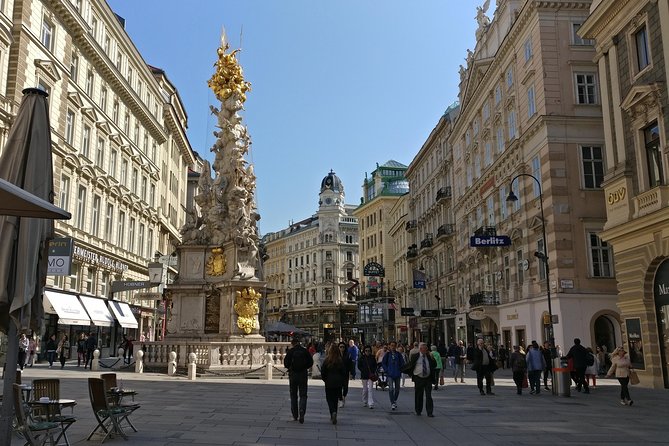
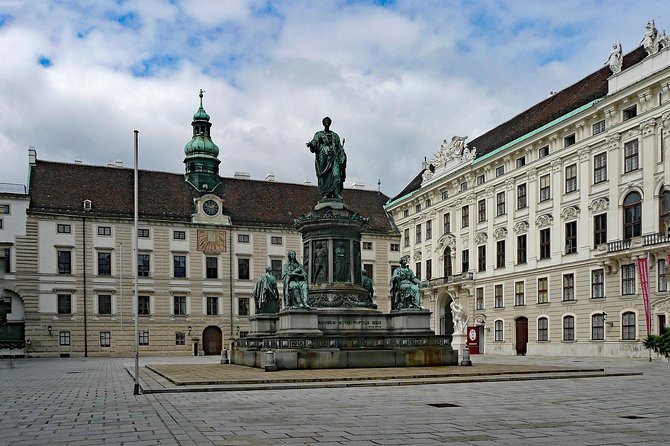
The final phase lands at the Hofburg. This is the heart of power in Vienna, described as the center of government for the Habsburg emperors for centuries and still linked to today’s civic life.
The game positions Hofburg as more than just a building:
- it has been the core of power since the 13th century
- it served as residence and seat of government until 1918
- the Imperial apartments are described as 24 rooms
- the Sisi Museum focuses on Empress Elisabeth
- silver collections are part of the attraction
- the National Library is also found here
- the Hall of Ceremonies is used nowadays for Viennese balls
Here the quest ends. You get the clue-puzzle closure, then you can continue exploring the Hofburg area at your own pace.
I like the logic of ending with Hofburg. You finish in a place that is obviously important even if you skipped some indoor ticket moments earlier. It makes it easier to justify spending a little extra time, because the setting itself does the storytelling.
App, puzzles, and one practical warning before you start
This experience runs on your smartphone, and that is the deal. I love the freedom, but I also recommend you set yourself up to avoid friction.
Based on real-world feedback, the app setup and unlocking the game can be a little tricky at the start. If you can, arrive a few minutes early at Ruprechtskirche and give yourself time to get the game running before you step into your first puzzle.
Also, watch your precision when entering answers. One issue that can slow people down is answer formatting, like capitalization or connecting words. It sounds minor, but if you are type-ahead guessing, the app might not validate what you expect.
The good news: when tech problems happen, support is described as responsive and quick in fixing things for at least some participants.
How long it takes, and how to plan your Vienna afternoon
The quest is listed at about 1 hour 30 minutes. In practice, self-paced means you can go faster or slower depending on how long you linger inside or how much time you spend solving.
Opening hours are listed daily from early morning to late evening, with a broad operating window. That makes it easy to slot into an afternoon break, or pair it with a museum or dinner plan later.
Here is how I would time it:
- If you want only the “free access” portions of sights, aim for the 1.5-hour plan.
- If you want the St. Stephen’s tower-room view and an Albertina museum visit, treat this as a longer activity day, and plan buffer time.
Who this is best for, and who should skip it
This quest is ideal if you want:
- family-friendly entertainment with built-in tasks
- a way to see historic Vienna without being tethered to a group
- a route that pushes you into side streets like Bäckerstrasse
- a format that naturally helps you notice details on your own
You might want a different style if you:
- crave a lot of spoken history facts delivered by a guide
- strongly dislike puzzles or answer checks
- expect that every major stop includes admission costs
Should you book the Great Plague Vienna quest?
Book it if you want a smartphone-led adventure that mixes famous landmarks with overlooked details, and you like the idea of learning by searching. At this price, with audio stories, free kid entry, and multiple admission-free segments, it is a strong value if you will actually use the time to look around.
Skip it or choose something else if you need a guide’s narrative to enjoy history. This is for people who enjoy walking, spotting, and solving, not for those who want a nonstop lecture.
If you are the type who loves Vienna when you go slower than a tour schedule, this is a fun way to do it.
Latest Additions
- Wachau Valley Private Wine Tour with Tasting and Gourmet Lunch
★ 5.0 · 1 review - Private city tour in Vienna
★ 5.0 · 1 review - Vienna: Danube Valley Tour with Melk, Dürnstein with wine tasting and boat.
★ 5.0 · 1 review - Hallstatt Small Group Day Trip from Vienna
★ 3.0 · 1 review - Inside Freud’s Mind: Self-Guided Mystery Walk in Vienna
★ 4.0 · 1 review - Private Transfer from Vienna to Prague
★ 5.0 · 1 review - Vienna’s Christmas Market Magic Tour
★ 5.0 · 1 review
Scavenger Hunts & Puzzle Walks, compared.
Private City Discovery walk – Historical Treasure hunt
Read our review →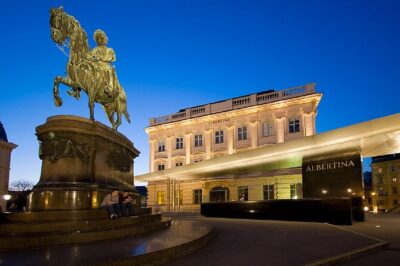
Vienna Scavenger Hunt and Highlights Self Guided Audio Tour
Read our review →
Vienna Highlights Self guided scavenger hunt and Walking Tour
Read our review →
Explore the Hidden Gems of Vienna with CityRiddler
Read our review →
Browse the lists this tour appears in