
Reviewed · WALKING TOURS
Fall in Love with Vienna Tour- the best of Vienna on foot!
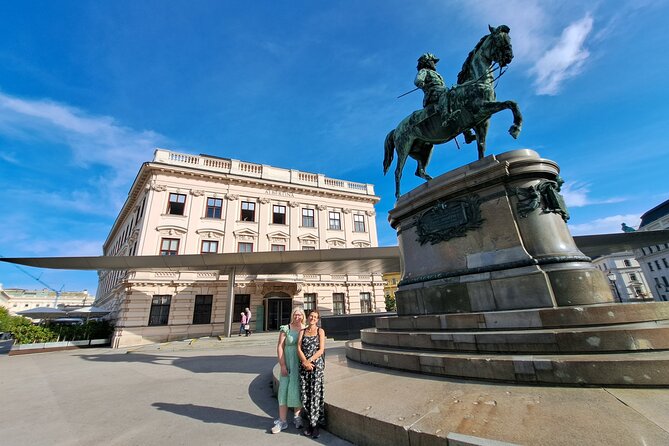
Vienna is best understood on foot, fast. This guided walking tour strings together the city’s biggest landmarks and cultural storylines in a 3-hour loop, starting at Mozarthaus Vienna and ending outside the Vienna State Opera. I like that the guide can share a clear first-time “what matters here” map of the city, and that guides such as Nicoletta and Moritz are known for taking photos and pointing you toward smart next stops.
I also love the food-and-culture rhythm, especially the traditional coffee house break that includes a 30-minute pause (January to November only). One thing to consider: on busy days the group can get close to the upper end (up to 18), and hearing the guide can be harder in crowds.
In This Review
- Key things that make this Vienna walking tour worth it
- Vienna Highlights, on Foot, With a Plan That Actually Fits 3 Hours
- Where You Start at Mozarthaus Vienna, and Why That Matters
- Mozart to St. Stephen’s: The First Landmarks You Use All Trip
- From the Plague Column to Baroque Church Interiors That Feel Like Art
- Coffee Culture Stops, Freud to Julius Meinl, and the Vienna Taste Test
- The Hofburg and Sisi Museum: Imperial Power Without the Confusion
- Heldenplatz, Volksgarten, and the Peaceful Break Between Big Buildings
- Parliament to Rathaus: When Vienna’s Architecture Talks Back
- Burgtheater, Palais Ferstel, and the Opera-End Stretch
- Beethoven, Schottenkirche, and Other Stops That Feel Like Vienna, Not Just Vienna-as-a-Postcard
- Spanish Riding School and Sacher: A Sweet Finish With Tradition
- Pacing, Walking Surface, and What to Wear
- Group Size and Hearing the Guide in Real Life
- Included Extras That Actually Help You After the Tour
- Who This Tour Fits Best
- Should You Book This Vienna Walking Tour?
- FAQ
- How long is the Vienna walking tour?
- What does the tour cost?
- Is the tour offered in English?
- Do I need a physical ticket?
- How big is the group?
- Is there a coffee break included?
- Are entrance fees included?
- Where do I start and where does it end?
Key things that make this Vienna walking tour worth it
- Small group format (max 18) keeps the vibe conversational, so questions do not feel awkward
- Built-in coffee break gives you an easy reset in the middle of the walking
- Photo-help included so you spend less time fighting with your phone camera
- A first-day overview route links Mozart sites, imperial Vienna, churches, and major squares in a tight time window
- Practical planning tools like a printed information package and a Vienna city map
- Flexible guide support such as restaurant and museum recommendations for what you should do next
Vienna Highlights, on Foot, With a Plan That Actually Fits 3 Hours
This is the kind of tour that helps you stop guessing. You start in the historic core, walk through the most iconic scenery, and leave with a mental map for the rest of your days in Vienna. It is not trying to do everything. It is trying to do the right things quickly, and then send you back out informed.
The price, at $72.59 per person, sounds like a splurge until you compare what you get: a 3-hour guided walk, a small-to-medium group, a city map, and a printed information package. In the months when the coffee break is offered (January to November), you also get that extra 30-minute sit-down, which is real value when you are walking all morning or afternoon.
Other ways to round out a Vienna visit
Where You Start at Mozarthaus Vienna, and Why That Matters
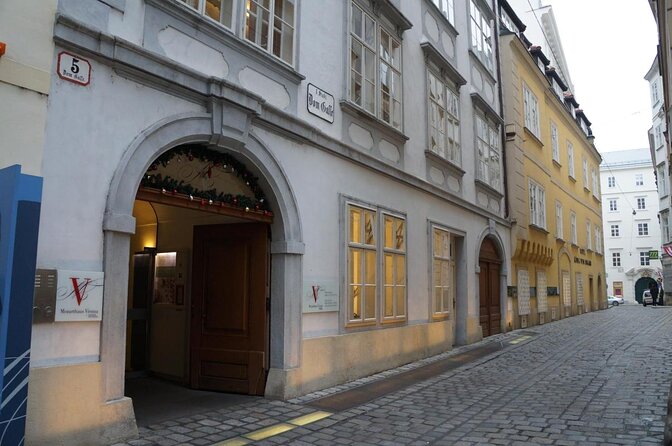
You meet at Mozarthaus Vienna, at Domgasse 5, right by the action of central Vienna. Starting here is smart because it sets the tone for the whole walk. Mozart is not treated like a statue. You learn about his presence in Vienna while standing in front of a long-time residence linked to his life.
There is also an optional angle that helps if you are a music fan. The tour notes that, upon request, they can help book concert tickets for you in the city’s best concert houses. Even if you do not book anything, it’s useful to know how to line up performances during your stay.
Mozart to St. Stephen’s: The First Landmarks You Use All Trip
From Mozarthaus, you are straight into the heart of tourist-and-local Vienna. One of the earliest stops is Stephansdom, St. Stephen’s Cathedral, a landmark that essentially anchors orientation in the city. Even if you just do a quick look, it gives you a reference point for later walks.
Right around the same area, you also make time for the kind of detour that makes this tour feel like Vienna, not a checklist. You stop at a wafer shop famous for the Neapolitan-style wafer and other candy varieties, located at one of the most central outlets near St. Stephen. It is brief, but it’s a nice palate of place. Think of it as your edible souvenir, not a hard-sell “buy now” stop.
From the Plague Column to Baroque Church Interiors That Feel Like Art
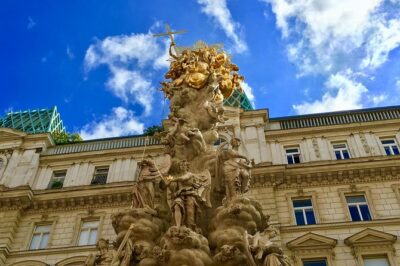
Next you move into a layer of Vienna that visitors often skip: memorials and churches that tell stories about survival and style. The Colonna della Peste, the Pestsaule, is ordered by Emperor Leopold II as a gratitude marker after Vienna got help during the plague epidemic. It is one of those moments where a quick stop still leaves you with real context.
Then comes Peterskirche. Outside, it looks like an old Catholic church. Inside, it is described as looking more like an art gallery, and it was rebuilt from scratch after the original building was destroyed in the 16th century. Even if you only get a short look, it’s a great example of how Vienna keeps renewing itself.
You also visit St. Michael’s, dating back to the 12th century. This stop is valuable because it shows continuity. In a city that loves grand palaces, it is easy to forget that Vienna’s roots also live in older, smaller-scale religious buildings.
Beyond the palaces, the city keeps its own rhythm of coffee, concerts, and day trips nearby.
- Vienna: Vivaldi’s Four Seasons Concert in Karlskirche★ 4.7 · 14,951 reviews
- Vienna: Schönbrunn Palace & Gardens Skip-the-Line Tour★ 4.7 · 7,739 reviews
- Vienna: Light of Creation Votive Church Immersive Light Show★ 4.8 · 6,779 reviews
- Vienna Spanish Riding School Guided Tour★ 4.7 · 6,765 reviews
Coffee Culture Stops, Freud to Julius Meinl, and the Vienna Taste Test
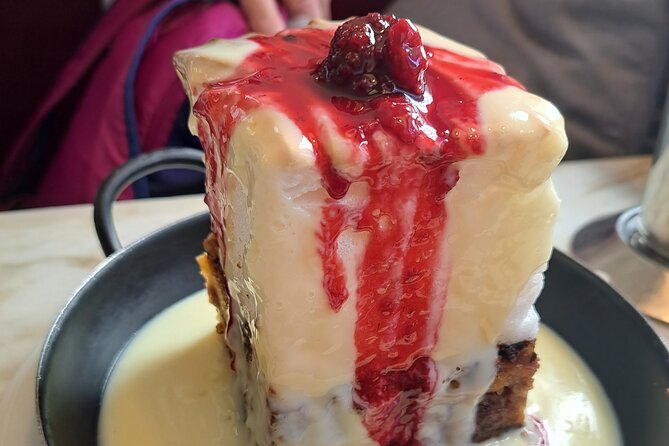
If Vienna has a secret handshake, it is coffee houses. This tour bakes that into the route, not as an afterthought.
You get time at Julius Meinl on Kohlmarkt, and the guide talks about how coffee culture took hold in Vienna. That alone makes the stop more than just a caffeine break. You start noticing Vienna’s identity through its coffee rituals.
Then there are the famous classics:
- Café Landtmann, tied to Sigmund Freud’s favorite coffee house
- Café Central, widely known as one of the most famous traditional stops in an old historic Palais
- Demel, the confection spot connected with Empress Elisabeth, famous for cakes and chocolates
One small practical note: the tour includes free admission-type access at the stops, but it does not include entrance fees to museums. Coffee house purchases are naturally optional. Still, if you want a realistic taste of Vienna without overthinking it, this is where it happens.
Also, you might be in the mood for something sweet at Demel, especially if the schedule hits near a break moment. The tour frames it as a must for candy lovers, and it’s an easy treat to justify because you are already taking in the city’s most memorable stop-by-stop atmosphere.
The Hofburg and Sisi Museum: Imperial Power Without the Confusion
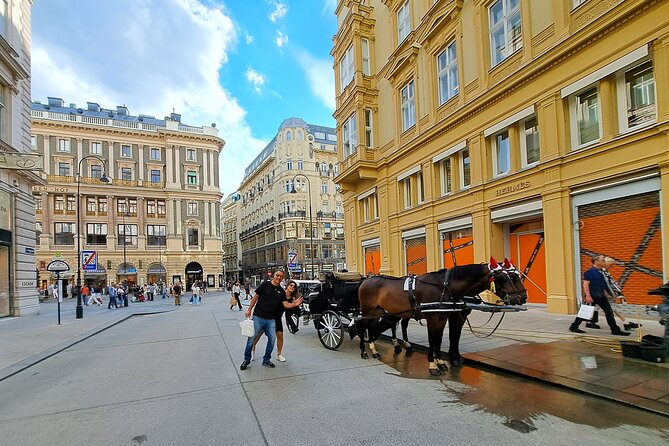
After the cathedral-and-church stretch, you pivot to imperial Vienna with the Hofburg. This is a key value moment on the tour because Hofburg is where history turns into everyday place names. You learn where Elisabeth, Franz, Maria-Theresa, and others lived and how the palace started, including the life of the people who worked there and the quirks of the Habsburg world.
Then you connect that broader palace story to a focused angle with the Sisi Museum, dedicated to Empress Elisabeth. The tour describes it as connected to the museum of the Emperor’s Apartments, and the guide’s storytelling is highlighted as a major part of why this stop lands. If you want one museum style stop during a short walk, this pairing makes sense.
Heldenplatz, Volksgarten, and the Peaceful Break Between Big Buildings
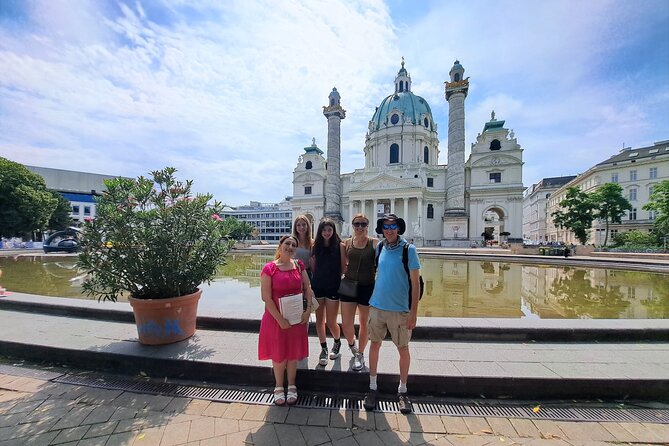
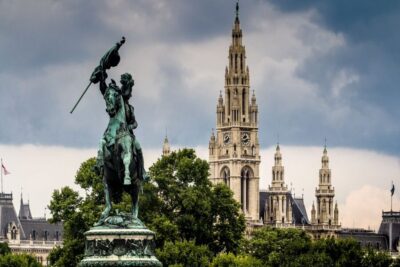
You then step into Heldenplatz, the square of the heroes, tied to the Winter Palace and surrounded by museums. It works as a visual reset. Instead of cramming another building into your brain, you get space to look around and connect the palace complex to the city layout.
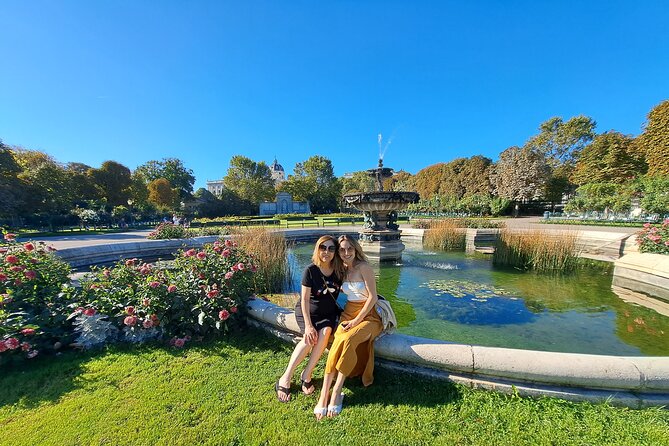
Right after that comes Volksgarten, the garden of the people from 1821, known for being one of the best preserved parks in central Vienna. It’s nicknamed the “Garden of the 1000 roses,” and the tour says you will learn why.
You also stop at a Greek-style temple inside the People’s Garden, a reminder of the Habsburgs’ emperors and their love for Greece. This is one of those “quick but unforgettable” stops. Even if you only take a photo, it helps you see Vienna as an international-minded capital, not just a local tradition machine.
Parliament to Rathaus: When Vienna’s Architecture Talks Back
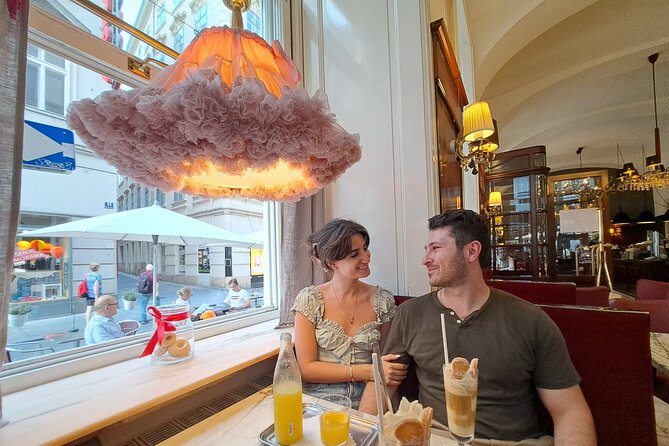
From Volksgarten, the route moves to civic symbols and the kind of architecture that frames everyday city life.
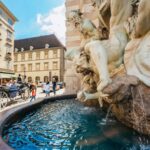
You see Pallas-Athene-Brunnen, the fountain in front of the Austrian Parliament. The guide explains what Athena is holding and what it represents. It’s a fast stop, but it turns a fountain into a story, and stories are what you remember.
Then you look at the Vienna City Hall with its new-gothic architecture. The tour also points out that it hosts festivals all year and is tied to major Christmas market energy. Even if you are not there in winter, it helps you understand why people rave about Vienna’s seasonal changes.
Burgtheater, Palais Ferstel, and the Opera-End Stretch
The walking tour keeps nudging you toward “culture power points.”
You pass Burgtheater, a royal theater built by Empress Maria Theresa in the 17th century. Even if you do not go inside, it gives you the sense of how Vienna treats performance as civic identity.
Then there is Palais Ferstel, noted for standout architecture and for having coffee shops, restaurants, and shops. You can walk through the passage and see the fountain. This stop is a good one if you like pretty details but do not want a long museum commitment.
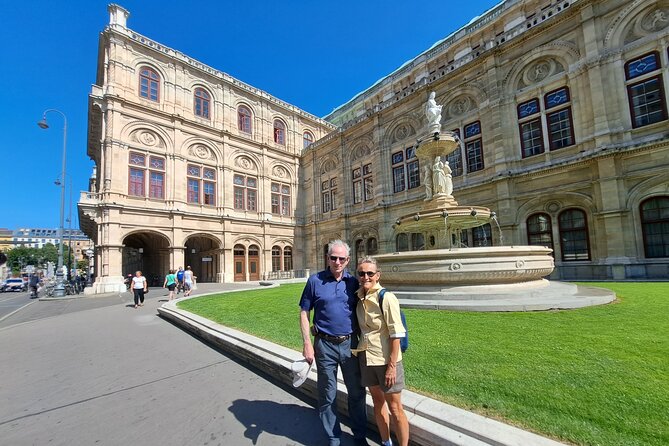
Finally, you are headed toward the end point: Vienna State Opera (Wiener Staatsoper), on Ringstrasse. The tour frames it as a must-see and ties it to its 1869 construction and the daily crowds. The ending location is practical too, because it drops you into a transit-friendly zone for planning the rest of your evening.
Beethoven, Schottenkirche, and Other Stops That Feel Like Vienna, Not Just Vienna-as-a-Postcard
A good highlight tour does not only show what everyone already knows. It adds a few curveballs. This one includes:
- Beethoven Pasqualatihaus, a residence turned museum
- Schottenkirche, a 13th-century church, monastery, and museum
- Albertinaplatz, close to the Albertina museum area and the central tourist information office
It also includes a pass-by of Peterskirche earlier and Schottenkirche later, which gives you two different church styles in a short span. If you like architecture, this structure is satisfying.
You also see Augustinerkirche, including a small chapel with 50 hearts of emperors and empresses of Austria. The tour describes it as a well-kept treasure since the 17th century. Even on a short timeline, those kinds of details make a stop feel intentional rather than rushed.
Spanish Riding School and Sacher: A Sweet Finish With Tradition
Near the end, you get the classic Vienna tradition cue with the Spanish Riding School. The tour explains the long tradition tied to Emperor Maximilian, and why the school mattered for military presence and national strength. You also hear about horse training and the exceptional horses, delivered through an informative, friendly guide tone.
Then comes the dessert finale territory:
- Hotel Sacher Vienna, explained as the birthplace of the Sacher cake, positioned as the best place to taste the original Sacher cake
- Plus earlier Demel for Empress Elisabeth’s preferred cake shop angle
If you want to end your day with something Vienna-specific, this is a clean way to do it. You are not forced into a big meal, but you are set up for a memorable last bite.
Pacing, Walking Surface, and What to Wear
The walk is described as roughly 3 hours and designed for people with moderate physical fitness. Reviews also note it feels like an easy pace with no hills, but they mention uneven cobblestones. That means the shoes matter. Wear something with grip, and you will enjoy the stops more because you will not be doing a constant balance workout.
Also, it is a guided walk with many short stops. You will likely spend more time moving and looking than sitting. That is ideal if you want a quick orientation. If you need long seating breaks, you might feel stretched outside the included 30-minute coffee stop.
Group Size and Hearing the Guide in Real Life
The tour has a maximum of 18 travelers. That’s the sweet spot where you get interaction without feeling swallowed by a crowd.
Still, one review concern was that when the group runs toward the top end, the guide can be harder to hear in dense areas. Practical fix: stand where you can see the guide’s face and project your attention. If a location is packed, do not hang back. You will hear more, and you will photograph better too.
Included Extras That Actually Help You After the Tour
Beyond the landmark list, the tour offers helpful “day two” support:
- Printed Vienna information package
- Vienna city map
- Local recommendations for museums, venues, and restaurants
- Practical suggestions that help you choose what to do next
There is also an extra coffee house break (January to November only). That pause matters. It is not just comfort. It is time to ask questions while you are still in walking mode.
Who This Tour Fits Best
This is a strong match if:
- You are in Vienna for a short stay and want a clean overview
- You prefer walking and want a guide’s context, not just photos
- You want a first-day route that helps you choose what to return to later
- You like coffee house culture and history tied to real places
It may not fit as well if you want very deep museum-style detail on every stop. This is a highlights format, with plenty of variety, not a slow scholarly seminar.
Should You Book This Vienna Walking Tour?
I think you should book it if you want a practical first look at Vienna that leaves you with direction. The small group size, the strong guides like Nicoletta and Moritz, the photo help, and the coffee break are the parts that repeatedly make this tour feel worth doing rather than just checking boxes.
Skip it only if you know you want long indoor time at major museums, or if you strongly dislike walking on uneven cobblestones. If that’s you, you could still enjoy Vienna with a different pace, but you would likely lose the tight orientation this tour is built to provide.
If you are arriving in Vienna and thinking, Okay, where do I even start, this tour is a smart way to answer that question quickly.
FAQ
How long is the Vienna walking tour?
It lasts about 3 hours.
What does the tour cost?
The price is $72.59 per person.
Is the tour offered in English?
Yes, it is offered in English.
Do I need a physical ticket?
No. The tour uses a mobile ticket.
How big is the group?
It has a maximum of 18 travelers.
Is there a coffee break included?
Yes, there is an extra 30-minute break in a traditional Viennese coffee house from January to November only.
Are entrance fees included?
Entrance fees to museums are not included. The tour notes admission ticket free stops, but museum admission is not part of the included list.
Where do I start and where does it end?
You start at Mozarthaus Vienna (Domgasse 5, 1010 Wien) and end at the Vienna State Opera area, at Herbert-von-Karajan-Platz, Staatsoper, 1010 Wien.
Latest Additions
- Wachau Valley Private Wine Tour with Tasting and Gourmet Lunch
★ 5.0 · 1 review - Vienna: Danube Valley Tour with Melk, Dürnstein with wine tasting and boat.
★ 5.0 · 1 review - Private city tour in Vienna
★ 5.0 · 1 review - Private Transfer from Vienna to Prague
★ 5.0 · 1 review - Hallstatt Small Group Day Trip from Vienna
★ 3.0 · 1 review - Inside Freud’s Mind: Self-Guided Mystery Walk in Vienna
★ 4.0 · 1 review - Vienna’s Christmas Market Magic Tour
★ 5.0 · 1 review
Walking Tours, compared.
Guided Walking Tour of City Center Highlights
Read our review →
Guided Walking Tour of City Highlights & Hidden Gems
Read our review →
Vienna Historic Center Small Group Walking Tour
Read our review →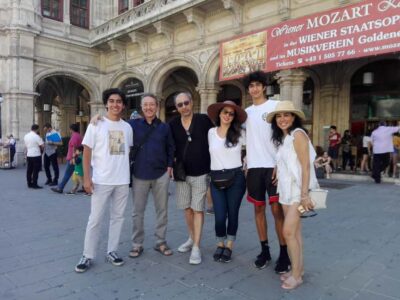
Browse the lists this tour appears in