

Reviewed · WALKING TOURS
An Introduction to Vienna Walking Tour
Vienna can feel like a museum, until someone points at the stories. This 2.5-hour historian-led walk strings together the city’s most important landmarks, plus the side details that make them click. You’ll pass modern-era architecture, Habsburg power, and Vienna’s everyday food-and-shopping pulse in one loop.
I especially like how the tour balances big icons with lived-in context. You’ll hear Austria’s shifting history alongside architecture stops like the Secession building and Stephansdom, and that blend helps you read Vienna instead of just photographing it. The small group size also matters, because guides like Elisabeth, Wolfgang, Katarina, and Annelie can handle questions without turning your walk into a lecture.
One thing to consider is the price. At about $181 per person, it’s not a “quick highlights” bargain, so it pays to want meaning and orientation, not just sightseeing checkmarks.
In This Review
- Key points before you lace up
- Why this 2.5-hour Vienna walk works on day one
- Start at Café Hawelka, then into Michaelerplatz and the Hofburg
- Secession building and Stephansdom, Vienna’s “then” meets “still”
- The Ringstraße stroll, power palaces and luxury hotels
- Loos House and Maria-Theresien-Platz, where Vienna shows its sharper edges
- Naschmarkt, Kohlmarkt, and the Graben, Vienna’s everyday face
- How the historian guide shapes what you take away
- Price and value, what you’re paying for at $181.02
- Practical tips for a smooth, comfortable walk
- Should you book this Vienna walking tour?
- FAQ
- How long is the Vienna walking tour?
- What is included in the tour price?
- Is food and drinks included?
- Where does the tour start and where does it end?
- How big are the groups?
- What language is the tour offered in?
- Do I need hotel pickup or drop-off?
- Can I cancel for a full refund?
Key points before you lace up
- Small-group cap (max 6 per booking, up to 8 total): more back-and-forth, less crowd chaos.
- Historian guide focus: you’re not just looking, you’re learning how Vienna got that way.
- A smart route mix: Secession and Stephansdom, then Hofburg, Naschmarkt, and Ringstraße.
- Details that make it real: plague memory on the Graben and architectural personalities like Adolf Loos.
- Vienna in layers: art, empire, street life, and museums in one 2.5-hour block.
Why this 2.5-hour Vienna walk works on day one
If it’s your first day in Vienna, you need two things: orientation and context. This tour gives you both fast, with a route that touches the city’s power centers, its signature churches, and its “people actually come here” spaces.
The pace is built for walking, with a 2.5-hour guided loop that stays focused instead of spreading you thin. And because it’s offered in English with a maximum group size, you spend time looking at buildings instead of waiting for the guide to catch up.
I also like that it’s a historian-led format. That usually means you get dates and themes, but also the human angles that connect art, politics, and everyday life.
Other ways to round out a Vienna visit
Start at Café Hawelka, then into Michaelerplatz and the Hofburg
The tour begins at Café Hawelka, Dorotheergasse 6 (1010 Wien), right where central Vienna starts to feel intensely important. From there, you’re walking into the shadow of the Hofburg, which sits at the heart of centuries of rule.
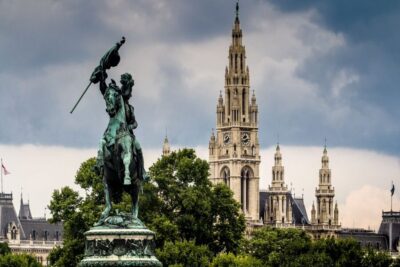
Once you reach Michaelerplatz, you see how the Hofburg dominates the square. That’s the kind of view that makes history feel physical. The Hofburg isn’t just a palace postcard. It’s described as the Habsburg seat of power since the 13th century, and that long timeline helps you understand why Vienna’s identity got tied to imperial control.
Expect a guide to connect the dots between what you see from the outside and what it meant inside. Some guides also bring in extra personal stories, and that makes the area feel less like a set and more like a living capital.
Secession building and Stephansdom, Vienna’s “then” meets “still”
From the Hofburg area, the route brings you into major landmarks that represent different Vienna eras. The Secession building is your first big swing into turn-of-the-century ideas, with a focus on avant-gardism and creative figures such as Klimt and Mahler.
This is where you learn to stop thinking of Vienna as one style. It’s a city that keeps changing its mind, and the Secession stop is one of the clearest examples. You’re not only seeing an architectural statement. You’re getting the cultural reason it mattered.
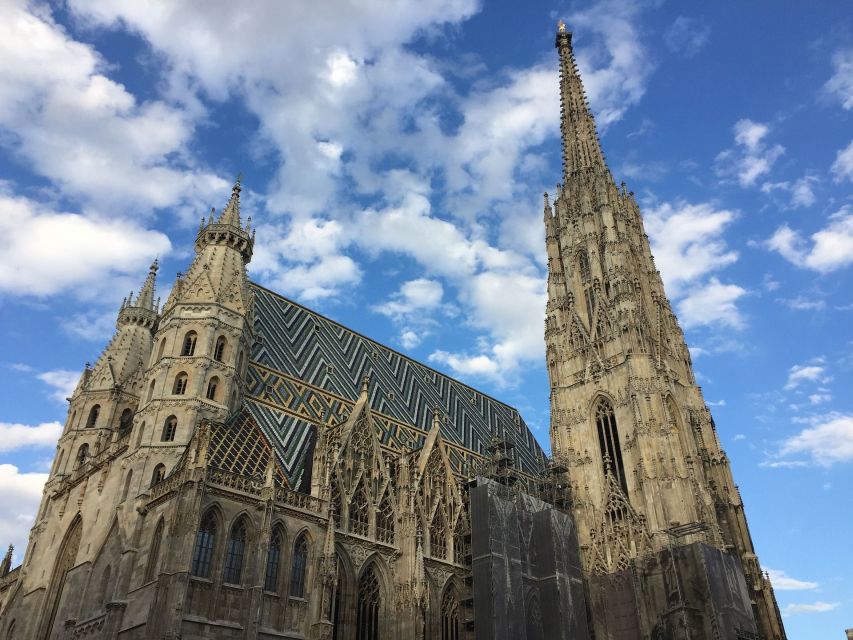
Next comes Stephansdom, Austria’s national architectural icon. It’s the kind of stop where you can stare for a long time because the details are worth it, but the guide’s role is to tell you what to look for and why it became such a symbol.
A key plus here: these two stops help you compare two identities, artistic innovation and sacred-imperial visibility, without needing a history degree.
The Ringstraße stroll, power palaces and luxury hotels
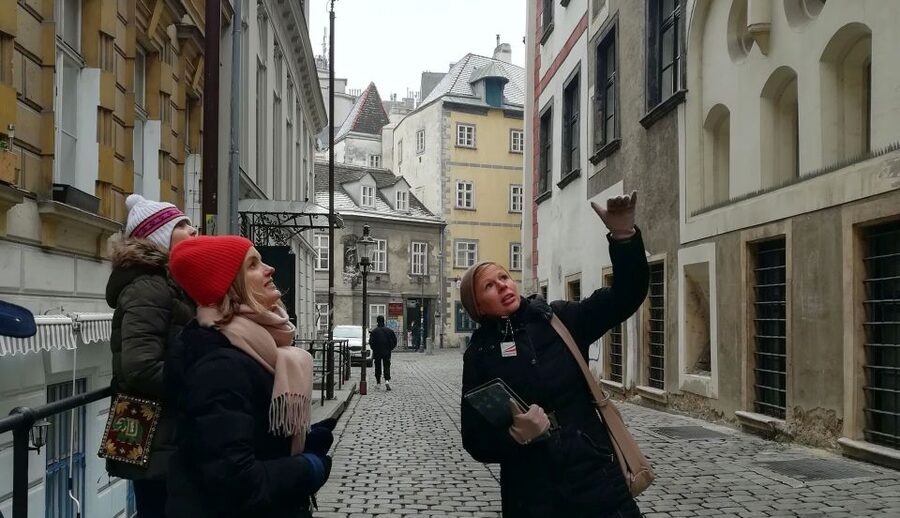
One of the most satisfying segments is the stroll along Ringstraße, the grand boulevard built in the middle of the 19th century. The Ringstraße is where Vienna flexed its wealth and confidence, and the architecture follows that mood.
A practical benefit of this part of the walk is timing. You can get a long, coherent view down the boulevard while still being guided through what you’re seeing. It’s also a great “orientation corridor,” because it shows you where the city’s major layers sit relative to each other.
You’ll hear how many luxury hotels were established within the walls of older palaces. That’s a useful detail because it changes how you think about modern Vienna. It’s not that history disappeared. It got repurposed.
If you like planning your own walking days after a tour, this is the section that helps you map your next steps. You end up with a mental grid of the city’s structure.
Beyond the palaces, the city keeps its own rhythm of coffee, concerts, and day trips nearby.
- Vienna: Vivaldi’s Four Seasons Concert in Karlskirche★ 4.7 · 14,951 reviews
- Vienna: Schönbrunn Palace & Gardens Skip-the-Line Tour★ 4.7 · 7,739 reviews
- Vienna: Light of Creation Votive Church Immersive Light Show★ 4.8 · 6,779 reviews
- Vienna Spanish Riding School Guided Tour★ 4.7 · 6,765 reviews
Loos House and Maria-Theresien-Platz, where Vienna shows its sharper edges
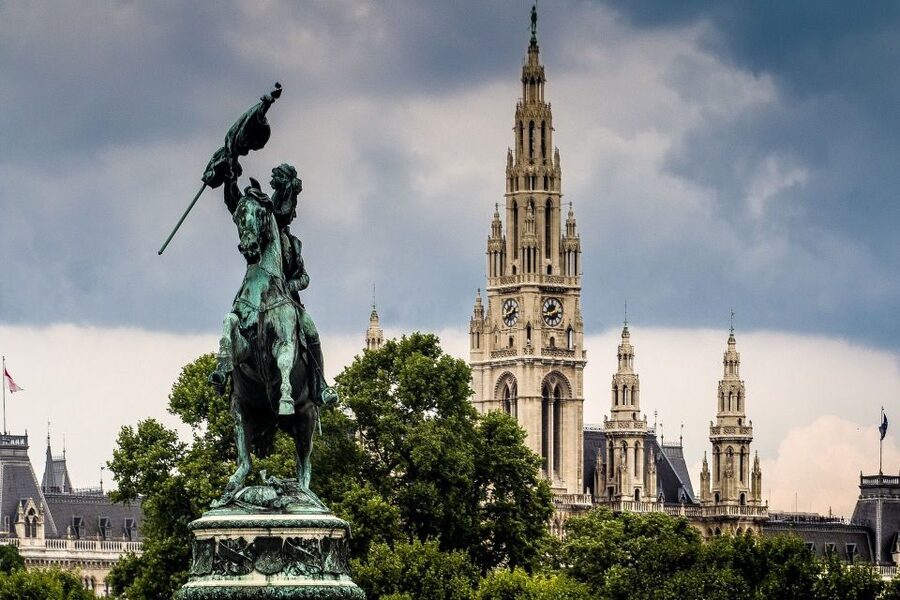
The walk continues with architectural personality, including the Loos House, designed by Austrian architect Adolf Loos (1870 to 1933). The tour frames it from the Hofburg area, heading clockwise, so the perspective stays connected to the larger “empire versus modern thinking” theme.
This stop is a reminder that Vienna is not only about ornate façades and grand squares. You’re seeing how the city approached modern design ideas, and why that mattered within a place still tied to deep tradition.
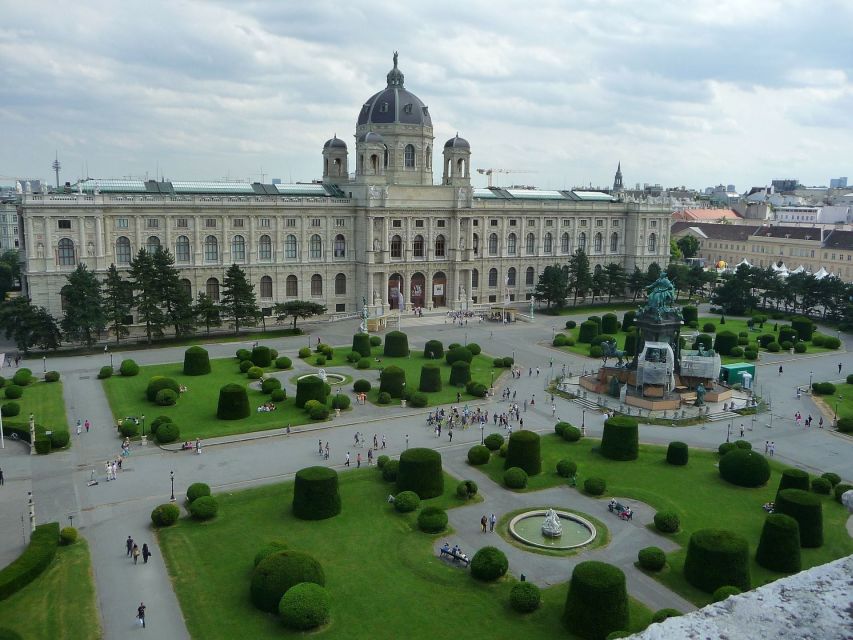
Then you reach Maria-Theresien-Platz, noted for the city’s largest concentration of museums. This is a big transition from “history you can touch with your eyes” to “culture you can keep exploring on foot later.”
Even if you don’t go inside any museums during the walk, you’re leaving with a clear target zone. That makes it easier to choose a museum day without guessing where everything is.
Naschmarkt, Kohlmarkt, and the Graben, Vienna’s everyday face
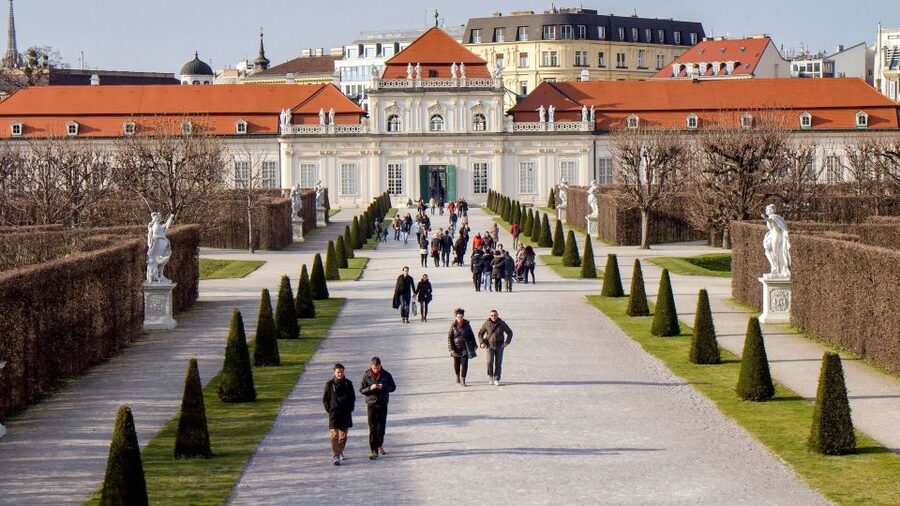
Not every good Vienna day is palace-first. A highlight here is a pass by Naschmarkt, the colorful traditional food market where locals mingle and shop. It’s an important contrast to the more ceremonial stops, and it’s exactly the kind of place that helps you understand how Vienna eats and lives, not just how it ruled and worshipped.
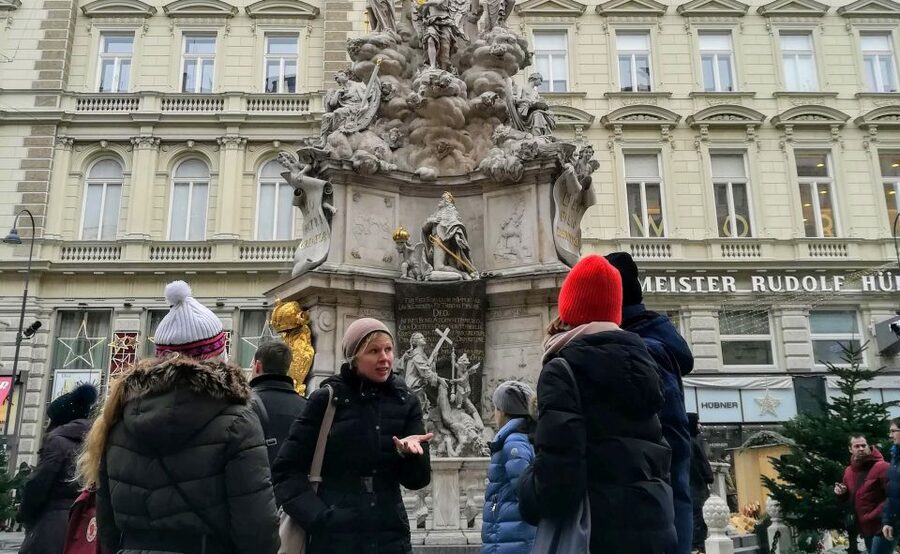
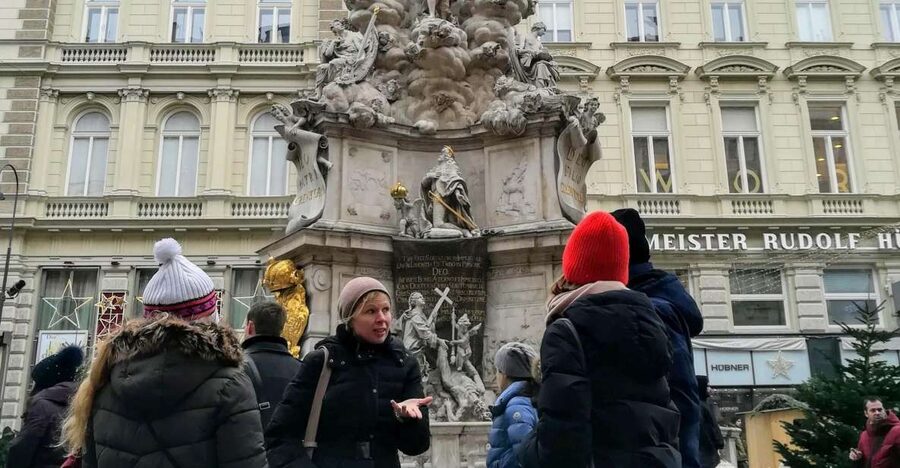
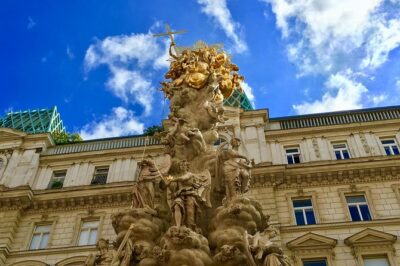
Next are Kohlmarkt and the Graben, which are now among the city’s most fashionable shopping areas. But the tour does something clever here: it pairs the trendy storefront vibe with a reminder of the 17th-century bubonic plague and the plague column that commemorates the outbreak.
That combo can be surprisingly emotional, because it underlines how public space holds memory. You might also hear guides connect this type of monument to how Viennese society recovered, rebuilt, and reinterpreted loss over time.
If you want a city walk that includes the human scale of shopping streets and markets, this section delivers without making the stops feel random.
How the historian guide shapes what you take away
The guides are a big reason this tour earns top scores. Names you may encounter include Elisabeth, Christina, Annelie, Wolfgang, Katarina, Ilse, Walter, and Ilsa. Across that mix, the common thread is storytelling that makes buildings feel like characters.
A few examples of the style you can expect, based on what guides bring into the walk:
- You may hear music references connected to Viennese culture, including Mozart and Haydn, used to set the mood.
- Some guides add small local touches like Sisi-inspired candies to help you link palace history to pop-culture memory.
- You can get practical food guidance, including alternatives for Sachertorte that aim to save you from the biggest lines.
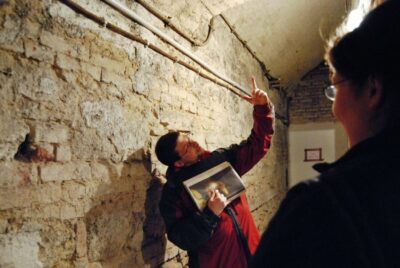
- If you’re interested in darker chapters, some guides bring in wartime context, including memorials connected to Allied bombing effects on the Opera House area and an underground bomb shelter.
None of that changes the route itself, but it changes how well the route sticks. When a guide connects architecture to a person, a period, or a turning point, Vienna stops being a list of landmarks.
Price and value, what you’re paying for at $181.02
Let’s talk money plainly. At $181.02 per person for about 2 hours 30 minutes, this sits in the “worth it if you care” category. It’s more than a basic group “see these sights” option.
Here’s the value math. You’re getting:
- A historian guide instead of a casual commentator
- A small-group setup, capped at max 6 per booking and up to 8 total
- A route that includes major icons plus context-heavy stops like the plague column area
- A guided orientation that helps you plan the rest of your day and often the rest of your trip
If your goal is only photos of the headline buildings, you may feel the cost is high. If your goal is understanding why these places matter, the price starts to make sense quickly.
Also, the tour is booked about 53 days in advance on average, which is a hint that it’s popular. That doesn’t guarantee your exact guide, but it’s a sign the format lands well for people who want more than surface-level viewing.
Practical tips for a smooth, comfortable walk
Here are the nuts-and-bolts that keep this kind of city walk enjoyable.
- Dress for Vienna weather. The city can swing from sunny to windy fast, and you’ll be outside most of the time.
- Plan for walking pace. It’s a 2.5-hour guided walk, so wear shoes you trust for steady sidewalks.
- Bring a phone for the mobile ticket. The tour uses mobile entry, which is convenient once you’re already out sightseeing.
- Use the tour for orientation. Aim to remember the Ringstraße direction, the Hofburg anchor, and the museum zone at Maria-Theresien-Platz, because those locations make self-guided exploring easier afterward.
One more small tip: if you want food recommendations, ask your guide early. Some guides share specific ideas for where to eat and how to avoid the longest lines.
Should you book this Vienna walking tour?
Book it if you want a first-class orientation walk that gives meaning to the big sights. This is especially good for first-timers, people who like architecture and culture, and anyone who prefers a small group where you can ask questions.
Skip it if you’re the type who only wants quick exterior photos and you don’t care about historical context. Also, if you already have a heavy Vienna history background and want only museums, you might prefer a more museum-centered plan.
My final take: the combination of iconic stops plus guided stories, paired with a small-group historian format, is exactly the kind of experience that makes Vienna feel less overwhelming and more personal.
FAQ
How long is the Vienna walking tour?
It runs for about 2 hours 30 minutes.
What is included in the tour price?
You get a 2.5-hour guided walk with a historian guide.
Is food and drinks included?
No. Food and drinks are not included unless specified.
Where does the tour start and where does it end?
The tour starts at Café Hawelka, Dorotheergasse 6, 1010 Wien, Austria. The end is listed as Vienna.
How big are the groups?
The maximum is 6 people per booking, and the experience has a maximum of 8 travelers.
What language is the tour offered in?
The tour is offered in English.
Do I need hotel pickup or drop-off?
No. Hotel pickup and drop-off are not included.
Can I cancel for a full refund?
Yes. You can cancel up to 24 hours in advance for a full refund.
Latest Additions
- Wachau Valley Private Wine Tour with Tasting and Gourmet Lunch
★ 5.0 · 1 review - Private city tour in Vienna
★ 5.0 · 1 review - Vienna: Danube Valley Tour with Melk, Dürnstein with wine tasting and boat.
★ 5.0 · 1 review - Hallstatt Small Group Day Trip from Vienna
★ 3.0 · 1 review - Inside Freud’s Mind: Self-Guided Mystery Walk in Vienna
★ 4.0 · 1 review - Private Transfer from Vienna to Prague
★ 5.0 · 1 review - Vienna’s Christmas Market Magic Tour
★ 5.0 · 1 review
Walking Tours, compared.
Guided Walking Tour of City Center Highlights
Read our review →
Guided Walking Tour of City Highlights & Hidden Gems
Read our review →
Vienna Historic Center Small Group Walking Tour
Read our review →
Browse the lists this tour appears in