
Reviewed · CLASSICAL CONCERT TICKETS
Vienna Private Walking Tour including State Opera
Vienna’s power stories march beside music. I like how this tour links a single thread from Roman Vindobona to Habsburg rule, so the city feels less like a blur. I also love the State Opera stop, because it turns Vienna’s musical legacy into something you can point at in real buildings.
The main drawback is that opera access can be limited, since what happens inside depends on what the State Opera is offering that day. For some people, that means the experience feels more like a building visit than a deep interior tour.
In This Review
- Key highlights
- A 3-hour timeline you can actually walk
- Meeting at Stephansplatz, then heading to the State Opera first
- Vienna State Opera: history, famous works, and what to confirm
- Mozart Monument to the Hofburg: reading Vienna as a power map
- Michaelertor, St. Michael’s, and the gates of authority
- The Graben and St. Peter’s: streets that remember who entered
- Stephansplatz and Stephansdom: Vienna’s cathedral as a finish line
- Price and value for a private group up to 15
- Watch-outs: when the opera portion feels off
- Who should book this tour, and who should choose differently
- Should you book this Vienna Private Walking Tour including State Opera?
- FAQ
- Where is the meeting point for the tour?
- How long is the Vienna private walking tour?
- What does the tour include, and are entrance fees part of the price?
- What languages are the live guides available in?
- What is the group setup and size?
- Is the tour suitable for people with mobility impairments?
- Is free cancellation available, and can you pay later?
Key highlights
- State Opera context: Why Vienna’s composers, directors, and famous works matter in the same streets you’re walking.
- Habsburg-to-Second Republic storytelling: A timeline that connects palaces, churches, and squares to political change.
- Roman, medieval, and imperial layers: You see ruins, walls, and theater remains in one compact route.
- Royal church stops: Michaelerkirche as the emperors’ official church, plus St. Peter’s Church reaching back to the 4th century.
- Stephansdom and Stephansplatz: Vienna’s Roman-Gothic cathedral as a visual anchor at the end.
- Private group pace: Up to 15 people, with English or German live guiding.
A 3-hour timeline you can actually walk
This is a compact Vienna sampler that favors clarity over overload. In three hours, you get a guide-led path that jumps between eras, from Roman foundations to Habsburg dominance, through the World Wars and the birth of the Second Republic. If you like a city tour where every stop has a reason, this style works well.
The private format is also a big deal. With your own small group, you’re more likely to get questions answered on the spot, rather than waiting for the next segment. Your feet will do some work, but you’ll leave with a mental map that holds together.
One practical note: this tour is not suitable for people with mobility impairments, so plan accordingly.
Have a guide keep the pace


Meeting at Stephansplatz, then heading to the State Opera first
You meet at Stephansplatz 8A, right in the orbit of Vienna’s most famous church complex. From there, the route leads you toward the Vienna State Opera House, because that’s where the day’s “music meets power” theme takes shape.
Even before you get into the story, you’re in a part of Vienna that reinforces the idea that the city was designed for ceremony. Squares and major streets keep appearing like stage sets, and your guide helps you read them instead of just walking through them.
If you’re the type of traveler who wants orientation fast, this tour gives you something useful quickly: a way to place what you see into a timeline. That matters in Vienna, where it’s easy to stare at buildings and still feel like you missed the plot.
Vienna State Opera: history, famous works, and what to confirm
The State Opera stop is the headline, and it’s a good one. The building’s roots go back to the 1860s, when it was first called the Vienna Court Opera. Then, in 1920, the name changed again under the Habsburg era as Austria’s early republic took shape.
Your guide also connects the opera house to major musical figures. You’ll hear names tied to the stage and the podium, including Gustav Mahler, Herbert von Karajan, and Claudio Abbado. And because Vienna’s opera season isn’t just entertainment, the tour links repertoire to identity. Works you may be pointed to include La Traviata, La Clemenza di Tito, and Verdi’s Don Carlo.
Two reality checks for planning:
- Entrance fees are not included, and your access may vary depending on what’s open.
- The experience can be more “visit the building” than “full guided opera interior,” depending on what the opera offers that day.
So if your dream is a deep guided look inside specific rooms, I’d treat the opera portion as something to verify before you go. That small bit of homework can prevent disappointment.
Mozart Monument to the Hofburg: reading Vienna as a power map
From the opera area, the tour moves into a stretch of imperial symbolism. You’ll see the Mozart Monument and the surrounding grand facades, including views connected to the Art History Museum and the Hofburg. The point here is simple: Vienna’s grandeur isn’t only about style. It’s about who held power, how they displayed it, and how music became part of the public image.
The Hofburg is especially important because it’s a physical reminder of long rule. The Habsburgs didn’t just govern from paperwork, they shaped the city through architecture and patronage. Even if you know the name already, seeing how the complex sits in the urban fabric makes the influence feel more immediate.
At this stage, you’ll likely start to notice a pattern your guide is using all day: each stop isn’t random. It’s chosen because it ties to a theme, like empire, culture, or transition.
A night of Mozart or Strauss
- Vienna: Vivaldi’s Four Seasons Concert in Karlskirche★ 4.7 · 14,951 reviews
- Vienna: Classical Concert in the World-Famous Musikverein★ 4.6 · 6,673 reviews
- Vienna: Mozart Concert at the Musikverein – Golden Hall★ 4.6 · 5,194 reviews
- Vienna: Classical Concert in St. Anne’s Church (Annakirche)★ 4.6 · 3,414 reviews
Michaelertor, St. Michael’s, and the gates of authority
Next comes a more textured zone, where Vienna’s layers show up in close quarters. You pass the Michaelertor gate and look at the Michaelerkirche, St. Michael’s Church. This church is described as the official church of the emperors for years, which instantly gives the building a political weight beyond religious beauty.
From there, you’re guided toward the sense of the city having multiple pasts at once. Roman ruins appear in the square area, and you also get old medieval walls and remnants of the former Burg Theatre. It’s a great moment to slow down mentally. Vienna is often sold as imperial and baroque, but here you see earlier foundations and the scars of what changed.
If you like “history you can see,” this part delivers. Instead of hearing facts and moving on, you can point to the terrain and let it explain the story for you.
The Graben and St. Peter’s: streets that remember who entered
The tour includes the Graben, or Der Graben, a street with roots traced back to the Roman Empire. You’ll also hear the standout story that Richard Lionheart used it to enter the city. Whether you connect to it as legend or fact, the function is the same: it gives the street a human timeline.
Then you’ll reach Peterskirche, St. Peter’s Church. It’s been there since the 4th century, which makes it one of those stops that changes your sense of time. Instead of treating Vienna as a single era, you start seeing continuity. Buildings survive, ideas shift, and the city keeps being rebuilt around older footprints.
These moments are where a walking tour can shine. You’re not trapped looking at one museum wall. You’re traveling through the city’s “links,” and that makes it easier to remember.
Stephansplatz and Stephansdom: Vienna’s cathedral as a finish line
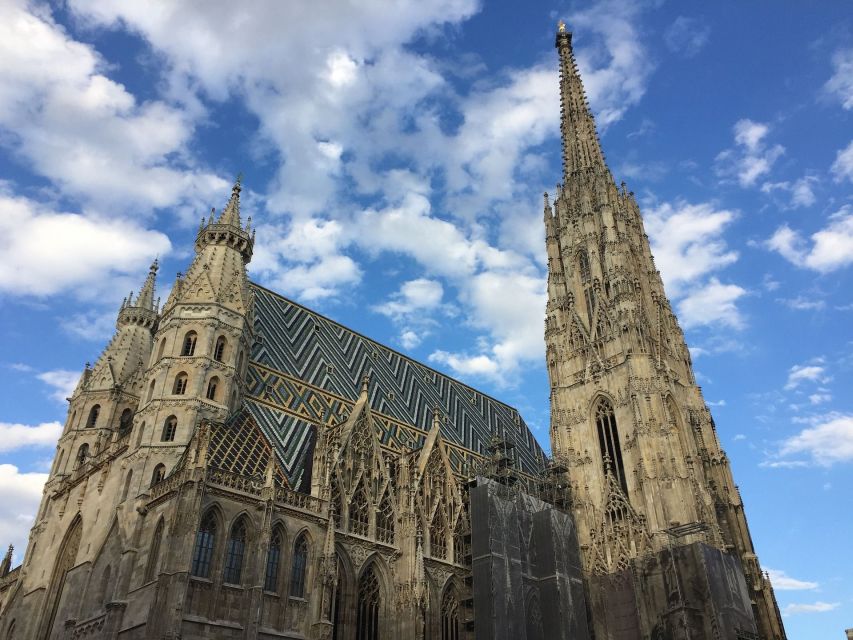
You end this circuit at Stephansplatz, with a focus on Stephansdom, Vienna’s cathedral. It’s described as a majestic Roman-Gothic masterpiece and one of the tallest churches in the world. Even if you’ve seen photos before, the scale tends to land differently when you stand in the square.
This is also a smart concluding choice because the tour’s themes converge here. By now, you’ve heard the story arc from Roman Vindobona, to Habsburg power, to major wars and the Second Republic. The cathedral becomes a visual marker you can attach to that arc, like a final word in the sentence your guide has been writing with you.
A useful way to experience this stop is to keep one question in mind: what kind of city builds a monument like this, and why? Your guide’s earlier comparisons between empire, culture, and public identity make the question feel less academic.
Price and value for a private group up to 15
The price is listed at $323 per group, for up to 15 people, for a 3-hour walk. In practice, that means you’re paying for a private guide experience, not a per-person museum ticket.
Whether it’s good value depends on how you travel:
- If you’re a pair or small family who likes guidance, it can feel like a low-cost way to get structure and context.
- If you’re a group approaching the 15-person ceiling, it can become a cost-effective option compared with multiple separate bookings.
However, the opera part is where value can swing. If your opera access turns out to be limited, you’re still getting a solid walking itinerary, but you might feel you paid for more interior access than you received. That’s why it helps to treat the “including State Opera” promise as something to confirm in advance, especially if the opera segment is the reason you booked.
Watch-outs: when the opera portion feels off
This tour is popular for good reason, but there are two recurring friction points to know about.
First, timing and access matter. The State Opera may only offer certain types of tours or access during specific windows, so an adjusted start time can change what you actually get inside. If the opera portion is non-negotiable for you, plan with flexibility.
Second, the guide experience can vary, and Vienna’s history includes heavy topics. In one account, a guide named Franziska Pfisker made comments that many people found uncomfortable. I can’t know how every guide will handle sensitive history in your group, but you should trust your instincts. If a conversation tone shifts into territory that makes you lose confidence, you can always refocus on the architecture and keep moving with the route.
This is one reason I like private tours for some travelers and avoid them for others. You can get a great guide, but you also feel their style more directly.
Who should book this tour, and who should choose differently
Book it if you want:
- A tight 3-hour route that connects Habsburg history to music and major public buildings.
- A guide to explain why Roman ruins, imperial palaces, and churches sit where they do.
- A private-group pace with English or German live guiding.
Consider a different option if:
- You need guaranteed, deep interior access to the opera house beyond public spaces.
- You’re easily frustrated by schedule changes tied to the opera’s own programming.
For many visitors, the walking part alone is worth it, especially if you like seeing Rome-to-empire-to-cathedral continuity in one coherent walk.
Should you book this Vienna Private Walking Tour including State Opera?
If you’re excited about Vienna as a city where music and empire share the same real estate, I’d say yes, with one smart caveat. Confirm what the State Opera visit includes for your date, so you know what you’re buying.
When this tour clicks, it does something rare in big cities. It turns famous names like Mozart and Haydn, and major historical turns like the Austro-Hungarian Empire and the Second Republic, into a route you can walk and remember. Just don’t treat the opera stop as automatic backstage access.
If you like structured orientation plus a few “wait, that’s older than it looks” moments, this one has strong potential.
FAQ
Where is the meeting point for the tour?
The meeting point is Stephansplatz 8A, 1010 Wien, Austria.
How long is the Vienna private walking tour?
The tour duration is 3 hours.
What does the tour include, and are entrance fees part of the price?
The tour includes a local professional guide and a visit to the State Opera. Entrance fees are not included.
What languages are the live guides available in?
The tour offers live guiding in English and German.
What is the group setup and size?
This is a private group experience, priced per group up to 15 people.
Is the tour suitable for people with mobility impairments?
No, it is not suitable for people with mobility impairments.
Is free cancellation available, and can you pay later?
Yes. You can cancel up to 24 hours in advance for a full refund, and you can reserve now and pay later.
More Walking Tours in Vienna
- Vienna: Guided Walking Tour of City Center Highlights
★ 4.7 · 4,989 reviews - Vienna: Vienna Central Cemetery Guided Walking Tour
★ 4.8 · 3,307 reviews - Vienna: Guided Walking Tour of City Highlights & Hidden Gems
★ 4.9 · 2,180 reviews - Vienna: Viennese Underworld Guided Walking Tour
★ 4.7 · 1,865 reviews - Vienna: World War II Historical Walking Tour
★ 4.8 · 1,772 reviews
Latest Additions
- Wachau Valley Private Wine Tour with Tasting and Gourmet Lunch
★ 5.0 · 1 review - Vienna: Danube Valley Tour with Melk, Dürnstein with wine tasting and boat.
★ 5.0 · 1 review - Private city tour in Vienna
★ 5.0 · 1 review - Hallstatt Small Group Day Trip from Vienna
★ 3.0 · 1 review - Inside Freud’s Mind: Self-Guided Mystery Walk in Vienna
★ 4.0 · 1 review - Private Transfer from Vienna to Prague
★ 5.0 · 1 review - Vienna’s Christmas Market Magic Tour
★ 5.0 · 1 review
Classical Concert Tickets, compared.
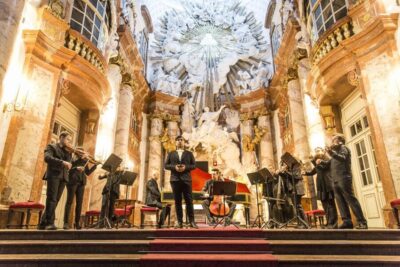
Vivaldi’s Four Seasons Concert in Karlskirche
Read our review →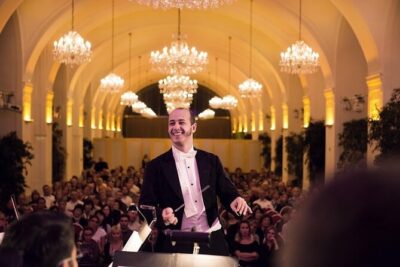
Classical Concert in the World-Famous Musikverein
Read our review →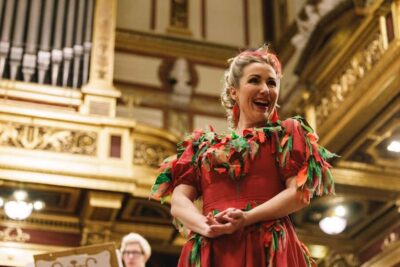
Mozart Concert at the Musikverein – Golden Hall
Read our review →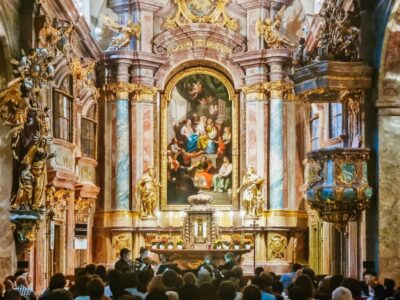
Classical Concert in St. Anne’s Church (Annakirche)
Read our review →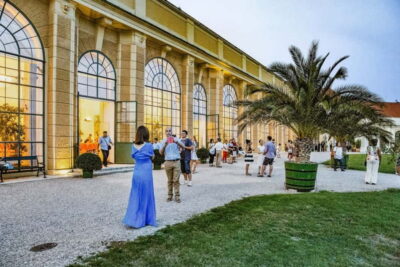
Vienna Classical Concert at St. Peter’s Church
Read our review →Classical Concert in St. Anne’s Church (Annakirche)
Read our review →Browse the lists this tour appears in