
Reviewed · TRUE CRIME & GHOST WALKS
Terrible crimes in Vienna, hidden secrets of the inner city
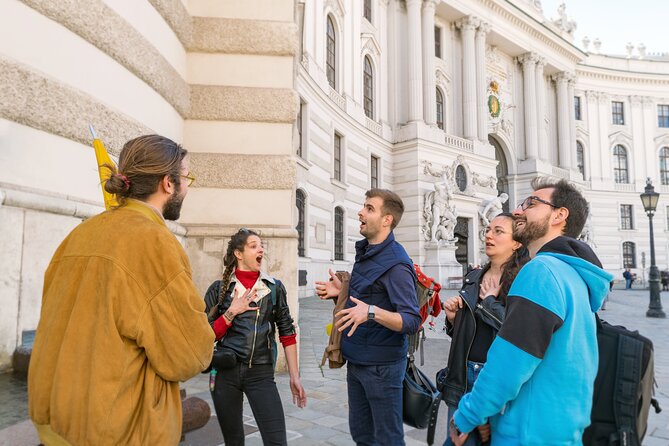
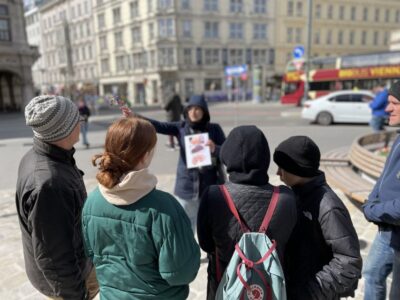
Vienna has teeth, if you know where to look. This true-crime walking tour links murders, scandals, and punishments across centuries, paced with a smartphone audio guide. You spend about 2 hours in the inner city, learning how power, rumors, and greed shaped everyday lives.
I love the way each stop is a compact story that also acts like street-level history. I also like the tour’s research-first approach, including sharp case details shared by guides such as Ben, who reportedly prepares the material himself. The route stays small and focused, built for a group of up to 20.
The main drawback is the subject matter. Expect gruesome murders, torture, and executions, so it is not for you if you want Vienna strictly pretty and polite. It is also a short walk, so you will get the core story beats rather than a slow museum-style experience.
In This Review
- Key highlights to watch for
- Why this Vienna crime walk works in about two hours
- Price and logistics, and what you actually get for $46.13
- Walking the darker side of Vienna, stop by stop
- Tegetthoffstraße 2: Capuchin monastery dungeon and Father Innocentius
- Trattnerhof: the Jaroszynski murder case and Therese Krones
- Augustinerstraße 12: Palais Bathory and the blood countess question
- Graben and Kohlmarkt: Place of the Demel and Udo Proksch’s Lucona affair
- Herrengasse: Palais Ferstel and the Zu den Fünf Morden house
- Herrengasse: Hotel Klomser and Colonel Redl’s spy affair
- Molker Bastei: Anna Gaugisch and Raimund Lewisch
- Am Hof: Theodor Baillet de Latour and the 1848 revolution violence
- Hannaken-Brunnen: Hannakenkönig, the doctor who wanted injuries
- Maria Am Gestade: the city wall and the Zahlheim case execution
- Hoher Markt: Thekla Riener’s torture and the jealousy trap
- St. Stephen’s Cathedral area: the baptism of bakers and medieval punishment
- Steffl: the executioner’s apartment and the Plainacher witch case
- Himmelpfortgasse: the walled-in nun and a Romeo and Juliet style conflict
- The bigger picture: what these cases teach about Vienna
- Should you book this Vienna inner-city terrible-crimes tour?
- FAQ
- How long is the tour?
- Is the tour available in English?
- What does my ticket include?
- Where does the tour start and end?
- Do I need to pay separate admission fees at the stops?
- How big is the group?
- What should I know about weather?
- What is the cancellation window for a full refund?
Key highlights to watch for
- Capuchin monastery dungeon and how Father Innocentius ended up in Joseph II’s orbit
- Jaroszynski murder case and the career fallout for actress Therese Krones
- Elisabeth Bathory legend at Palais Bathory, framed as serial-crime vs intrigue
- Lucona insurance fraud case at Place of the Demel, tied to Udo Proksch
- Colonel Redl and the Evidenzbureau, where espionage shadows may reach WWI
- Medieval punishments from the Zahlheim wheeling case to the baptism of bakers tradition
Why this Vienna crime walk works in about two hours
This is the kind of Vienna experience that feels like an old city map you did not know you had. You are surrounded by grand facades, but the tour keeps snapping your attention to the darker systems behind them: courts, monasteries, military secrets, and punishment as public control.
I especially like the pacing. Each stop is brief enough to keep moving, yet specific enough to leave you with a clear mental image of what happened and why it mattered. The smartphone audio guide also helps you stay oriented as the story jumps from era to era.
One more practical note: because the content is heavy, it reads best when you are ready for adult storytelling. Think teens and adults, not a kid-friendly history stroll.
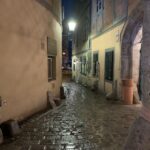
What Vienna hides after the museums close


Price and logistics, and what you actually get for $46.13
At $46.13 per person for roughly 2 hours, you are paying for a guided route plus a structured narrative that ties together many sites you might otherwise pass without meaning. The tour includes a mobile ticket and is offered in English.
You also get a complimentary smartphone audio guide. That matters because you are not just hearing one voice for two hours. You can match what the guide says with audio support while you walk, which makes it easier to remember details when the stories get complicated.
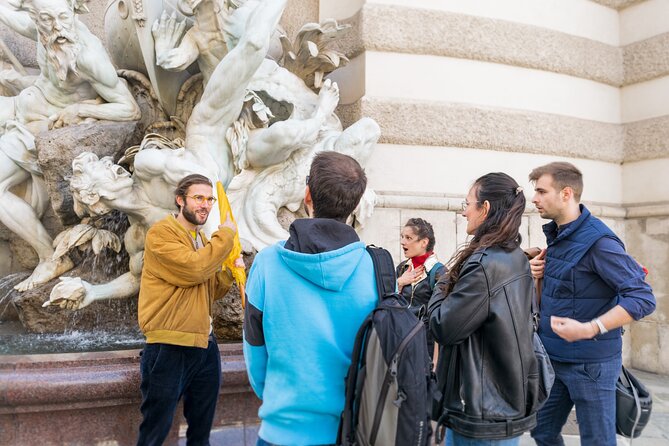
This is a small-group experience, capped at 20 travelers, which helps the guide keep the pace readable. The listed stops are marked as free admission points, so you are not adding extra ticket costs just to “access the site” as part of the walking story.
Two practical anchors for your plan:
- Start: Helmut-Zilk-Platz, Albertinapl. 2-3, 1010 Wien
- End: Rauhensteingasse, 1010 Wien
And yes, weather counts. The tour requires good weather, and if it is canceled for poor weather you are offered another date or a full refund.
Walking the darker side of Vienna, stop by stop
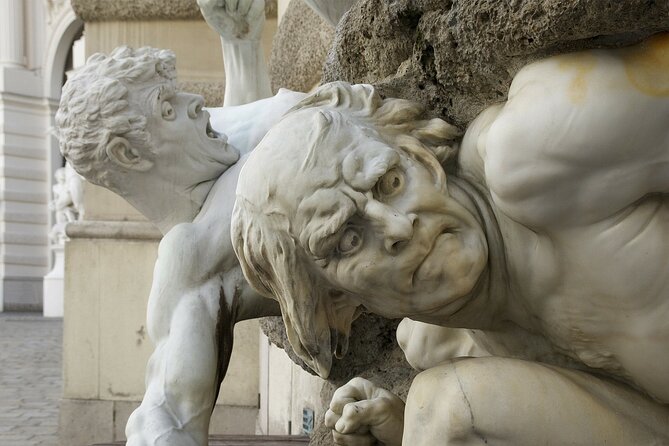
Below is the story trail you follow, in the order you visit it, with what to look for and what to keep in mind at each place.
Tegetthoffstraße 2: Capuchin monastery dungeon and Father Innocentius
At the Capuchin monastery, you hear how a “dungeon” functioned as an institutional off switch. Monks could be locked up for decades, sometimes for reasons that sound absurd on paper, like unauthorized afternoon walks or single incidents involving monastery officials.
The story spotlights Father Innocentius and how he became entangled with Emperor Joseph II. He announced the dungeon to Joseph II, who closed it and transferred Innocentius for his own safety, sending him later toward Lviv. The tale adds an extra twist: Innocentius later became a Protestant, a Freemason, and an advisor to the tsar.
What I like here is the institutional lens. It is not just “crime happened,” it is “a system decided who could be silenced.”
Get your bearings in the old town
- Vienna Historic Center Small Group Walking Tour★ 5.0 · 1,746 reviews
- Vienna: Old Town Sightseeing Tour in a Vintage-Style E-Car★ 4.5 · 1,107 reviews
- Vienna: 30-Minute Fiaker Ride in the Old Town★ 4.5 · 1,092 reviews
- Vienna: Romantic Old Town 2-Hour Discovery Tour★ 4.7 · 816 reviews
Trattnerhof: the Jaroszynski murder case and Therese Krones
At Trattnerhof, you step into a scandal that mixes entertainment fame with criminal investigation. The case is remembered partly because of actress Therese Krones, whose career took a serious hit.
There are rumors about extravagance and despair driving Jaroszynski toward crime, but the core story is more grounded. He was addicted to games and deeply in debt, which reframes the motive away from “romantic legend” and toward financial pressure.
This stop is a reminder that public narratives often prefer drama over mechanics. In Vienna, even big cases got turned into story.
Augustinerstraße 12: Palais Bathory and the blood countess question
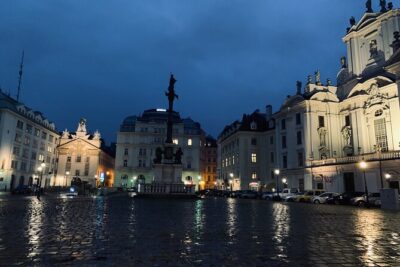
Palais Bathory is tied to Elisabeth Bathory, known as the blood countess. The famous claim is that she murdered over 600 virgins and bathed in blood to enhance youth and beauty.
The tour frames this as a real question, serial killer versus violent intrigue tied to a countess with dubious motives. Either way, it is a stop built around how legend spreads, what people want to believe, and how fear becomes part of city folklore.
If you are sensitive to violent themes, this one may hit early because the legend is vivid. Still, it is useful historically, because it shows how stories of power often travel faster than proof.
Graben and Kohlmarkt: Place of the Demel and Udo Proksch’s Lucona affair
In the area around Graben and Kohlmarkt, you reach Place of Demel, a setting where the Lucona affair is discussed. Udo Proksch in the 1970s is linked to planning a far overinsured freighter for Asia, with an explosive charge hidden on board.
The result was mass murder and massive insurance fraud, and the investigation took years. The story emphasizes that Proksch’s relationships pulled investigation in many directions, complicating accountability.
I like this stop because it is less medieval and more modern: it is about paperwork, networks, and how wealth can bend outcomes. Vienna is not only old legends, it is also modern systems of damage.
Herrengasse: Palais Ferstel and the Zu den Fünf Morden house
At Herrengasse, Palais Ferstel connects to one of medieval Vienna’s most notorious mass murder stories. The site is associated with the house called Zu den Fünf Morden, where five murders included a seven-year-old.
The punishment described is brutal and deliberately slow: the perpetrator was impaled because the deed was considered terrible, and the executioner was not very experienced in that specific method. The result, in the tour’s telling, was an execution that took extremely long.
This stop is a lesson in how justice doubled as public spectacle. Even if you already know Vienna’s medieval reputation, this gives you the machinery behind it.
Herrengasse: Hotel Klomser and Colonel Redl’s spy affair
Opposite Palais Ferstel, the story shifts from medieval cruelty to monarchy-era intelligence. The former Hotel Klomser is linked to Colonel Redl’s suicide and what is described as the monarchy’s greatest spy affair.
The tour ties the affair to potential consequences for the First World War. It also points to damage closer to home: Redl’s espionage activity exposed vulnerabilities in the underfunded Evidenzbureau, and it harmed the army’s reputation.
This is one of the more chilling stops because it suggests the ripple effect. A single breach can change how a whole institution thinks it is safe.
Molker Bastei: Anna Gaugisch and Raimund Lewisch
At Molker Bastei, the case is Anna Gaugisch, murdered in 1861 by her boyfriend Raimund Lewisch. The story includes dismemberment and the detail that some body parts were found in the Danube, while others were connected to this area.
The motive is described as Lewisch wanting the situation removed, including the fact that the woman was pregnant. The narrative also references his background and a mention of earlier gruesome learning through dissection, including a cat.
This stop is heavy and very direct. If you want your true crime softer at the edges, you might brace yourself here.
Am Hof: Theodor Baillet de Latour and the 1848 revolution violence
At Am Hof, you hear about the lynch murder of war minister Theodor Baillet de Latour during the revolution year 1848. The tour treats this as rare political violence in Vienna, and it links the event to the start of the Wiener October Revolution, the more violent later phase.
The story also points to nearby consequences, including that the civil arsenal in the same area was looted during the revolution. This makes the stop feel like a hinge in the city’s political timeline.
I like how this frames violence as something that spreads through opportunity. The theme is not random cruelty, it is political momentum.
Hannaken-Brunnen: Hannakenkönig, the doctor who wanted injuries
At Hannaken-Brunnen, the story turns darker in a different way: a surgeon called the Hannakenkönig who caused broken bones to improve business. The tour says he set trip hazards so injuries would happen and he could treat the victims afterward.
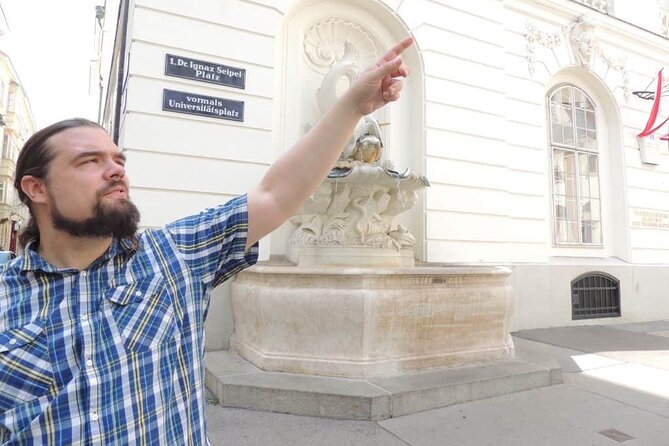
This stop also connects to migration and work. The Hannaken were a minority in Moravia who often came to Vienna for jobs, and the fountain’s imagery shows two men carrying an injured comrade to the Hannakenkönig.
What I take from this is how “help” can be twisted into a system for profit. It is a grim version of incentives.
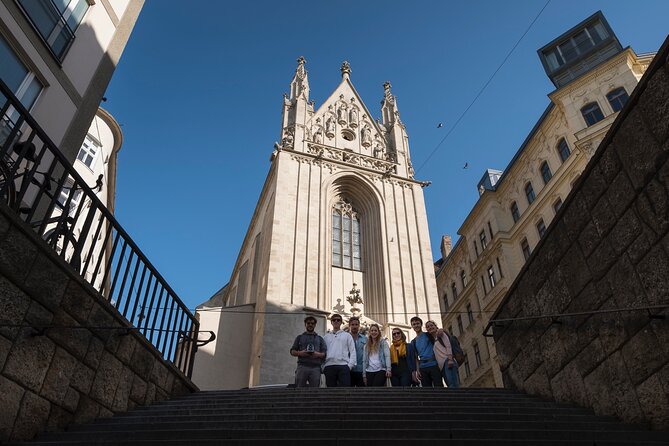
Maria Am Gestade: the city wall and the Zahlheim case execution
At Maria Am Gestade, you reach a section of the city wall tied to the Zahlheim case. The tour describes the death penalty as the last wheeled in Vienna for murderers, and it calls out how cruel it was and that it later disappeared in most countries.
Joseph II usually rejected the death penalty in general, but the facts of this case forced him to allow this punishment. The message is that even enlightened rulers could be pressured by the specifics.
This stop is useful if you like seeing how policy meets public emotion. The wall is old, but the decision logic is familiar.
Hoher Markt: Thekla Riener’s torture and the jealousy trap
At Hoher Markt, the story is Thekla Riener, who was tortured at the site tied to the courthouse. Her husband Anton Grünborn is part of the tale, using instruments from the court to push her into betraying a lover.
Here the twist is psychological and tragic: there was supposed to be a lover, but the lover was not real. The tour says the jealous acts were driven by imaginary rivals, and Thekla dies accidentally during a chain of insane behaviors that escalates.
Her parents then become insane as well, pushing the trauma outward. It is an ugly stop, but it is also a clear case study in how obsession turns people into instruments.
St. Stephen’s Cathedral area: the baptism of bakers and medieval punishment
Near St. Stephen’s Cathedral, you hear the legend of the baptism of bakers. It is presented as a quality control punishment, specifically for bad bakers, where bakers were put in a cage and dipped several times into the Danube.
The tour treats this as partly legendary, but it also insists the core tradition was real enough to have become widespread. It even notes a comparison to English-speaking countries, where a similar type of punishment existed for women in dispute.
This is a good stop if you want irony. Vienna’s most famous church can still hold stories about humiliating “standards.” You learn to look at symbols as social tools, not just architecture.
Steffl: the executioner’s apartment and the Plainacher witch case
At Steffl, the tour references the Malefizspitzbubenhouse, connected to an executioner’s apartment and dungeon. The story highlights the Plainacher case, described as the only witch burned in Vienna.
The accused woman is said to have been charged with bewighting her epileptic granddaughter and summoning demons. The tour adds that witch persecutions were not common in Vienna, but the city judge had to avoid public pressure, shaping how the case played out.
This stop works well because it shows how fear can be selective. Even when a country is not “all-in” on a witch hunt, one case can still set a harsh precedent.
Himmelpfortgasse: the walled-in nun and a Romeo and Juliet style conflict
At Himmelpfortgasse, the tour links you to Himmelpfort monastery and a nun who was walled in in 1319. The reason given is refusing to part with her lover, a relationship her father strongly opposed.
The narrative is described as a local Vienna version of Romeo and Juliet, including a conflict between a mayor and his archenemy where the children still align as friends. When the mayor’s son asks for Anna’s hand, the father condemns her to a life as a nun instead.
This last segment lingers because it is not only violence. It is control through institutions, where the punishment is social erasure.
The bigger picture: what these cases teach about Vienna
If you connect the dots across the route, several themes repeat.
First, institutions matter as much as individuals. Monasteries can lock people away for decades, courts can torture and punish, and secret services can fail because they are underfunded. Even Joseph II’s actions show up as policy with human consequences, such as closing the dungeon and later permitting a cruel execution in the Zahlheim case.
Second, rumors versus motives show up everywhere. The actress Therese Krones story carries rumor about extravagance, but the tour’s version points to games addiction and debt. In other stops, legends like Bathory’s blood countess highlight how societies choose the dramatic explanation, even when the truth is uncertain.
Third, modern cases sit beside medieval ones without changing the underlying human pattern: greed, jealousy, and power struggles still drive outcomes. The Lucona fraud at Place of the Demel and the Redl espionage affair feel new, but the same logic of leverage is there.
Should you book this Vienna inner-city terrible-crimes tour?
Book it if you want Vienna from the inside out, not just from the postcard viewpoint. This tour is strong when you like true crime, enjoy history tied to real locations, and prefer a guided storyline you can follow while walking. It also fits well for people who already like the Vienna crime museum style experience and want the darker layer expanded across the inner city.
Skip it if you are sensitive to torture, executions, and gruesome murder details. Also skip it if you want a light, architecture-only city stroll. Even though the settings are beautiful, the subject matter is intentionally “beneath the gilding.”
One last deciding tip: because it is about 2 hours and kept to a small group, it works best when you are ready to pay attention. If you like stories that connect centuries with clear cause and effect, this is a smart use of your time in Vienna.
FAQ
How long is the tour?
It lasts about 2 hours.
Is the tour available in English?
Yes, it is offered in English.
What does my ticket include?
You get a mobile ticket, and you also receive a complimentary smartphone audio guide.
Where does the tour start and end?
It starts at Helmut-Zilk-Platz, Albertinapl. 2-3, 1010 Wien, and ends at Rauhensteingasse, 1010 Wien.
Do I need to pay separate admission fees at the stops?
The tour information lists free admission ticket entries at each stop.
How big is the group?
The maximum group size is 20 travelers.
What should I know about weather?
The tour requires good weather. If it is canceled due to poor weather, you are offered a different date or a full refund.
What is the cancellation window for a full refund?
You can cancel up to 24 hours in advance for a full refund. If you cancel less than 24 hours before the start time, the amount paid is not refunded.
Latest Additions
- Wachau Valley Private Wine Tour with Tasting and Gourmet Lunch
★ 5.0 · 1 review - Vienna: Danube Valley Tour with Melk, Dürnstein with wine tasting and boat.
★ 5.0 · 1 review - Private city tour in Vienna
★ 5.0 · 1 review - Hallstatt Small Group Day Trip from Vienna
★ 3.0 · 1 review - Inside Freud’s Mind: Self-Guided Mystery Walk in Vienna
★ 4.0 · 1 review - Private Transfer from Vienna to Prague
★ 5.0 · 1 review - Royal Route VIP Journey from Vienna to Bratislava and Budapest
★ 5.0 · 1 review
True Crime & Ghost Walks, compared.
Ghosts and Legends Guided Nighttime Walking Tour
Read our review →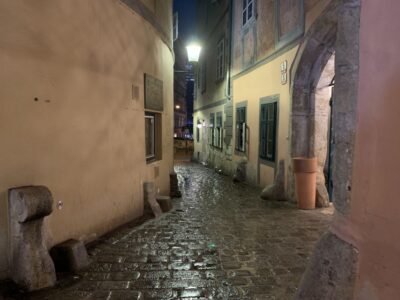

Browse the lists this tour appears in