
Reviewed · OLD TOWN DISCOVERY TOURS
Private Ringstrasse Project Walking Tour
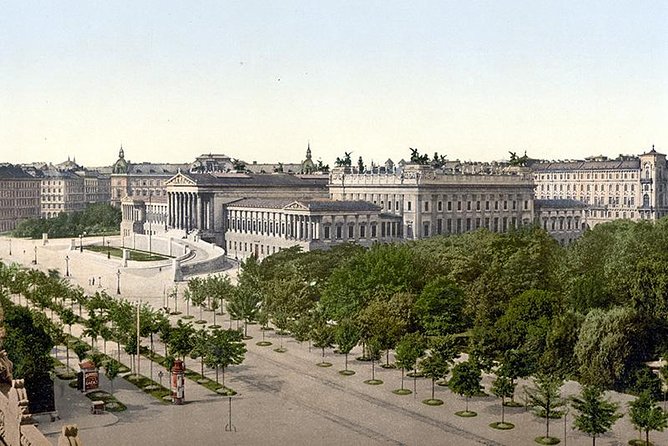
Vienna’s Ringstrasse is architecture with a backstory. This private 3-hour walk focuses on the political and philosophical reasons behind the project, then shows how those choices shaped where people lived and how the boulevard functioned as a public stage. I especially like the personal, private-guide format and the chance to see the Ring through an expert historian’s context, not just photo stops.
There is one catch to plan around: it is a 3-hour on-foot experience along a busy boulevard. If you prefer lots of stops with quick breaks, this might feel like a steady walk rather than a slow sightseeing shuffle.
In This Review
- Key highlights worth your attention
- Why the Ringstrasse was planned, and what UNESCO recognition changes for you
- Starting at Rathaus: how Vienna’s meeting place sets the tone
- Architecture as a career win: architects, commissions, and stylistic choices
- Funding the Ring: apartment sales, class anxiety, and who ended up next to whom
- The Ring as a public catwalk: cafés, restaurants, and people watching
- Café Schwarzenberg: how a single stop explains late 19th-century café culture
- Private guide value, duration, and what the $490 per group really means
- What you get for your group, and who this tour fits best
- Should you book this Private Ringstrasse Project Walking Tour?
- FAQ
- Where does the tour start and end?
- How long is the private Ringstrasse project walking tour?
- What is included in the price?
- Is food or drinks included?
- Is hotel pickup included?
- How many people can be in the group?
- Can I book this tour in the morning or afternoon?
- Can this tour be adapted for children?
- What is the cancellation policy?
Key highlights worth your attention
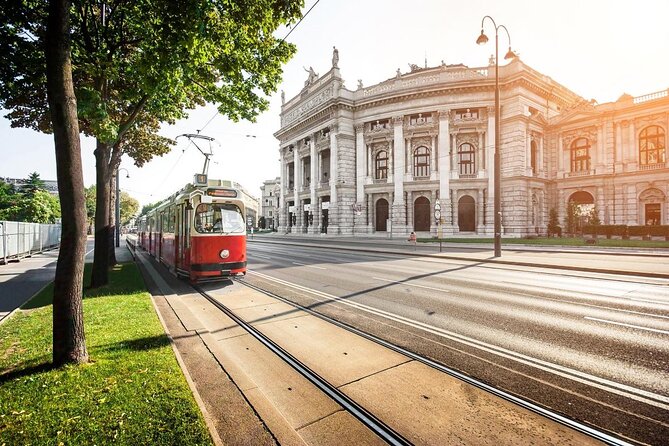
- Private guide with real context focused on why the Ring was designed the way it was
- Rathaus start point at a classic meeting place on the Ring
- Architects and style choices explained as career-defining commissions
- Funding and class dynamics behind the privately financed apartments and who actually moved in
- Café Schwarzenberg (est. 1861) for a real taste of Vienna’s late 19th-century café culture
- Morning or afternoon departures so you can match the tour to your day
Why the Ringstrasse was planned, and what UNESCO recognition changes for you
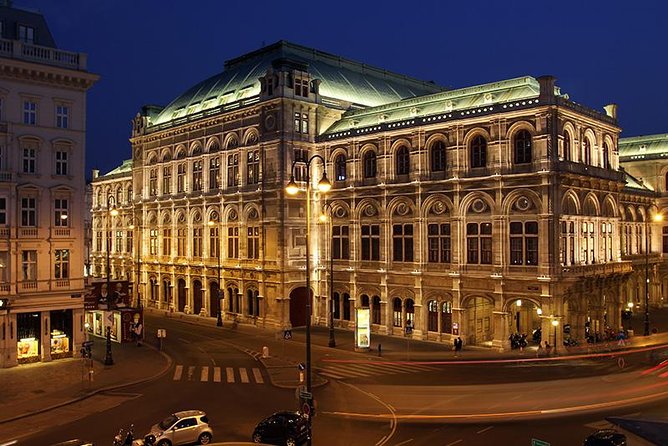
The Ringstrasse is not just a pretty circle of buildings. The tour frames it as a deliberate project with political and philosophical motivations, then asks the key question you should always ask in cities like Vienna: who decided what, and why?
That matters because it changes how you read what you see. Instead of treating the Ring like a lineup of monuments, you start noticing the logic behind public buildings placed along a ring-shaped boulevard. The guide also connects that plan to the social and geographical impact the project had as the years went on, which gives you a clearer mental map of why the area feels the way it does.
And yes, UNESCO designated the circular road as a world heritage site. In practice, that means the tour gives you a framework for why the Ring is considered significant, not just why it looks good on a postcard. You walk away with a better sense of what those architectural choices were trying to communicate.
Get your bearings in the old town



Starting at Rathaus: how Vienna’s meeting place sets the tone
The tour begins in front of the Vienna City Hall, the Rathaus, at Universitätsring 4. That start point is smart, because Rathaus is one of the Ring’s most recognizable anchors and also a beloved meeting spot. Even if you are short on time in Vienna, you can use this as a way to get your bearings on the boulevard quickly.
From the beginning, you are meant to think about public institutions, not only façades. The guide starts the story by explaining how the project was introduced with plans for many public buildings along the Ring, and then moves into the historical style those institutions were built in. You start to see building styles as decisions, not decorations.
A quick consideration: since the tour is 3 hours long, you will likely spend a meaningful chunk of time walking and absorbing explanations. If you are the type who loves to pause for long photo sessions every few minutes, plan for that to be secondary to the guide’s flow.
Architecture as a career win: architects, commissions, and stylistic choices
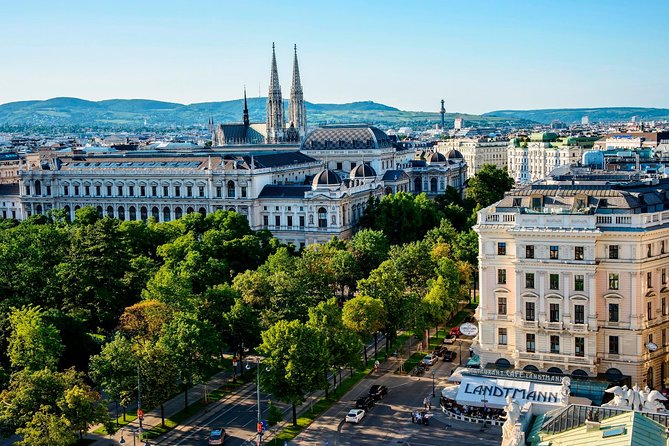
One of the most interesting parts is how the tour treats architecture as professional risk and professional reward. The Ringstrasse project was so prestigious that winning a commission could mean a completely new status for an architect’s career. That’s a different angle than the usual sightseeing approach.
You also learn how the guide connects specific building styles to the kind of institution they housed. The discussion considers the historical style in which the public buildings were built and why certain styles were chosen for certain buildings. That helps you do something useful while you are walking: you learn to notice patterns and then ask what those patterns were meant to signal.
If you like understanding the “why” behind the “what,” you will appreciate this section. It is also where a historian-type guide usually shines, because the information turns the boulevard from a visual experience into an interpreted one. And if your guide happens to be Ana, the experience stands out for its context and depth, based on a past review praising Ana as an easy companion with an expert grasp of the material.
Funding the Ring: apartment sales, class anxiety, and who ended up next to whom
Here is the story layer I think makes this tour worth paying for, not just doing on your own. The plan included funding the Ring through privately financed apartment houses. That sounds clean on paper, but the tour explains why it did not work immediately.
First, it would take years before the Ring project finished. That delay made it hard to sell properties. Second, the established nobility of Vienna feared the uncertainty of future occupants in an entirely new district. In other words, they worried about living next to people they did not know, in a neighborhood that still felt unknown.
The tour adds an extra social twist by emphasizing the Ring as a “terrae incognitae” in social circles. The fear was that any nouveau riche could become a neighbor. This is the kind of detail that gives you a more human version of city planning, because it shows that even big infrastructure projects are driven by people protecting their comfort and reputation.
What you should take away: you are not only learning about buildings, you are learning how social sorting happens through space. Once you hear this, you start looking at the boulevard with a new lens, noticing it as a place where public image and private life constantly intersect.
Other ways to round out a Vienna visit
- Vienna: Guided Walking Tour of City Center Highlights★ 4.7 · 4,989 reviews
- Vienna: Vienna Central Cemetery Guided Walking Tour★ 4.8 · 3,307 reviews
- Vienna: Guided Walking Tour of City Highlights & Hidden Gems★ 4.9 · 2,180 reviews
- Vienna: Viennese Underworld Guided Walking Tour★ 4.7 · 1,865 reviews
The Ring as a public catwalk: cafés, restaurants, and people watching
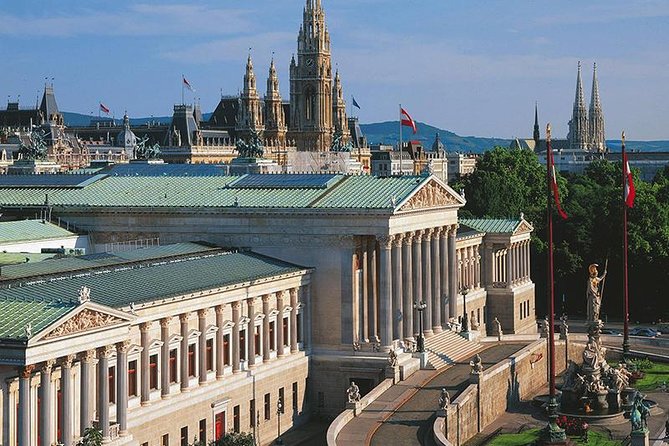
A boulevard works as a public stage. The tour frames the Ringstrasse exactly that way, explaining that it quickly became one of Vienna’s best places to see and be seen, plus a place for meeting.
That public function fed directly into the food and social scene along the boulevard. The guide notes that several cafes and restaurants were established along the Ring, which makes sense when you think about how people use prime public space. If this is where you come to be out in the open, you want easy places to stop, talk, watch, and regroup.
This part of the tour is useful for a practical reason. Vienna’s café culture can feel intimidating if you do not know what you are looking for. By connecting the social life of the Ring with the growth of cafes and restaurants nearby, the tour gives you a “why” for where you might want to linger later, even if your time is limited.
Also, if you enjoy people watching, the Ring’s design as a promenade matters. You get enough interpretation to know where to look and why certain spaces invite public interaction.
Café Schwarzenberg: how a single stop explains late 19th-century café culture
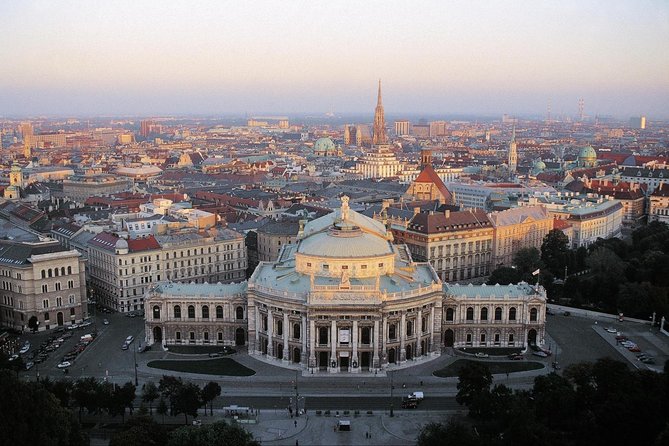
The tour ends with a visit to Café Schwarzenberg (est. 1861). This is a key payoff stop because it ties the whole Ring story to a daily-life tradition. Instead of treating the café as a random sweet break, the tour connects it to the thriving café culture during the latter half of the 19th century.
What makes this stop valuable is that it translates big ideas into small, everyday behaviors. You can expect the guide to help you understand why cafés mattered so much in that period, especially along a boulevard designed for meeting and observation.
Food and drinks are not included, so you should plan to either budget for what you order or treat the visit as a seated cultural moment rather than a full meal. Either way, the café stop works best if you use it like the tour intends: pause, watch the rhythm, and connect what you see to the Ring’s role in public life.
Private guide value, duration, and what the $490 per group really means
This is priced at $490 per group for up to 10 people, and the tour runs about 3 hours. The price feels high if you think per person, but the real way to judge value is how the group size affects your cost.
If your group fills all 10 spots, you are looking at roughly $49 per person. If it is just two people, it becomes more like $245 per person. So this tour is best when you can share it with friends or family, because the “private” part becomes cheaper fast once you spread the cost.
You also get real flexibility in when you go. The tour offers a choice of morning or afternoon departure, which matters in a city where you might want to place your Ring walk either early for softer crowds or later when you are building toward dinner.
One practical point: hotel pickup and drop-off are listed as not included. However, pickup is mentioned as offered in the summary. So I would treat this as an option that may depend on how you book and where you start from. The safe plan is to treat the stated meeting point as your anchor: Universitätsring 4, 1010 Wien.
What you get for your group, and who this tour fits best
This is a private tour/activity, meaning only your group participates. That matters for how the guide can pace the story and adjust explanations if someone in your party asks questions. It also helps if you have different energy levels in the group, because you are not stuck matching a random crowd’s tempo.
The tour can also be booked as a children’s family tour. In that version, the guide focuses on symbols on buildings and everyday life in Vienna around 1900. If you are traveling with kids, this is a big plus because the Ring is easy to overwhelm young people with unless the guide is intentionally steering the experience toward readable details.
Most people can participate, but remember it is a walking tour with a 3-hour duration. If your group has mobility limits, plan carefully and consider whether you can handle continuous time on your feet.
Should you book this Private Ringstrasse Project Walking Tour?
Book it if you want the Ringstrasse to make sense, not just look impressive. I like that this tour explains motivations behind the project, including how the financing idea ran into real-world problems and how social anxiety played out through who could live there. The stop at Café Schwarzenberg (est. 1861) gives your story an ending that connects architecture to daily life.
Skip it if your idea of a great Vienna outing is mostly free time, unstructured wandering, and long photo breaks. This is a guided, historian-led walk with a story arc, so it rewards curiosity more than casual strolling.
If you are the kind of person who loves asking why a city looks the way it does, this is a strong choice. And if you end up with Ana as your guide, past feedback highlights context and depth plus a friendly approach, which is exactly what you want when you are paying for a private tour.
FAQ
Where does the tour start and end?
The tour starts at Universitätsring 4, 1010 Wien, Austria. The tour ends in Vienna (the exact end point is not specified in the details provided).
How long is the private Ringstrasse project walking tour?
It runs for about 3 hours.
What is included in the price?
Included are the 3-hour guided tour and a professional guide.
Is food or drinks included?
No. Food and drinks are not included.
Is hotel pickup included?
Hotel pickup and drop-off are not listed as included. Pickup is mentioned as offered, but you should confirm the exact pickup arrangement when booking.
How many people can be in the group?
It is a private tour/activity for your group only, with a maximum of up to 10 people per group.
Can I book this tour in the morning or afternoon?
Yes, you can choose between a morning or afternoon departure.
Can this tour be adapted for children?
Yes. It can be booked as a children’s family tour, with the guide focusing on symbols on various buildings and everyday life in Vienna around 1900.
What is the cancellation policy?
You can cancel for free up to 24 hours in advance for a full refund.
Latest Additions
- Wachau Valley Private Wine Tour with Tasting and Gourmet Lunch
★ 5.0 · 1 review - Vienna: Danube Valley Tour with Melk, Dürnstein with wine tasting and boat.
★ 5.0 · 1 review - Private city tour in Vienna
★ 5.0 · 1 review - Hallstatt Small Group Day Trip from Vienna
★ 3.0 · 1 review - Inside Freud’s Mind: Self-Guided Mystery Walk in Vienna
★ 4.0 · 1 review - Private Transfer from Vienna to Prague
★ 5.0 · 1 review - Vienna’s Christmas Market Magic Tour
★ 5.0 · 1 review
Old Town Discovery Tours, compared.
Vienna Historic Center Small Group Walking Tour
Read our review →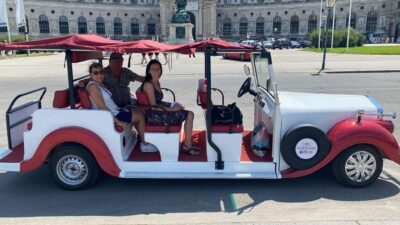
Old Town Sightseeing Tour in a Vintage-Style E-Car
Read our review →
Exclusive Vienna Old Town Highlights Walking Tour (max. 6 persons)
Read our review →

Browse the lists this tour appears in