
Reviewed · KLIMT ART TOURS
Klimt & Vienna around 1900
Vienna around 1900 feels close when you’re in the right rooms. This guided visit to the Upper Belvedere uses Klimt’s art as your guide into the Vienna Secession world and the artists who shaped the era. I especially liked how you get the why behind the paintings, not just the what, and how the session ties Klimt to bigger names like Egon Schiele and Josef Hoffmann.
One possible drawback to keep in mind is time. At 90 minutes, you see a carefully chosen selection, so if your goal is to hunt every Klimt work in the building, you might wish you had longer. Also, the Upper Belvedere entrance ticket is not included, so your time slot matters.
In This Review
- Key moments that make this tour worth it
- Upper Belvedere meeting point, and why this palace changes the mood
- Vienna around 1900 explained through the Vienna Secession
- Klimt’s masterpieces in context, including The Kiss
- Egon Schiele and Josef Hoffmann, the supporting cast of a big shift
- Symbolism, Impressionism, Expressionism, and how to read what you see
- Value for your money, and the ticket timing that can make or break it
- Who this tour fits best, and who might want something else
- Should you book Klimt & Vienna around 1900?
- FAQ
- Where do I meet for the tour?
- Do I need an entrance ticket to the Upper Belvedere?
- Which languages is the guided tour offered in?
- How long is the tour?
- Is the tour wheelchair accessible?
- What is included in the price?
- What is the cancellation policy?
Key moments that make this tour worth it
- Upper Belvedere setting: Start inside the entrance hall by the grand imperial staircase, then get a feel for the palace.
- A PhD art historian at the microphone: You get context, not just art talk.
- Klimt focus, including The Kiss: The tour spotlights major Klimt works you can actually see.
- Vienna Secession explained clearly: How 1897 changed what artists showed in public.
- 1900 Vienna, not just Klimt: You hear how others like Schiele and Hoffmann fit into the same artistic shift.
- International influence in the story: The Secession’s reach included artists such as Monet, Munch, and van Gogh.
Upper Belvedere meeting point, and why this palace changes the mood
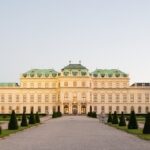
You start inside the Upper Belvedere Palace, not outside, not at a random corner. The meeting point is in the entrance hall, in front of the grand imperial staircase. That matters more than you’d think. You’re immediately in a theatrical, imperial space, which helps you understand why art of the period wanted to look both modern and meaningful.
From there, the guide sets you up with the palace context. You’ll hear about Prince Eugen Belvedere and why this was such a beautiful summer residence in its day. Even if you’re not a palace person, it gives you a fast orientation: you understand who lived here, what this building represented, and how the setting ties into the culture that produced Vienna around 1900.
A nice bonus is the sense of height and views. The tour includes a moment to appreciate the panorama over Vienna. It’s not just scenic. It helps you grasp how artists and patrons could talk about “new worlds” while still living in one of Europe’s most central cities. You get a practical reminder that ideas have geography, too.
Finally, this tour is built around a museum rhythm. You won’t be wandering for half your time. You’ll be guided into the art that supports the storyline, so you don’t have to guess what to prioritize once you’re inside.
Follow the gold leaf through Vienna
Vienna around 1900 explained through the Vienna Secession
The heart of the experience is how the guide links Klimt to the cultural change that was sweeping Vienna at the turn of the century. The big concept you’ll hear is the Vienna Secession, founded in 1897. That one date gives the era its shape: artists wanted new rules, new spaces, and a new way to show art.
Here’s what I like about this approach. Instead of treating Klimt as a lone genius, you learn him as part of an artistic network. You’ll hear how Secession members displayed works by young, upcoming artists and how they also brought in international art influences. The names you might hear are Impressionists like Monet, and other international figures associated with broader avant-garde currents, including Edvard Munch, Ferdinand Hodler, Giovanni Segantini, and Vincent van Gogh.
Even if you know some of those names already, the tour helps you connect them to Vienna’s own moment. Vienna’s art scene wasn’t just copying trends. It was actively debating what art should do and what it should feel like. That’s why the guide emphasizes multiple styles that were floating around the same time: Symbolism, Impressionism, and Expressionism. You start to see them as different answers to the same question.
Also, the session is led by Kolja Kramer, and the format keeps the ideas moving. You get enough theory to make the art make sense, but it’s not turned into a textbook. It’s the kind of storytelling that helps you look at a painting longer because you know what to notice.
Klimt’s masterpieces in context, including The Kiss
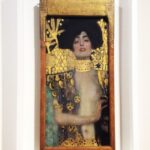
Yes, you’re here for Klimt. And the tour makes sure that Klimt is not reduced to one famous image. A major highlight is seeing the largest collection of original Klimt paintings available in Vienna, with special attention on his masterpiece, The Kiss.
What’s valuable about the focus on Klimt is the timing and the evolution. The guide talks about Klimt’s artistic development and his personal life, so when you look at different works, you’re not guessing at why the style changes. You can interpret the shift in mood and symbolism as part of a lived process, not random variation.
This is where the PhD perspective really helps. You’re not just told that Klimt is “symbolic.” You’re guided to understand what symbolism meant to late 19th century and early 20th century Viennese audiences, and why viewers at the time could feel both attracted and unsettled by what they were seeing.
There’s also a practical viewing advantage. Museums can be overwhelming when you’re tired. A 90 minute guided format tells you where to look first and what to notice in each key painting. That’s especially useful for The Kiss, because it draws you in immediately, but it can be easy to only react emotionally and miss details.
If you love Klimt, the payoff is that you’ll leave knowing what to look for next time you see his work elsewhere in Vienna or beyond. You’ll likely start spotting recurring ideas and patterns on your own.
Egon Schiele and Josef Hoffmann, the supporting cast of a big shift
Klimt doesn’t stand alone in this tour. You’ll learn about major players around him, including Egon Schiele and Josef Hoffmann. This matters because the Vienna Secession story isn’t only about paintings hanging on walls. It’s about a generation reorganizing how art looks, how it’s made, and what it’s supposed to represent.
Schiele’s inclusion is helpful because he represents a different kind of intensity. Even if you have a vague sense of Schiele already, hearing his role in this broader movement helps you understand him as part of the same artistic climate rather than as a separate, later detour.
Hoffmann brings an architectural and design angle into the discussion. Again, this supports the theme that Vienna around 1900 was about systems. Artists were changing not only what they painted, but how they thought about form, style, and modern life.
The tour works best if you’re open to the idea that one painter can be the doorway into an entire cultural moment. If your expectations are narrow, you might feel impatient while the guide sets the stage for why Klimt looks the way he does within that changing circle.
Beyond the palaces, the city keeps its own rhythm of coffee, concerts, and day trips nearby.
- Vienna: Vivaldi’s Four Seasons Concert in Karlskirche★ 4.7 · 14,951 reviews
- Vienna: Schönbrunn Palace & Gardens Skip-the-Line Tour★ 4.7 · 7,739 reviews
- Vienna: Light of Creation Votive Church Immersive Light Show★ 4.8 · 6,779 reviews
- Vienna Spanish Riding School Guided Tour★ 4.7 · 6,765 reviews
Symbolism, Impressionism, Expressionism, and how to read what you see
One reason this tour gets good marks is that it teaches you how to interpret styles, not just label them. You’ll hear examples of Symbolism, Impressionism, and Expressionism, tied back to the Vienna Secession and to the international influences that the movement welcomed.
Here’s what I find most useful for your own museum time. Even if you don’t remember every term later, you can still apply the logic. When the guide explains symbolism, you’re encouraged to look for mood and meaning rather than only realism. When impressionism enters the conversation, you start thinking about perception, light, and the “moment” feeling. When expressionism is mentioned, you pay attention to emotion that’s pushed forward, not just observed.
This is also why the palace setting helps. The Upper Belvedere is not a blank box. It’s ornate, formal, and full of historical cues. So you’re reading art in a room that was built for display and status. That tension between tradition and the new ideas of 1900 becomes part of the experience.
If you normally rush through galleries, the tour’s structure can slow you down just enough. And if you’re the type who likes to stare at a painting until you feel you understand it, this guide gives you just enough tools to make that staring more productive.
Value for your money, and the ticket timing that can make or break it
The price is $53 per person for about 90 minutes with a certified guide and PhD art historian. Entrance to the Upper Belvedere is not included. To me, that’s still good value because you’re paying for interpretation, not just access. You’re also paying for time efficiency.
The catch is logistics. You must buy an entrance ticket for the Upper Belvedere only, and you need the correct time slot. If you arrive with the wrong slot or without a valid ticket, you risk missing entry. The group is not supposed to wait if you’re delayed, and there are no refunds for missing entry due to the wrong time slot or no ticket.
So here’s my practical advice if you book this tour: buy your Upper Belvedere ticket online early, and pick a time slot that’s the same or slightly before your tour start. That way you’re not scrambling at the counter while the rest of your group is being directed into the palace.
Also, check your schedule before you lock anything in. Because entrance timing is strict, it’s smarter to buffer your day near the museum rather than stack it tight with another timed activity.
On the bright side, the tour is wheelchair accessible, and the language options include English and German. If you speak either, you’ll have a better chance of catching the nuances that make the art talk actually worthwhile.
Who this tour fits best, and who might want something else
This is a strong fit if you want a focused introduction to Klimt and Vienna around 1900 without spending hours doing guesswork. It’s also ideal if you like explanations that connect artists to ideas like the Vienna Secession, symbolism, and the shift toward modern styles.
It’s especially good for:
- art lovers who want context around The Kiss and the broader Klimt story
- first-timers to the Upper Belvedere who don’t want to figure out what matters alone
- anyone interested in how Vienna became a launchpad for both local artists and international influence
It might be less ideal if:
- you want to see every Klimt painting in one visit, because 90 minutes means a selective path
- you prefer very free-form museum time, where you control every minute without a structured narrative
- you tend to find long explanations tiring, since this tour is built on teaching and interpretation
The best way to think about it is like this: you’re buying guidance through a specific idea set, not a complete museum survey.
Should you book Klimt & Vienna around 1900?
I’d book this tour if you’re curious about why Klimt matters, not only what he looks like. The biggest reason is the structure: you start in a meaningful palace setting, then you learn the Vienna Secession context, and finally you return to the paintings with a clearer set of lenses.
It also helps that the tour is led by Kolja Kramer. The style of delivery is described as warm and engaging, and that matters. Art history can feel dry. Here, the pacing is designed to keep you looking.
If you hate scheduling, or if you think you might arrive late, plan carefully and protect your time slot. The museum ticket rules are strict enough that being rushed can ruin the day.
If you want a one-and-done Klimt primer that gives you the emotional and historical keys to what you’re seeing, this is a smart use of 90 minutes in Vienna.
FAQ
Where do I meet for the tour?
Meet inside the Upper Belvedere Palace in the entrance hall, in front of the grand imperial staircase.
Do I need an entrance ticket to the Upper Belvedere?
Yes. An entrance ticket to the Upper Belvedere is required and not included in the tour price. The ticket must include the correct time slot. You only need a ticket for the Upper Belvedere.
Which languages is the guided tour offered in?
The tour is offered in English and German.
How long is the tour?
The duration is 90 minutes.
Is the tour wheelchair accessible?
Yes, the tour is wheelchair accessible.
What is included in the price?
The guided tour with a certified guide, who is a PhD art historian, is included.
What is the cancellation policy?
Free cancellation is available up to 24 hours in advance for a full refund.
Latest Additions
- Wachau Valley Private Wine Tour with Tasting and Gourmet Lunch
★ 5.0 · 1 review - Vienna: Danube Valley Tour with Melk, Dürnstein with wine tasting and boat.
★ 5.0 · 1 review - Private city tour in Vienna
★ 5.0 · 1 review - Hallstatt Small Group Day Trip from Vienna
★ 3.0 · 1 review - Inside Freud’s Mind: Self-Guided Mystery Walk in Vienna
★ 4.0 · 1 review - Private Transfer from Vienna to Prague
★ 5.0 · 1 review - Vienna’s Christmas Market Magic Tour
★ 5.0 · 1 review
Klimt Art Tours, compared.
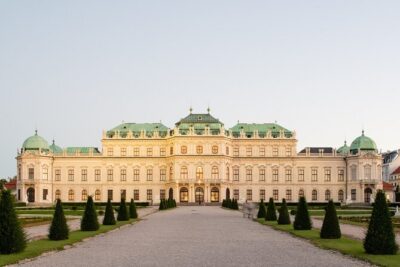
Entry Ticket Upper Belvedere, Klimt’s Kiss & Permanent Collection
Read our review →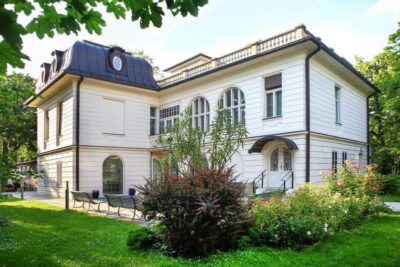
Klimt Villa (Gustav Klimt Atelier & Museum) Ticket
Read our review →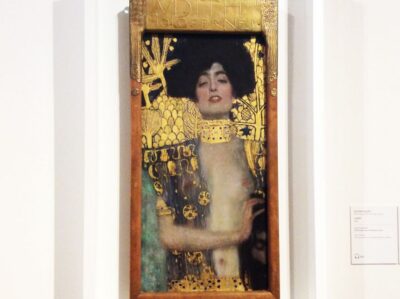
Tour of Gustav Klimt’s Art in 3 Museums with Tickets
Read our review →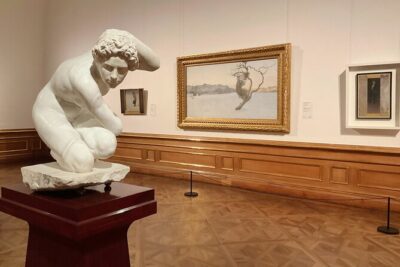
Private Themed Tour of the Belvedere with an Art Historian: “The Kiss” by Gustav Klimt: how it became the Symbol of the Viennese Art
Read our review →
Big Tour of Gustav Klimt’s Art in Vienna: Belvedere, Secession & Leopold Museum with Skip-the-Line Tickets
Read our review →
Private Klimt & Vienna Art Walk — From Baroque to Secession
Read our review →
Private Tour with an Art Historian of the Leopold Museum: Gustav Klimt, Egon Schiele and Viennese Art Nouveau
Read our review →
Belvedere & The Best of Gustav Klimt Private Tour
Read our review →Browse the lists this tour appears in