
Reviewed · STRAUSS CONCERTS & SHOWS
Johann Strauss 200th birthday anniversary exhibition
Waltzes start in a palace. This Johann Strauss 200th birthday anniversary exhibition takes place at the Theatermuseum inside Vienna’s Palais Lobkowitz, where baroque rooms set the mood for the story of the Waltz King and his era. One thing I like right away is the setting, you are not just looking at objects, you are surrounded by a dramatic, historic interior.
I also like how the experience uses multimedia exhibits to pull you into Strauss’s life and the music that made him famous. The result is closer to storytelling than a pile of labels, and you can follow along at your own pace with an included audio guide.
One consideration, there is no live guide. If you prefer a person to answer questions in real time, you may find the audio-guided format a little less lively than a classic guided tour.
In This Review
- Key Highlights You Should Care About
- Palais Lobkowitz at the Theatermuseum: What You’re Really Walking Into
- The Exhibition Flow: One Hour With an Included Audio Guide
- What You’ll See First: The Lobkowitz Family World
- Klimt’s Nuda Veritas: A Meaningful Highlight You Should Not Skip
- Eroica Hall: Where Music History and Theater Space Meet
- The Strauss Angle: How the Show Builds His Story
- Why the Multimedia Matters More Than You Might Think
- Price and Value: Is $19.21 a Smart Use of Your Time?
- Timing and Practical Planning for a Smooth Visit
- Who This Exhibition Works Best For
- Should You Book It?
- FAQ
- How long is the Johann Strauss 200th birthday anniversary exhibition?
- Where is the meeting point?
- Is the admission ticket included in the price?
- Is there a live guide?
- What is the price per person?
- How many people are in the group?
- Is the venue near public transportation?
- What are the opening hours on Mondays?
- When will I receive confirmation after booking?
Key Highlights You Should Care About
- Palais Lobkowitz setting in the Theatermuseum, so you get architecture plus exhibition content
- Multimedia displays that help you feel connected to Strauss and the world around him
- Audio guide included, letting you control your pace during the one-hour visit
- Gustav Klimt’s Nuda Veritas shown as a featured highlight, with help understanding its symbolism
- Eroica Hall connection to Beethoven, with a note that the Eroica Symphony was performed there for the very first time
- Small group size with a maximum of 25 people, which keeps the visit calmer than large tours
Palais Lobkowitz at the Theatermuseum: What You’re Really Walking Into
The best part of this exhibition is the address itself. You meet at Lobkowitzpl. 2, in the center of Vienna, and the Theatermuseum’s home is Palais Lobkowitz, a place that already feels like you stepped into a different century.
The baroque setting matters more than you might expect. It gives you a framework for understanding what Johann Strauss Sohn’s music would have felt like in Vienna: formal spaces, public performance culture, and the sense that art was a social event, not just background sound. Even before you focus on Strauss, the rooms help you get in the right headspace.
You are also getting a theater-themed museum experience rather than a music-only stop. That difference is useful if you want the bigger picture of how Viennese performance culture worked, including how artists and audiences shared space.
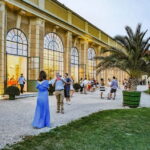
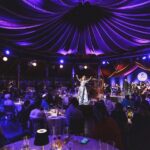
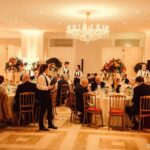
More waltzes under gilded ceilings
The Exhibition Flow: One Hour With an Included Audio Guide
This visit is listed at about one hour, which is a good length for a museum stop. Short enough that you can fit it into a busy day, but long enough to actually make sense of the exhibition rather than rushing through it.
You’ll use an included audio guide as you move through the experience. Since there is no live guide, the audio track is the main way you’ll connect the dots. That means you should treat the audio guide like the heart of the visit, not an optional extra.
Also, with a max group size of 25 people, you are not dealing with a crowd that forces you to sprint between rooms. In a self-guided format, that small-group size helps your attention stay on the exhibits instead of the timing.
What You’ll See First: The Lobkowitz Family World
Early on, the experience invites you to take an intimate look behind the doors of a historic Viennese palace. The audio guide frames the visit by talking about the Lobkowitz family and the kind of cultural life that would have surrounded the spaces you’re walking through.
This part is practical even if you only care about Strauss. It helps you understand why a waltz composer belongs in a theater museum. Strauss’s reputation grew in a city where music and public entertainment mattered, and these kinds of palace settings were part of the stage.
If you like museum experiences that connect art to place, you will probably appreciate this framing. If you only want a straightforward Strauss story with zero context, you might spend a little time longer than you planned in the early rooms, because the palace setup is part of the show.
Klimt’s Nuda Veritas: A Meaningful Highlight You Should Not Skip
A featured moment is Gustav Klimt’s Nuda Veritas. It’s called out as one of the best-known Klimt works, and the experience includes guidance on its meaning and symbolism.
Even if you are not a Klimt superfan, this kind of highlighted artwork is a strong reason to book. It adds layers to the visit: this exhibition is not only about music, it’s also about the visual art world that thrived in Vienna around the same cultural energy.
One practical tip here is to slow down for the painting section. Audio guidance is often most helpful when you take a beat and look closely instead of moving on immediately. Spend the extra minute, because symbolism is the kind of thing that becomes more interesting when you are actually seeing the details.
Other ways to round out a Vienna visit
- Vienna: Skip-the-Line Sisi Museum, Hofburg and Gardens Tour★ 4.8 · 5,918 reviews
- Vienna Kunsthistorisches Museum Day Admission Ticket★ 4.6 · 3,690 reviews
- Tickets for the Albertina Exhibitions★ 4.7 · 2,126 reviews
- Sigmund Freud Museum Ticket★ 4.6 · 1,668 reviews
Eroica Hall: Where Music History and Theater Space Meet
Another highlighted area is the Eroica Hall, named after Beethoven’s celebrated Eroica Symphony. The experience specifically notes that the Eroica Symphony was performed there for the very first time.
This connection is more than trivia. It gives you a concrete example of Vienna as a performance hub, where major works could be introduced in specific rooms with real acoustics and real audiences. When you connect that idea to Strauss, you start to see why his “waltz king” status happened in Vienna, not somewhere abstract.
It’s also a helpful way to broaden the experience. Even if you think you know Strauss, the Beethoven link can refresh your perspective and make the palace feel like an active cultural machine, not a museum set.
If you are sensitive to long halls or lots of standing time, plan for comfort. You may want to keep your phone use minimal during this part, so you can focus on the audio content and let the space do the work.
The Strauss Angle: How the Show Builds His Story
The exhibition is designed to mark the 200th anniversary of Johann Strauss’s birth, and it centers on Johann Strauss Sohn. The Theatermuseum presents an impressive collection of objects celebrating his life and work.
What I like about this structure is the implied balance between composer and context. This is not only about dates and titles. By placing Strauss inside a theater palace setting, the exhibition nudges you toward thinking about performance culture, public events, and the way music traveled from room to room and city to city.
You’ll also find multimedia elements that make the experience feel less like a passive exhibit. Based on the tone of the show, the goal is to help you feel involved with Strauss’s world, rather than treating you like you’re scanning facts for a test.
Since we are not dealing with a live guide format, the best way to get full value is to stay alert and listen carefully to the audio track. If the audio mentions how something connects to Viennese culture or the Strauss era, pause and look around so you can anchor the story to the space.
Why the Multimedia Matters More Than You Might Think
Multimedia exhibits can go two ways. Either they add value, or they become noise. In this kind of exhibition setting, multimedia can actually solve a problem: it helps bridge the gap between a composer’s legacy and what you can see in a museum room.
For you, that likely means a more memorable visit. Audio and visuals can reinforce mood and timeline, making the story of the Waltz King stick better than standard labels alone.
Another small benefit is practical. Multimedia can guide your attention so you don’t spend the whole hour guessing what the “main points” are. When you have limited time, that matters.
Price and Value: Is $19.21 a Smart Use of Your Time?
At $19.21 per person, this is priced like an accessible museum add-on rather than a premium guided attraction. The key value factor is that your ticket price includes admission to the Johann Strauss anniversary exhibition, and it also includes all fees and taxes.
So you’re not stacking extra costs on top just to get into the content. You also get an audio guide as part of the experience, which helps justify the price even though there is no live guide.
Where the value calculation depends on you is this: how much do you like self-guided museum storytelling? If you enjoy wandering with an audio track and picking up context at your pace, the price looks fair for what you get in a one-hour format.
If you want a person leading the room, answering questions, and making connections out loud, the lack of live guide might feel like a trade-off. For that style of visitor, you may decide to pair the exhibition with another guided experience elsewhere in the day.
Timing and Practical Planning for a Smooth Visit
This activity runs during a stated opening window, from 09/10/2025 to 06/23/2026. One specific listed schedule is Monday, 10:00 AM to 6:00 PM.
Since the duration is about one hour, it’s a good candidate for a first or second-slot museum block. If you arrive close to the start of your time window, you can get through the audio guide without feeling rushed. If you arrive late, you may feel pressured to skip parts, and this exhibition rewards patience.
The meeting point is Lobkowitzpl. 2, 1010 Wien, Austria, and the activity ends back at the same place. That makes it easier to plan your next stop, you do not need to map an unfamiliar final location.
The venue is near public transportation, so you can build it into a day without relying on a long walk. Still, give yourself a little buffer, Vienna center streets can be crowded and you might spend extra time lining up at the museum entrance.
Who This Exhibition Works Best For
This experience fits best if you want a Vienna arts stop that connects music to place. If you enjoy classical music but also like museums that show how culture works in real spaces, you’ll likely get a lot out of the palace context.
It also works well for people who prefer quiet concentration over a talk-heavy guided tour. With the audio guide and a small group size, you can take in details without constant interruptions.
If you come just because you love Strauss and want quick entertainment, you might wish for a faster, more performance-like format. But if you like “story through objects and spaces,” this is a strong match.
It’s also a good option when you want something specific tied to a milestone event, Johann Strauss’s 200th birthday anniversary, without committing to a long half-day program.
Should You Book It?
Book this exhibition if you want a compact, well-priced museum experience in Palais Lobkowitz that links Strauss to the wider Vienna world of performance and art. The included audio guide plus multimedia elements are a smart combo for making a one-hour visit feel complete.
Skip it or choose carefully if you strongly prefer a live guide or you know you’ll get frustrated with self-guided storytelling. In that case, you may not enjoy the pace as much, even though the content highlights, like Klimt’s Nuda Veritas and the Eroica Hall connection, are genuinely compelling.
If you do book, go in with a simple plan: listen actively to the audio guide, pause for the featured art moment, and take your time inside the palace rooms. That approach is the difference between a quick pass-through and a visit that actually sticks.
FAQ
How long is the Johann Strauss 200th birthday anniversary exhibition?
It runs for about 1 hour.
Where is the meeting point?
You meet at Lobkowitzpl. 2, 1010 Wien, Austria.
Is the admission ticket included in the price?
Yes. The entrance ticket for the Johann Strauss anniversary exhibition is included.
Is there a live guide?
No live guide is included.
What is the price per person?
The price is $19.21 per person.
How many people are in the group?
The group has a maximum of 25 people.
Is the venue near public transportation?
Yes, it is near public transportation.
What are the opening hours on Mondays?
On Mondays, it is open from 10:00 AM to 6:00 PM.
When will I receive confirmation after booking?
Confirmation is received at the time of booking.
Latest Additions
- Wachau Valley Private Wine Tour with Tasting and Gourmet Lunch
★ 5.0 · 1 review - Vienna: Danube Valley Tour with Melk, Dürnstein with wine tasting and boat.
★ 5.0 · 1 review - Private city tour in Vienna
★ 5.0 · 1 review - Hallstatt Small Group Day Trip from Vienna
★ 3.0 · 1 review - Inside Freud’s Mind: Self-Guided Mystery Walk in Vienna
★ 4.0 · 1 review - Private Transfer from Vienna to Prague
★ 5.0 · 1 review - Vienna’s Christmas Market Magic Tour
★ 5.0 · 1 review
Strauss Concerts & Shows, compared.
Kursalon Vienna: Strauss and Mozart Concert With Dinner
Read our review →
Vienna Residence Orchestra: Mozart and Strauss Concert
Read our review →
Vienna Classical Concert – Strauss in Historic 1837 Hall
Read our review →
Concert at House of Music Vienna: Mozart, Strauss & the Masters
Read our review →Browse the lists this tour appears in