Reviewed · TICKETS
Entrance ticket Heidi Horten Collection Vienna
Two icons, one unforgettable building. That is the vibe of the Heidi Horten Collection ticket in Vienna, where modern art meets a striking, transparent museum layout, plus a special show built around the simple power of the line.
I really like that your entry includes an English audio guide, so you can move room to room without needing a group schedule. I also love the focus on recognizable modern icons alongside newer international names, which makes it easier to connect the dots even if you are picky about style.
The one drawback to keep in mind is that this museum does not aim to feel like a quiet, traditional white-box gallery. Expect sensory, sound, and light elements and some tight circulation spots, so if you hate crowd flow restrictions or get stressed by immersive exhibits, plan your pace.
In This Review
- Key points before you go
- Why this museum feels like art first, museum second
- The ground floor: Klimt ⇄ Warhol and a modern-art hit list
- A practical looking strategy for the permanent rooms
- The special exhibition The Line (19 Sep 2025 to 8 Mar 2026)
- How to enjoy The Line without getting lost
- Your visit speed: why 1 to 2 hours is the right window
- Using the included audio guide in English (and why it helps)
- Location and pairing: plan it with Vienna’s center core
- Price and value: what $14.38 buys you here
- Who will love this ticket and who should think twice
- What I’d do to plan your visit well
- Should you book this ticket?
- FAQ
- What is included with the Heidi Horten Collection entrance ticket?
- Is the audio guide available in English?
- How long should I plan to spend at the museum?
- Is this ticket available on mobile?
- What special exhibition is included with this ticket?
- Where is the museum located in Vienna?
- Can I cancel my booking?
- Do I need to bring anything for the ticket?
- Is this experience suitable for most travelers, including service animals?
Key points before you go
- Klimt ⇄ Warhol on the ground floor, with a permanent mix of major modern masters
- The special exhibition The Line (19 Sep 2025 to 8 Mar 2026) traces how lines show up across eras and continents
- English audio guide included, accessible via SMARTIFY for a smoother visit
- Striking architecture with open sightlines, designed so you can see across spaces while you walk
- Good for 1 to 2 hours, especially if you like modern and contemporary art rather than only old masters
Why this museum feels like art first, museum second
The Heidi Horten Collection is housed in an architecture you notice immediately. It is not the usual Vienna museum experience where you enter a room, stare straight ahead, and treat each gallery like an island. Instead, the building’s open, transparent design creates sightlines between works and spaces, so your visit starts to feel like you are navigating a designed artwork, not just collecting facts.
That design choice matters because it changes how you experience the collection. You can keep your bearings without losing momentum, and you often see how one work’s color, scale, or mood echoes something nearby. The museum is also built around the idea that this started as a private collection, so the presentation leans into a more personal, less formal feeling than you might expect.
Now, that same openness can be a mixed bag. One critique you may run into is that the flow can feel a little tight in certain passages and that some exhibits feel intentionally “designed for reaction,” including sound, light, or other sensory pieces. If you like slow, silent looking, you will still find great art here, but you will have to manage your environment more than you would in a classic museum setup.
Other ways to round out a Vienna visit
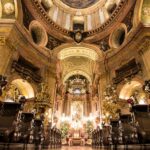

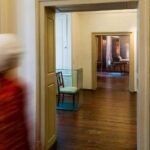

The ground floor: Klimt ⇄ Warhol and a modern-art hit list
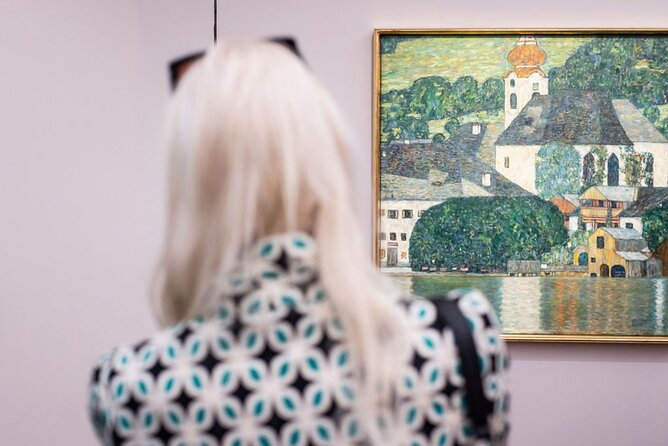
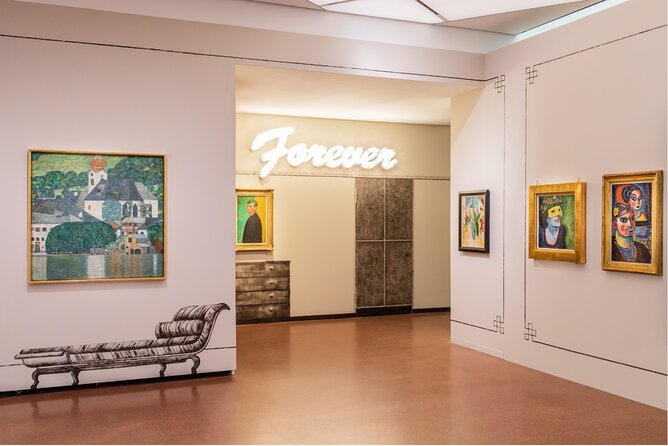
The main permanent exhibition on the ground floor is called Klimt ⇄ Warhol. It is designed as the entry point to the museum’s broader modern and contemporary focus, so it is a good place to start your “what am I looking at” process.
What I like about this approach is that it gives you anchors. You are not walking into total obscurity. The museum’s permanent selection includes big-name artists such as Picasso, Rothko, Warhol, Basquiat, Klimt, Lichtenstein, Magritte, Chagall, Klein, Klee, Bacon, and Baselitz, among others. Even if you do not love every artist, you can usually find at least a few works that click quickly, and then the rest becomes easier to interpret.
This is also a good layout if you enjoy modern art in an “icons plus context” way. Instead of treating each piece as a standalone puzzle, you get a broad storyline: 20th-century art shifts, pop culture enters, abstract expression changes what emotional painting can do, and then contemporary art expands the vocabulary again. The museum’s staging is also meant to encourage you to keep going, because the ground floor sets up questions you can answer later in the special exhibition.
A practical looking strategy for the permanent rooms
When you start, do not try to “finish” the ground floor like a checklist. I suggest you pick a small target. For example:
- Choose 2 artists you already know and 1 you want to learn.
- Spend extra time with the works that feel most confusing, not the ones that feel easiest.
- Use the audio guide early, even for one or two pieces. It helps your brain stop treating modern art as random.
If you are someone who wants a strict logic between works, you might notice the permanent rooms feel more like a strong assortment than a museum-style timeline. That is not a deal breaker, but it is worth knowing before you arrive so your expectations match the experience.
The special exhibition The Line (19 Sep 2025 to 8 Mar 2026)
The ticket also includes the special exhibition THE LINE, running from 19 September 2025 to 8 March 2026. The theme is exactly what it sounds like: the line as a fundamental element of art, explored across time and geography.
What makes the show appealing is the way it treats the line as more than drawing. You see lines as structure, as movement, as symbolism, and as a way artists control rhythm and tension. It is also built around a journey, moving from Vienna around 1900 through the art world of the 1960s and onward to the present day.
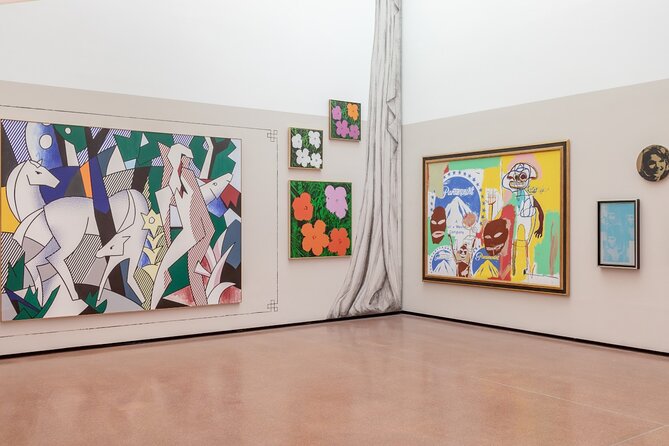
The artist list gives you a clue about the range you will see. The exhibition includes works by Paul Klee, Lucio Fontana, Roy Lichtenstein, Egon Schiele, Jackson Pollock, Agnes Martin, Andy Warhol, and Chiharu Shiota, among others. That combination is helpful because it lets you compare how a line can be delicate and precise in one context and explosive or spatial in another.
Beyond the palaces, the city keeps its own rhythm of coffee, concerts, and day trips nearby.
- Vienna: Vivaldi’s Four Seasons Concert in Karlskirche★ 4.7 · 14,951 reviews
- Vienna: Schönbrunn Palace & Gardens Skip-the-Line Tour★ 4.7 · 7,739 reviews
- Vienna: Light of Creation Votive Church Immersive Light Show★ 4.8 · 6,779 reviews
- Vienna Spanish Riding School Guided Tour★ 4.7 · 6,765 reviews
How to enjoy The Line without getting lost
This exhibition is much easier if you pick a “line type” to track. Instead of asking What is the meaning of this? ask:
- Is the line behaving like a boundary or a bridge?
- Does it act as structure (geometry, grid-like feeling) or as gesture (motion, energy)?
- Does it show up as a drawing tool, a surface cut, or something that controls space?
Because the show spans eras, you will likely feel a shift in how the line “works.” That is part of the point. If you come in expecting one style of line, you might miss the broader idea.
Your visit speed: why 1 to 2 hours is the right window
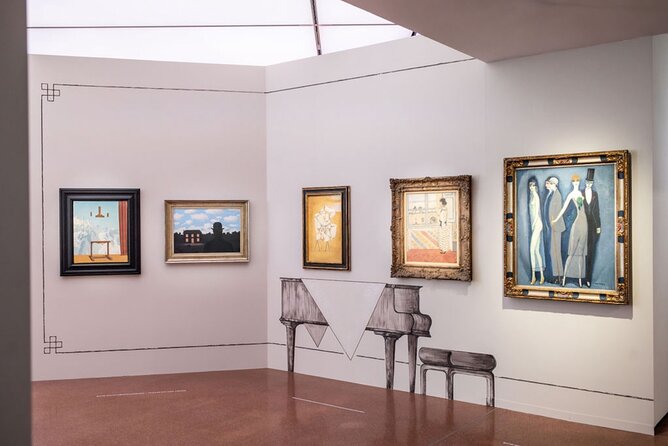
This experience is listed for about 1 to 2 hours. In practice, that duration works best if you treat it as a meaningful circuit rather than trying to see everything at a crawl.
Here is a simple timing plan I like:
- 20 to 30 minutes on the ground floor to get oriented and pick a few personal favorites.
- 35 to 50 minutes on The Line, focusing on the works that answer your line questions.
- 10 to 15 minutes to circle back, using the audio guide where you felt stuck.
The museum’s architecture helps you keep moving because you can often see where you are headed next. Still, there can be moments where traffic gets close between rooms, so it pays to keep your pace steady rather than stopping suddenly in narrow passages.
Also, your ticket is available as a mobile ticket, so you do not need extra time hunting for a printed pass.
Using the included audio guide in English (and why it helps)
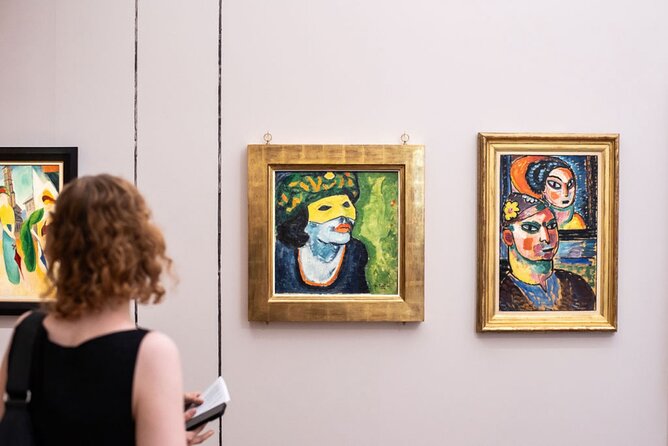
Your admission includes an audio guide and it is offered in English. The audio guide can be accessed through SMARTIFY, and the museum even notes you can check it from home. That matters because modern and contemporary art often needs a translator for the ideas, not the language.
I recommend using the audio guide in short bursts. Pick a handful of works and listen long enough to understand what the artist is doing with form, not just what the piece depicts. Once you have that, the rest of the collection often starts to “click” faster.
One review also highlighted the way museum education can be playful and respectful, which matches the audio guide’s job: explain while keeping the experience human. If you prefer to skim rather than listen, that is fine too. You can still benefit from audio context for just the few pieces you are unsure about.
And if you enjoy a hands-on angle, there is mention of voting related to creative works. If that option is available during your visit, it can be a fun way to turn looking into participation.
Location and pairing: plan it with Vienna’s center core
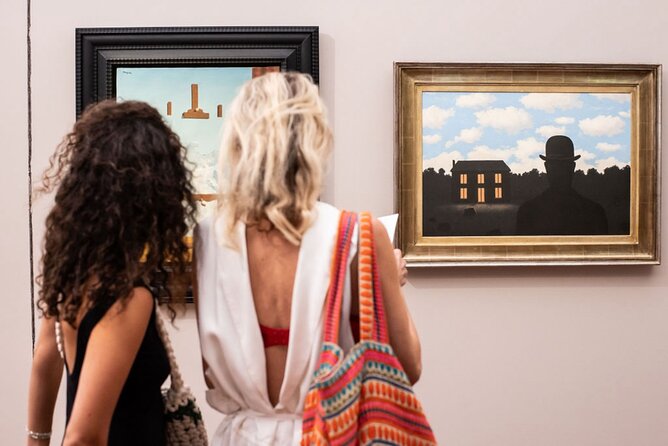
The Heidi Horten Collection sits near the Vienna State Opera and close to Albertina, which makes it easy to stack with other central Vienna stops. If you are already thinking about Albertina, this is a great second museum step, especially because the art focus differs. Albertina often pulls you toward prints and classical strengths, while this collection leans modern and contemporary.
A practical pairing route looks like this:
- Start with Albertina or Opera nearby for a morning or afternoon anchor.
- Walk to the Heidi Horten Collection when you want something more “conceptual and sensory.”
- If you have energy afterward, keep the same neighborhood. You avoid travel time and keep your day feeling smooth.
Because your ticket experience is short, you can also use it as a flexible cushion day. Vienna days often run long on walking. This ticket gives you a contained, high-impact stop.
Price and value: what $14.38 buys you here
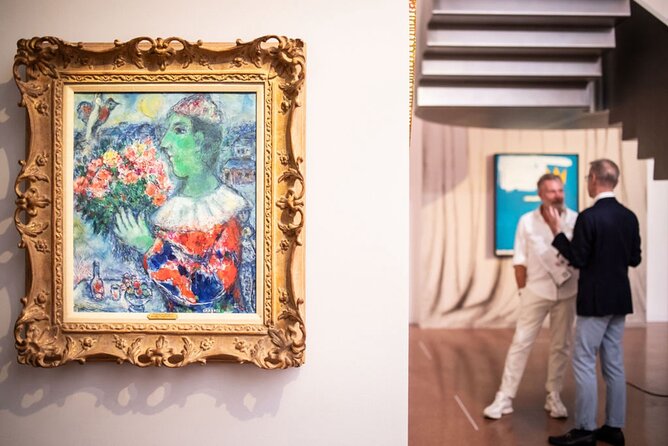
The ticket price is $14.38 per person, and the listing notes that the experience includes all fees and taxes, plus the entrance ticket and the audio guide. It also notes what is not included, like private transportation and snacks.
So where is the value? In the way the ticket package reduces decision fatigue. You are not paying extra for the basics of context (audio). You also get both the permanent show and the special exhibition in one visit window, which makes your time count.
Is it a bargain compared to every other museum option in Vienna? That depends on what you want. But if you like modern masters and contemporary pop and abstract art, this pricing feels fair for what you get in a 1 to 2 hour museum visit.
One note to keep your expectations aligned: this museum is not built only for traditionalists. If you expect a strictly academic flow, you might spend less time on some installations that feel intentionally provocative. If you are open to that, the ticket can feel like a strong deal because you get to sample big names and a themed concept show.
Who will love this ticket and who should think twice
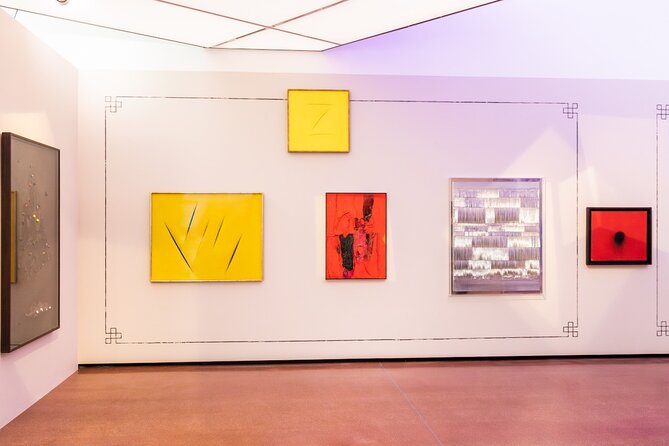
This is one of those museums where taste drives everything.
You will likely love it if:
- You like pop art and modern icons and want them alongside other major 20th-century names.
- You enjoy themed exhibitions that use a single element, like the line, to connect very different art styles.
- You do not mind sound, light, or sensory components as part of the experience.
- You appreciate museum education that can be informative and lightly playful.
You might want a more traditional museum instead if:
- You strongly prefer quiet, orderly gallery layouts where every work feels tightly connected by theme or chronology.
- You get easily distracted by immersive effects or by spaces that feel visually busy.
- You care a lot about transparency around how an institution is funded. One critique about limited financial transparency came up in discussion, so if that is important to you, it is smart to check the museum information carefully before you commit.
The good news is that even critics who disliked the museum approach often still pointed to standout works by major artists. So if you go with a flexible mindset, you can usually find something memorable.
What I’d do to plan your visit well
Here is the simple plan I would use if I were organizing your Vienna afternoon:
- Go with 90 minutes minimum. Give yourself time for both the permanent show and The Line.
- Use the audio guide on the works you are least confident about.
- Look for patterns, not perfection. With a theme like the line, the “aha” comes from comparing how artists treat structure and gesture.
- Wear comfortable shoes. Even if the museum is not huge, you will walk more than you expect.
And one last practical tip: if you like to document your visit, be mindful of where people are flowing. Some spaces can be tight when you stop for photos, so keep your camera breaks brief and consider stepping to the side.
Should you book this ticket?
Book it if you want a short, high-impact Vienna museum stop that mixes Klimt ⇄ Warhol with a themed special exhibition about THE LINE. The included English audio guide is a real value add, and the museum’s architecture gives the visit a distinct feel that you do not get in a standard “rooms in a row” museum.
Hold off if you need a very traditional museum experience with strict pacing and you prefer quiet galleries without sensory elements. In that case, you can still love modern art, but you might want a different Vienna stop that matches your expectations more closely.
FAQ
What is included with the Heidi Horten Collection entrance ticket?
The ticket includes the entrance ticket for the Heidi Horten Collection Vienna, an audio guide, and all fees and taxes.
Is the audio guide available in English?
Yes. The experience is offered in English.
How long should I plan to spend at the museum?
Plan for about 1 to 2 hours.
Is this ticket available on mobile?
Yes. You get a mobile ticket.
What special exhibition is included with this ticket?
The included special exhibition is titled THE LINE, running from 19 September 2025 to 8 March 2026.
Where is the museum located in Vienna?
The museum is near public transportation, and it is described as being in central Vienna close to the State Opera and Albertina area.
Can I cancel my booking?
Yes, free cancellation is available. You can cancel up to 24 hours in advance for a full refund.
Do I need to bring anything for the ticket?
You will receive confirmation at the time of booking, and the ticket is delivered as a mobile ticket.
Is this experience suitable for most travelers, including service animals?
Most travelers can participate, and service animals are allowed.
Latest Additions
- Wachau Valley Private Wine Tour with Tasting and Gourmet Lunch
★ 5.0 · 1 review - Vienna: Danube Valley Tour with Melk, Dürnstein with wine tasting and boat.
★ 5.0 · 1 review - Private city tour in Vienna
★ 5.0 · 1 review - Hallstatt Small Group Day Trip from Vienna
★ 3.0 · 1 review - Inside Freud’s Mind: Self-Guided Mystery Walk in Vienna
★ 4.0 · 1 review - Private Transfer from Vienna to Prague
★ 5.0 · 1 review - Vienna’s Christmas Market Magic Tour
★ 5.0 · 1 review
Tickets, compared.
Classic Ensemble Vienna in St. Peter’s Church Ticket
Read our review →
Vienna Kunsthistorisches Museum Day Admission Ticket
Read our review →
Tickets for Mozarthaus Vienna with Audio Guide
Read our review →
Skip-the-Line Entrance Ticket to the Danube Tower
Read our review →
St. Stephen’s Cathedral & Dom Museum Wien Tickets
Read our review →