Reviewed · GUIDED
Vienna – the making of a Weltstadt – guided Citytour
Vienna makes more sense when you hear the story. This 2-hour guided walk turns key sights into a clear timeline, and I especially like how it links Vienna’s epochs to the buildings you see. The other big win is the way the tour centers St. Stephen’s Cathedral as the city’s geographical and emotional core.
One consideration: the tour runs in German, and it is not suitable for people with mobility impairments. Also, you cannot bring luggage or large bags, so travel light.
In This Review
- Key highlights you will feel right away
- Vienna’s “Weltstadt” feeling starts with one smart walk
- Meet Christian Grausam, and get a tour that actually ties eras together
- From a Roman fort to a major Central European capital
- Schottenkirche, Freyung, and Am Hof: street-level history you can spot
- Kohlmarkt and Michaelerplatz: the city as a place of courts and commerce
- The Hofburg and Heldenplatz: why Vienna’s power was also home
- Burggarten and Josefsplatz: the calm between grand statements
- Albertina and the Capuchin Crypt: art, music, and dynastic memory
- Franziskanerplatz, Domgasse, and St. Stephen’s Cathedral: the emotional center lands
- Price and pacing: is $35 worth a 2-hour history walk?
- Who should book this Weltstadt tour?
- Should you book this guided Citytour of Vienna’s Weltstadt?
- FAQ
- FAQ
- How long is the Vienna – the making of a Weltstadt – guided Citytour?
- What is the price per person?
- What language is the live tour guide?
- Where does the tour start?
- When should I arrive at the meeting point?
- Is the tour held rain or shine?
- Can I cancel and get a refund?
- Can I book now and pay later?
- Is luggage allowed on the tour?
- Is the tour suitable for people with mobility impairments?
Key highlights you will feel right away
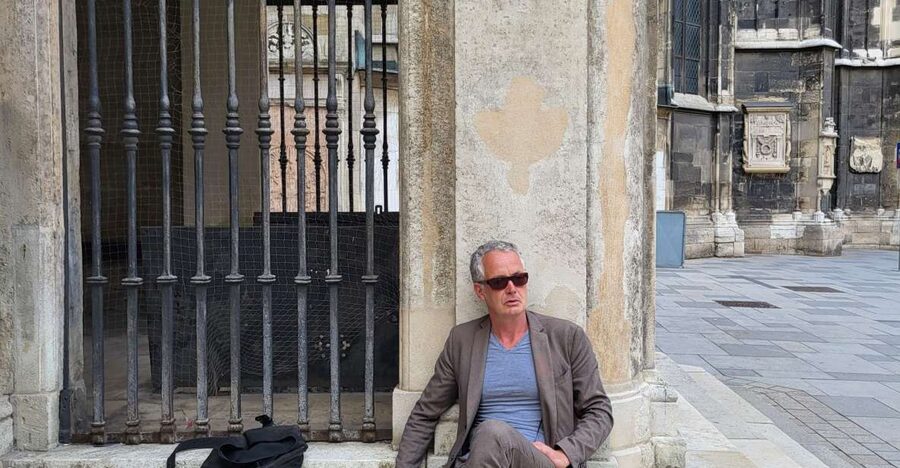
- A real Viennese perspective, led by local certified guide Christian Grausam
- Two millennia in 2 hours, starting from Roman roots and moving forward
- Hofburg explained as a residential center, not just an impressive facade
- St. Stephen’s Cathedral as the city compass, where the story finally clicks
- Art and music context, with Mozart, Beethoven, and Haydn in the mix
- Tight city-center route, mixing famous squares with less obvious stops
Vienna’s “Weltstadt” feeling starts with one smart walk
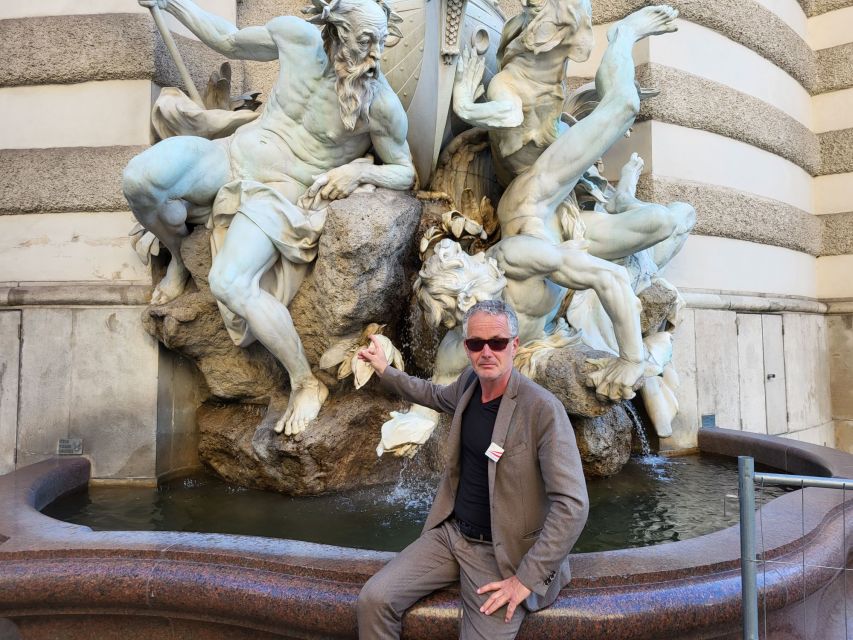
Vienna can feel like a lot, especially when you first arrive and every street seems to have a palace, a church, or a statue. This tour helps you make order out of the chaos by giving you the plot behind the architecture. You are not just looking at landmarks, you are learning how they connect.
What I like most is that the guide keeps steering you back to meaning. Why is this place important? What changed here over centuries? How do you see Middle Ages memories when everything looks so grand today? That is the difference between collecting photos and actually understanding a city.
And yes, it is a city walk. You will be outside, you will see the center closely, and you will cover enough ground that 2 hours feels efficient rather than rushed.
Other ways to round out a Vienna visit

Meet Christian Grausam, and get a tour that actually ties eras together
Christian Grausam leads in German, and he has a style that connects history, building styles, and rulers without turning it into a lecture you forget at the next corner. The most praised part of the experience is the way he binds together eras and visible landmarks, so the city stops feeling like random highlights.
You get more than dates. You get context for why Vienna became what it became, including the big swing from early settlement roots toward a major Central European metropolis in the 19th century. That 2-hour format works best when the guide can compress smartly, and Christian clearly does that.
If you speak basic German or you are comfortable with guided discussions, you will have an easier time. If not, you might miss parts of the story, even if you still enjoy the sights.
From a Roman fort to a major Central European capital
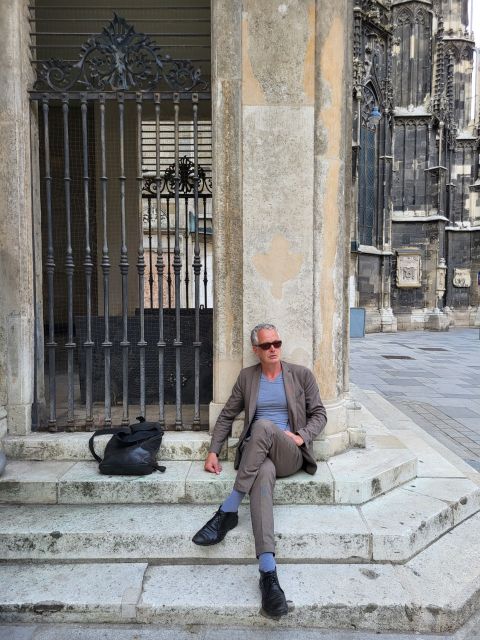
The tour concept is simple and effective: you start with Vienna’s earliest layers and move forward through the city’s turning points. It begins around the area linked to an early Roman presence, then walks toward the later imperial and cultural centers that defined Vienna for centuries.
Along the route, you get pointed questions that train your eye. What architectural styles characterize this city? Are there still traces of the Middle Ages? Where do you feel the shift from everyday settlement to imperial power?
This is also where the tour earns its title, Weltstadt, because it does not stop at “pretty.” It explains how a residential imperial city grew into a cultural force and political symbol. That makes later stops like the Hofburg and St. Stephen’s Cathedral feel like chapters, not separate attractions.
Schottenkirche, Freyung, and Am Hof: street-level history you can spot
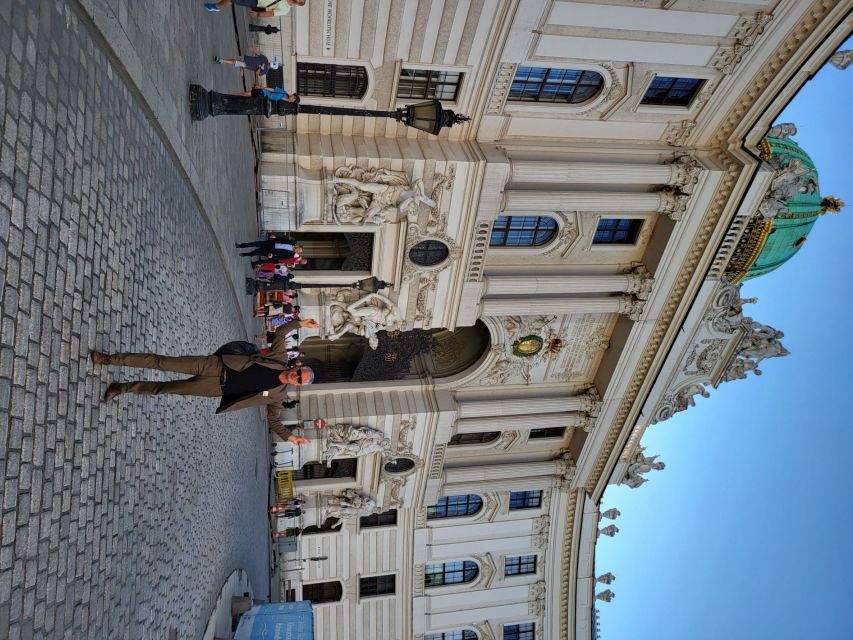
Depending on your booked option, you may start around Freyung, and then the walk typically flows through spots such as Schottenkirche, Freyung, and Am Hof. These places matter because they are tied to how Vienna functions at street level, not just how it looks in postcards.
This is where you learn to “read” the city. Squares and church areas in Vienna often sit at crossroads of older urban life, and the tour uses them to show how Vienna’s shape and priorities evolved. You are also reminded that Vienna is layered, so one big building does not tell the whole story.
A practical note: these central areas can be busy, so you will want to keep an eye on the group and where you are crossing. The tour is designed to keep you moving, not to pause for long museum-style waits.
Beyond the palaces, the city keeps its own rhythm of coffee, concerts, and day trips nearby.
- Vienna: Vivaldi’s Four Seasons Concert in Karlskirche★ 4.7 · 14,951 reviews
- Vienna: Schönbrunn Palace & Gardens Skip-the-Line Tour★ 4.7 · 7,739 reviews
- Vienna: Light of Creation Votive Church Immersive Light Show★ 4.8 · 6,779 reviews
- Vienna: Classical Concert in the World-Famous Musikverein★ 4.6 · 6,673 reviews
Kohlmarkt and Michaelerplatz: the city as a place of courts and commerce
As you head toward Kohlmarkt and Michaelerplatz, the tour shifts from early urban life to the spaces where Vienna’s importance becomes visible. These streets and squares are part of the city center’s story of status, movement, and power.
This section helps you connect geography to ambition. Vienna did not become significant by luck, it became significant through rulers, institutions, and the way the city organized itself around centers of decision-making. The guide uses these stops to show that you can learn a lot just by understanding where people gathered and why.
If you like architecture but hate vague commentary, this part is a good match. The narrative stays grounded in what you can see and how it reflects the city’s changing role.
The Hofburg and Heldenplatz: why Vienna’s power was also home
The Hofburg is one of the tour’s headline stops for a reason. You do not just hear that it is important. You learn what makes it important as a residential city, which changes how you think about it.
When a palace complex is also lived-in, it behaves differently from a pure monument. The Hofburg becomes a machine for everyday court life, politics, and ceremonial identity all at once. That idea helps you understand why Vienna’s ruling presence shaped both the skyline and the city’s rhythm.
From there, you reach Heldenplatz, another major stage for imperial meaning. This is where the tour makes big connections to rulers you will recognize from European history, including the long arc from Charles V to Franz Josef and his Elisabeth. Even if you do not know every detail, you will understand how the story lands in stone and space.
Burggarten and Josefsplatz: the calm between grand statements
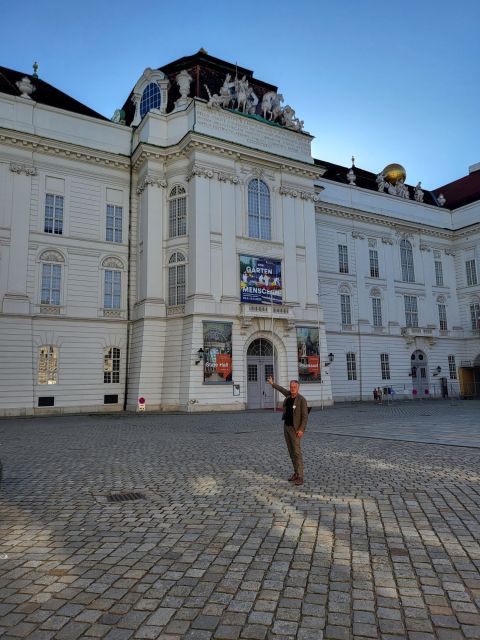
Between major power nodes, the walk includes spaces like Burggarten and Josefsplatz. This is not just a breather. It is a strategic pause that helps you reset your sense of scale and perspective.
Vienna often mixes dramatic statements with quieter pockets, and the tour uses those shifts to help you mentally organize what you saw. If you are prone to information overload, these moments matter. They give your brain a place to file what you learned, before the next major chapter.
You also get a sense of how public space and imperial space can coexist in the same city center. That is part of Vienna’s charm, and it becomes easier to appreciate once you understand the logic behind the layout.
Albertina and the Capuchin Crypt: art, music, and dynastic memory
The tour brings in Vienna as a center of art and music, not as an optional sidebar. You hear about Mozart and Beethoven living and working here, and you also get mention of Josef Haydn composing a melody that is important for Germany today. Even if you only know one or two names, hearing them placed into Vienna’s physical geography makes the city feel more personal.
Stops like the Albertina fit this theme because they point toward Vienna’s long relationship with arts institutions. The tour keeps the story moving, so you see the cultural angle as part of the city’s identity, not as a separate checklist item.
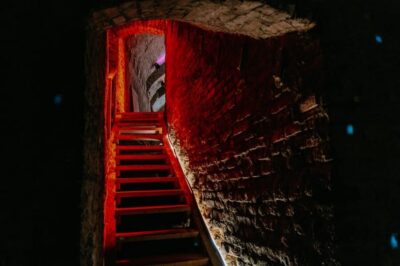
Then comes a mood shift to the Capuchin Crypt. This is where dynastic memory becomes visible in a very direct way, and the tour treats it as part of the same big picture: rulers shaped Vienna, and Vienna kept their stories close. It is a reminder that Vienna’s cultural greatness was tied to political power, and that power left real marks you can still find.
Franziskanerplatz, Domgasse, and St. Stephen’s Cathedral: the emotional center lands
The finale is St. Stephen’s Cathedral, described as the geographical and emotional center of the city. By the time you reach it, the tour has already given you enough context that the cathedral stops being just a famous church.
You understand it as a focal point where Vienna’s story converges, across time, style, and shifting priorities. The guide also connects the city’s older layers to the later imperial chapters, so you start seeing continuity rather than a series of unrelated buildings.
On the way, the stops around Franziskanerplatz and Domgasse help set that final approach. They act like a lead-in, tightening the route toward the cathedral so the last moment feels earned.
If you only have limited time in Vienna, this is the part that gives you the most payoff. You finish with a sense of orientation and meaning, not just a few impressive photos.
Price and pacing: is $35 worth a 2-hour history walk?
At $35 per person for 2 hours, this is priced like a solid value city tour, not a budget knockoff and not a premium, all-day excursion. The main reason it feels worth it is focus. You get a guided story through major center highlights, while still touching smaller points that help the timeline make sense.
The pace is brisk enough to cover a lot, but not so rushed that you only catch glimpses. The real benefit is the way the guide links information to what you see, especially with Christian Grausam’s style of connecting epochs to architecture and monuments.
If you already know Vienna deeply, you might find parts familiar. But if you want a fast, structured understanding before you start exploring on your own, this kind of tour is a great launchpad.
Who should book this Weltstadt tour?
I think this works best for you if:
- You want a 2-hour overview that turns landmarks into a clear story
- You like learning how power, art, and everyday urban life connect
- You want a guide who makes history feel linked to the street in front of you
- You are comfortable with a German-led experience
It is less ideal if:
- You need an accessible route, since it is not suitable for mobility impairments
- You are traveling with luggage or large bags, since they are not allowed
If you like music history, the inclusion of Mozart, Beethoven, and Haydn adds an extra layer that many basic city tours skip.
Should you book this guided Citytour of Vienna’s Weltstadt?
If your goal is to understand Vienna, not just tick off sights, I would book it. The best reason is the guide, Christian Grausam, and the way he connects eras and buildings so the city’s evolution becomes obvious in real time. Finishing at St. Stephen’s Cathedral with that added context makes the whole walk feel like a coherent story.
If you only need a photo tour, you could do that cheaper. But if you want your first Vienna day to give you a mental map and a sense of meaning, this is a strong pick.
FAQ
FAQ
How long is the Vienna – the making of a Weltstadt – guided Citytour?
The tour lasts 2 hours.
What is the price per person?
The price is $35 per person.
What language is the live tour guide?
The tour is guided live in German.
Where does the tour start?
The meeting point may vary depending on the option booked.
When should I arrive at the meeting point?
Please arrive at the meeting point 10 minutes before the start of the tour.
Is the tour held rain or shine?
Yes, it takes place rain or shine.
Can I cancel and get a refund?
Free cancellation is available up to 24 hours in advance for a full refund.
Can I book now and pay later?
Yes, you can reserve now and pay later.
Is luggage allowed on the tour?
No, luggage or large bags are not allowed.
Is the tour suitable for people with mobility impairments?
No, it is not suitable for people with mobility impairments.
Latest Additions
- Wachau Valley Private Wine Tour with Tasting and Gourmet Lunch
★ 5.0 · 1 review - Vienna: Danube Valley Tour with Melk, Dürnstein with wine tasting and boat.
★ 5.0 · 1 review - Private city tour in Vienna
★ 5.0 · 1 review - Hallstatt Small Group Day Trip from Vienna
★ 3.0 · 1 review - Inside Freud’s Mind: Self-Guided Mystery Walk in Vienna
★ 4.0 · 1 review - Private Transfer from Vienna to Prague
★ 5.0 · 1 review - Vienna’s Christmas Market Magic Tour
★ 5.0 · 1 review
Guided, compared.

Guided Walking Tour of City Center Highlights
Read our review →
Tickets for Mozarthaus Vienna with Audio Guide
Read our review →
Day trips from Vienna: Hallstatt & Salzburg Guided Tour
Read our review →
Guided Walking Tour of City Highlights & Hidden Gems
Read our review →