Reviewed · TOURS
Vienna: Sightseeing Tour in a Classic Style Car
Old Vienna is easier when you sit back. This electric old-timer style tour lets you glide past major sights while your driver brings the stories, plus the ride stays comfortable even when it is chilly or wet. I especially like the friendly, funny guiding and how the car makes major landmarks feel reachable in a short time. The main drawback is simple: with so many stops, you will see plenty but you will not linger long at every single spot.
You also get the kind of group setup that works for real trips, not just couples on a schedule. The tour keeps it small, and the whole family can stay together in one old-timer (up to 10 people), so you are not constantly negotiating who is where. And because it is weather-friendly sightseeing, you can keep moving without turning your day into a rain plan.
For getting oriented fast, the format helps. You get a live driver experience with English or German audio commentary, and the tour starts and ends at Herrengasse 12 near the Radisson Blu, which makes it easy to plug into the rest of your day.
In This Review
- Key highlights I would plan around
- A classic electric old-timer tour that makes Vienna feel manageable
- The full 90-minute route, start at Herrengasse 12 and see the key districts
- 1) Old-town structure and classic city walls
- 2) Ringstrasse scale and the opera-class highlights
- 3) Big monuments and the imperial center around Hofburg
- 4) Culture and government: museums, parliament, and theaters
- 5) Cafes, neighborhoods, and the way the old and new meet
- 6) Parks and music icons, then back to Herrengasse 12
- Comfort, group size, and why the car helps in winter
- The driver experience matters more than you think
- Price and value: why $40 for 90 minutes can be a smart first-day move
- Should you pick 60 minutes or 90 minutes?
- Who this tour suits best
- Should you book this Vienna electric old-timer tour?
- FAQ
- How long is the Vienna sightseeing tour by classic style electric old-timer car?
- Where does the tour start and end?
- What languages are available for the tour?
- How many people are in the group?
- What is included in the ticket price?
- Is there a shorter 60-minute tour option?
- Is the tour suitable in bad weather?
- Can I cancel for a full refund?
Key highlights I would plan around
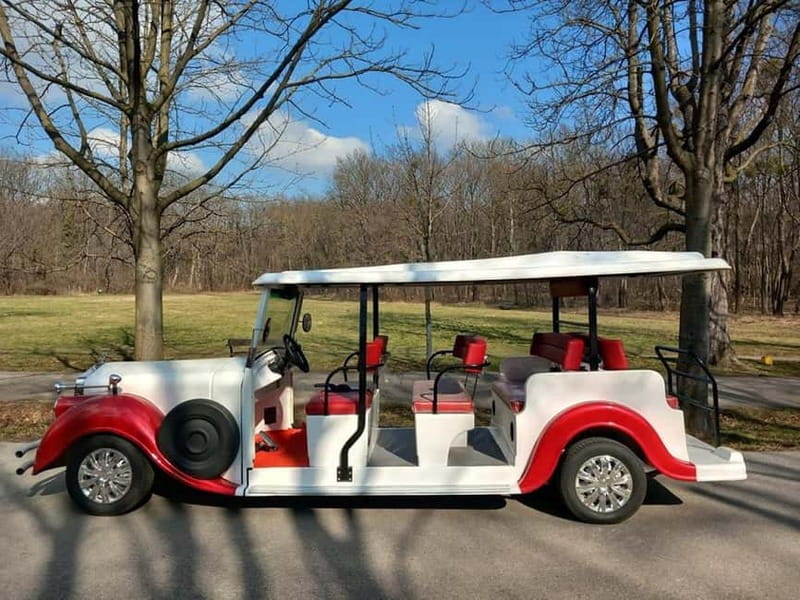
- Electric old-timer comfort: emission-free city sightseeing with a classic feel, without needing to walk between far-apart sights
- A guide who talks and answers: you get stories plus real conversation, with smooth switching between English and German
- A packed 90-minute route: you cover the old city core and the grand Ringstrasse area in one go
- St. Stephen’s Cathedral to Imperial set-pieces: you get iconic photo windows, including landmarks like St. Stephen’s Cathedral, Hofburg, and the State Opera
- Pause when something catches your eye: the driver can often stop briefly for a better look if you ask
A classic electric old-timer tour that makes Vienna feel manageable
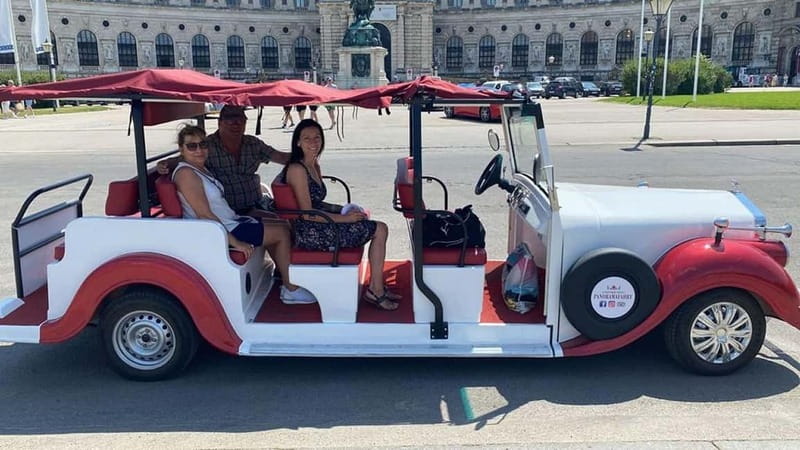
If Vienna intimidates you on day one, this type of tour is a smart antidote. The city has world-class buildings, but the distances between them can make a normal walking plan feel like work. Here, you sit comfortably in an electric old-timer and let the route connect the dots.
What I like most is that the vibe is not stiff. Guides described as fun, friendly, and humorous tend to keep the ride light while still sharing details. When the driver is comfortable in both English and German, it also helps the whole group follow along without awkward switching or long stretches of silence.
The tradeoff is time. In 90 minutes, you are not going to slow down for extended museum time, long photo stops, or deep dives into one neighborhood. You are there to see the big things, get the feel of the city, and figure out what you want to revisit later under your own steam.
Vienna is a city built for slow mornings and long evenings — plan accordingly.

The full 90-minute route, start at Herrengasse 12 and see the key districts
The tour begins and ends at Herrengasse 12, 1010 Vienna, at the meeting point in front of the Hotel Radisson Blu. That matters because it anchors your day. You are not stuck figuring out a complicated pickup location across town, and the return to the same area helps you plan dinner nearby.
From that starting point, the route is built like a greatest-hits Vienna ride. You will pass through layers of the city, from the old city wall area to the grand ceremonial streets, and you will get windows on major civic, cultural, and imperial sites.
Here is how the time usually feels, stop groupings included.
1) Old-town structure and classic city walls
Early on, you will get a feel for Vienna’s older layout, including the old city wall area. The value here is orientation. Even if you later come back on foot, this first look helps you understand how the historic core is organized, and why some streets feel tightly connected while others open up into bigger boulevards.
You also pass by stops like Albertina and the historic old city wall segment again, which gives you a sense that the center is not random, it is layered. In a short ride, this is one of the best ways to spot the relationship between major sights.
2) Ringstrasse scale and the opera-class highlights
Then you move into the ceremonial side of Vienna: the Ringstrasse and its landmarks. The tour describes Ringstrasse as the longest boulevard in the world, and even without getting hung up on the exact claim, the point is clear. This is where Vienna shows its grand face, and the car ride makes it easier to absorb the scale without stopping your feet every few minutes.
You will see major targets along the Ring area, including:
- State Opera
- Palais Schy
- Goethe Monument and Schiller Monument
- Academy of Fine Arts
- Burggarten, plus Palm House and Butterfly House
For planning, think of this as the “wide-angle” part of Vienna. You are not trying to read every detail yet. You are collecting impressions you can later turn into specific visit plans.
Beyond the palaces, the city keeps its own rhythm of coffee, concerts, and day trips nearby.
- Vienna: Classical Concert in the World-Famous Musikverein★ 4.6 · 6,673 reviews
- Vienna: Hallstatt Day Trip with Boat Ride Option★ 4.7 · 6,311 reviews
- Vienna: Skip-the-Line Sisi Museum, Hofburg and Gardens Tour★ 4.8 · 5,918 reviews
- Vienna: Skip-the-Line Schönbrunn Palace & Gardens Tour★ 4.8 · 5,411 reviews
3) Big monuments and the imperial center around Hofburg
As the route continues, the highlights shift to imperial Vienna. You will pass the Mozart Monument, then move toward New Burgtor, Heldenplatz, and the Hofburg area. These are the kind of places that look impressive from the street, and the car windows give you a steady view without having to fight crowds for position.
You will also see the National Library, the Welt Museum, and the Presidential Palace area. Even if you only skim the buildings on the first look, it helps you understand why Vienna is famous for institutions that sit proudly in the open, not hidden behind side streets.
Then the tour continues through statues and ceremonial points like:
- Prince Eugene Statue
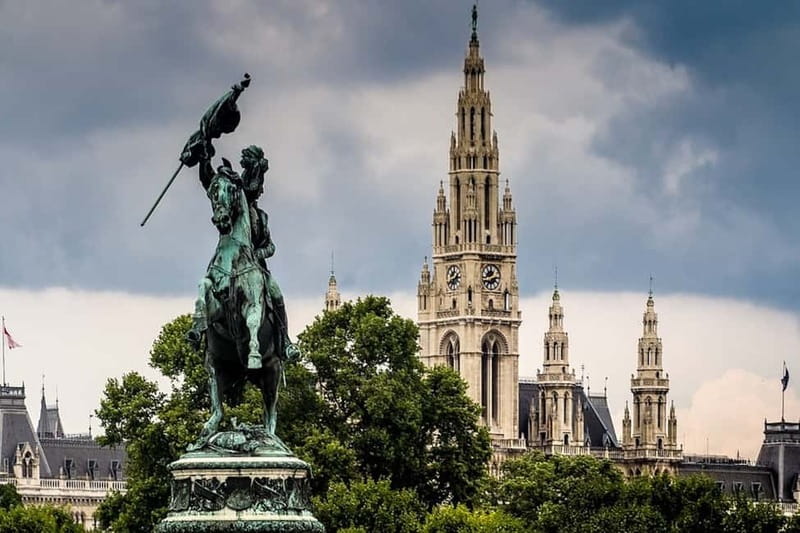
- Archduke Karl Statue
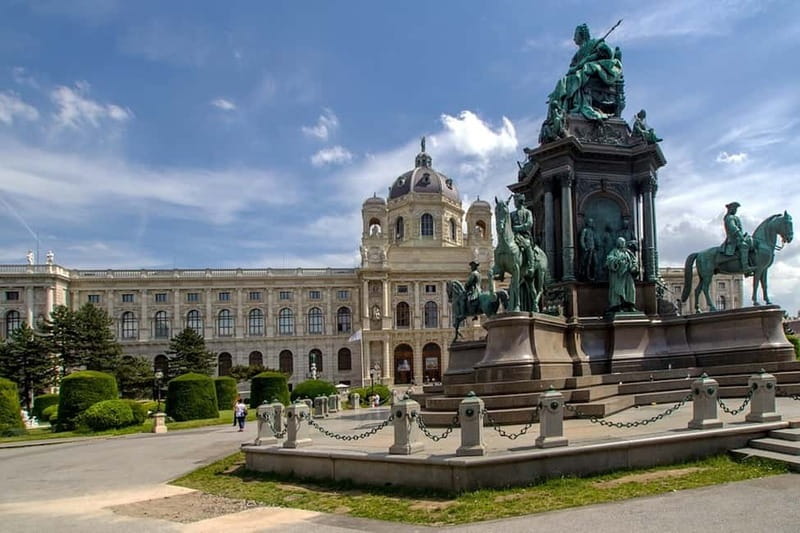
- Maria Theresa Statue
Again, you get the recognition effect. You walk away knowing where these names live in the city, so later when you see them on a map or in a guidebook, you know exactly what you are looking at.
4) Culture and government: museums, parliament, and theaters
The next stretch keeps the “major Vienna” theme, connecting museums and civic buildings. You will pass the Museum of Nature and Art History (a big duo of cultural pull), plus Epostein Palace, and then you head toward Parliament and Burgtheater.
If you like architecture but you also want a day that does not become an all-day slog, this sequence is practical. You can look at a building, take a photo, and move on, all while your driver is providing audio commentary and context.
You will also pass City Hall and University, then continue through additional memorial points such as:
- Liebenberg Monument
- Drei Mädel House
- and more cultural stops tied to famous figures like the Beethoven Houses area
This is the point where Vienna starts feeling like a map you can actually navigate later.
5) Cafes, neighborhoods, and the way the old and new meet
The route includes café and palace-area names that help break up the grand civic sequence with more human-scale stops. You will see places like Café Zentral (connected to one of the listed palaces), Am Hof, and Wollzeile.
You will also pass Hohe Brücke, Salz Gries, Marc Aurel Straße, Hoher Markt, and Wedding Fountain. These are the kinds of spots where, if you return later on foot, you might actually stop for a coffee and just wander.
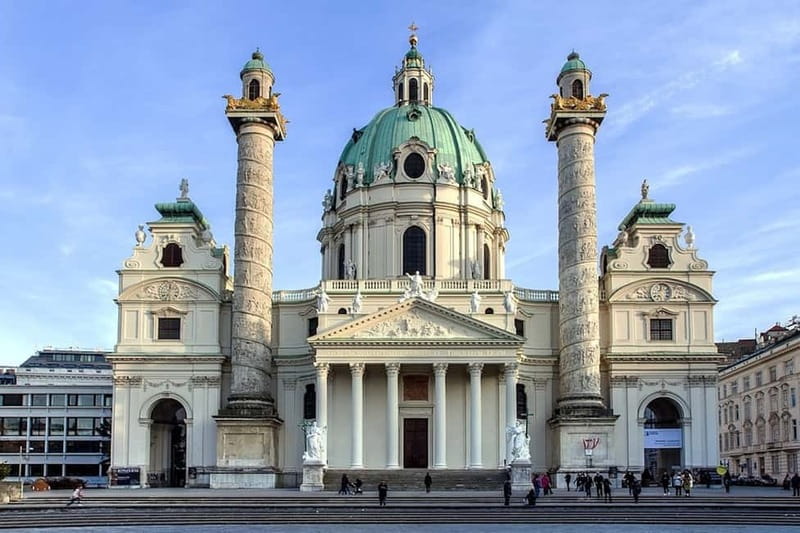
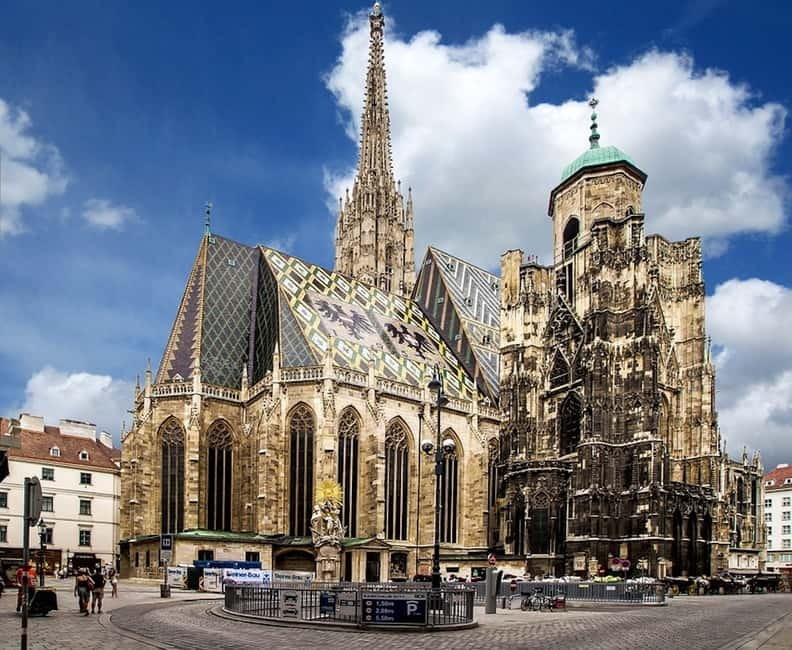
And yes, the tour hits a showstopper: St. Stephen’s Cathedral. You will also see the surrounding area approach toward the city core, which makes it easier to build your next day plan around where you want to walk.
6) Parks and music icons, then back to Herrengasse 12
The final stretch includes City Park, Johann Strauss Monument, and Kursalon Hübner, plus stops linked to Vienna’s music life like Musikverein. You will also pass hotel landmarks such as Hotel Imperial, Grand Hotel, Hotel Bristol, and Hotel Sacher.
All of this feeds into the same payoff: by the time you return to Herrengasse 12, you have a mental checklist of the Vienna version you want to see more of. You have the famous buildings in your head, not just names on a phone.
Comfort, group size, and why the car helps in winter
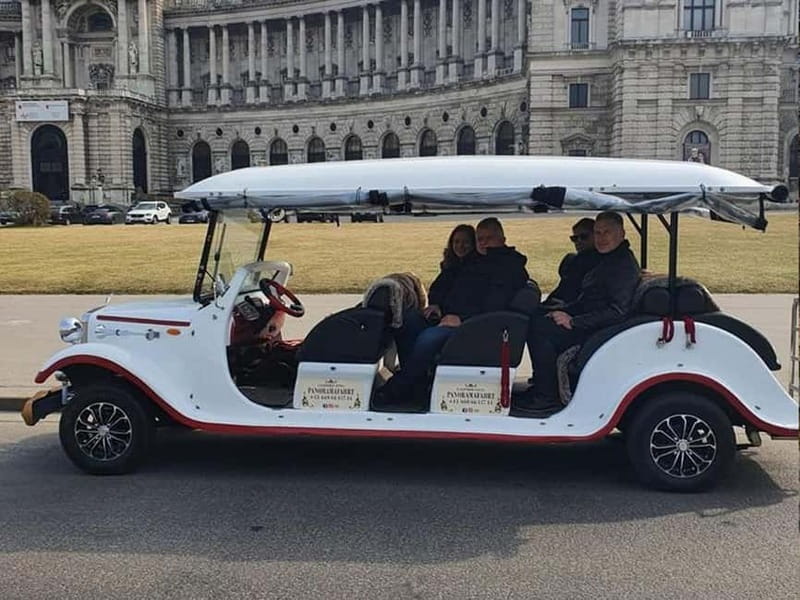
This is a real advantage in Vienna because weather changes how enjoyable walking feels. The tour explicitly focuses on going sightseeing no matter the weather, and the electric old-timer setup is built for exactly that.
The ride format also makes a difference for families. With a cap of 10 participants, you avoid the chaos of large buses. You stay close together, and the old-timer feel can make the tour feel more personal than a big group shuffle.
Comfort comes up in the feedback too. Mentions of the cart being comfortable are consistent with the idea that the ride is meant to keep you relaxed while still covering ground.
One small practical consideration: because it is a group car ride, you will still want to dress for being outdoors for photo moments and quick stops. The tour reduces walking strain, but it does not turn you into an indoor-only visitor.
The driver experience matters more than you think
This type of tour lives or dies by the driver. You get tour and audio commentary by the driver, and that is the heart of what makes the city come alive instead of turning into a moving bus photo stop.
What stands out in the vibe is the ability to keep energy up without rambling. Guides are described as fun and friendly, and also solid with facts and stories. In some cases, the driver can switch between German and English smoothly, which keeps everyone included even if your group has mixed language comfort.
I also like the idea that the driver can pause for a closer look if you ask. You never want to be stuck staring at a landmark through a window when you have the chance to get a minute to frame the photo properly or take in details from street level.
Price and value: why $40 for 90 minutes can be a smart first-day move
At $40 per person for 90 minutes, you are paying for three things: transport within central Vienna, a guided route, and commentary. In practical terms, this can beat the cost of piecemeal taxis plus the time cost of wandering without a plan.
The value is strongest when you are doing at least one of these:
- you are in Vienna for a short time and want to prioritize key sights
- you want to get oriented fast before committing to museum tickets
- you are traveling with kids, older relatives, or anyone who gets tired walking
It can also help when you are not sure where to start. The tour essentially gives you a navigable overview: you see clusters (imperial center, opera-class Ring area, old-town core) and you can decide what deserves longer visits later.
The main value caution is the same as the earlier drawback: the tour is efficient, so it is not designed for deep time at one site. Think of it as a “you can plan next” tour, not a “you will finish Vienna in one ride” tour.
Should you pick 60 minutes or 90 minutes?
You can book a 60-minute nostalgic tour as an option, and the 90-minute version is the one that includes the fuller set of sights.
If you are trying to hit the broadest set of Vienna’s highlights in your day, the 90 minutes makes sense because the route has more time to connect old-town sights with the Ring and the imperial core.
If you are short on time, or you just want a quick overview before a bigger plan (like a concert or a museum day), the 60-minute option can be a better fit. The key decision is how hungry you are for seeing everything versus choosing a smaller set and spending more time on foot.
Who this tour suits best
This is a strong choice if you fall into one of these groups.
- Families who want everyone together, without splitting up
- First-time visitors who need a guided orientation of central Vienna
- Couples who want iconic sights without a full walking workout
- Anyone who likes architecture and monuments but prefers a comfortable pace
If you are the type who needs to spend an hour inside one place to feel satisfied, you will likely want to pair this with at least one additional stop on your own afterward. The ride gives you the map and the motivation, then your feet can handle the specifics.
Should you book this Vienna electric old-timer tour?
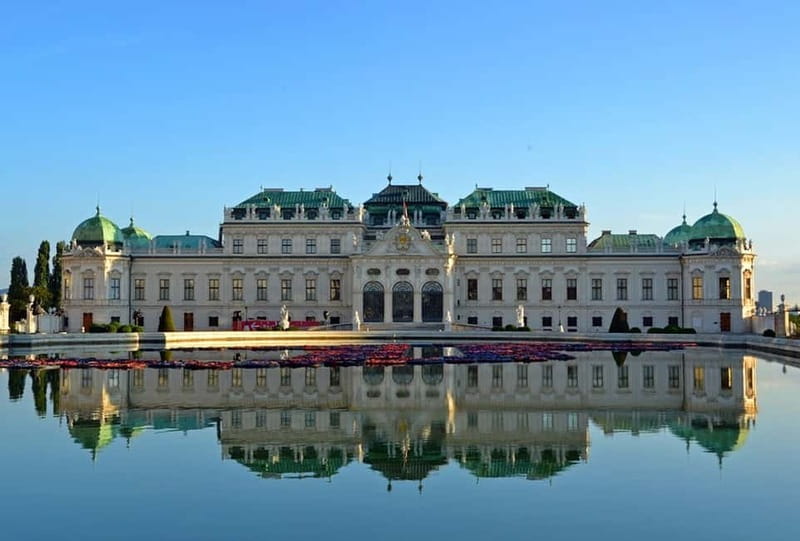
Yes, if you want an efficient, comfortable way to see central Vienna in one relaxed block of time. This is especially worth it when you:
- want a first-day plan that helps you decide what to do next
- want an easy way to see both the historic core and the grand Ring area
- are traveling as a group that benefits from staying together
Skip it only if your main goal is extended time at a single landmark. This tour is built for movement and overview, not long stays.
If you do book it, come ready with a short list of must-sees, then ask the driver to help you prioritize what to revisit later. That turns a 90-minute ride into a smarter multi-day Vienna plan.
FAQ
How long is the Vienna sightseeing tour by classic style electric old-timer car?
The tour duration is 90 minutes.
Where does the tour start and end?
It starts and ends at Herrengasse 12, 1010 Vienna. The meeting point is 1010 Wien, Herrengasse 12 a, in front of the Hotel Radisson Blu.
What languages are available for the tour?
The live tour guide provides commentary in English and German.
How many people are in the group?
The group is small, limited to 10 participants.
What is included in the ticket price?
The tour includes tour and audio commentary by the driver.
Is there a shorter 60-minute tour option?
Yes, you can book a nostalgic 60 minute tour as an option.
Is the tour suitable in bad weather?
Yes, it is designed for sightseeing no matter the weather.
Can I cancel for a full refund?
Yes, free cancellation is available up to 24 hours in advance for a full refund.
Latest Additions
- Wachau Valley Private Wine Tour with Tasting and Gourmet Lunch
★ 5.0 · 1 review - Vienna: Danube Valley Tour with Melk, Dürnstein with wine tasting and boat.
★ 5.0 · 1 review - Private city tour in Vienna
★ 5.0 · 1 review - Hallstatt Small Group Day Trip from Vienna
★ 3.0 · 1 review - Inside Freud’s Mind: Self-Guided Mystery Walk in Vienna
★ 4.0 · 1 review - Private Transfer from Vienna to Prague
★ 5.0 · 1 review - Vienna’s Christmas Market Magic Tour
★ 5.0 · 1 review
Tours, compared.
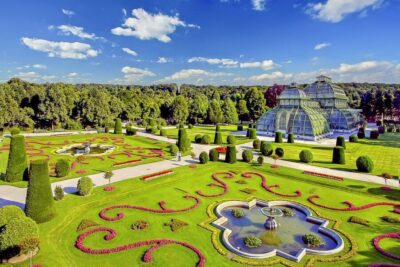
Schönbrunn Palace & Gardens Skip-the-Line Tour
Read our review →

Skip-the-Line Sisi Museum, Hofburg and Gardens Tour
Read our review →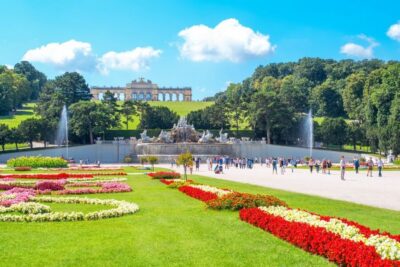
Skip-the-Line Schönbrunn Palace & Gardens Tour
Read our review →
Guided Walking Tour of City Center Highlights
Read our review →
Hop-On Hop-Off Sightseeing Bus Tour in 19 Languages
Read our review →