Reviewed · TOURS
Vienna: Sightseeing Tour in a 1920s Classic Style Car
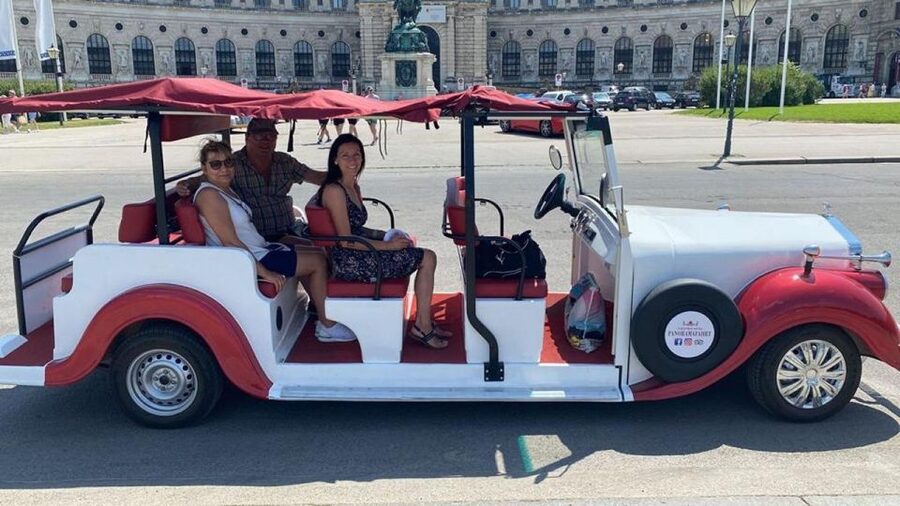
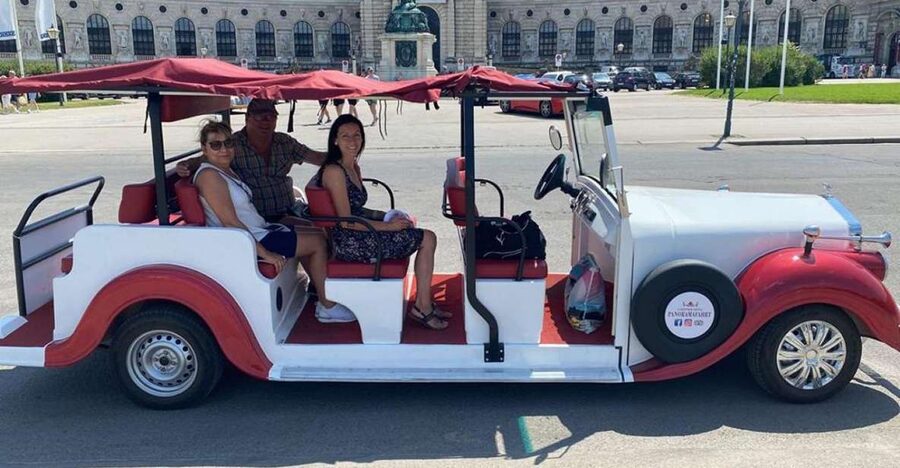
Vienna is easier when the city comes to you. This 60-minute electric old-timer tour gives you a comfortable, emission-free way to see a stack of famous places, all paired with driver audio commentary that helps the stops click. I especially like that it is built for real sightseeing, not museum logistics, and you can keep your group together in one vehicle.
The main drawback is time. With just 1 hour, you get great views and quick context, but you will not have time for inside visits or a deep stop-by-stop walking experience.
In This Review
- Key moments that make this tour worth your time
- Why Vienna looks different from a classic electric car
- Price and value: $282 per group can be a smart deal
- Where to meet, and how to avoid first-minute confusion
- What a 60-minute electric old-timer tour actually covers
- Ringstraße highlights: Opera to palace gardens to iconic statues
- The Hofburg and Heldenplatz area: where Vienna flexes
- Parliament to Rathaus and the inner-city classics you can name
- Stephansdom, Stadtpark, and the music and hotel landmarks
- The driver commentary is the difference between sightseeing and learning
- Who should book this electric old-timer tour
- Should you book? My straight recommendation
- FAQ
- How long is the Vienna sightseeing tour in the electric old-timer car?
- What does it cost and how many people can join?
- Where does the tour start and end?
- Is admission to sights included?
- What language is the tour available in?
- Is there live commentary during the ride?
- Does the tour run in bad weather?
- What are the booking and cancellation options?
Key moments that make this tour worth your time
- Electric old-timer comfort: classic feel, modern emission-free drive
- Private group up to 10: ideal for families and small friend groups staying together
- Driver-led commentary: history and culture explained in a way that stays understandable
- See a lot fast: a tight route that hits major Ringstraße, Hofburg, and inner-city landmarks
- Weather-friendly sightseeing: you stay in the vehicle while Vienna flashes by
- Photo-friendly loop: you get multiple high-recognition backdrops without crossing town on foot
Why Vienna looks different from a classic electric car
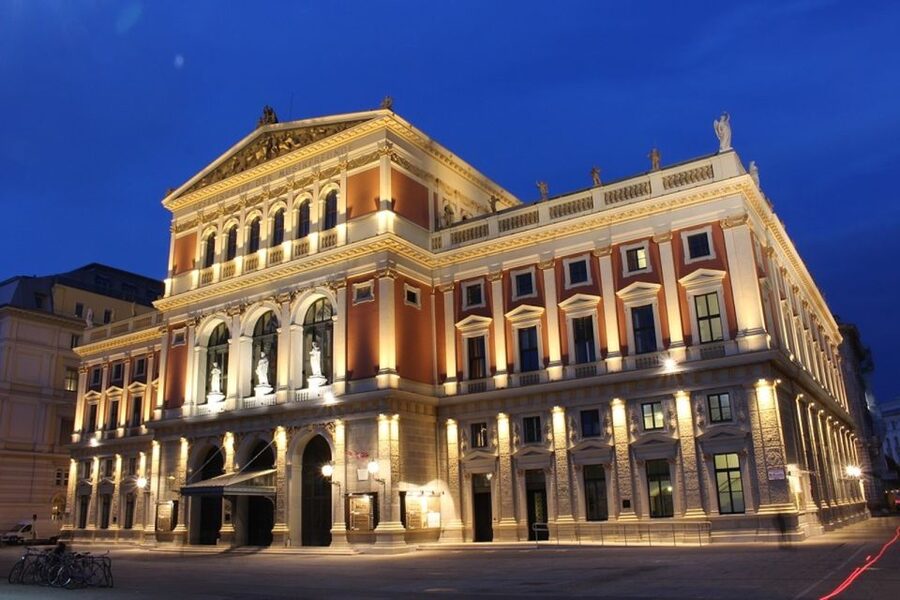
The first thing I like about this style of tour is the pace. Vienna can feel big when you are walking from one landmark to the next, but the car version keeps momentum. You slide through areas like the Ringstraße and the grand imperial core without spending your energy on transit lines or long crossings.
The second big win is the vehicle concept. The tour uses an electric old-timer, so you get that nostalgic feel while staying emission-free during the ride. It may sound like a detail, but in a city where traffic and crowds can slow you down, smoother movement helps you actually enjoy the views.
One more practical benefit is the audience fit. This is a private group for up to 10 people, which means you can keep family members close, keep kids calm, and avoid splitting up. And because it is a sightseeing loop, you are not stuck planning around weather. If it rains, you are still moving and still seeing the highlights.
Vienna is a city built for slow mornings and long evenings — plan accordingly.

Price and value: $282 per group can be a smart deal
The price is $282 per group up to 10, and that is where the value math matters. If you fill the car, the per-person cost drops fast, especially compared with booking separate tickets or paying for multiple people on public-transport tours. Even if your group is smaller, it can still be good value when you factor in convenience and the fact that admission fees are not included.
The trade-off is that this is a group-priced experience. If you are traveling solo or as a couple, you may find individual walking tours or audio-guided options cheaper. But if you want one vehicle, one route, and one guide voice in your preferred language, this turns into a time-saving shortcut.
Also, the tour is only 60 minutes. That short duration is not a weakness if your real goal is orientation. It is a great way to learn what you want to revisit later when you have more time.
Where to meet, and how to avoid first-minute confusion
Your start point is listed in two ways, so do yourself a favor and check both before you go. The activity starts and ends at Café Mozart, Albertinaplatz 2, 1010 Vienna. The meeting point is 1010 Vienna Herrengasse 12 (Hotel Radisson Blu).
Plan to arrive a little early. Even with a short tour, the key is being ready when the group boards so you do not feel rushed. If you are with family, arrive early so everyone can settle, grab water, and take a first photo before you roll.
Because the tour offers live guidance in English or German, it is worth confirming your language preference when you book. If you want the driver to answer quick questions in real time, let that be part of your plan, not an afterthought.
What a 60-minute electric old-timer tour actually covers
This is not a “hop off every stop” tour. You will mostly view landmarks from the road and learn about them as you pass. That changes what “seeing” means here. Instead of long photo stops and walking, you get a flowing circuit through Vienna’s most recognizable architecture.
The route is packed. You will pass a mix of imperial Vienna (Hofburg and grand institutions), cultural Vienna (Opera and music venues), and classic inner-city streets (markets, bridges, and famous churches). By the end, you should be able to name what you saw and understand why those buildings matter.
The itinerary includes returns too, so you will get repeats that help your brain connect the dots. For example, you loop back toward the Opera area and then finish near where you started, returning to the Albertina area.
Beyond the palaces, the city keeps its own rhythm of coffee, concerts, and day trips nearby.
- Vienna: Classical Concert in the World-Famous Musikverein★ 4.6 · 6,673 reviews
- Vienna: Hallstatt Day Trip with Boat Ride Option★ 4.7 · 6,311 reviews
- Vienna: Skip-the-Line Sisi Museum, Hofburg and Gardens Tour★ 4.8 · 5,918 reviews
- Vienna: Skip-the-Line Schönbrunn Palace & Gardens Tour★ 4.8 · 5,411 reviews
Ringstraße highlights: Opera to palace gardens to iconic statues
You start the sightseeing rhythm near the Albertina area at Albertinaplatz. This sets you up for the Ringstraße story, because you are about to see how Vienna arranged itself when it turned broad boulevards into a stage for culture, power, and architecture.
As you move along, you pass the State Opera (Staatsoper) and the long stretch of boulevard often described as the world’s longest boulevard. This is one of the easiest places to get oriented fast. Even from the road, the scale tells you this is a city built to impress.
You also pass key names that act like a guided map for your memory. Expect to see the Palais Schy, along with major memorials like the Goethe Denkmal and Schiller Denkmal, plus the Akademie der bildenden Künste. These stops are useful because they connect literature and arts to the physical city you are looking at. If you know Goethe and Schiller from school or books, suddenly the places feel real.
Then the tour shifts into palace-garden territory with Burggarten, the Palmenhaus, and the Schmetterlingshaus. I like this change of mood because it breaks up the big-stone grandeur. Even without getting out to walk, you can usually spot the green relief and the glass-and-structure vibe in these areas.
From there, you are guided toward the more monumental imperial zone, including the Mozart Denkmal and the Neues Burgtor area. This is a good moment to pay attention to names, because Mozart and the imperial complex often tie Vienna’s music identity to its political history.
The Hofburg and Heldenplatz area: where Vienna flexes
Once you reach the Heldenplatz and Hofburg zone, the city goes full grand-form. These are the kinds of places where Vienna’s identity is written in stone and scale. Even if you have never read about the Habsburg era, you will feel the weight here.
You also pass the Nationalbibliothek and the Welt Museum, plus the Präsidentenpalast area. The point of including these stops is not just recognition. It helps you understand how Vienna uses institutions as landmarks. You see culture, knowledge, and government sitting side by side.
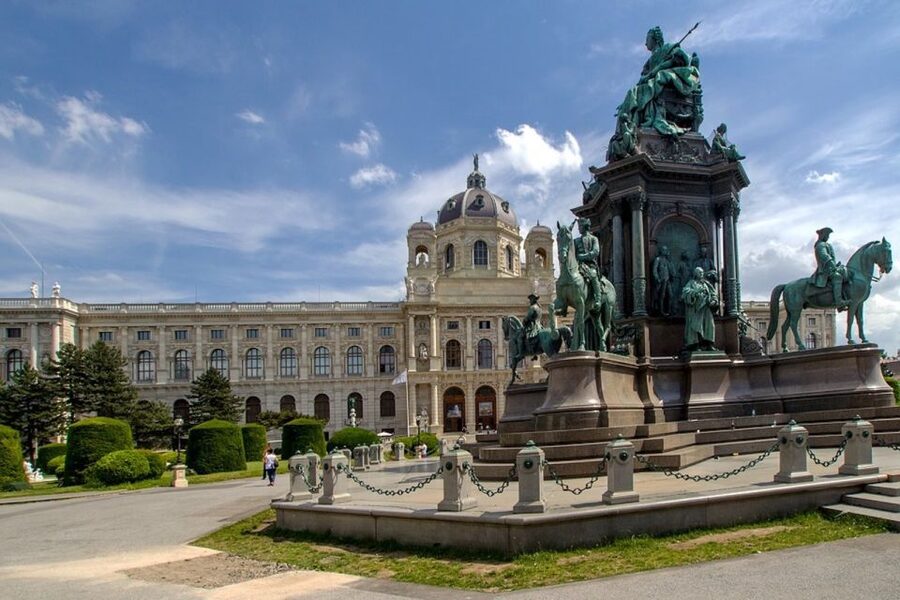
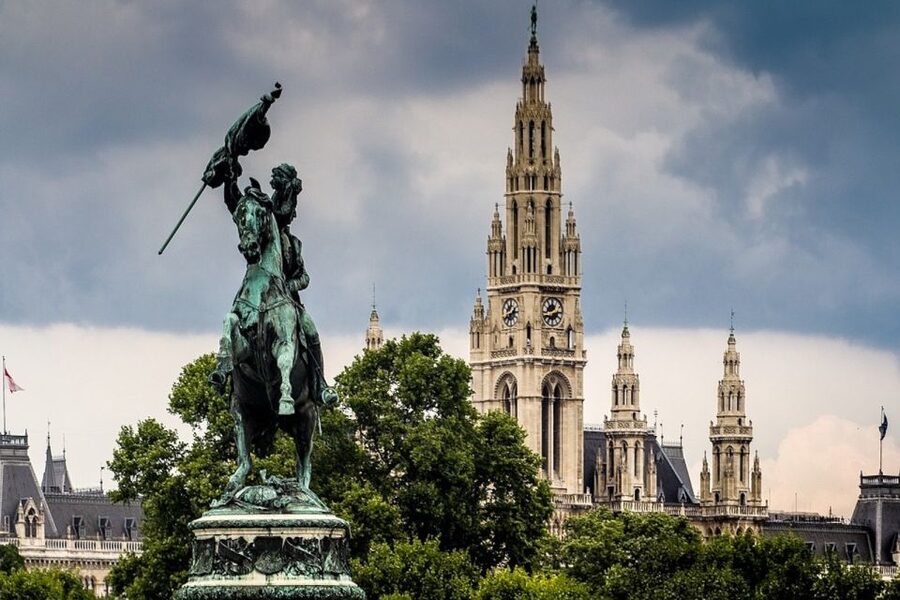
The tour then highlights multiple statues tied to major historic figures, including the Prinz Eugen Statue, the Erzherzog Karl Statue, and the Maria Theresia Statue. This is a helpful approach because it turns a skyline into a story with characters. If you catch just a few names during the ride, you will later be able to connect plaques and street symbolism on your own.
Two more major museum landmarks appear in this section: the Naturhistorisches Museum and the Kunsthistorisches Museum. This is one of the most useful “look from the car” moments, because you can see how Vienna planned a museum block that feels like a destination in itself. The drawback, of course, is that you only get the exterior view, and admission tickets are not included.
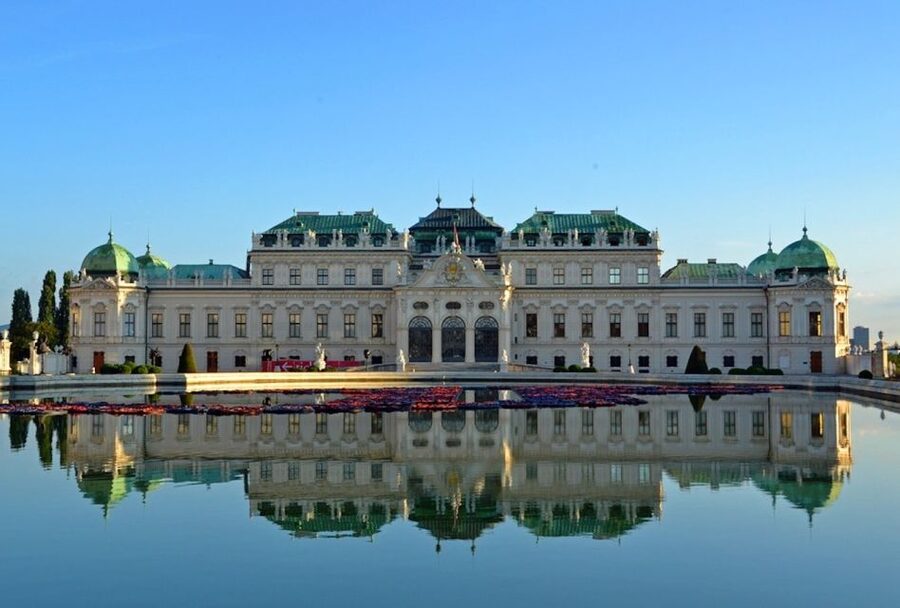
You also pass Palais Epostein, keeping the feel of grand residences present while you stay in ride mode. For many visitors, this section gives the biggest wow factor per minute.
Parliament to Rathaus and the inner-city classics you can name
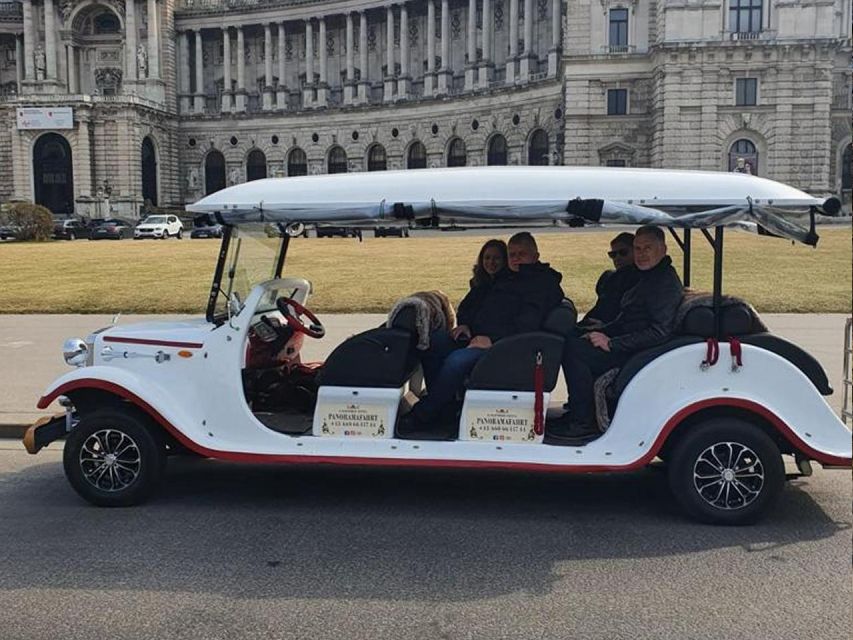
After the imperial core, the tour continues into the civic and inner-city sweep. You pass the Parliament, the Burgtheater, and the Rathaus. These are perfect for a quick “Vienna identity checklist.” Parliament anchors modern civic power, Burgtheater connects culture and stage tradition, and Rathaus signals municipal pride.
The route continues with the Universität and the Liebenberg Denkmal. Even if you do not stop, you are building a mental inventory of landmarks. That matters because Vienna is full of streets that look similar until you can place them.
Next comes a shift toward more human-scale historic corners, with stops like the Drei Mädel Haus and Eines der Beethovenhäuser. I like that inclusion because Vienna is not only emperors and opera. Beethoven is a key part of the story, and seeing where that connection sits in the city helps you understand the cultural map.
The tour also passes a series of palatial buildings and hotel-residence classics, including Palais Daum Kinski and Palais Harrach. You even pass Palais Ferstl mit Café Zentral, which helps tie architecture to everyday Viennese café culture.
As you roll onward, you reach the old-center feeling around Am Hof and cross into bridge and market territory with Hohe Brücke, then Salz Gries, Marc Aurel Straße, and Hoher Markt. These are the places where the city feels like it has always had foot traffic. You can also catch recognizable spots like the Hochzeitsbrunnen and the Ankeruhr, which are great “I saw that” landmarks when you are trying to recall your day.
Stephansdom, Stadtpark, and the music and hotel landmarks
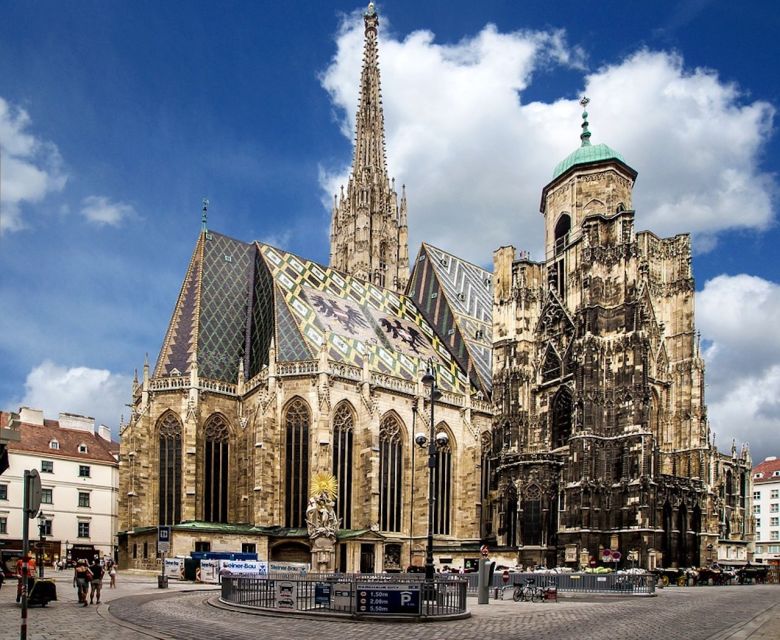
No Vienna sightseeing loop feels complete without Stephansdom. You will pass it on this tour, and it is usually one of the most photogenic moments because it is visually dominant. Even from the road, it gives you an immediate sense of why Vienna became the Vienna you recognize today.
The route then continues through Wollzeile and toward Stadtpark. This is a nice pivot from stone monuments to a more stroll-and-gather energy zone. You pass the Johann Strauss Denkmal, which is helpful because Strauss is not just a name. You can almost feel the city’s music identity in the way Vienna marks these composers in public space.
From there, you move toward the concert-world landmarks, including the Kursalon Hübner, Schwarzenberg Platz, Café Schwarzenberg, and the Musikverein. This is a strong pairing because it connects “Vienna music you might know” to the actual buildings connected with performance. If you plan to attend a concert later, this section sets context fast.
Then comes the hotel grandeur, with well-known names such as Hotel Imperial, Grand Hotel, Hotel Bristol, and Hotel Sacher. These are the sort of stops where Vienna’s storytelling shifts into glamour and historical reputation. Even if you never step inside, seeing them from the car helps you understand the city’s public face.
Finally, the loop brings you back toward the Staatsoper area and toward the finish near Albertina, so you end where the ride started.
The driver commentary is the difference between sightseeing and learning
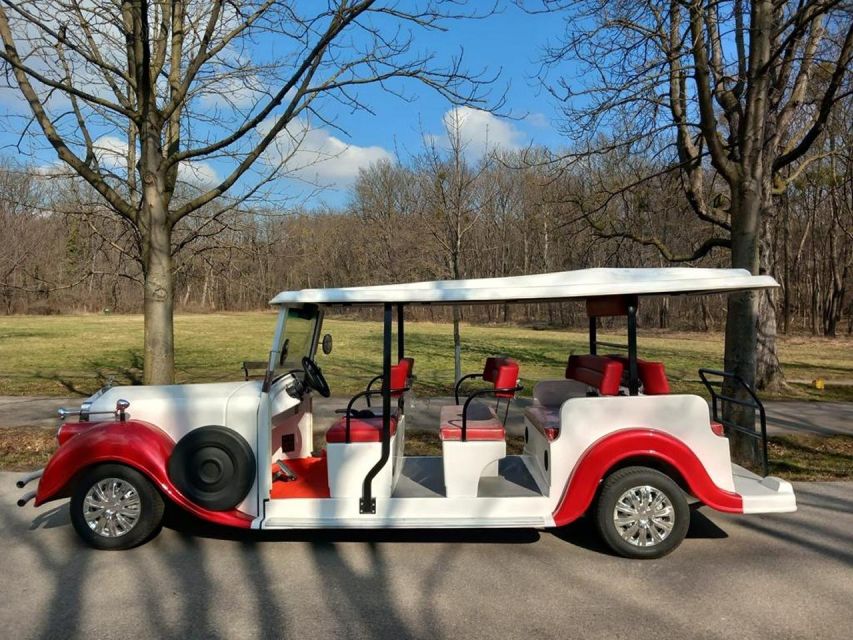
A 60-minute loop can be just driving around. What makes this tour feel worthwhile is the commentary style and pacing. The experience includes tour and audio commentary by the driver, with live guidance available in English or German.
In practice, this means you are not just watching buildings. You are hearing enough context to make the sights stick. One standout example from previous groups is the way the driver can add light, personal touches, like when a birthday was shared at the start and the driver later played Happy Birthday and got everyone singing. That is not guaranteed, but it shows the tone you are likely to get: friendly, human, and not overly stiff.
You also get the right balance of information. Some tours overload you with facts. Here, the explanations aim to be enough to understand what you are seeing without turning into a lecture that drains the fun.
And the transportation quality matters. The transport score is strong, with 88% giving it a perfect score. For a short tour, that is important because comfort and smooth handling affect whether you actually enjoy the ride or just endure it.
If you want better photos, remember this: do not chase every single view like you are at a walk-in photo tour. Instead, treat the car window moments as quick snapshot chances. The route gives you multiple “hero” backdrops, but your best results usually come from being ready when the landmarks line up.
Who should book this electric old-timer tour
This is a great choice if you fit one or more of these profiles:
- You want first-time orientation in Vienna with major landmarks in a short window.
- You travel with family or a group up to 10 and want to stay together in one vehicle.
- You prefer not walking much or you want to keep the day efficient.
- You like learning from a driver who can mix history with an easygoing tone.
It is less ideal if you expect a long walking tour or you want inside access. Admission fees are not included, so you should plan to revisit any museum or church you care about after the ride, if you want that deeper experience.
Should you book? My straight recommendation
Book it if your goal is to get your bearings fast and see Vienna’s most famous landmarks without planning a complicated route. The combination of a classic electric old-timer, a private group setup, and driver commentary makes it feel like a guided highlight reel that still leaves you free to choose what to do next.
Skip it if you only want a budget-friendly alternative for a couple of people, or if you are hoping for long stops and inside sightseeing during the 60 minutes. This tour is designed to keep moving and keep learning, not to replace a museum ticket.
If you are unsure, this is one of those “start here” tours. It sets up the rest of your trip, because once you recognize the places on the street, Vienna becomes much easier to explore on your own.
FAQ
How long is the Vienna sightseeing tour in the electric old-timer car?
The tour lasts 1 hour.
What does it cost and how many people can join?
It costs $282 per group, with room for up to 10 persons.
Where does the tour start and end?
The tour starts and ends at Café Mozart, Albertinaplatz 2, 1010 Vienna. The meeting point is listed as 1010 Vienna Herrengasse 12 (Hotel Radisson Blu).
Is admission to sights included?
No. Admission fees are not included.
What language is the tour available in?
The live tour guide and commentary are available in English and German.
Is there live commentary during the ride?
Yes. The experience includes tour and audio commentary by the driver.
Does the tour run in bad weather?
Yes, the experience is designed for sightseeing no matter the weather.
What are the booking and cancellation options?
You can reserve and pay later, and you can cancel up to 24 hours in advance for a full refund.
Latest Additions
- Wachau Valley Private Wine Tour with Tasting and Gourmet Lunch
★ 5.0 · 1 review - Vienna: Danube Valley Tour with Melk, Dürnstein with wine tasting and boat.
★ 5.0 · 1 review - Private city tour in Vienna
★ 5.0 · 1 review - Hallstatt Small Group Day Trip from Vienna
★ 3.0 · 1 review - Inside Freud’s Mind: Self-Guided Mystery Walk in Vienna
★ 4.0 · 1 review - Private Transfer from Vienna to Prague
★ 5.0 · 1 review - Vienna’s Christmas Market Magic Tour
★ 5.0 · 1 review
Tours, compared.
Schönbrunn Palace & Gardens Skip-the-Line Tour
Read our review →

Skip-the-Line Sisi Museum, Hofburg and Gardens Tour
Read our review →
Skip-the-Line Schönbrunn Palace & Gardens Tour
Read our review →
Guided Walking Tour of City Center Highlights
Read our review →
Hop-On Hop-Off Sightseeing Bus Tour in 19 Languages
Read our review →