
Reviewed · WINE TOURS
Vienna: Austrian Wine Tasting
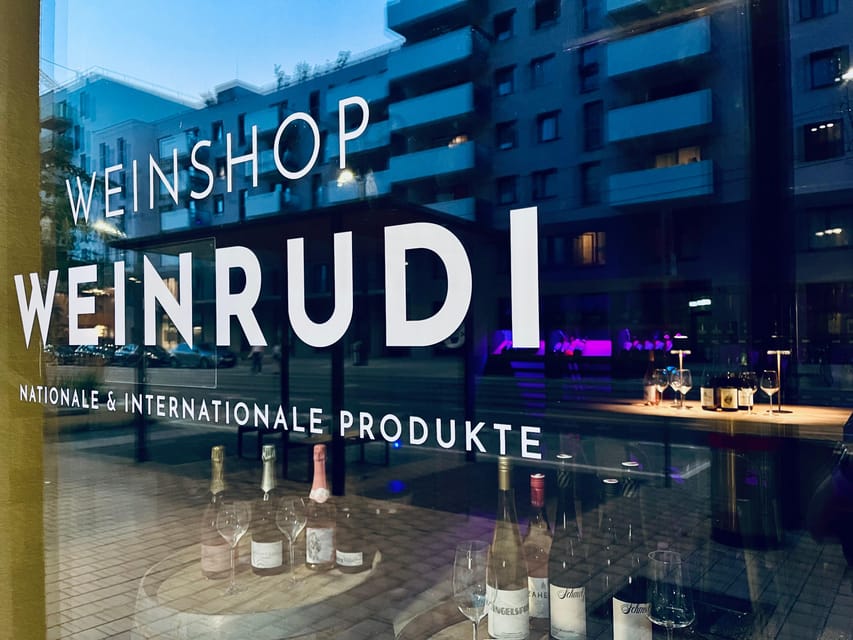
Wine tasting can be surprisingly practical. In Vienna, this session at Weinshop Weinrudi turns Austrian wine into something you can actually order and talk about, not just sip. You get an expert-led, professional presentation in a small group with six quality wines chosen to show you what Austria is really about.
What I like most is the focus on learnable technique, not just drinks in a row. You’ll taste representative styles like Vienna’s Wiener Gemischter Satz DAC and then get pointers on what to notice in aroma, acidity, and flavor. I also like the pacing, since it’s about a two-hour experience with bread, snacks, water, and a welcome glass of frizzante so you stay comfortable.
One drawback to consider: there’s no pickup, so you’ll want to plan to arrive at the shop yourself. Also, it’s not suitable for children under 18, pregnant women, or people with a cold, so check that before you book.
In This Review
- Key things to know before you go
- Walking Into Weinrudi in Vienna’s Second District
- A Two-Hour Austrian Wine Tasting That Teaches You How to Taste
- Welcome Frizzante and Snacks, the Often-Ignored Part
- Vienna’s Wiener Gemischter Satz DAC: What Makes It Worth Ordering
- Wachau’s Grüner Veltliner Ried Pichl Point: Learning the Language of Acidity
- Kremstal Riesling: When You Start Tasting Texture, Not Just Flavor
- How the Guide Keeps It Fun, Flexible, and Not Rushed
- The Real Value: Paying for Comparison, Not Just Alcohol
- Itinerary Walkthrough: What Happens at Each Step
- Stop 1: Bruno-Marek-Allee 11
- Stop 2: Weinshop Weinrudi, aperitif and wine tasting
- Return: Bruno-Marek-Allee 11
- Who This Tour Suits Best (and Who Should Skip It)
- Final Recommendation: Should You Book Weinrudi in Vienna?
- FAQ
- How long is the Vienna Austrian Wine Tasting?
- Where is the meeting point?
- What is included in the price?
- Is pickup included?
- How many people are in the group?
- What languages are available?
- Is the tour wheelchair accessible?
- Who is this experience not suitable for?
Key things to know before you go
- Small group (max 8) for more back-and-forth during the tasting
- Six generous pours that cover major Austrian regions and styles
- Technique basics to help you taste with confidence, not guess
- Welcome Frizzante plus bread, snacks, and water to keep the session easy
- Central Second District meeting point near the Prater area
Walking Into Weinrudi in Vienna’s Second District
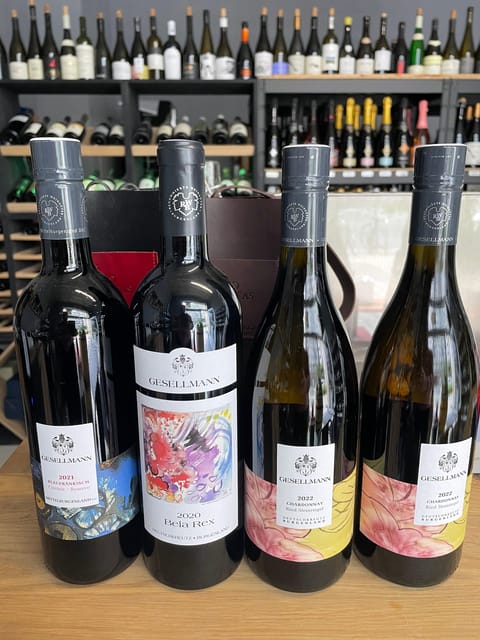
The meeting point is straightforward: Weinshop Weinrudi, Bruno-Marek-Allee 11, in Vienna’s 2nd district. If you’re also planning to see the Prater, the Giant Ferris Wheel area is nearby, so this works well as a pre-dinner or early evening activity. You’re not locked into a hotel pickup schedule, which means you can pair it cleanly with whatever else you’re doing that day.
Inside the shop, the vibe is practical and friendly. You’re there to learn, but it doesn’t feel like a stiff classroom. The guide is there to walk you through what you’re tasting and why it matters, with English and German support. That matters in Vienna, because it’s easy to get caught up in the romance of wine, and harder to get the simple language that helps you make choices later.
One more plus: the experience is listed as wheelchair accessible, which is worth noting if you’re planning around mobility needs. If you’re sensitive to crowds or strong smells, the small group size helps you feel more relaxed than a big, fast group tasting.
Other ways to round out a Vienna visit


A Two-Hour Austrian Wine Tasting That Teaches You How to Taste
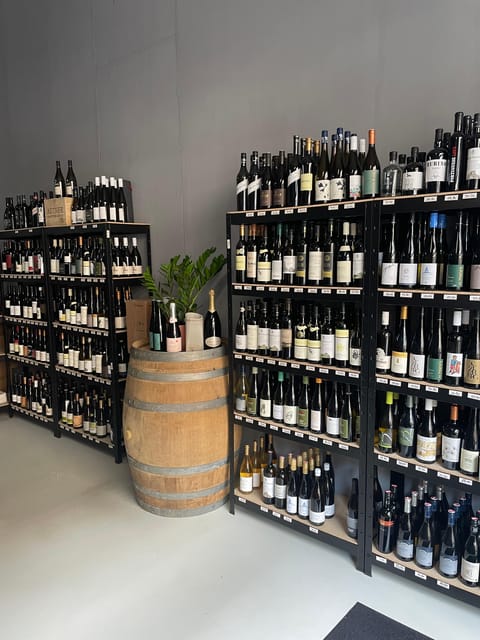
The core of the experience is a professional presentation, roughly two hours, led by a wine-trained presenter from the Wine Academy background. The goal is clear: you’ll explore Austrian wine, its flagship varieties, and the regions behind them, while tasting six quality wines.
What makes this format useful is that it connects wine to patterns you can remember. Instead of only hearing facts, you taste and then learn what to look for. You get an intro Frizzante with the group, then the wines come in an order meant to show contrast. That’s the kind of structure that helps you stop thinking, This is nice, and start thinking, This one is about acidity and texture, or this one leans more toward fruit and spice.
The session also comes with bread, snacks, and water, which sounds basic, but it changes the whole feel of the tasting. You’re not forced to either rush or white-knuckle your way through the last few pours. One practical tip: eat a real breakfast or light lunch beforehand so the snacks feel like support, not the only food you have.
If you care about value, this setup is strong. For $81 per person, you’re not just paying for drinks. You’re paying for a guided way of understanding Austria’s main styles, plus the chance to compare them side-by-side in one sitting.
Welcome Frizzante and Snacks, the Often-Ignored Part
The experience starts with a welcome glass of Frizzante, plus bread, snacks, and water. That matters because frizzante, compared to still wine, can feel lighter and more refreshing at the start. It helps you get into the session without feeling instantly “wine-saturated.”
The food is also more than window dressing. Bread and snacks act like a reset button between different wine profiles. If you’ve ever taken a tasting where everyone finishes with a headache and no useful notes, you know the problem. Here, the inclusion of bread and snacks is part of the design, not an afterthought.
Also, since the shop is in a central district, you can treat the tasting as a standalone plan or as part of a longer evening. The session is short enough that you can still do something after, especially if you’re heading toward the Prater area.
Vienna’s Wiener Gemischter Satz DAC: What Makes It Worth Ordering
One of the wines you’ll taste is the Wiener Gemischter Satz DAC from Vienna. If you only know Austrian wine from a single grape, this is your nudge toward Austria’s more distinctive identity. Wiener Gemischter Satz is tied to the idea of blending and place, and it’s one of the ways Vienna expresses its wine culture without trying to copy the big-name styles you see elsewhere.
In practical tasting terms, this variety is a good lesson in complexity that doesn’t require heavy alcohol or sweetness. You’re likely to notice multiple layers in the glass, and that’s where the tasting technique part comes in. You learn what to identify first, aroma then palate, and how to connect the two.
Why you’ll care: once you understand what makes Vienna wine feel different, you can make smarter choices later. Instead of ordering the safest bottle on a menu, you’ll be able to ask for a style that matches what you enjoyed in the tasting.
Beyond the palaces, the city keeps its own rhythm of coffee, concerts, and day trips nearby.
- Vienna: Vivaldi’s Four Seasons Concert in Karlskirche★ 4.7 · 14,951 reviews
- Vienna: Schönbrunn Palace & Gardens Skip-the-Line Tour★ 4.7 · 7,739 reviews
- Vienna: Light of Creation Votive Church Immersive Light Show★ 4.8 · 6,779 reviews
- Vienna Spanish Riding School Guided Tour★ 4.7 · 6,765 reviews
Wachau’s Grüner Veltliner Ried Pichl Point: Learning the Language of Acidity
Another standout you’ll taste is the Grüner Veltliner Ried Pichl Point from the Wachau. Grüner Veltliner is Austria’s calling card, and Wachau is one of the regions people actually travel for, not just for postcards.
This is the grape-and-region combo that helps you hear the logic in Austrian wine. With Grüner Veltliner, acidity is often the backbone. The tasting format here nudges you to notice how that acidity shows up as crispness, freshness, and structure rather than just a sour bite.
If you’re the kind of person who likes food pairings, this is also a good wine to learn with. Even without being told a matching menu, you’ll start to see why Austrian whites work with many cuisines that need a fresh counterpoint. When you know what you’re tasting, you can order with confidence later.
Kremstal Riesling: When You Start Tasting Texture, Not Just Flavor
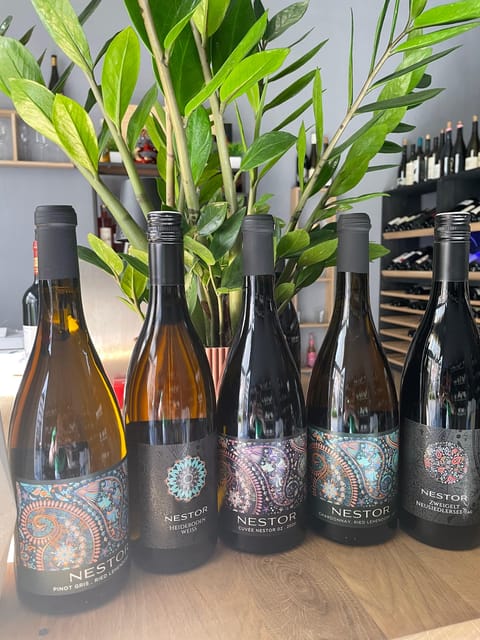
The lineup also includes Riesling Handwerk from the Kremstal. Riesling can feel confusing when it’s treated like a single category. In Austria, it often shows a cleaner focus, with details in flavor and texture that you can pick up once the tasting method is explained.
This is where the guided comparison really helps you. You can start separating your impressions into the basics: sweetness level, acidity, aroma intensity, and mouthfeel. Those are the building blocks that let you judge a wine quickly even when you’re not in a tasting setting.
And if you’re worried you’ll miss out because you don’t know anything about wine jargon, don’t be. The point of this experience is to teach you the simple approach so you can actually enjoy the tasting and learn from it.
How the Guide Keeps It Fun, Flexible, and Not Rushed
The experience is designed as a guided presentation with English and German options, and it’s hosted by Weinrudi. In practice, the atmosphere tends to be welcoming and easygoing, not stiff. The guide is also known for adjusting flow when time windows shift, so you don’t feel like you’re being marched out the door.
One detail I like about the way this can run: if you have questions about wines beyond Austria, you may find the guide answers them directly and clearly. That matters because it helps you connect Austrian wine to what you already know from other places. It turns the tasting into something transferable, not a one-off lesson.
You’ll taste at least six wines as part of the program. In some cases, sessions can stretch a bit with extra pours if there’s time, and the host may offer an additional bottle for sampling. Just remember, that’s not the guaranteed “extra,” but it’s a clue that the guide is paying attention to the group and the schedule.
The Real Value: Paying for Comparison, Not Just Alcohol
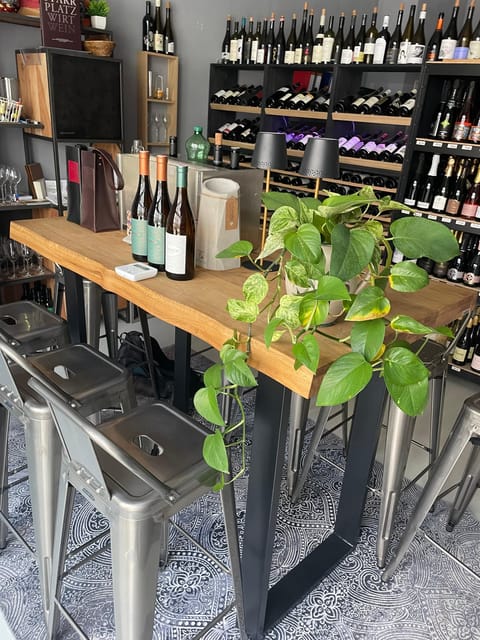
At $81 per person for a roughly one-day experience with six generous wine tastings, a welcome drink, and food, you’re paying for structure. A lot of tastings feel like you’re buying a flight and trying to remember what you liked. Here, the value is that the guide gives you a map of Austrian wine in a short time frame.
Think of it like this: if you’re new to Austrian wine, this can save you from wasting money on bottles that don’t match your tastes. If you’re already interested, it helps you get sharper. Either way, you come away with better instincts for what to order later in Vienna or beyond.
Also, the small group size, up to 8 participants, is part of the value. You’re more likely to get answers that are specific to what you’re tasting rather than hearing general explanations at full volume across a crowd.
Itinerary Walkthrough: What Happens at Each Step
Your day is simple and efficient. You start at Bruno-Marek-Allee 11, and then you’re at the shop for the tasting itself.
Stop 1: Bruno-Marek-Allee 11
This is your starting point. Plan to arrive on time so you can settle, meet the group, and start with the welcome drink. Since there’s no pickup, arriving a few minutes early is the easiest way to avoid stress.
Stop 2: Weinshop Weinrudi, aperitif and wine tasting
This is the main event. You’ll get:
- a welcome glass of Frizzante
- a guided tasting session focused on Austrian wine styles and regions
- six quality wines from leading, award-winning winemakers
- bread, snacks, and water to keep things comfortable
In the middle, you’ll learn about tasting technique and how Austria’s regions shape the wine in your glass. The tasting selections are built around variety and contrast, including Vienna, Wachau, and Kremstal.
Return: Bruno-Marek-Allee 11
After the tasting, you return to the same starting area. Because the shop is in a busy central district, this makes it easy to continue your day with dinner plans or an evening walk toward the nearby Prater area.
Who This Tour Suits Best (and Who Should Skip It)
This is best for you if you want a clear, learnable introduction to Austrian wine without a car ride or a complicated schedule. You’ll enjoy it if you like the idea of tasting multiple regions in one go and leaving with a better sense of what you actually like.
It’s also a great fit if you’re traveling in a small group or solo and want a host who can answer questions in English or German. The max group size of 8 helps the experience feel personal.
Skip it if you fall into the “not suitable” categories listed for the activity: pregnant women, children under 18, and people with a cold. If any of those apply, you’ll want to look for a different food or culture experience that fits better.
Final Recommendation: Should You Book Weinrudi in Vienna?
If you’re trying to understand Austrian wine quickly, this booking makes sense. The combination of guided technique, a focused set of wines from real regions, and included food and water adds up to strong value for a short time in Vienna.
I’d especially book it if you:
- want wines like Wiener Gemischter Satz DAC, Grüner Veltliner, and Riesling handled in a way that’s easy to remember
- care more about learning and tasting structure than collecting souvenirs
- prefer a calmer small-group setup over a crowded tasting room
I might think twice if you:
- hate walking into a venue without pickup support
- can’t participate in tastings due to the stated suitability rules
- need a very quiet, low-stimulation environment
FAQ
How long is the Vienna Austrian Wine Tasting?
The experience is listed as 1 day, and the guided presentation is about 2 hours, with the tasting taking place at the wine shop.
Where is the meeting point?
You meet directly at Weinshop Weinrudi, Bruno-Marek-Allee 11, in Vienna’s Second District.
What is included in the price?
The price includes a welcome drink (Frizzante), six glasses of wine, plus bread, snacks, and water.
Is pickup included?
No. Pickup is not included.
How many people are in the group?
The tasting is a small group with a limit of 8 participants.
What languages are available?
The live tour guide offers English and German.
Is the tour wheelchair accessible?
Yes, the experience is listed as wheelchair accessible.
Who is this experience not suitable for?
It is not suitable for pregnant women, children under 18 years, and people with a cold.
Latest Additions
- Wachau Valley Private Wine Tour with Tasting and Gourmet Lunch
★ 5.0 · 1 review - Vienna: Danube Valley Tour with Melk, Dürnstein with wine tasting and boat.
★ 5.0 · 1 review - Private city tour in Vienna
★ 5.0 · 1 review - Hallstatt Small Group Day Trip from Vienna
★ 3.0 · 1 review - Inside Freud’s Mind: Self-Guided Mystery Walk in Vienna
★ 4.0 · 1 review - Private Transfer from Vienna to Prague
★ 5.0 · 1 review - Vienna’s Christmas Market Magic Tour
★ 5.0 · 1 review
Wine Tours, compared.
Wachau Valley Wine Tasting Bike Tour from Vienna
Read our review →
Grape Grazing: Wachau Valley Winery Biking Tour
Read our review →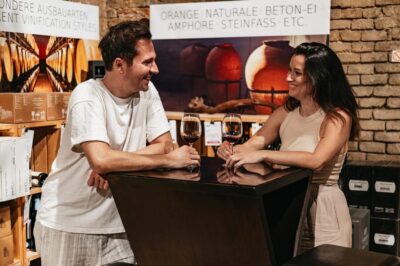
Wine Tasting Experience in a Private Wine Cellar
Read our review →
Schlumberger Wine Cellar Guided or Self-Guided Tour
Read our review →Browse the lists this tour appears in