
Reviewed · VIENNA
The devilish Vienna
Vienna has a soft glow, until you learn its darker side. This is a 2-hour inner-city walk built for the goosebump crowd, where stories of ghosts, vampires, and witches get tied to real streets and landmarks. I love that it is not just jump-scare spooky, it is story-driven spooky, with a guide who can actually perform the material, like Stefan on a chilly evening.
Second, you get a tight route through places most sightseeing trips never touch, from cellar legends to cathedral symbolism. One possible drawback: the themes can get quite grim, including torture, mummies, and stories tied to people being buried alive, so it may not feel fun if you prefer your city tours light and easy.
In This Review
- Key things I’d notice before you go
- A spooky inner-city walk through Vienna’s dark folklore
- Starting at Stephansplatz, then following a tight 2-hour route
- Josefsplatz and The Third Man’s underworld
- Michaelerplatz and the mummies of Michaelergruft
- Neuer Markt, the Imperial Crypt, and Capuchin dungeons
- Rauhensteingasse: torture at House No. 10 and Mozart’s death-house legend
- Blutgasse curse and the Knights Templar alley legend
- Stephansplatz, St. Stephen’s devilish symbolism, and the pact with the devil
- From Fleischmarkt to Dr. Ignaz Seipel Platz: plague pits and buried-alive reality
- Price and value for a $45.38, 2-hour Vienna ghost tour
- Who this tour fits best, and who should skip it
- Practical tips to stay comfortable on a creepy evening
- Should you book The devilish Vienna?
- FAQ
- How long is The devilish Vienna tour?
- Where does the tour start and end?
- Is the ticket mobile?
- How much does it cost?
- How big are the groups?
- Is it dependent on weather?
- Can I cancel for free?
Key things I’d notice before you go
- A performer’s guide who leans into the dark tone without turning it into chaos
- Landmarks you can picture fast, since the stops line up with major squares and streets
- Macabre, not random, with each stop linked to a specific legend or historical claim
- Free admission tickets listed for the stops, which helps the value
- Good-weather dependent, so plan for a real walking night
- Small groups up to 20, so you are not lost in a crowd
A spooky inner-city walk through Vienna’s dark folklore
If you like Vienna’s official beauty, you are going to notice the contrast here right away. The route keeps you in the city center, but the focus is on the stories that city guides usually skim over. Expect a mix of the supernatural and the historically ugly, with demons and curses treated like clues you are meant to connect.
This kind of tour works best when you are in the mood for atmosphere. A darker evening helps, and the story style makes even familiar buildings feel new. You are also walking through a neighborhood rhythm, not trapped in one museum room, so the city feels alive instead of staged.
And yes, the whole thing has that tongue-in-cheek horror energy, the kind that makes you look at statues differently and wonder what a medieval rumor actually sounded like on the street.
Vienna is a city built for slow mornings and long evenings — plan accordingly.

Starting at Stephansplatz, then following a tight 2-hour route
You meet at Stephansplatz 5, 1010 Wien, and the walk finishes around Fleischmarkt to Dr. Ignaz Seipel Platz. The tour lasts about 2 hours, and the group cap is 20, which matters more than you might think. In a small group, the guide can keep the pacing, and you can hear the details without straining.
You do not need to print anything because it is a mobile ticket. That is practical in Vienna, where you are likely to use your phone for transit too. The start area is central and reachable by public transportation, so you are not forced into a long commute just for a short tour.
Also, because the experience requires good weather, check the forecast before you commit. In winter and shoulder season, a quick “walk through the dark” can feel very long if you are underdressed.
Josefsplatz and The Third Man’s underworld
The first stop is Josefsplatz, a square that carries serious cinematic DNA. It is tied to the film The Third Man, including the story of Harry Lime and the hunt through Vienna’s sewer world. Even if you know the movie only casually, you will get that “this city has layers” feeling fast, because the tour points you toward the idea of underground life as a character of its own.
What I like about starting here is how it sets expectations. The guide is telling you that Vienna’s past is not only in churches and palaces. It is also in drainage systems, cellars, and hidden passages, the kind of places people used before the city felt orderly.
One consideration: the tone right from the start is dark, not gentle. If you want your first 10 minutes to feel like light entertainment, this opener may push the mood immediately.
Michaelerplatz and the mummies of Michaelergruft
Next you head to Michaelerplatz, where the focus shifts from crime-story darkness to bodily-mystery darkness. You hear about the Michaelergruft and legends connected to mummification in Vienna, mixing historical ideas with spooky lore. This is a classic kind of “Vienna macabre,” where the city’s relationship to death becomes almost architectural.
This stop is valuable because it gives you a specific, place-based explanation for why “mummy stories” show up in Vienna at all. It also breaks up the violence-heavy themes with something stranger, which keeps the tour from feeling one-note.
If you are sensitive about stories involving bodies, pace yourself. This is part of the show, and you will get the facts and the legend side by side.
Beyond the palaces, the city keeps its own rhythm of coffee, concerts, and day trips nearby.
- Vienna: Classical Concert in the World-Famous Musikverein★ 4.6 · 6,673 reviews
- Vienna: Hallstatt Day Trip with Boat Ride Option★ 4.7 · 6,311 reviews
- Vienna: Skip-the-Line Sisi Museum, Hofburg and Gardens Tour★ 4.8 · 5,918 reviews
- Vienna: Skip-the-Line Schönbrunn Palace & Gardens Tour★ 4.8 · 5,411 reviews
Neuer Markt, the Imperial Crypt, and Capuchin dungeons
At Neuer Markt, the tour points you toward the Imperial Crypt and treats it as more than a grand burial site. You also get the darker layer: hidden prison dungeons under the Capuchin church, and stories tied to punishment by the Capuchin monks. It is a big-city religious site with a survival-and-control history living under the surface.
This stop is one of the reasons I think this tour feels different from a generic “ghost walk.” You are not just hearing about supernatural events. You are seeing how power, religion, and punishment used physical spaces, often in ways people wanted to forget.
The drawback here is simple: it can feel heavy. The tour balances legend and historical cruelty, and if you are hoping for mostly campy horror, you may want to mentally switch modes before you arrive.
Rauhensteingasse: torture at House No. 10 and Mozart’s death-house legend
This is where the walk turns into a double-feature, and it happens on Rauhensteingasse with two major stops at specific addresses.
At House No. 10, you hear about the former Malefizspitzbubenhaus, described as Vienna’s infamous torture prison. The story includes the case of Elisabeth Plainacher, sometimes presented as the only witch in Vienna. That name and that accusation are part of why this stop lands. It is not abstract evil, it is pointed, with an individual story used to explain how fear worked.
Then you move to House No. 8, tied to what is known as Mozart’s death house. Here the legend gets cinematic again, with a story about a ghostly gray boat that is said to have commissioned the Requiem and pushed Mozart toward his death. The tour even connects the idea to scenes made famous by Amadeus, so the “ghost rumor” lands with a stronger emotional cue.
Two practical notes. First, the guide’s performance matters a lot here, because you are dealing with fast transitions between prison-story and composer-myth. Second, the torture topic is not a throwaway line. If you do not want graphic themes, this is the moment to decide how much detail you can handle.
Blutgasse curse and the Knights Templar alley legend
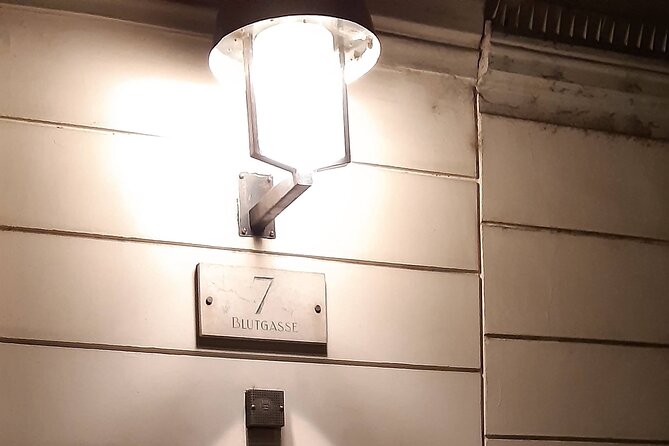
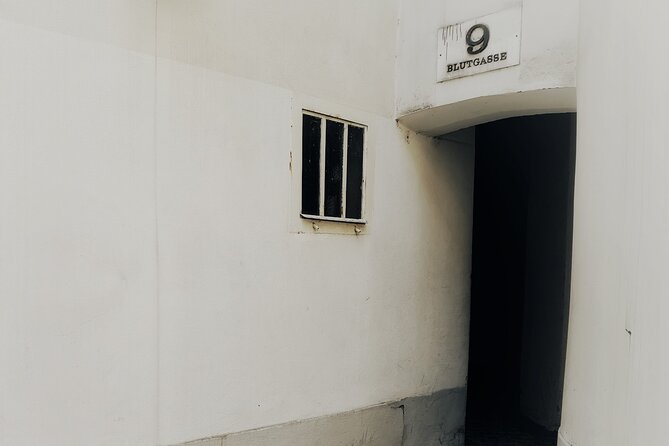
At Blutgasse, the tour leans into street-name storytelling. You get a legend of a massacre involving the Knights Templar and a claim that the event gave the alley its name, with a curse said to linger afterward. It is the kind of place-based myth that makes you look down at the ground instead of up at the buildings.
I like this stop because it keeps the horror grounded in everyday navigation. An alley like Blutgasse is not a landmark you would automatically put on a postcard list. But after hearing the story, you understand why locals might fear a narrow lane the way others fear a battlefield.
If you are expecting a big set piece, this is more “myth plus mood” than spectacle. Still, it fits the walking format well, because you are moving through the city, absorbing atmosphere in small doses.
Stephansplatz, St. Stephen’s devilish symbolism, and the pact with the devil
Back at Stephansplatz, you get cathedral-focused spooky symbolism. The tour points out why the north tower is only half as high as the south tower, and then ties the visual to stories you can tell yourself are connected to the supernatural.
You also hear the story of Master Buxbaum and a pact with the devil, plus attention to demonic and devilish symbolism on the exterior of St. Stephen’s Cathedral. This is clever tour-writing, because it gives you a way to “read” the building, not just admire it.
This stop is also a great reset point. After darker alley and prison themes, a major cathedral usually feels bigger, more breathable. You still get the horror angle, but now it is woven into stonework and design choices you can actually study with your eyes.
From Fleischmarkt to Dr. Ignaz Seipel Platz: plague pits and buried-alive reality
The final stretch runs from Fleischmarkt to Dr. Ignaz Seipel Platz, and it brings the tour’s realism back. You hear about the sage connected with the story of the Dear Augustine and how people were thrown alive into a plague pit. Then you get the historical reality angle, including that in Vienna, people were buried alive, along with measures taken to avoid it.
This section is intense, but it is also where the tour earns credibility. It is one thing to enjoy supernatural legends. It is another to hear how fear, overcrowding, and disease created real-world cruelty. Even when the guide leans into horror language, the point is that the city had systems for dealing with mass death, and those systems were not always humane.
If you are booking this for a light date night, talk yourselves into a “spooky stories with real bite” mindset first. The tour is not trying to shock for shock’s sake. It is showing how easily legend can grow from truth, or from what people believed was true.
Price and value for a $45.38, 2-hour Vienna ghost tour
At $45.38 per person for about 2 hours, this tour sits in a reasonable range for a guided walking experience that uses famous Vienna locations. The real value is not only the price, it is how much you see for the time. You move through multiple squares and specific addresses, so the tour feels efficient rather than repetitive.
Another value lever: the stops list admission ticket free. That means you are not paying extra just to stand near the right door or learn the right story at the right spot. You are paying for interpretation, performance, and route design, which is what a tour should do.
Finally, the group cap of 20 helps you get your money’s worth. You can actually hear the guide. You are not mostly watching the backs of other people.
Who this tour fits best, and who should skip it
This is ideal for you if you like urban legends, dark fairy-tale storytelling, and Vienna as a city with contradictions. You will likely enjoy it even more if you already know a few cultural touchstones, like The Third Man or Amadeus, because the guide uses them as story anchors.
It is also a solid choice for you if you want a short evening activity that feels like an event. Two hours goes by fast when the guide is acting the story and the route stays central.
Consider skipping if you want a standard “look at the pretty sights” tour. Also skip if sensitive topics like torture, death, or buried-alive stories will ruin the mood for you.
Practical tips to stay comfortable on a creepy evening
Wear comfortable shoes. This is an inner-city walk, and the whole point is movement through squares and streets. Bring layers, too, because a spooky evening tour can run cooler than you expect once you are outside longer than a typical museum stop.
Keep your phone charged, since it is a mobile ticket. Also, if you want photos, do not expect every stop to be a perfect postcard angle, because you may be pausing at less open corners or along narrow lanes.
Most importantly, pick the right mindset. If you treat it like a story night with history as the backbone, the experience clicks. If you want purely verified facts, you may find the legends add noise. The sweet spot is enjoying how Vienna’s past and its rumors shaped each other.
Should you book The devilish Vienna?
I think you should book it if you want a memorable, compact Vienna experience that feels theatrical and genuinely focused. The strongest reason is the guide style, the sense that this is not just reading facts off a sign. With Stefan at the helm, the story delivery sounds like it matters.
Book it also if you want to see side streets and details you would normally miss while doing the classics. The route through Josefsplatz, Michaelerplatz, Neuer Markt, Rauhensteingasse, Blutgasse, and Stephansplatz gives you variety without wasting time.
Only pause if the darker themes will weigh on your evening. If you can handle legends that include torture, mummies, and plague-era cruelty, this tour is an easy yes for a spooky night in Vienna.
FAQ
How long is The devilish Vienna tour?
It runs for about 2 hours.
Where does the tour start and end?
It starts at Stephansplatz 5, 1010 Wien, Austria, and ends around Fleischmarkt in the same area.
Is the ticket mobile?
Yes, it is listed as a mobile ticket.
How much does it cost?
The price is $45.38 per person.
How big are the groups?
The maximum group size is 20 travelers.
Is it dependent on weather?
Yes, it requires good weather. If it is canceled due to poor weather, you will be offered a different date or a full refund.
Can I cancel for free?
Free cancellation is available. You can cancel up to 24 hours in advance of the experience for a full refund.
Latest Additions
- Wachau Valley Private Wine Tour with Tasting and Gourmet Lunch
★ 5.0 · 1 review - Vienna: Danube Valley Tour with Melk, Dürnstein with wine tasting and boat.
★ 5.0 · 1 review - Private city tour in Vienna
★ 5.0 · 1 review - Hallstatt Small Group Day Trip from Vienna
★ 3.0 · 1 review - Inside Freud’s Mind: Self-Guided Mystery Walk in Vienna
★ 4.0 · 1 review - Private Transfer from Vienna to Prague
★ 5.0 · 1 review - Vienna’s Christmas Market Magic Tour
★ 5.0 · 1 review