Reviewed · TOURS
Riddle Tour: Explore the Hidden Gems of Vienna
Vienna’s best stories are in the side streets. This self-guided CityRiddler walk turns central landmarks into a clue trail, including Blutgasse and Vienna’s oldest church (not St Stephen’s). I like that it stays time-flexible, so you can pause and restart without feeling rushed, and I also like the focus on alleys that regular sightseeing walks often skip.
The main drawback is that it leans on your phone, so you need a fully charged smartphone and you should expect some walking.
This is a great fit if you want to wander Vienna at your own pace while picking up small, specific facts. But if you rely on accessibility support for navigation, pay close attention to the suitability notes, since the tour info is mixed on wheelchair use.
In This Review
- Key highlights worth planning for
- How a self-guided riddle tour turns central Vienna into a story walk
- Getting started at Annagasse, then walking on your own schedule
- Kärntner Straße to Schwedenplatz: your first clues in the middle of it all
- Hoher Markt and Cafe Central: using famous streets as story connectors
- Blutgasse and the history of Blood Alley
- The oldest church in Vienna, and why it is not St Stephen’s
- Freemasons headquarters and Freyung: clues that lead to institutions
- Vienna’s most beautiful clock: symbolism you can actually see
- The Basilisk: who killed it, and why the legend lingers
- Price and value: is $23 worth a 1.5 to 2 hour audio hunt?
- Who this Vienna riddle walk suits best
- Should you book this CityRiddler riddle tour?
- FAQ
- Where does the tour start and where does it end?
- How long is the riddle tour?
- Is this tour self-guided or do I meet someone?
- What do I need to bring?
- Which languages are available?
- Do I have to finish in one go?
- How much does it cost?
- Is it wheelchair accessible?
- What if my plans change?
Key highlights worth planning for
- Riddle route through Blutgasse to Freyung, with a steady trail through the city center
- Oldest church in Vienna, explicitly described as not St Stephen’s Cathedral
- An especially beautiful clock in Vienna, plus what it symbolizes
- Freemasons headquarters stop, folded into the story logic of the route
- The Basilisk legend, including who killed it and the background behind the myth
- Audio guide you control, with the option to start, pause, and continue when you want
How a self-guided riddle tour turns central Vienna into a story walk
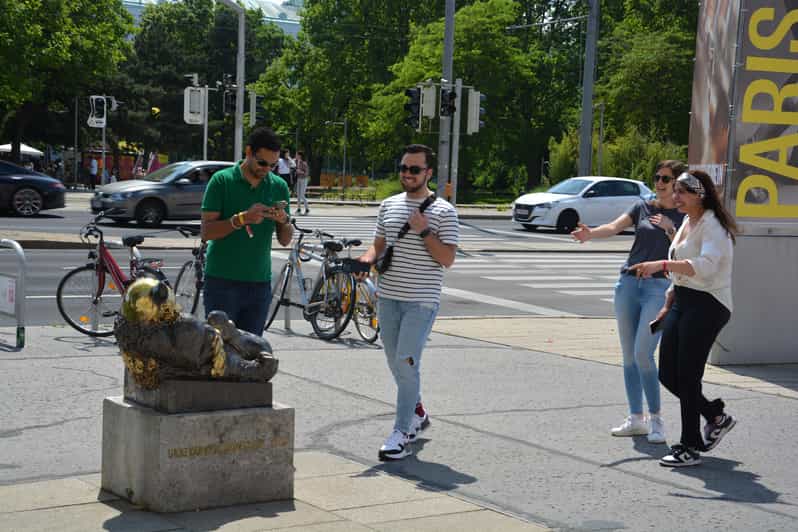
This CityRiddler experience is designed like a walking puzzle. You follow clues that connect places you can otherwise see in passing into something you actually remember. Instead of just looking at street corners, you’re reading, listening, and moving from one prompt to the next.
I like the route because it sticks close to the center and stays practical. The walking distance is about 2.7 km, and the sights are clustered enough that you don’t need transit between stops. If you’re the type who enjoys “wait, what is that?” moments on the street, this format rewards that instinct.
You also get English and German audio, so you can listen while you walk. And since it’s self-guided, you are not dependent on a group schedule. That matters in Vienna, where your day can easily get rearranged by weather, museum lines, or just plain curiosity.
Vienna is a city built for slow mornings and long evenings — plan accordingly.


Getting started at Annagasse, then walking on your own schedule
You begin at Annagasse, a side street off Kärntner Straße, and you end at Freyung. There’s no person waiting for you, because this is run through the CityRiddler app. After you book, you receive an access code by email, and you might need to wait up to 24 hours to get it.
Once you have the app set up, the flow is simple: press play, follow the prompts, and use the controls to pause and continue at any time. That is more than a nice feature. It changes how you explore. You can stop for a coffee, step into a shop window, or slow down if a riddle takes a few minutes to land.
Timing is flexible too. The tour takes about 1.5 to 2 hours, which is a sweet spot for a self-guided experience. Long enough to feel like an actual activity, short enough that it won’t steal your whole day.
Practical note: you need a fully charged smartphone. If your battery runs low, your riddle tour basically turns into a normal walk, and you lose the audio and clue layer that makes it worthwhile.
Kärntner Straße to Schwedenplatz: your first clues in the middle of it all
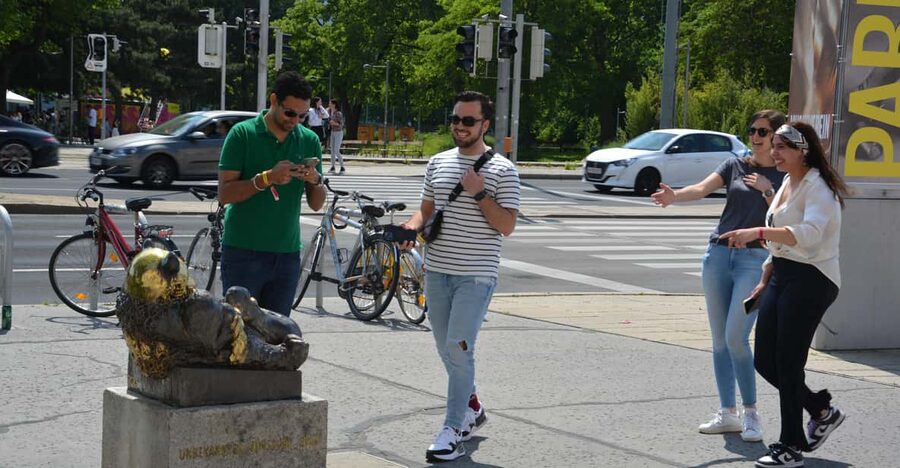
The route includes Kärntner Straße and Schwedenplatz early on, so you’re not starting in some distant neighborhood. That matters because it makes the experience easy to plug into a normal sightseeing day.
Think of these early segments as your setup. Vienna’s center has a lot going on, and the app helps you slow down and notice details. You’re learning the rhythm of the walk: move, listen, read the clue, look around, then continue.
If you already know Vienna a little, this part still works. You’re not learning the city from scratch, you’re adding a second layer of meaning to places you might have walked past without paying attention. And if you’re new to the city, this is a way to get oriented without hiring a guide for every hour.
A small consideration: since the tour is self-guided, you’ll need to trust your phone. If you prefer offline-only navigation or you don’t want to look at your screen while walking, plan for that before you start.
Hoher Markt and Cafe Central: using famous streets as story connectors
As you move along the tour, you pass Hoher Markt and Cafe Central. Even without turning every stop into a long visit, these places help anchor the story. The riddle format uses recognizable landmarks to keep you oriented, while the alleys do the storytelling heavy lifting.
This is where you’ll start feeling the “hidden” angle of the tour. Vienna’s center is compact, but the most memorable moments often happen a few steps off the main drag. The app nudges you to leave the straight line and take the smaller routes.
If you’re traveling with someone who doesn’t always love puzzles, this kind of riddle walk can still work because you’re surrounded by real scenery the whole time. You’re not trapped in a classroom activity. You’re out on the street, with sights and sounds around you.
Beyond the palaces, the city keeps its own rhythm of coffee, concerts, and day trips nearby.
- Vienna: Classical Concert in the World-Famous Musikverein★ 4.6 · 6,673 reviews
- Vienna: Hallstatt Day Trip with Boat Ride Option★ 4.7 · 6,311 reviews
- Vienna: Skip-the-Line Sisi Museum, Hofburg and Gardens Tour★ 4.8 · 5,918 reviews
- Vienna: Skip-the-Line Schönbrunn Palace & Gardens Tour★ 4.8 · 5,411 reviews
Blutgasse and the history of Blood Alley
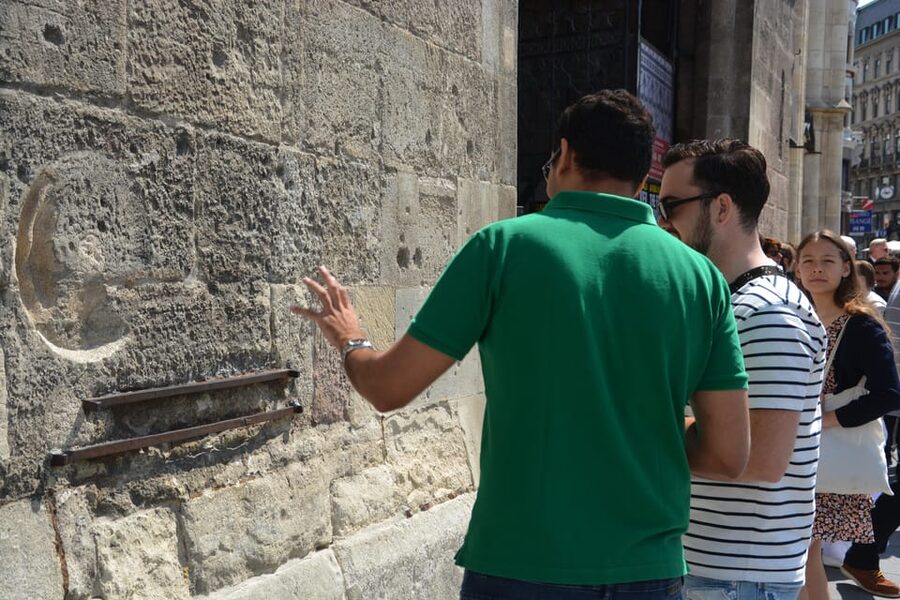
One of the headline experiences is Blutgasse, also known as Blood Alley. The tour promises its ancient history, and it guides you through the nearby alleys so you can connect the legend to the urban layout.
This is the part I’m most excited for if you enjoy how place names carry memories. Vienna has layers, and this is a classic example: a narrow lane name that invites you to ask, what happened here? The riddle walk format makes you do that mentally, then gives you the explanations right when you’re standing in the right spot.
You also get the benefit of pacing. You’re not rushing from one must-see to the next. Instead, you’re walking a short distance and letting the story stick. The alley segments are short enough that you can handle them even if you’re not a marathon walker.
The oldest church in Vienna, and why it is not St Stephen’s
Another clear highlight is the oldest church in Vienna, with an important tip: it is not St Stephen’s Cathedral. That alone is useful, because many first-time visitors assume the most famous cathedral must also be the oldest.
On this tour, you get directed to the church as a key story stop, not just a photo opportunity. You’re there for context, symbolism, and the riddle logic that connects it to the surrounding streets.
The value here is simple: you leave with a correction to a common assumption and you learn it in a way that sticks because you experienced it physically. If you like your sightseeing to include one good fact you can tell a friend later, this kind of stop delivers.
Freemasons headquarters and Freyung: clues that lead to institutions
The route also brings you past the headquarters of the Freemasons and finishes at Freyung. This is where the story starts to feel like more than just local folklore. You’re dealing with people, groups, and public-facing institutions, all placed within the city’s old street network.
Freyung is a strong ending point for a riddle walk. By the time you reach it, you have already followed multiple clue types, from dark legends to architectural anchors. Ending at a well-known square helps you transition out of the game and back into free exploration.
If you like the idea of learning about how old Vienna organized its social world, this segment is one of the better uses of your time. It makes you notice that street corners are not just scenery, they are the stage where groups and stories overlap.
Vienna’s most beautiful clock: symbolism you can actually see
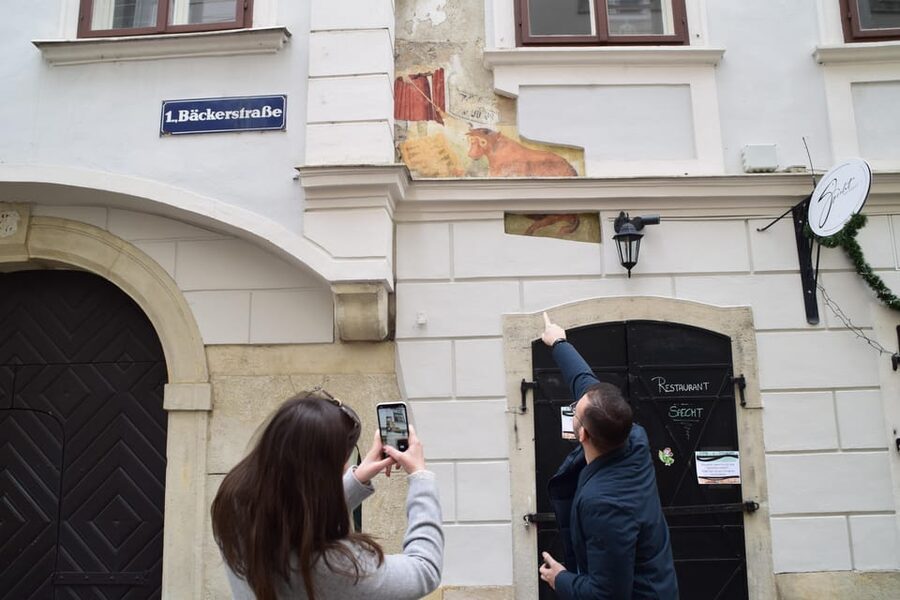
The highlights include the most beautiful clock in Vienna, plus what it represents. Even though the tour doesn’t ask you to be an expert, it does give you a reason to look carefully when you reach it.
This is exactly the kind of detail that can be missed on regular sightseeing. A clock is easy to glance at and move on. A riddle tour turns it into a destination, so you stop, check, and connect it to the meaning the audio gives you.
When you’re planning your day, give yourself a little breathing space around this moment. Don’t schedule your next big museum entry instantly after the walk ends. Let the audio finish and then take a quick look without rushing.
The Basilisk: who killed it, and why the legend lingers
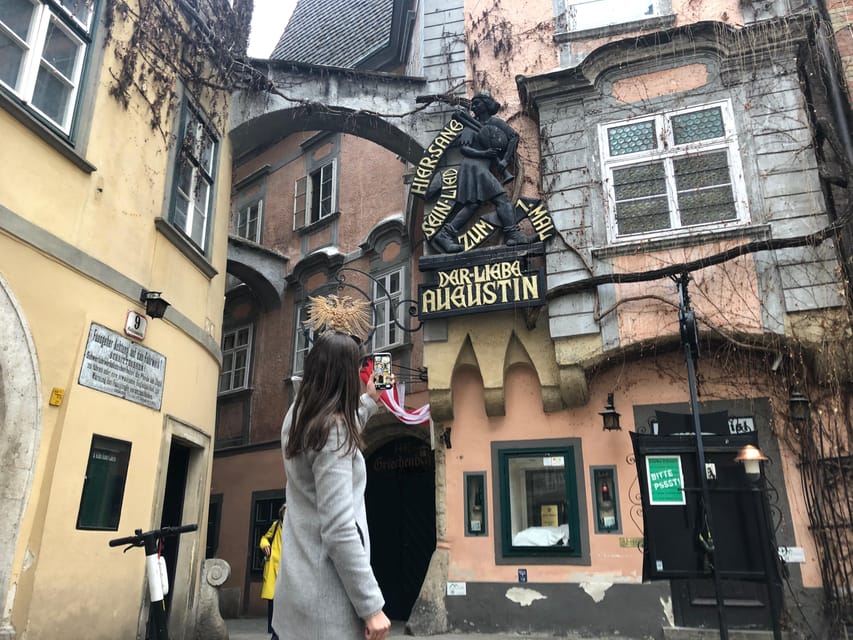
The most myth-driven highlight is the story of the Basilisk, including who killed it and the history behind it. Legends like this are fun because they add color to a city, but they can also feel like trivia if you don’t understand where they connect.
Here, the riddle format helps. Instead of hearing the Basilisk story in the abstract, you encounter it as part of your route, woven into the streets you’re actually walking. That makes the legend feel anchored rather than random.
If you enjoy dark fairy-tale energy but still want your facts to have a street-level connection, this is a good stop to focus on. Take your time with the audio there, and once you learn the answer to who killed the Basilisk, look around the nearby area with fresh eyes.
Price and value: is $23 worth a 1.5 to 2 hour audio hunt?
At $23 per person, you’re paying for a self-guided route, the app experience, and audio guidance in English and German. For a 1.5 to 2 hour walk that covers multiple named sights, that price can be a solid value if you like learning by doing.
What makes it good value is control. You can start and pause, you can spend extra time if something catches your interest, and you can repeat the experience as long as it stays within the valid 1 month window. That flexibility is hard to get with traditional guided tours, especially if your Vienna schedule is still fluid.
Is it the best choice if you want a hands-on guide? Probably not. This is not about a person meeting you on the street and answering questions. It’s about you using your phone and the audio to unlock the route at your pace.
Who this Vienna riddle walk suits best
This tour is built for explorers and adventurers of all ages and it works for local tourists and families with children from 6 years. That age guidance matters. The route is not about museum galleries and long sitting. It’s about street-level discovery and a rhythm that kids can follow.
It’s also well-suited for first-timers who want a smart orientation through the center. You end at Freyung, you pass recognizable points like Schwedenplatz and Hoher Markt, and you also get story-driven detours into alleys that make the city feel deeper.
If you’re a regular Vienna visitor, it still makes sense because you get pointed facts and legends tied to specific locations. It can refresh your understanding without forcing you to commit to a full guided day.
Two caution flags to take seriously:
- It is listed as not suitable for visually impaired people.
- It’s described as wheelchair accessible, but also listed as not suitable for wheelchair users. If wheelchair use is part of your plan, check directly with the provider before booking so you don’t get stuck with an unpleasant surprise.
Should you book this CityRiddler riddle tour?
I think this is a good booking when you want a Vienna walk that feels more like a story game than a checklist. If you like street legends, symbolic details like the clock, and the idea of learning why Blutgasse has its name, you’ll probably enjoy how the audio nudges you from clue to clue.
You might want to skip it if you strongly dislike phone-based navigation or if your group needs step-by-step human guidance. And if you need the highest level of accessibility support, you should verify the suitability question in advance due to the mixed notes.
If you can handle a charged smartphone, comfortable shoes, and 1.5 to 2 hours of walking, this tour is an efficient way to see Vienna’s city center while picking up the kind of specific stories you cannot Google at a glance.
FAQ
Where does the tour start and where does it end?
You start at Annagasse, a side street of Kärntner Straße, and you end at Freyung.
How long is the riddle tour?
The walking experience takes about 1.5 to 2 hours.
Is this tour self-guided or do I meet someone?
It is self-guided with the CityRiddler app, so there is no person waiting at the meeting point.
What do I need to bring?
Bring a fully charged smartphone and water.
Which languages are available?
The audio guide is available in English and German.
Do I have to finish in one go?
No. You can start and pause at any time, then continue whenever you want.
How much does it cost?
The price listed is $23 per person.
Is it wheelchair accessible?
The activity info says wheelchair accessible, but it is also listed as not suitable for wheelchair users. It’s worth confirming with the provider before booking if you use a wheelchair.
What if my plans change?
You can cancel up to 24 hours in advance for a full refund. The tour also offers reserve now and pay later, so you can keep your plans flexible.
Latest Additions
- Wachau Valley Private Wine Tour with Tasting and Gourmet Lunch
★ 5.0 · 1 review - Vienna: Danube Valley Tour with Melk, Dürnstein with wine tasting and boat.
★ 5.0 · 1 review - Private city tour in Vienna
★ 5.0 · 1 review - Hallstatt Small Group Day Trip from Vienna
★ 3.0 · 1 review - Inside Freud’s Mind: Self-Guided Mystery Walk in Vienna
★ 4.0 · 1 review - Private Transfer from Vienna to Prague
★ 5.0 · 1 review - Vienna’s Christmas Market Magic Tour
★ 5.0 · 1 review
Tours, compared.

Schönbrunn Palace & Gardens Skip-the-Line Tour
Read our review →

Skip-the-Line Sisi Museum, Hofburg and Gardens Tour
Read our review →
Skip-the-Line Schönbrunn Palace & Gardens Tour
Read our review →
Guided Walking Tour of City Center Highlights
Read our review →
Hop-On Hop-Off Sightseeing Bus Tour in 19 Languages
Read our review →