Reviewed · CITY TOURS
Panoramic Vienna City Tour Passing by the Most Famous Landmarks
Vienna reveals itself fast on this one-hour loop. This private panoramic tour is built around the big exteriors, so you get a clean sense of where everything sits, and you leave with a plan for what to see next.
I love the tight timing and smart route, since it strings together the Hofburg area, the Ringstraße power belt, and the arts district without making you drag your feet. I also love the human touch from guides who get praised by name, including Constanze for warmth and Hannah for being fun and ready with answers.
The main drawback is the tradeoff you expect from a 1-hour panorama: you see the sights and their details, but you will not have time for deep, inside-the-building visits at each stop.
In This Review
- Highlights to Spot in the First Hour
- Why This One-Hour Vienna Panorama Works So Well
- Price and Group Size: What You Actually Get for $212.93
- The Start at Führichgasse 8, 1010 Wien, and the Pace You Should Expect
- Hofburg Palace: Where Vienna’s Imperial Core Still Breathes
- Maria Theresa, Franz Joseph, and the Perfect Museum Face-Off
- Natural History Museum Vienna: More Than a Pretty Facade
- The Ringstraße Power Belt: Parliament, Burgtheater, City Hall, University
- A Quick Stop with Big Vienna Energy: The Famous Café Years
- Spanish Riding School and the Hofburg Connection
- Austrian National Library: 12 Million Reasons to Care
- Albertina: Art Through Prints, Drawings, and Line Work
- Vienna State Opera and Musikverein: Two Different Kinds of Musical Power
- Karlskirche at Karlsplatz: Baroque Finish and a Visual Reset
- Should You Book This Panoramic Vienna City Tour?
- FAQ
- How long is the panoramic Vienna city tour?
- What languages is the tour offered in?
- How much does the tour cost?
- Is the tour private?
- Where do we meet and where does it end?
- Will I get a mobile ticket?
- Is the tour near public transportation?
- Can I cancel if my plans change?
Highlights to Spot in the First Hour
- Führichgasse start near public transport, easy to plug into your day
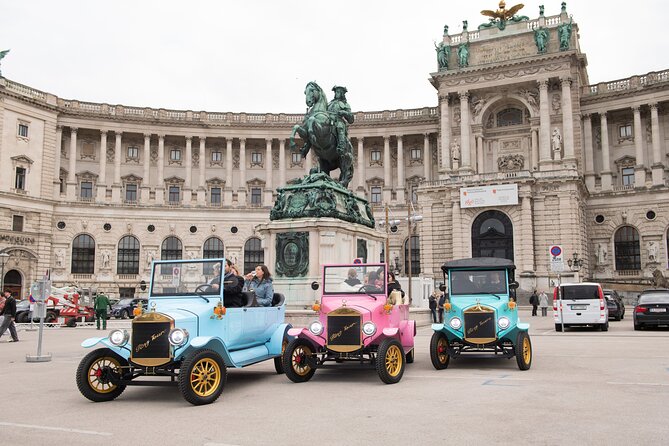
- Hofburg to Maria-Theresien-Platz framing, with the Maria Theresa monument and two museum facades facing off
- Ringstraße classics in sequence, including Parliament, Burgtheater, City Hall, and the University of Vienna area
- Café culture stop with a startling list of intellectuals, plus tarot game references like Tapp Tarock
- Arts and music landmarks in one sweep, from the State Opera to the Musikverein
- Karlskirche baroque moment at Karlsplatz for a visual “bookmark” at the end of the loop
Why This One-Hour Vienna Panorama Works So Well
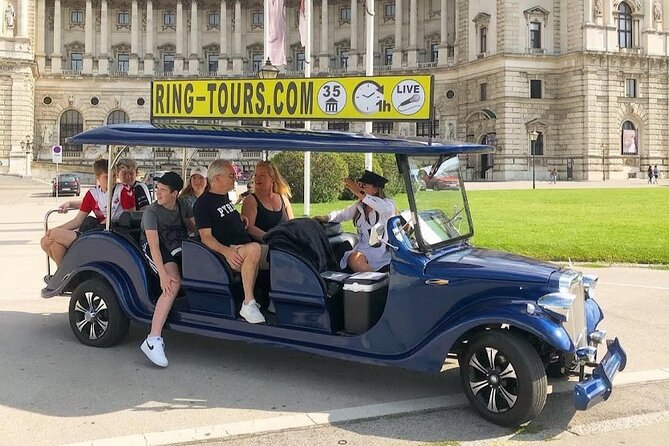
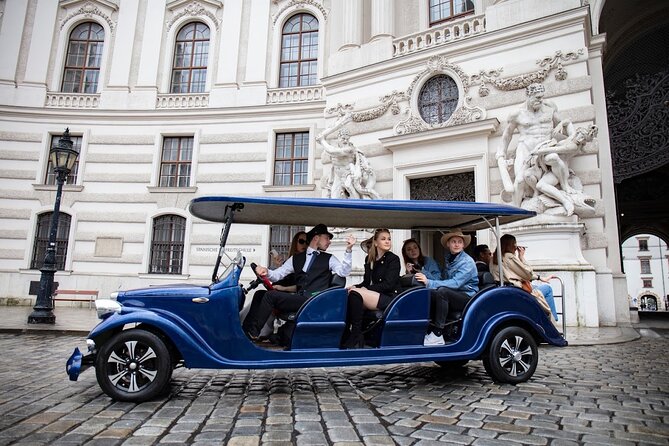
This tour is designed for orientation. Vienna can feel grand and slightly spread out, so the best first move is learning the geography. In about an hour, you get a guided “map lesson” from the inside of a car, with the Ringstraße landmarks and major cultural buildings sliding past in a logical order.
The second reason I like this format is that it focuses on the most recognizable faces of the city. You will see the Hofburg complex and the Maria Theresa monument area, then pivot into the civic and cultural sweep that makes Vienna feel like a capital built for performance, scholarship, and state ceremony.
Because the tour is private for your group of up to 7, it is easier to ask small questions on the spot. That matters when you are trying to decide what to book later, like whether you should prioritize opera, concerts at the Musikverein, or an interior museum visit.
Other ways to round out a Vienna visit

Price and Group Size: What You Actually Get for $212.93
The price is $212.93 per group, for up to 7 people. That structure is key. If you travel with 2 to 4 people, the cost per person will be higher than if you fill the group, but you are still paying for a private, guided loop rather than a bigger, less personal bus experience.
Think of the value like this: one hour of guided routing can save you hours of guesswork. You will understand where major landmarks cluster, and you will know which areas you want to revisit on foot later. That planning value is real in Vienna, where a “nearby” sight can still mean a meaningful walk or tram hop.
A small practical point: the tour uses a mobile ticket, which is convenient when you are moving quickly between places. You also get the reassurance that confirmation is sent at booking, and it runs in English.
The Start at Führichgasse 8, 1010 Wien, and the Pace You Should Expect
Your meeting point is Führichgasse 8, 1010 Wien, and the tour ends back there. It is close to public transportation, which helps if your morning started elsewhere in the city.
In terms of pace, the tour is short: about 1 hour. That means the guide will do what good city guides do in Vienna, they connect big buildings to the human stories behind them, then keep the line moving so you cover a lot without feeling rushed every minute. One detail I like from the experience pattern: people mention a walk, which suggests you are not only staring out the window the whole time, but you are still not signing up for a long walking day.
So come with a mindset of discovery, not completion. This is a fast scan, then a choose-your-own-adventure after.
Hofburg Palace: Where Vienna’s Imperial Core Still Breathes
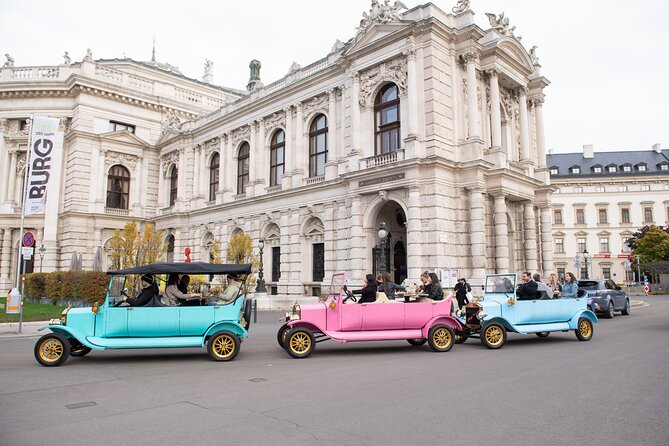
The first major stop is the Hofburg, the former principal imperial palace of the Habsburg dynasty. It was built in the 13th century by Ottokar II of Bohemia, and then expanded repeatedly over time. Even if you know Vienna’s “big palaces,” the Hofburg matters because it was the imperial winter residence, while Schönbrunn served as the summer escape.
What you will feel at the Hofburg is scale and continuity. The building is not one single instant in history. It is many additions stacked into one strong civic presence, which is why it works so well as a starting anchor for the rest of the tour.
If you like your landmarks with context, this stop is a good warm-up: you hear why the Habsburgs mattered to Vienna, and you start seeing the city’s later developments as consequences of that long reign.
Beyond the palaces, the city keeps its own rhythm of coffee, concerts, and day trips nearby.
- Vienna: Vivaldi’s Four Seasons Concert in Karlskirche★ 4.7 · 14,951 reviews
- Vienna: Schönbrunn Palace & Gardens Skip-the-Line Tour★ 4.7 · 7,739 reviews
- Vienna: Light of Creation Votive Church Immersive Light Show★ 4.8 · 6,779 reviews
- Vienna Spanish Riding School Guided Tour★ 4.7 · 6,765 reviews
Maria Theresa, Franz Joseph, and the Perfect Museum Face-Off
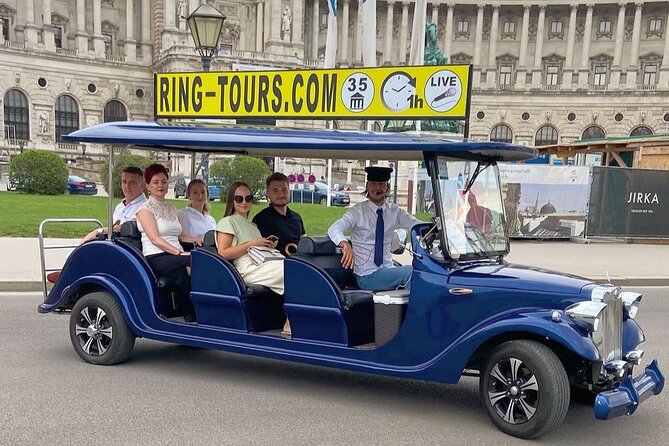
Next up is the memorial to Empress Maria Theresa, who lived from 1717 to 1780. Her monument took a little longer than other memorials after reigns ended, and it was unveiled in 1888 by one of her successors, Franz Joseph.
The late 19th century was also a time of construction, as architects and planners used space freed up by the removal of the city fortifications. That is why the area feels so planned, with wide sight lines and major institutions placed deliberately.
A standout visual here is Maria-Theresien-Platz, where the Kunsthistorisches and Naturhistorisches museums face each other across the square. Even when you are only passing by, you get that “this is meant to be seen together” feeling. It is a nice reminder that Vienna often designs for the process of looking.
This is also where your guide’s stories can do a lot of work. The point is not just that Maria Theresa is famous, but that she inherited Habsburg lands in a precarious position and turned them into something more successful. That kind of leadership detail helps the monument make sense rather than just look impressive.
Natural History Museum Vienna: More Than a Pretty Facade
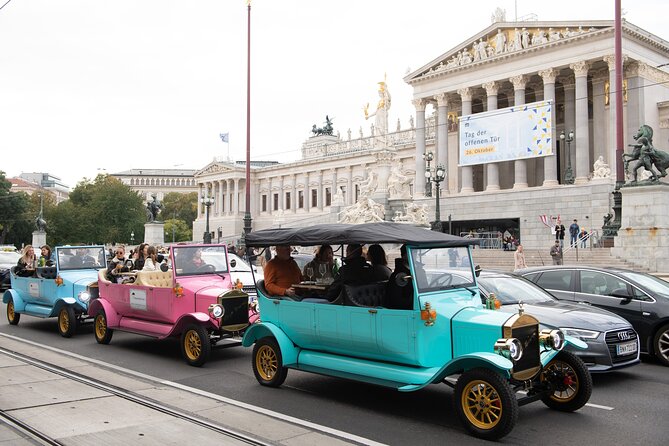
The Natural History Museum Vienna is one of the largest natural history museums in Austria, and it is also a non-university research institution. That double role matters. It is not only a place for visitors to admire, it is described as an important center of excellence for natural sciences.
So when you see the building from the outside, you can think “museum plus research engine,” not just “tour stop.” It is a useful distinction in Vienna, where several institutions are both public-facing and academic.
In an hour-long panorama, you will not have time to tour everything inside. But knowing the museum’s research identity gives you a reason to return later if that theme interests you.
The Ringstraße Power Belt: Parliament, Burgtheater, City Hall, University
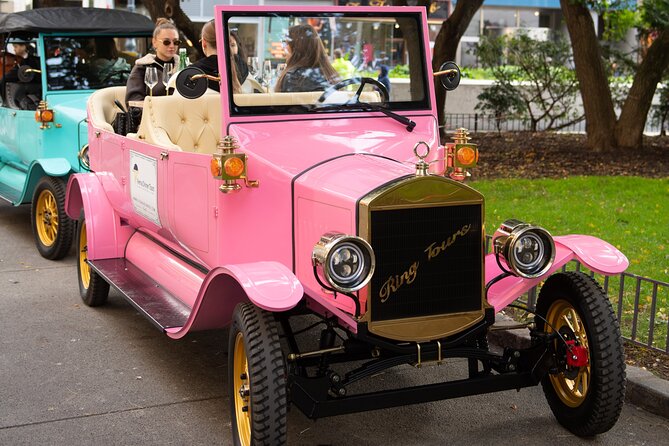
Vienna’s Ringstraße is where the city signals its status. Your tour threads through several major civic and cultural buildings that show different sides of power: government, performance, administration, and education.
First is the Austrian Parliament Building, the meeting place of the two houses of the Austrian Parliament. It is on the Ringstraße, near Hofburg Palace and the Palace of Justice, so the location itself ties it back into the broader seat-of-government feel.
Then you pass the Burgtheater Court Theater, originally known as K.K. Theater an der Burg and later K.K. Hofburgtheater. It is the national theater of Austria and is described as the most important German-language theater, one of the most important theaters in the world. Even if you are not a theater person, that is the kind of statement that tells you Vienna takes performing arts seriously as national identity, not just entertainment.
Next is the Vienna City Hall, a Gothic Revival building designed by Friedrich von Schmidt and constructed between 1872 and 1883. City Hall architecture is a big clue about civic pride, and the Gothic Revival look signals ambition and permanence.
Finally, you reach the University of Vienna area. Founded by Duke Rudolph IV in 1365, it is the oldest university in the German-speaking world and among the largest institutions of higher learning in Europe. When you connect that age to the 19th-century Ringstraße build-up, you see how Vienna layered institutions over centuries.
This whole section is why the panorama is worth doing early. It compresses the mental map you need for later, when you start choosing between museums, concerts, and lectures, all in different parts of the center.
A Quick Stop with Big Vienna Energy: The Famous Café Years
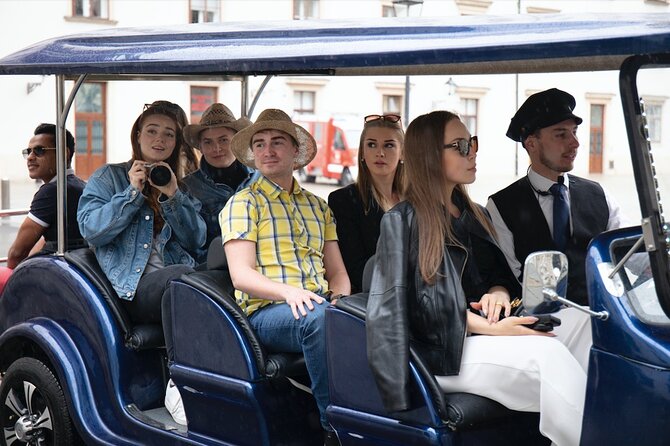
One of the most memorable pieces of the route is a café with roots going back to 1876. By the late 19th century, it became a key meeting place for the Viennese intellectual scene.
What makes this stop useful is the list of names linked to the café culture: Peter Altenberg, Theodor Herzl, Alfred Adler, Egon Friedell, Hugo von Hofmannsthal, Anton Kuh, Adolf Loos, Leo Perutz, Robert Musil, Stefan Zweig, Alfred Polgar, Adolf Hitler, and Leon Trotsky. The dates even tighten the realism, with January 1913 mentioned as having patrons including Josip Broz Tito, Sigmund Freud, and Stalin.
Tarot games also enter the story, with regular play of Tarock family games, and Tapp Tarock described as especially popular between the wars.
You do not need to agree with every person mentioned in order to appreciate what the detail tells you about Vienna. The point is that ideas mixed in public spaces here. If you enjoy intellectual history, this stop may be the one you remember most, even if it is just a quick glance on a panorama route.
Spanish Riding School and the Hofburg Connection
The Spanish Riding School is an Austrian institution in Vienna devoted to classical dressage and the training of Lipizzaner horses. It is tied directly to the Hofburg for performances, which is why this stop fits naturally into your imperial starting point.
If you love horses or you love old traditions, this is a strong “Vienna still does this” moment. You also get the note that leading horses and riders periodically tour and perform worldwide, so the brand of the school is not trapped inside Vienna.
In a short tour like this, you are not learning every technical detail. You are learning what makes the institution culturally significant, and why it is worth prioritizing if you want to see a living tradition rather than only stone and monuments.
Austrian National Library: 12 Million Reasons to Care
The Austrian National Library is described as the largest library in Austria, with more than 12 million items across its collections. It is located in the Neue Burg Wing of the Hofburg, right in the same imperial complex zone you started with.
Since 2005, some collections have been relocated within the Baroque structure of the Palais Mollard-Clary. That detail matters because it shows the library is both a historical monument and a working institution adapting over time.
From a traveler perspective, this stop is a reminder that Vienna is not only about sightseeing. It is also about scholarship and documents. If you like libraries, archives, and the feel of serious study, you now have a reason to build a time slot for it.
Albertina: Art Through Prints, Drawings, and Line Work
The Albertina is a museum in the Innere Stadt with a standout claim: one of the largest and most important print rooms in the world. It houses about 65,000 drawings and about 1 million old master prints, plus modern graphic works, photographs, and architectural drawings.
This is the kind of museum that suits a certain mood. If you like seeing art in smaller, precise formats, prints and drawings let you slow down in a way that paintings sometimes do not. And since your tour is an hour, you are likely seeing it from the outside, then deciding later if it deserves an interior visit.
Even if prints are not your thing, the sheer scale of the print room gives you a useful lens. You can think of the Albertina as a place to see “ideas made visible” through line work.
Vienna State Opera and Musikverein: Two Different Kinds of Musical Power
The Vienna State Opera is a historic opera house and opera company based in Vienna. The venue seats 1,709 people and is described as a Renaissance Revival building. It was also the first major building on the Vienna Ring Road, which ties it right back to the Ringstraße theme of prestige and civic planning.
Then comes the Wiener Musikverein, home of the Vienna Philharmonic. The building opened in 1870 and is a concert hall that defines Vienna’s sound identity for many visitors. Even if you never attend a formal concert during your trip, knowing where this tradition lives helps you understand why Vienna has a global reputation for classical music.
This is a practical segment too. If you are trying to choose between opera tickets and a concert at the Musikverein, you can use this panorama to decide what fits your schedule and your taste.
Karlskirche at Karlsplatz: Baroque Finish and a Visual Reset
The final stop listed is Karlskirche, a Baroque church dedicated to Saint Charles Borromeo, a key figure of the Counter-Reformation. It sits at Karlsplatz on the border of Wieden and the Innere Stadt, which helps it serve as a visual reset point after all the civic and cultural buildings.
Even on a quick pass, churches like this tend to stick in your brain because Baroque design creates drama through shape and light. If you want one last postcard-worthy moment that feels distinct from the opera and museum vibe, this is a strong ending.
Should You Book This Panoramic Vienna City Tour?
If you are in Vienna for a first time, or you only have a tight schedule, I think this is a smart booking. It is private, it runs in English, and the one-hour format gives you instant orientation while still packing in major sights like Hofburg, Maria-Theresien-Platz, Parliament, Burgtheater, City Hall, the University of Vienna zone, the Spanish Riding School, the National Library area, the Albertina, the State Opera, the Musikverein, and Karlskirche.
Book it if you want a quick guided scan and a shortlist for what you should return to later. It is also a good choice if you prefer not to spend the whole day deciding routes on your own, because the guide work translates buildings into connections you can use.
Skip it if your main goal is interior time. This is a panorama loop, so plan to add separate museum visits or ticketed performances if you want to go beyond exterior viewing.
And if plans are uncertain, you can cancel for a full refund up to 24 hours before the experience starts.
FAQ
How long is the panoramic Vienna city tour?
It is about 1 hour.
What languages is the tour offered in?
The tour is offered in English.
How much does the tour cost?
It costs $212.93 per group for up to 7 people.
Is the tour private?
Yes. It is a private tour or activity, and only your group participates.
Where do we meet and where does it end?
You start at Führichgasse 8, 1010 Wien, Austria, and the activity ends back at the meeting point.
Will I get a mobile ticket?
Yes, the tour includes a mobile ticket.
Is the tour near public transportation?
Yes, it is near public transportation.
Can I cancel if my plans change?
Free cancellation is available, and you can cancel up to 24 hours in advance for a full refund.
Latest Additions
- Wachau Valley Private Wine Tour with Tasting and Gourmet Lunch
★ 5.0 · 1 review - Vienna: Danube Valley Tour with Melk, Dürnstein with wine tasting and boat.
★ 5.0 · 1 review - Private city tour in Vienna
★ 5.0 · 1 review - Hallstatt Small Group Day Trip from Vienna
★ 3.0 · 1 review - Inside Freud’s Mind: Self-Guided Mystery Walk in Vienna
★ 4.0 · 1 review - Private Transfer from Vienna to Prague
★ 5.0 · 1 review - Vienna’s Christmas Market Magic Tour
★ 5.0 · 1 review
City Tours, compared.
Guided Walking Tour of City Center Highlights
Read our review →
Guided Walking Tour of City Highlights & Hidden Gems
Read our review →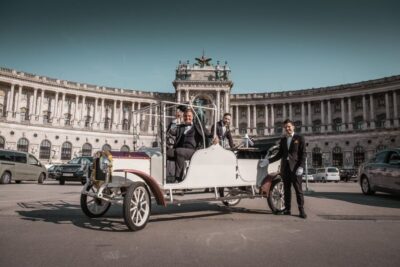
City Sightseeing Tour in an Electro Vintage Car
Read our review →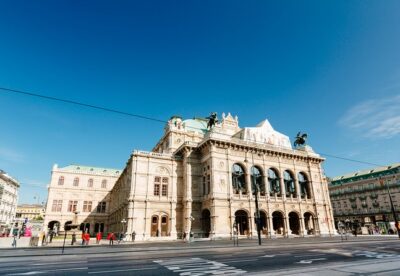
Skip-the-Line Schonbrunn Palace Guided Tour and Vienna Historical City Tour
Read our review →