Reviewed · TOURS
Gems of Vienna-Tour
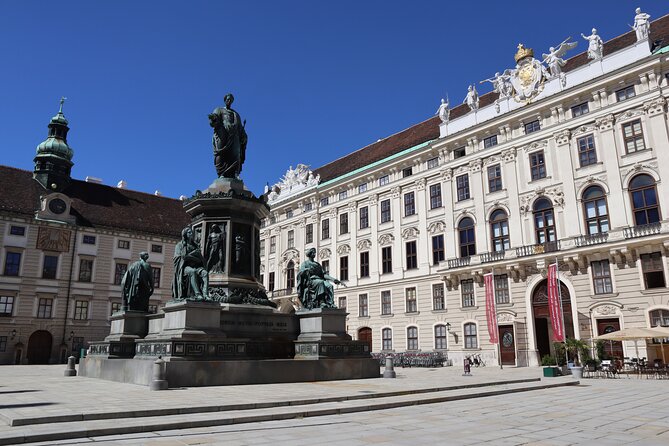
Time-travel in a simple walk. This small-group Vienna tour uses a licensed guide to point out clues from Rome through the Belle Epoque as you wind through the historic center and end up in places most people miss.
I also like how personal it feels, with a cap of 10 people, so questions stay easy and the pace stays human. The highlight is that you are not just looking at famous facades, you get to hear how different eras left their traces, including a secret courtyard and hidden passages.
One consideration: it is about 2 hours, so it is built for a smart overview, not a slow, deep museum-style experience of any single site.
In This Review
- Key Points to Know Before You Walk
- A 2-Hour Time Capsule Walk Through Vienna’s Center
- Starting at St. Stephen’s Cathedral, Then Walking Without Getting Lost
- Traces of Ancient Rome to Belle Epoque, How the City’s Timeline Shows Up
- Late Middle Ages Church Stop, Why It Adds More Than Another Photo Op
- Secret Courtyard and Hidden Passages, the Moment Vienna Feels Alive
- The Guide Factor, Including Lisa Marie’s Mentioned Style
- Price and Value at $41.70 for a 2-Hour Guided Walk
- Timing, Comfort, and Getting the Most Out of the 10:00 am Start
- Who Should Book Gems of Vienna-Tour
- Should You Book This Vienna Walking Tour?
- FAQ
- How long is the Gems of Vienna-Tour?
- Where do I meet, and where does the tour end?
- Is the tour offered in English?
- How many people are in the group?
- Do I get a mobile ticket?
- Can I cancel for a full refund?
Key Points to Know Before You Walk
- Licensed local guide with strong storytelling that ties buildings to specific eras.
- Small group size (up to 10), which keeps the tour interactive and comfortable.
- Rome to Belle Epoque in one compact route, with stops that connect the timeline.
- Secret courtyard and hidden passages that change the way you see the center.
- Late Middle Ages church stop, which adds texture beyond the usual highlights.
- Mobile ticket and English language make it straightforward to use on the day.
A 2-Hour Time Capsule Walk Through Vienna’s Center
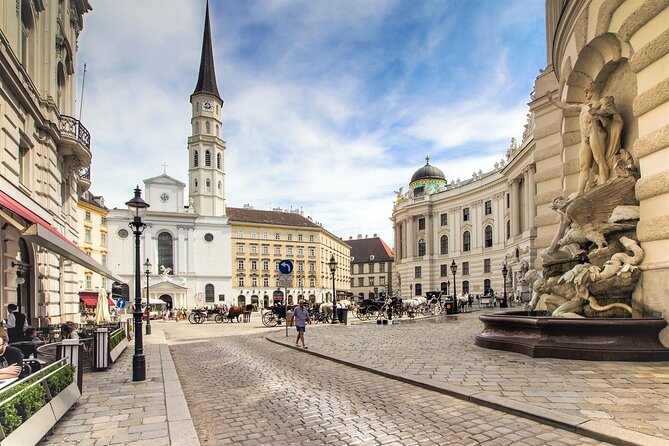
Vienna can feel like a giant photo album, all grand squares and famous landmarks. This tour is different. It is a focused walking route that helps you read the city like a timeline, not just admire it as scenery.
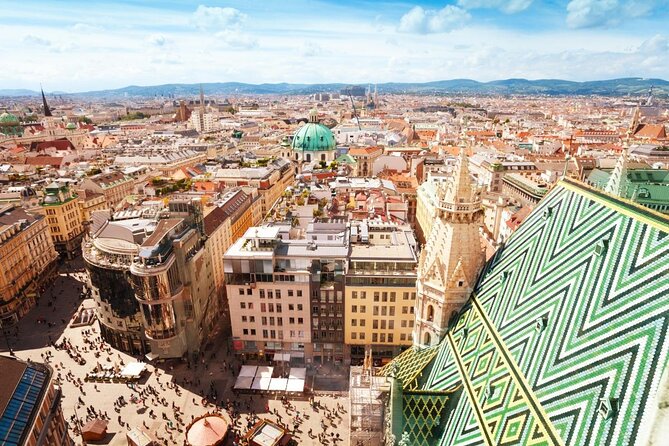
You start at Saint Stephen’s Cathedral, the classic “now we are here” point in Vienna. From there, the guide keeps steering the group toward traces of different periods, including references that reach back toward ancient Rome. That mix matters because Vienna’s center is stacked with layers. One corner can point to medieval life, while the next street suggests later grand tastes.
The small group size is a real quality-of-life upgrade. Up to 10 people means you are more likely to hear the explanations clearly, and it is easier for the guide to adjust if you have questions or if people need a moment to catch up.
And yes, you get the kind of details that make you look at a building differently afterward. Think: a church stop from the Late Middle Ages, a Belle Epoque piece, and the promise of a secret courtyard and hidden passages. Those moments shift the tour from “nice walk” to “I finally get how Vienna grew.”
Vienna is a city built for slow mornings and long evenings — plan accordingly.

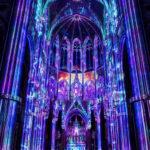

Starting at St. Stephen’s Cathedral, Then Walking Without Getting Lost
The meeting point is Saint Stephen’s Cathedral, Dom zu St. Stephan, 1010 Wien, Austria. It also ends back at that same meeting point, so you do not have to worry about a complicated finish.
Timing is also simple: it starts at 10:00 am and runs for about 2 hours. If you like to keep your mornings open for a second activity, this tour fits well. If your Vienna trip is packed, it still gives you a grounded foundation without eating the entire day.
It is also described as near public transportation, which is practical because Vienna is best navigated by tram, metro, and a short walk. You are not relying on a single bus line or a long walk from the outskirts.
In my view, starting at such a central landmark is smart. It gives the guide a natural “launchpad” for the timeline, and it helps you orient quickly. You will know where you are and where you came back to, which makes the rest of your day easier.
Traces of Ancient Rome to Belle Epoque, How the City’s Timeline Shows Up
This is where the tour earns its name. The route through the historic center is designed to show how Vienna changed across eras, including traces that go back toward Roman times.
What I like about this approach is that it teaches you a way to look around. Instead of hearing dates as isolated facts, you get the pattern: empires, styles, and street-level life leave physical marks. Some are obvious. Others take a guide to point out.
As you walk, expect the guide to connect:
- Roman times and how Vienna may have looked in earlier days
- A piece of the Belle Epoque, when Vienna leaned into elegance, refinement, and grand city culture
- Transitions between periods, not just separate “interesting stops”
This matters for your planning because it changes what you do after the tour. If you walk with a mental timeline, you will notice more on your own. A facade stops being just a facade. You start asking what era you are standing in and what features survived, changed, or got built over.
The tour is not trying to make you memorize every year. It is more useful than that. You come away with a sense of sequence, and with enough context to appreciate why the city looks the way it does.
Late Middle Ages Church Stop, Why It Adds More Than Another Photo Op
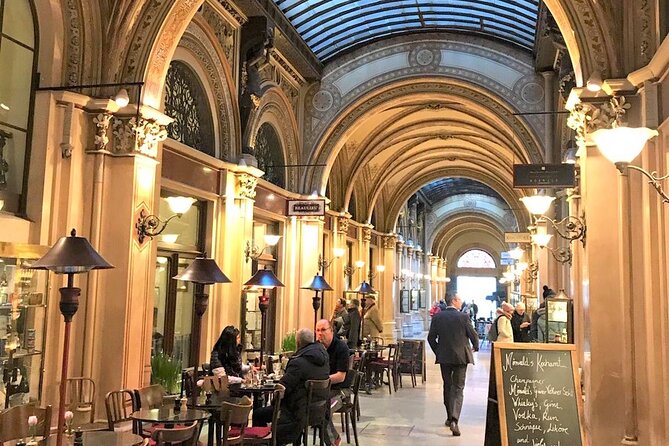
One of the itinerary highlights includes an unknown church of the Late Middle Ages. That phrasing is telling. The tour is not only built around the biggest, most crowded icons. It tries to broaden your sense of Vienna’s religious and community life during the medieval period.
I enjoy this part because Late Middle Ages sites often feel less “instagrammable,” but that is exactly why they help you understand the city. When everything is famous, the city risks becoming a blur. When you get a less predictable stop, it brings variety and realism.
Also, a church in the Late Middle Ages period is a good anchor for understanding how daily life worked. Even without a museum feel, you can sense the role such places played in community rhythm. The guide’s job is to turn that “sense” into something concrete, by connecting the building to the era’s style and function.
A minor drawback to keep in mind: because the tour is only about 2 hours, you are not going to get a slow, detailed tour of the church itself. You should treat this stop as a meaningful context moment, not an extended interior visit.
Beyond the palaces, the city keeps its own rhythm of coffee, concerts, and day trips nearby.
- Vienna: Classical Concert in the World-Famous Musikverein★ 4.6 · 6,673 reviews
- Vienna: Hallstatt Day Trip with Boat Ride Option★ 4.7 · 6,311 reviews
- Vienna: Skip-the-Line Sisi Museum, Hofburg and Gardens Tour★ 4.8 · 5,918 reviews
- Vienna: Skip-the-Line Schönbrunn Palace & Gardens Tour★ 4.8 · 5,411 reviews
Secret Courtyard and Hidden Passages, the Moment Vienna Feels Alive
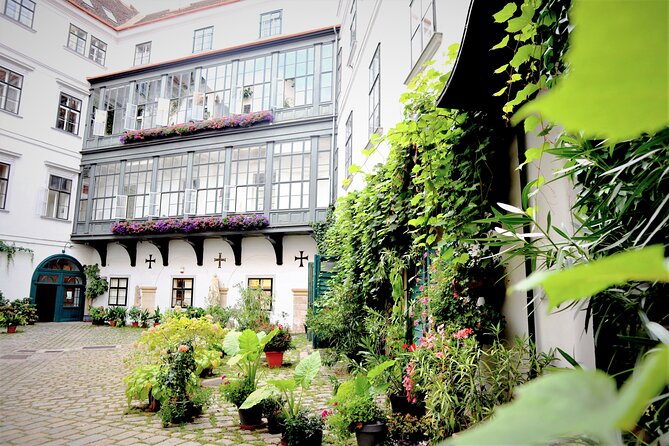
The tour includes a secret courtyard and hidden passages. That type of stop is more than a fun headline. It changes how you feel about walking in a historic center.
Vienna’s center can look orderly from the street. Courtyards and passages remind you that there is an “in-between Vienna” behind the main fronts. It is where service life happened, where connections existed, and where older structures and layouts sometimes survived beneath later changes.
If you enjoy architecture details and atmospheric spaces, this part is likely to be the highlight for you. It is also the kind of location that benefits from a guide, because you would not guess the story just by looking at an entrance.
This is also where the tour’s small-group style pays off again. In tighter spaces like courtyards, group flow matters. With up to 10 people, it is easier to keep everyone together and to hear what is being pointed out.
The Guide Factor, Including Lisa Marie’s Mentioned Style
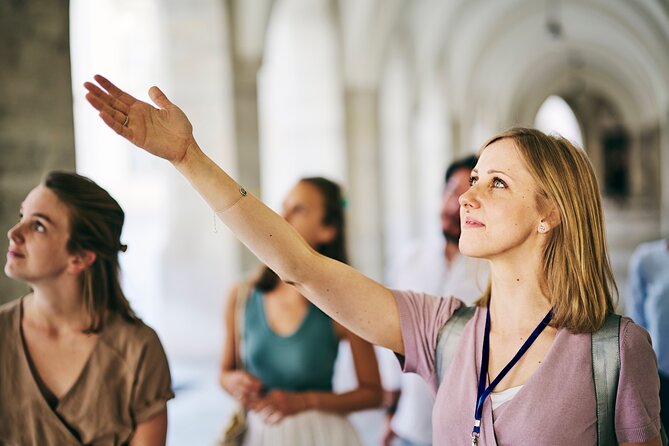
The tour is led by a local licensed guide. That is important. Licensing usually correlates with better route planning, good city knowledge, and a guide who can keep the group moving while still giving real explanations.
In the feedback, Lisa Marie is specifically called out for being both funny and well at explaining things clearly. That combo is rare. You want a guide who can handle history without turning it into a lecture. A light touch helps you remember the story because you actually enjoy listening.
If you are the type who likes to ask why a building changed, or what to look for while you are walking, this is the right kind of tour format. You are not stuck with a one-way script. The guide is there to connect the dots for you as you go.
Price and Value at $41.70 for a 2-Hour Guided Walk
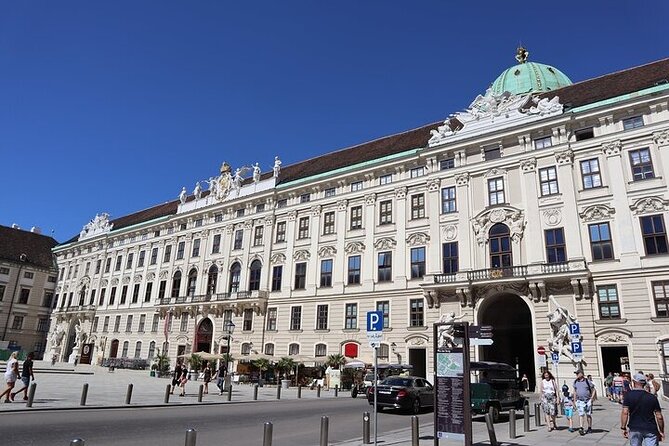
At $41.70 per person for about 2 hours, the value comes from three things working together:
- Small group size up to 10
You get more attention and a better chance to hear details.
- Licensed guide
You are paying for the explanations and the ability to spot what matters at street level.
- Admission Ticket Free is noted
If the tour’s key included elements do not require extra ticket purchases, you avoid surprises.
One thing to watch: the tour is short. So if your travel style is “I want to spend half a day inside one place,” you may feel tempted to stretch it with another stop afterward. But if you want to get oriented and learn how Vienna’s timeline works, this price feels aligned with the experience.
I also like that this is a walking tour. You see the city, not just the inside of one building. That makes the time easier to justify, especially if you plan to return to neighborhoods later on your own.
Timing, Comfort, and Getting the Most Out of the 10:00 am Start
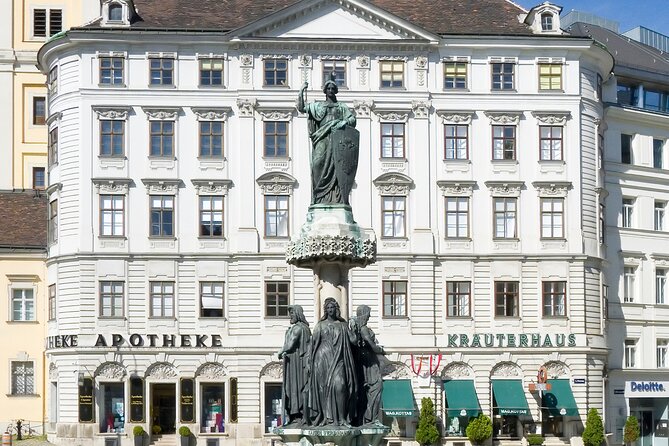
A 10:00 am start is convenient because it gives you the morning for the guided walk, then keeps the rest of the day flexible. If you are jet-lagged or want to ease into Vienna, an early tour can be a smart move.
Because it is described as a walking tour, you should plan for time on your feet. Wear comfortable shoes and bring water. Vienna walking can be deceptively tiring, even in pleasant weather, and you will enjoy the secret courtyards and passage stops more if you are not focused on foot pain.
Also, the tour is offered in English. If you are an English speaker, that removes a potential friction point. If your group includes different language levels, the guide can still run the route without needing translators, which helps keep the pacing steady.
Who Should Book Gems of Vienna-Tour
This tour fits best if you want:
- A guided overview of Vienna’s center with multiple time periods included in one loop
- A small-group format that stays interactive
- A guide-led focus on what buildings and places mean, not just where they are
It is also a nice choice if you like the practical side of sightseeing. You get a defined starting point, a clear time window, and an end back where you started. That reduces day-planning stress.
If you are a die-hard history specialist who expects long, scholarly stops and extended indoor visits, you might find the 2-hour structure too compact. But for most visitors, the breadth-to-time ratio is exactly what makes this style of tour work.
Should You Book This Vienna Walking Tour?
I think you should book Gems of Vienna-Tour if your goal is to leave Vienna’s center with a usable timeline and a better eye for what you see next. The combination of a licensed guide, a small group up to 10, and stops that include Roman-era traces through Belle Epoque, plus a Late Middle Ages church and a secret courtyard, makes it a strong orientation experience.
Skip it if you prefer long visits to a single attraction, or if you do not want to be walking for about 2 hours. But if you like smart pacing, street-level stories, and those little off-the-main-path spaces, this is a good bet for getting more out of your day.
FAQ
How long is the Gems of Vienna-Tour?
The tour lasts about 2 hours.
Where do I meet, and where does the tour end?
You meet at Saint Stephen’s Cathedral, Dom zu St. Stephan, 1010 Wien, Austria. The activity ends back at the meeting point.
Is the tour offered in English?
Yes, the tour is offered in English.
How many people are in the group?
The tour has a maximum of 10 travelers.
Do I get a mobile ticket?
Yes, the tour includes a mobile ticket.
Can I cancel for a full refund?
Yes. You can cancel for a full refund up to 24 hours before the experience’s start time. If you cancel less than 24 hours before, the amount you paid is not refunded.
Latest Additions
- Wachau Valley Private Wine Tour with Tasting and Gourmet Lunch
★ 5.0 · 1 review - Vienna: Danube Valley Tour with Melk, Dürnstein with wine tasting and boat.
★ 5.0 · 1 review - Private city tour in Vienna
★ 5.0 · 1 review - Hallstatt Small Group Day Trip from Vienna
★ 3.0 · 1 review - Inside Freud’s Mind: Self-Guided Mystery Walk in Vienna
★ 4.0 · 1 review - Private Transfer from Vienna to Prague
★ 5.0 · 1 review - Vienna’s Christmas Market Magic Tour
★ 5.0 · 1 review
Tours, compared.

Schönbrunn Palace & Gardens Skip-the-Line Tour
Read our review →

Skip-the-Line Sisi Museum, Hofburg and Gardens Tour
Read our review →
Skip-the-Line Schönbrunn Palace & Gardens Tour
Read our review →
Guided Walking Tour of City Center Highlights
Read our review →
Hop-On Hop-Off Sightseeing Bus Tour in 19 Languages
Read our review →