Reviewed · TOURS
Fall in Love with Vienna in 4h: Hidden Gems- Group Tour
Vienna can be seen fast, and still feel meaningful. This 4-hour, small-group route strings together Mozart, old passages, big churches, and key memorials, with short stops that keep the momentum. I love that it stays in the heart of the city and makes you see places I usually skip when I rush on my own.
What I like even more is the way the tour balances famous sights with calmer corners. You get a guided run-through of places like Stephansdom and the Wiener Staatsoper, plus quieter medieval streets and passages that you would likely miss without someone pointing them out. One possible drawback is that it is outdoors most of the way, so good walking shoes and smart layering matter, especially in colder weather.
You also need to accept the pace. It is only about four hours total, so each stop is brief, and the tour is designed for moderate walking and standing time rather than long museum browsing.
In This Review
- Key highlights in 4 hours
- Why this 4-hour Vienna walk is a smart first step
- Meeting at Mozarthaus Vienna, then following the Mozart thread
- Old lanes and early concert roots, from Blutgasse to Sala Terrena
- Stephansdom, Figlmüller, and the classic Vienna rhythm
- Baroque churches and medieval streets you can actually picture
- Ankeruhr, Roman remnants, and the emotional weight of Judenplatz
- Am Hof and Freyung Passage, plus finding a Last Supper copy
- Justizpalast, MuseumsQuartier, and the Habsburg gravity of Hofburg
- Burggarten and Wiener Staatsoper, finishing with music built for grandeur
- Price, included value, and what might cost extra
- What the guide does with the walking pace (and how to enjoy it)
- Who this tour fits best, and who might want something else
- Should you book Fall in Love with Vienna in 4h: Hidden Gems- Group Tour?
- FAQ
- How long is the Fall in Love with Vienna in 4h group tour?
- What time does the tour start?
- Where does the tour start and end?
- What language is the tour offered in?
- What is included in the price?
- Is there an entrance fee for the stops?
- Do I get a mobile ticket?
- What group size should I expect?
- What is the fitness level requirement?
- What is the cancellation policy?
Key highlights in 4 hours
- Mostly free stop lineup keeps costs down while still covering major sights and lesser-known corners
- Mozart start, opera finish gives you a clean storyline through Vienna’s music and power centers
- Coffee house break with apple strudel gives you a real midday reset, not just a quick photo stop
- Small group size helps you actually talk and ask questions during short stops
- Emotion and history included with stops like the Judenplatz Holocaust Memorial
- Passages and clockwork details like Freyung Passage and the Ankeruhr Clock make the city feel personal
Why this 4-hour Vienna walk is a smart first step
This is the kind of tour you book when you want to get your bearings fast. With a total duration of about 4 hours, it is long enough to feel like a mini education, but short enough to fit your day without stealing time from dinner, a museum, or an afternoon nap.
The price, $84.29 per person, feels fair when you compare it to the cost of doing paid museum days plus long taxi hops. Here, the big value is that many stops are free to enter, and the guide handles the storytelling so you are not stuck scanning plaques. You are also given a printed Vienna information package plus a city map, so you leave with tools to plan your next moves.
One more practical win: it runs in English and uses a mobile ticket. That matters because Vienna can be hectic in the middle of the day, and you do not want extra friction at the start.
Vienna is a city built for slow mornings and long evenings — plan accordingly.

Meeting at Mozarthaus Vienna, then following the Mozart thread
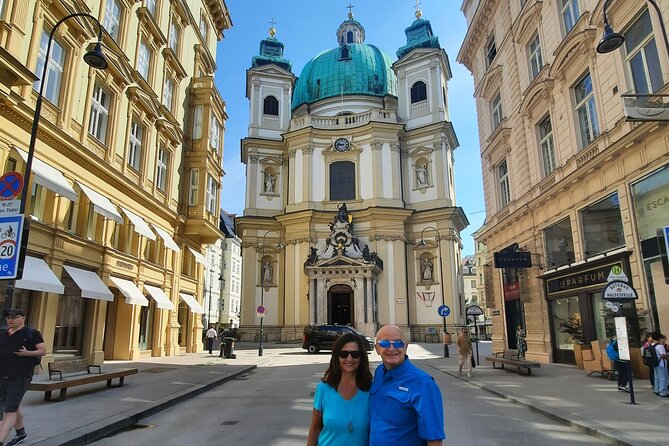
The tour starts at Mozarthaus Vienna (Mozarthaus, Domgasse 5). That matters because it sets tone right away: Vienna is not only about grand buildings, it is also about the people and ideas that shaped everyday culture.
Stop 1 is Mozarthaus Vienna, the Mozart house and apartment often called the Figaro house. Even though your time there is brief, the payoff is the perspective you get. You start with a real physical place tied to Mozart, then the route keeps pulling you forward into music culture.
From there, the tour shifts into nearby streets and architectural clues that feel like they belong to the same story. If you want the city to make sense quickly, starting in the Mozart orbit helps your brain build links instead of collecting unrelated photos.
Old lanes and early concert roots, from Blutgasse to Sala Terrena
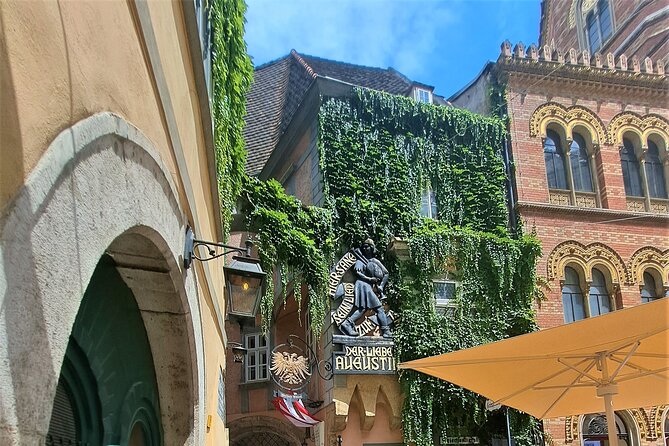
Next comes Blutgassenviertel (Blood Alley Quarter). The focus here is traditional Czech-style houses in an older section of Vienna. It is a quick stop, but the point is big: Vienna is not only all grand avenues and palaces. It has tight neighborhoods with older forms still visible.
Stop 3 is Sala Terrena im Deutschordenshaus, described as one of the first concert halls in Vienna where Mozart performed. This is one of those moments where you see how Vienna’s music life was not only a theater show. It happened in spaces tied to institutions and daily city rhythms.
What I’d watch for here is timing and temperature. Since stops are short, you want to have your questions ready. If you care about the why behind the architecture, this stretch gives you enough time to ask, then move on without killing the pace.
Stephansdom, Figlmüller, and the classic Vienna rhythm
At Stephansdom, you get the landmark everyone expects, but the tour’s edge is that you experience it as part of a route, not as a random stop. You are given a window of about 10 minutes. That is enough for a good look, quick photos, and soaking up the guide’s context without turning this into a half-hour detour.
Then the walk takes you toward Figlmüller at Wollzeile, described as the most historical schnitzel restaurant in Vienna, located in a lovely passage. This is a smart choice because it is food culture without turning the tour into a meal tour. Even if you do not eat inside on the spot, the setting in the passage helps you feel Vienna as a place of arcades, errands, and everyday stopping points.
If you plan to have lunch after the coffee break later, keep this in mind. You might decide to shift your meal timing so you do not overload on carbs and strudel too early.
Beyond the palaces, the city keeps its own rhythm of coffee, concerts, and day trips nearby.
- Vienna: Classical Concert in the World-Famous Musikverein★ 4.6 · 6,673 reviews
- Vienna: Hallstatt Day Trip with Boat Ride Option★ 4.7 · 6,311 reviews
- Vienna: Skip-the-Line Sisi Museum, Hofburg and Gardens Tour★ 4.8 · 5,918 reviews
- Vienna: Skip-the-Line Schönbrunn Palace & Gardens Tour★ 4.8 · 5,411 reviews
Baroque churches and medieval streets you can actually picture
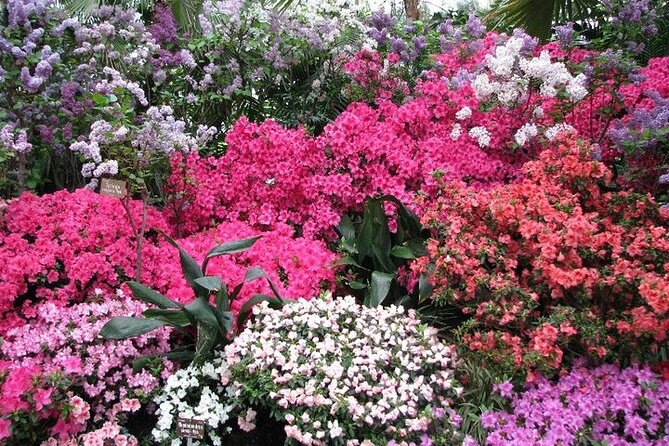
Stop 6 is the Church of the Jesuits, highlighted as one of Vienna’s most impressive baroque churches. You only get about 5 minutes, so do not expect a deep worship or museum-style visit. Instead, treat it like a guided visual moment. Your guide helps you notice the baroque style cues you might miss if you rush past the facade.
Then you move into Heiligenkreuzerhof Market (Stop 7). This stop connects a dramatic story, the suicide of the son of the last emperor, and links it to the abbey of the Holy Cross. The goal is not the drama for drama’s sake. The goal is understanding how big historical events and personal tragedies can leave fingerprints in the city layout and local memory.
Stop 8 is Greiezenkirche zur heiligen Dreifaltigkeit. Here the emphasis is on the medieval part of the city with old pedestrian streets and passages plus tales tied to the place. This is where Vienna often feels most like itself: narrow, walkable, and built for wandering without a strict itinerary.
Stop 9 is St. Rupert’s Church (Ruprechtskirche), described as the oldest church of Vienna. Even with 10 minutes, starting here is a strong way to anchor your sense of time. I like that it is not only about the newest landmark in the frame. You get an earlier layer too.
Ankeruhr, Roman remnants, and the emotional weight of Judenplatz
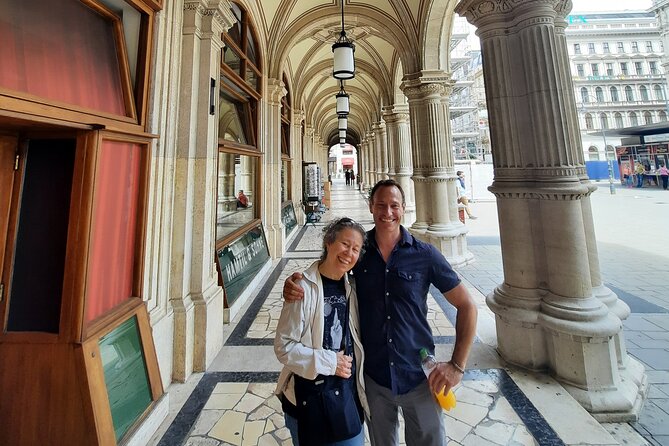
At Ankeruhr Clock (Stop 10), you are looking for a specific kind of Vienna detail, the famous clock that is said to be one of the most beautiful in the city. A clock stop sounds small, but it works because Vienna loves symbolism. You learn to notice the city’s little mechanisms and the way locals celebrate details.
Stop 11 is Hoher Markt, where you can see a Roman museum and history of Vienna. You are not promised long indoor time here, but the value is the reminder that Vienna sits on deeper layers than the Habsburg era everyone talks about.
Then comes Judenplatz Holocaust Memorial (Stop 12). This is described as the Jewish square and how WWII affected the Jewish community of Vienna. This stop gives the tour moral weight. If you prefer tours that only stay light and pretty, this moment may feel heavy. For most people, it is also the most important reason to have a guide rather than just walk by.
If you find yourself getting quiet here, that is normal. Give your mind a minute to absorb it before you move on to the older city streets that follow.
Am Hof and Freyung Passage, plus finding a Last Supper copy
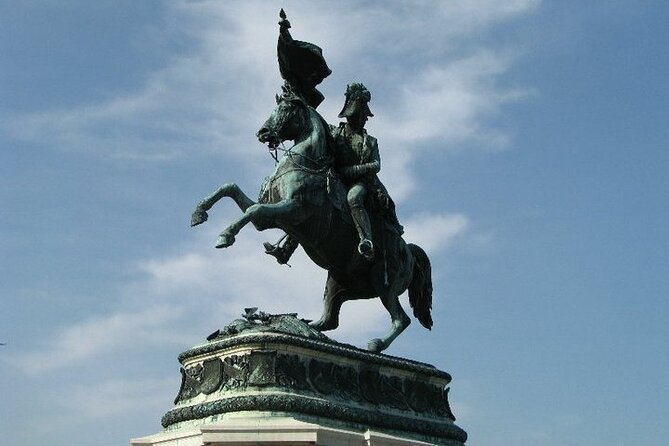
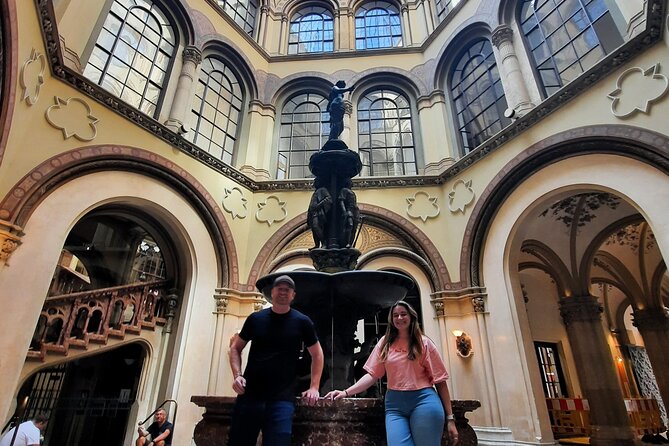
Stop 13 is Am Hof, one of the oldest parts of Vienna. Then Stop 14 is Freyung Passage, described as a wonderful passage with nearly buildings that enhance the experience. Passages are where Vienna stops being a list of big monuments and turns into atmosphere. You walk in a semi-private corridor of city life, and suddenly the city feels scaled to pedestrians.
Stop 15 is Minoritenkirche, where you can find a copy of Leonardo da Vinci’s Last Supper. Even if you have seen the original or a famous replica elsewhere, this is still a neat Vienna angle. It shows how European art moved and got reinterpreted in different places, not only kept behind museum glass.
Stop 16 is Volksgarten, described as the garden of thousands of roses. With only about 5 minutes, you are not there to read every plaque or plan a picnic. You are there to get the contrast, city intensity easing into green space and then back into architecture.
Justizpalast, MuseumsQuartier, and the Habsburg gravity of Hofburg
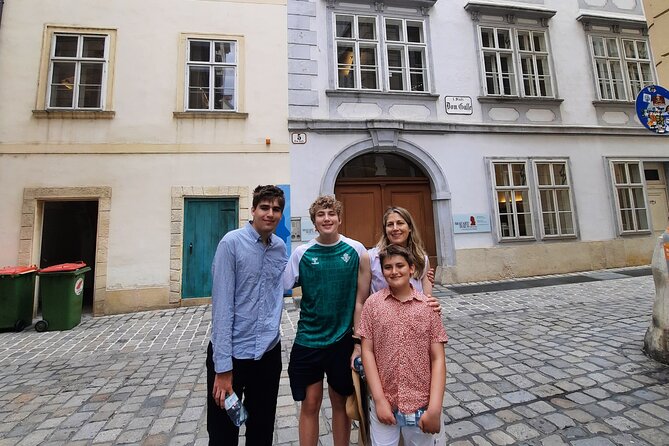
Stop 17 is Justizpalast, called one of the most impressive buildings in Vienna. The practical value of this stop is visual variety. After churches and passages, you get a large institutional building and the sense of civic power.
Stop 18 is MuseumsQuartier Wien, described as an inner yard with several interesting museums. The tour framing keeps it brief, so think of it as a signpost. If you want to go deeper later, this is exactly the place to use the printed information package and city map to choose what fits your interests.
Then Stop 19 is The Hofburg, the Habsburg palace. Even with 10 minutes, the guide should help you connect why this area is treated as Vienna’s center of gravity. It is a reminder that Vienna’s beauty is connected to serious authority and centuries of rule.
Burggarten and Wiener Staatsoper, finishing with music built for grandeur
Stop 20 is Burggarten, featuring the most photographed Mozart statue in Vienna and the Butterfly Museum. This is a clever pairing because it matches two Vienna moods. One is famous and photo-ready. The other is light and curious, even if you do not step inside.
Stop 21 ends at Wiener Staatsoper. Finishing at the Vienna State Opera gives you a satisfying bookend. You started in the Mozart house orbit, and you end at an institution that still drives the city’s identity through performance.
If you plan the rest of your afternoon, this ending location is convenient. It puts you near public transit and in an area where you can find food without crossing the whole city again.
Price, included value, and what might cost extra
Let’s do the honest value math in plain terms. For $84.29, you get:
- A 4-hour guided walk in English
- A small group format for conversation, with a maximum of 15 travelers
- A 30-minute break in a traditional Viennese coffee house, including coffee and apple strudel
- A printed Vienna information package, plus a Vienna city map
- Plenty of suggestions for what to do outside the city center, including restaurants and coffee spots
On top of that, the stops you visit are marked with Admission Ticket Free for each listed location. That is a big reason this tour can feel like a bargain compared to museum-heavy days. You are spending money mainly on the guide and the route, not constant entry fees.
The one caution is that entrance fees to museums are not included. So if MuseumsQuartier or other spots along the way call to you for a paid exhibit, you may pay extra. This is not a reason to skip the tour. It just helps you plan your budget so you do not get surprised later.
What the guide does with the walking pace (and how to enjoy it)
This type of tour lives or dies by the guide’s timing. The best part, based on the strongest feedback patterns, is how smoothly the route stays understandable. One guide name, Nicoleta, gets specific praise for making stories easy to follow and for explaining historical events in a way that lands at each corner.
That style matters for you because most of these stops are short. Your enjoyment depends on getting the meaning quickly while you are still standing in front of the building.
Here are a few ways to make the pace work for you:
- Wear comfortable shoes. Even with short stops, you are walking between 21 locations.
- If you are visiting in winter or shoulder seasons, bring warm layers. A review note mentions entering some places on the way to warm up, plus an extra break. That kind of flexibility is a major reason this style of tour stays pleasant.
- Keep your phone battery ready for photos, but do not let it eat your attention. The stories matter more than the shot.
Also, use the break strategically. The coffee house stop is long enough to reset. I’d treat it as your real meal anchor, not just a snack stop.
Who this tour fits best, and who might want something else
This tour is a great fit if you:
- Are in Vienna for a short time and want the center of gravity in one afternoon
- Like learning with a guide but still want to walk and explore
- Prefer a route that includes serious history, not just pretty buildings
- Want something family-friendly in spirit, since it emphasizes short segments and breaks rather than long stretches
It may be less ideal if you:
- Want a slow museum day with long indoor viewing
- Hate walking in cold weather or bad weather, since the experience requires good weather and you spend a lot of the time outdoors
- Want lots of time at a single site. Each stop is brief by design
Should you book Fall in Love with Vienna in 4h: Hidden Gems- Group Tour?
I would book this if your top priority is speed with substance. You get a clean circuit that moves from Mozart to the State Opera, plus practical extras like a map and a Vienna information package. The coffee and apple strudel break is the kind of included perk that makes the whole afternoon feel like it was planned, not just cobbled together.
Hold off if you are the type who needs long museum time or if your schedule is weather-fragile and you do not want to worry about outdoor walking. In that case, you might prefer a more indoor-focused option.
But if you want Vienna to make sense quickly, and you enjoy small streets, passages, clocks, and churches as much as big monuments, this is a strong pick.
FAQ
How long is the Fall in Love with Vienna in 4h group tour?
The tour lasts about 4 hours.
What time does the tour start?
The start time is 1:00 pm.
Where does the tour start and end?
It starts at Mozarthaus Vienna, Domgasse 5, 1010 Wien, and ends at Vienna State Opera, Opernring 2, 1010 Wien.
What language is the tour offered in?
The tour is offered in English.
What is included in the price?
Included are a knowledgeable guide, a group conversation format, a 30-minute coffee house break with coffee and apple strudel, a printed Vienna information package, suggestions for other places to visit, and a Vienna city map.
Is there an entrance fee for the stops?
Entrance fees to museums are not included. The listed stops are marked with free admission ticket access.
Do I get a mobile ticket?
Yes, the tour includes a mobile ticket.
What group size should I expect?
The experience is capped at a maximum of 15 travelers.
What is the fitness level requirement?
Travelers should have a moderate physical fitness level.
What is the cancellation policy?
You can cancel for a full refund if you cancel at least 24 hours before the experience’s start time. The experience may also be canceled due to poor weather, in which case you are offered a different date or a full refund.
Latest Additions
- Wachau Valley Private Wine Tour with Tasting and Gourmet Lunch
★ 5.0 · 1 review - Vienna: Danube Valley Tour with Melk, Dürnstein with wine tasting and boat.
★ 5.0 · 1 review - Private city tour in Vienna
★ 5.0 · 1 review - Hallstatt Small Group Day Trip from Vienna
★ 3.0 · 1 review - Inside Freud’s Mind: Self-Guided Mystery Walk in Vienna
★ 4.0 · 1 review - Private Transfer from Vienna to Prague
★ 5.0 · 1 review - Vienna’s Christmas Market Magic Tour
★ 5.0 · 1 review
Tours, compared.
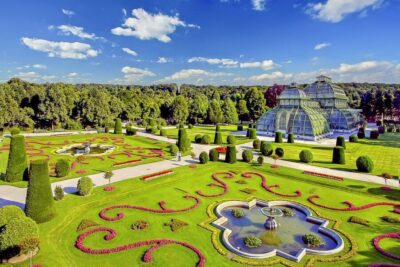
Schönbrunn Palace & Gardens Skip-the-Line Tour
Read our review →

Skip-the-Line Sisi Museum, Hofburg and Gardens Tour
Read our review →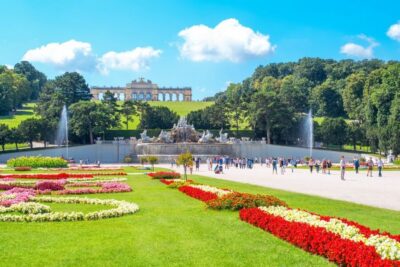
Skip-the-Line Schönbrunn Palace & Gardens Tour
Read our review →
Guided Walking Tour of City Center Highlights
Read our review →
Hop-On Hop-Off Sightseeing Bus Tour in 19 Languages
Read our review →