
Reviewed · VIENNA
‘Armenia In The Heart Of Vienna
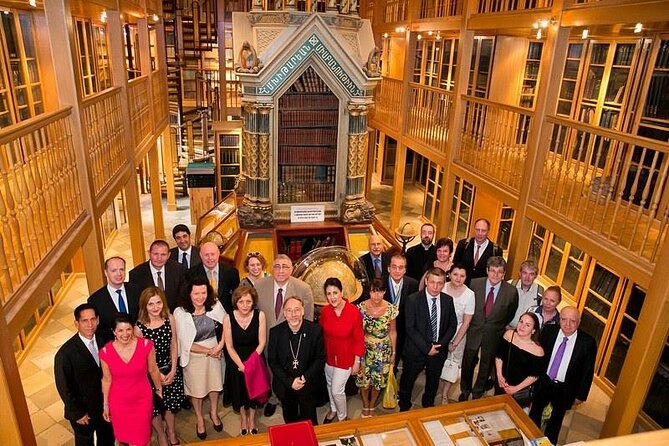
Armenian culture, right in Vienna’s 17th century halls. This 1 hour 30 minutes experience spotlights the Mekhitarist Order and its Armenian and Austrian connections, using real objects and stories to make the past feel usable in the present. I especially love how the stop centers on manuscripts and scholarship, not just a quick overview.
The second thing I really like is the Chatherine liquor portion, where taste and family history are part of the same conversation. The one drawback to think about is the tight format, so it is not a full-day Vienna immersion, and you will need to focus on what matters most to you in the museum rooms.
In This Review
- Key highlights you should know
- Armenia in Vienna’s Mekhitarist Congregation: where the story starts
- The artifacts that make the past feel real
- Understanding the Mekhitarist Order’s Armenian and Austrian connections
- Chatherine liquor: why this tasting is more than a sip
- Militarist Museum art exhibitions: what to look for in the limited time
- Timing, group size, and how to make it worth $89.36
- Who should book this and who might skip it
- Should you book Armenia In The Heart Of Vienna?
- FAQ
- Where does the Armenia In The Heart Of Vienna tour start?
- How long is the tour?
- What language is the tour offered in?
- Is admission included in the price?
- Will I receive a mobile ticket?
- How big is the group?
- Can most people participate?
- Is free cancellation available?
Key highlights you should know
- A Mekhitarist visit with centuries of Armenian scholarship in view
- Coins, manuscripts, folk costumes, rugs, books, and periodicals
- Chatherine liquor tasting, plus the taste and family story
- Art exhibitions connected to the Militarist Museum
- Small group size, up to 15 people, in English
- Admission ticket included, with a mobile ticket
Armenia in Vienna’s Mekhitarist Congregation: where the story starts
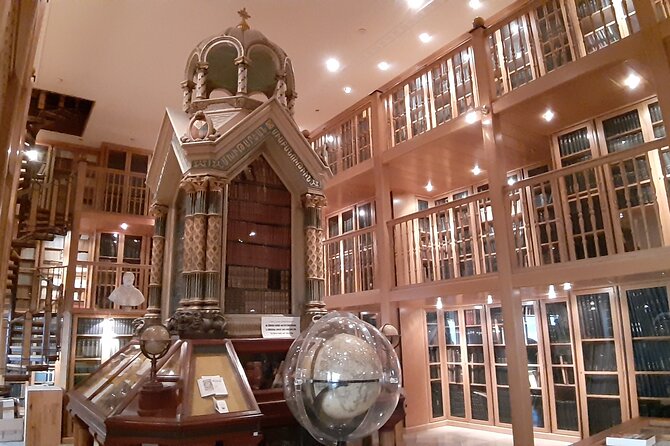
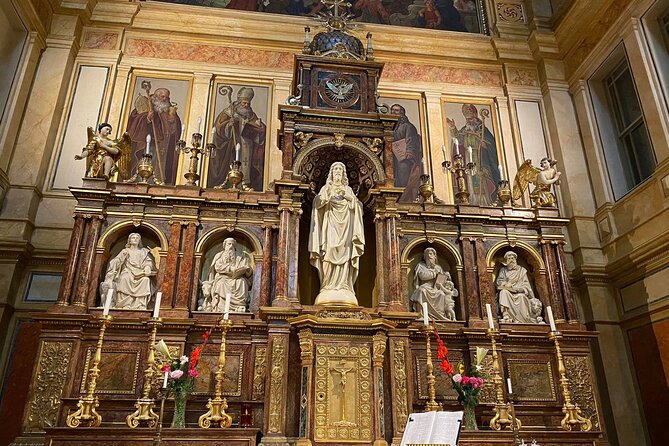
Vienna is famous for grand palaces and big-name museums. This tour takes you to a different kind of cultural landmark: the Mekhitarist Congregation in Vienna, the kind of place where books, collections, and scholarship matter as much as architecture.
The tour framing is clear. You are not just looking at objects, you’re learning how the Mekhitharist Order played a role in Armenian and Austrian legacy over nearly three centuries. The message is about intellectual work, publishing, and study, and how that effort helped shape the Renaissance of Armenian Culture in the 19th century, while also influencing Austrian culture through long-standing connections.
What I find most appealing for you is the focus on tangible proof. Instead of broad claims, you see the kinds of items a scholarly community leaves behind: manuscripts, coins, and everyday items like folk costumes and rugs. That turns Armenian cultural history into something you can point to, even if your background is brand new.
Vienna is a city built for slow mornings and long evenings — plan accordingly.


The artifacts that make the past feel real
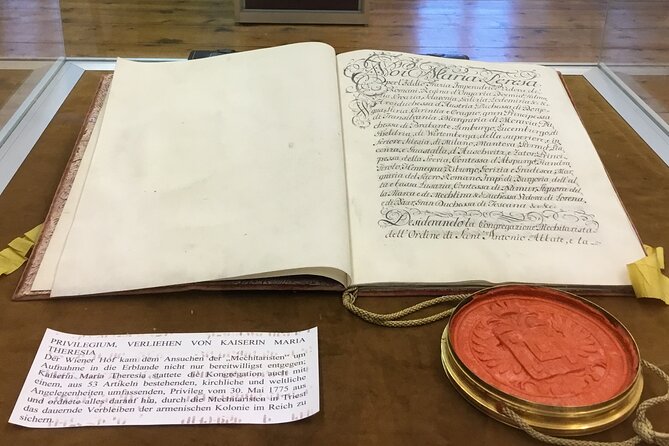
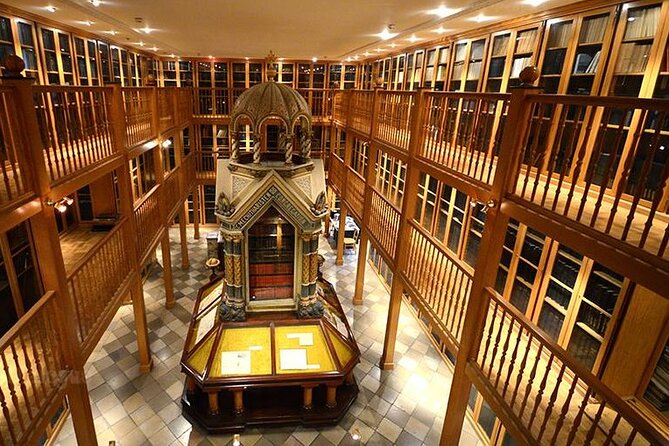
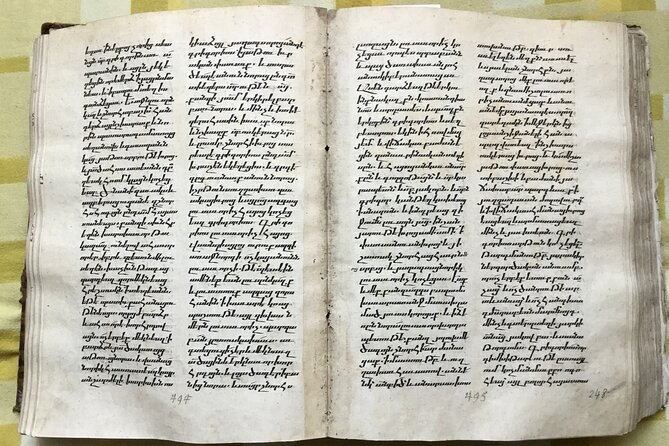
The heart of the experience is time with a collection that spans ancient and medieval material, plus more recent printed items. You’ll be looking at ancient and medieval coins, manuscripts, and also books, periodicals, folk costumes, and rugs.
If you’re the type who likes “show me” history, you’ll like this. Coins and manuscripts tend to push you to ask practical questions: Where did it come from? Who used it? What language or symbols show up? Even if you do not read everything on the page, you still get a sense of how knowledge traveled and how communities preserved identity.
And the collection is not only ceremonial. Folk costumes and rugs make culture feel lived in. Books and periodicals add a sense of continuity, because they hint at ongoing thought rather than one sealed moment in time.
Understanding the Mekhitarist Order’s Armenian and Austrian connections
A lot of cultural tours in Vienna stay focused on Vienna’s own story. This one does the opposite in a good way. It connects Armenian history and learning to Austrian legacy, and it keeps circling back to the Mekhitarist Order’s influence.
You’ll hear the idea that for close to three centuries, the order was known for intellectual and scholarly achievements. You’ll also get the 19th-century thread, where those efforts are described as playing a role in the Renaissance of Armenian Culture. There’s even a framing line about them becoming the first pioneers of Austrian culture in the Orient, which signals that the order acted as a cultural bridge, not a closed institution.
How that helps you as a visitor is simple. It gives you a reason to care about why these collections exist in Vienna at all. Instead of treating the site like a curiosity stop, you’ll see it as a crossroads shaped by people, study, and long-distance cultural exchange.
Chatherine liquor: why this tasting is more than a sip
The tour’s most memorable “sensory” element is the Chatherine liquor world, including taste, history, and family. One reason it works is that it turns something often treated as a side note, a drink, into a storytelling tool.
The feedback summarized in the tour information puts extra emphasis on the liquor tasting, with past visitors praising the quality and calling it among the best. That matters because it tells you this is not a token sample. It is meant to be part of the experience, tied to context rather than served randomly.
Also, when a tour includes both taste and family history, it usually changes how you pay attention. You’re not only asking what something is, you’re asking why it was made, who carried the knowledge, and how the flavor became part of identity. For a cultural tour, that’s a strong way to make information stick.
Practical tip for you: if you like food and drink experiences, take the liquor portion seriously. Ask questions, pay attention to the story thread, and you’ll walk away with more than a vague souvenir memory.
Beyond the palaces, the city keeps its own rhythm of coffee, concerts, and day trips nearby.
- Vienna: Classical Concert in the World-Famous Musikverein★ 4.6 · 6,673 reviews
- Vienna: Hallstatt Day Trip with Boat Ride Option★ 4.7 · 6,311 reviews
- Vienna: Skip-the-Line Sisi Museum, Hofburg and Gardens Tour★ 4.8 · 5,918 reviews
- Vienna: Skip-the-Line Schönbrunn Palace & Gardens Tour★ 4.8 · 5,411 reviews
Militarist Museum art exhibitions: what to look for in the limited time
Besides the monastery collection focus, the tour is described as including art exhibitions displayed in the Militarist Museum. That adds variety, and it helps you see how Armenian material culture can appear in an art context as well as in scholarly collections.
In practical terms, this means your “eye time” will be shared. Some of your attention will be on documents, coins, and objects. Other moments will be about exhibition presentation and the way items are grouped for viewing.
When you have only about 1 hour 30 minutes, you’ll get more from the visit if you pick one theme to watch for. For example:
- How are textiles and costume elements presented?
- Do the coins and written materials get linked through symbolism?
- Does the exhibition style make the story easier to follow?
You do not need to be an art expert. You just need to notice how the exhibition approach changes the way you interpret what you see.
Timing, group size, and how to make it worth $89.36
Price is $89.36 per person, and for many people, that is not “impulse purchase” money. The value here hinges on two things the tour description is clear about: admission is included, and the format includes multiple components in a short block of time.
Also, the group is capped at 15 travelers, which generally means you can ask questions without feeling lost in a crowd. The tour is offered in English, which makes the content easier to absorb quickly, especially for visitors who are not comfortable with museum-style translations.
The duration is about 1 hour 30 minutes, so think of it as a focused cultural appointment rather than a broad city tour. If you want Vienna’s big landmarks, you’ll still need separate time. If you want a strong Armenian cultural context in one shot, this fits well.
One more practical note: the start point is listed as Mechitaristengasse 4, 1070 Wien, and the tour ends back at the meeting point. That is convenient because you can plan your day without worrying about long transfers.
Who should book this and who might skip it

This is a great fit if you like the kind of culture you can see in objects: manuscripts, coins, and documented identity. If you’re the sort who enjoys learning how communities preserved language and culture through scholarship, you’ll feel at home here.
It also works well for food and drink fans. The inclusion of Chatherine liquor, with taste and family history, gives you an extra entry point that makes the overall story more memorable.
You might want to skip it if your ideal Vienna day is all about classic sightseeing and street-level wandering. This experience is centered on one main cultural site plus museum exhibitions, so it is less about casual roaming and more about concentrated learning.
Should you book Armenia In The Heart Of Vienna?
If you want one high-impact way to connect Armenian culture to Vienna, I think booking makes sense. The tour includes admission, a small group size, and a rare combination of scholarship-focused collections plus a tasting element that adds personality to the story.
Book it if you care about how cultures travel, how institutions preserve identity, and how real artifacts tell real stories. Skip it if you only want broad Vienna sightseeing or if you prefer experiences that run longer than 90 minutes, with plenty of breathing room to read everything slowly.
Either way, start your visit with a simple mindset: look closely at what’s in front of you, ask questions where you can, and treat the liquor portion as part of the cultural narrative, not just a free sample.
FAQ
Where does the Armenia In The Heart Of Vienna tour start?
The tour starts at Mechitaristengasse 4, 1070 Wien, Austria.
How long is the tour?
It lasts about 1 hour 30 minutes.
What language is the tour offered in?
The tour is offered in English.
Is admission included in the price?
Yes, admission ticket is included.
Will I receive a mobile ticket?
Yes, the tour offers a mobile ticket.
How big is the group?
The tour has a maximum of 15 travelers.
Can most people participate?
Yes, most travelers can participate.
Is free cancellation available?
Yes. You can cancel up to 24 hours in advance for a full refund. If you cancel less than 24 hours before the start time, you will not be refunded.
Latest Additions
- Wachau Valley Private Wine Tour with Tasting and Gourmet Lunch
★ 5.0 · 1 review - Vienna: Danube Valley Tour with Melk, Dürnstein with wine tasting and boat.
★ 5.0 · 1 review - Private city tour in Vienna
★ 5.0 · 1 review - Inside Freud’s Mind: Self-Guided Mystery Walk in Vienna
★ 4.0 · 1 review - Private Transfer from Vienna to Prague
★ 5.0 · 1 review - Hallstatt Small Group Day Trip from Vienna
★ 3.0 · 1 review - Vienna’s Christmas Market Magic Tour
★ 5.0 · 1 review