
Reviewed · CLASSICAL CONCERT TICKETS
A Self-Guided Tour of Vienna the Home of Classical Music
Mozart walks with you here, step by step. This self-guided Vienna route strings together famous stops from the Vienna State Opera to St Stephen’s Cathedral, mostly through the places tied to Mozart, plus a few big-name detours for other composers. It is a simple way to turn a normal Old Town stroll into a focused story.
I really like the built-in offline access through VoiceMap, so you can keep going without worrying as much about data. And I like that you end up with a clean, walkable loop of landmarks rather than a long transit-heavy day.
One thing to watch: the experience depends on your phone and the VoiceMap app working smoothly. In one past review, the app caused problems and drained the battery, so it is worth testing before you head out.
In This Review
- Key highlights from this Vienna classical music audio walk
- Vienna State Opera to St Stephen’s Cathedral, the route in plain terms
- Price and time: why $19.99 can feel fair in Vienna
- What you really get: VoiceMap app, offline tools, and what you must bring
- The landmark walk itself: what to notice at every stop
- Mozart-heavy focus: how that shapes your experience
- The biggest risk is the app, and how to manage it
- Who should book this Vienna classical music audio walk
- Should you book? My practical take
- FAQ
- How long is the self-guided tour?
- What language is the tour in?
- What is included in the price?
- What do I need to bring?
- Where does the tour start and end?
- Is there free cancellation?
Key highlights from this Vienna classical music audio walk
- VoiceMap offline audio and maps mean fewer internet hassles while you’re walking
- Start at the State Opera, finish at St Stephen’s for an easy Old Town arc
- Most stops tie to Mozart, with select nods to Beethoven and Vivaldi
- Clear landmark sequence helps you know what you are looking at while you walk
- Around 1 to 1 hour 15 minutes fits well between museums or dinner plans
Vienna State Opera to St Stephen’s Cathedral, the route in plain terms
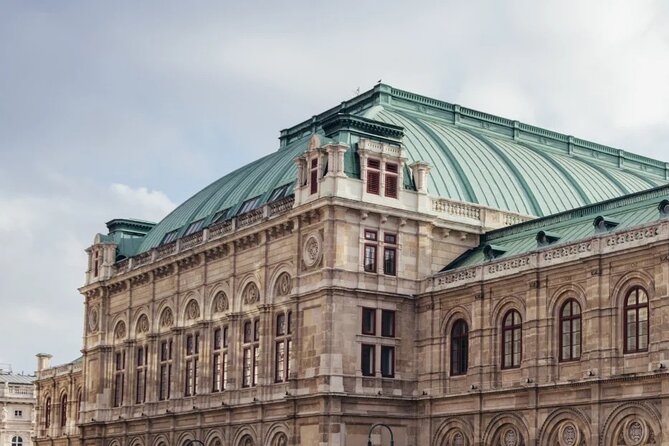
This is a self-guided walking tour that runs through Vienna’s central core. You start at Vienna State Opera on Opernring 2 and the route ends at St Stephen’s Cathedral at Stephansplatz 3. It is designed as a practical loop, not a scavenger hunt, and the listed duration is about 1 hour to 1 hour 15 minutes, depending on your pace and how often you pause for the next audio cue.
The tour is offered in English, and you get lifetime access. That matters because Vienna is not a city you fully see in one trip. If you revisit later, you can do the same walk again without paying again, or you can replay sections if a stop catches your attention more than you expected.
Also, this is a private activity, meaning your group is the only group on the experience. You are still walking on your own, but it can be a nicer setup if you do not want to share a starting moment with strangers.
Finally, it is near public transportation, which is helpful in case you want to start fresh with a quick tram or metro ride rather than crossing the city on foot.
A night of Mozart or Strauss


Price and time: why $19.99 can feel fair in Vienna
At $19.99 per person for a 60 to 75 minute route, the value mostly comes from how concentrated it is. You are not paying for a day of moving from venue to venue, plus you are not paying for entry tickets. Instead, you are paying for an audio layer that tells you what to notice as you walk between well-known points.
This is not a full museum day. You should treat it like a guided neighborhood walk with a classical music theme. If you are comfortable walking, you’ll likely feel the price makes sense because you get a guided flow right through the city center.
If you are hoping for a lot of composer variety, note that the tour leans heavily on Mozart locations. Other composers get moments, but the main thread is Mozart, so your enjoyment will depend on whether that fits what you want right now.
What you really get: VoiceMap app, offline tools, and what you must bring
This experience includes:
- Lifetime access to the tour in English
- The VoiceMap app for Android and iOS
- Offline access to audio, maps, and geodata
What is not included is just as important:
- You bring your own smartphone and headphones
That last part is a big deal. Without headphones, the audio is hard to use. And with a phone, your battery matters. One past reviewer reported that the app malfunctioned and the phone drained quickly. I cannot predict your phone’s behavior, but it’s a strong reminder to fully charge before you start, and to download or confirm offline access before you step outside.
Practical tip: before you begin, check volume and audio playback inside the app. Then do one short test walk a few steps from the start point. If the audio cuts out or the maps glitch, you will spot it before you’re committed to the route.
The landmark walk itself: what to notice at every stop
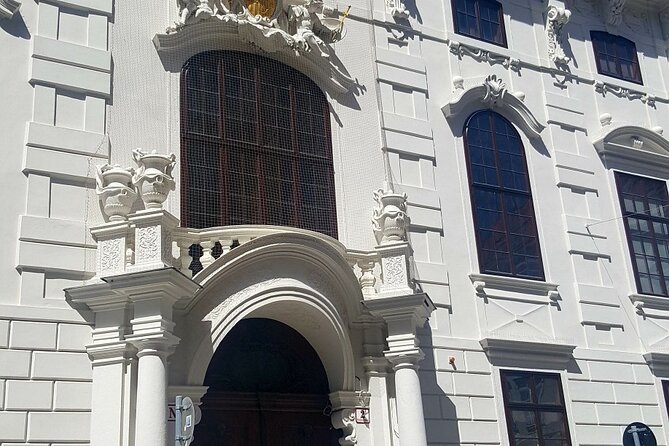
This route is built from a sequence of famous facades, squares, churches, and old-city lanes. You will be using the app to guide you from place to place, and the audio is what turns these street corners into a music story.
Vienna State Opera, start point (Opernring 2)
You kick off in front of the Vienna State Opera, one of the city’s most recognizable musical landmarks. This is a strong opening because it sets an obvious tone: you’re not just wandering, you’re starting with the big stage. Use the first minute to get your bearings and settle into the audio rhythm.
Stadtpalais Todesco
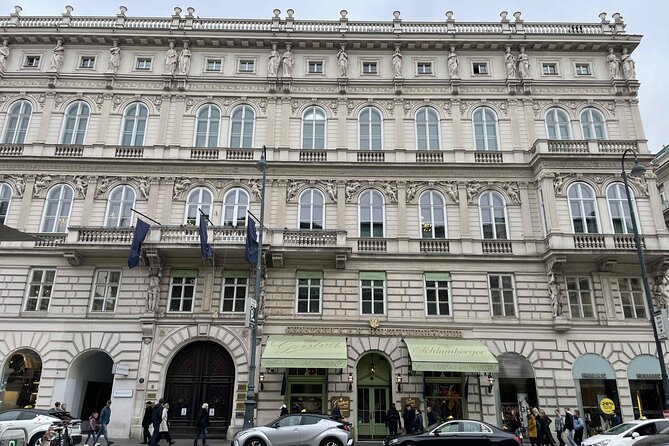
Next comes Stadtpalais Todesco, described in the tour as an exquisite building with a musical past, including stories tied to early musical prodigies. Even if you cannot see much up close from the sidewalk, you can still treat this as a cue to slow down and look for details in the architecture.
Hotel Sacher Wien and Vivaldi’s hospice site
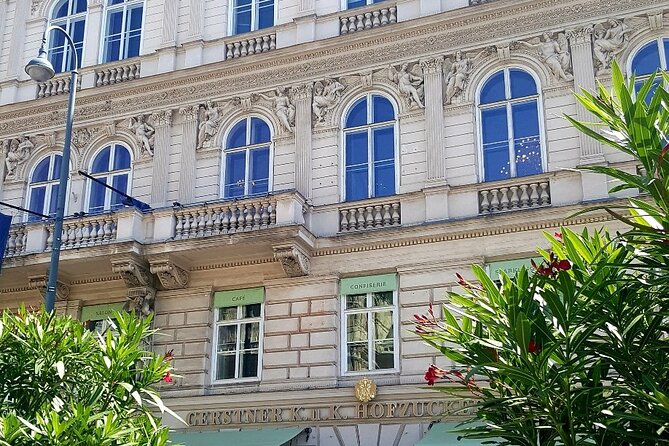
As you pass Hotel Sacher Wien, the tour points out that the hotel sits on the site of a hospice where Vivaldi died. That is the kind of fact that makes a normal storefront feel like a chapter of music history. This stop is a good reminder to keep your eyes up, because the audio connects the modern building to a specific historical moment.
Helmut Zilk Square and the Monument Against War and Fascism
At Helmut Zilk Square, the audio steers you to the Monument Against War and Fascism. This is not only about composers and performances. It’s a reminder that culture and politics have always collided in Vienna, and that the city’s public spaces carry messages, not just statues.
Palais Lobkowitz
You’ll pass Palais Lobkowitz, another location tied by the tour to Vienna’s musical heritage. Even without entering, this kind of stop works because you get the “place name plus meaning” pairing. It helps your brain file Vienna as a network of music-related spots, rather than random buildings.
Neuer Markt and Mozart concert activity
At Neuer Markt, the tour highlights where Mozart used to organize concerts. If you enjoy hearing that a composer had real routines and real meeting points, this is one of the stronger stretches. It’s also a useful moment to look at the square itself, because you can imagine how a concert gathering would have changed the feel of the place.
Donnerbrunnen
Donnerbrunnen is a local landmark you pass along the way. The audio angle here is more about giving you a recognizable anchor as you walk, so you feel like you’re making steady progress through Old Town instead of losing time between bigger sites.
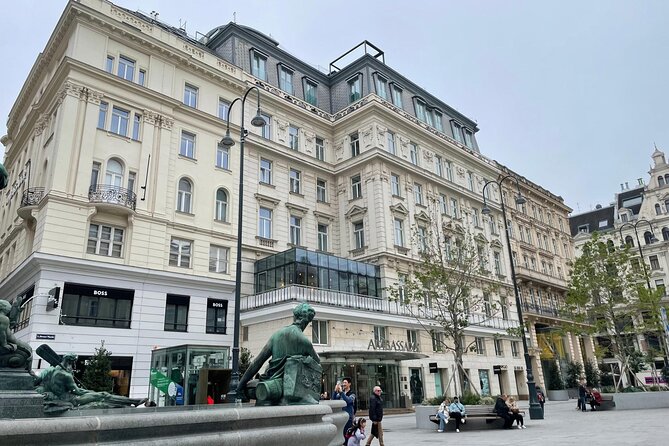
Ambassador Wien
As you traverse the streets, Ambassador Wien appears as another reference point for the tour’s theme of intersections between history and music. Think of this stop as a “keep walking, stay oriented” moment. It helps the route feel continuous rather than chopped into isolated spots.
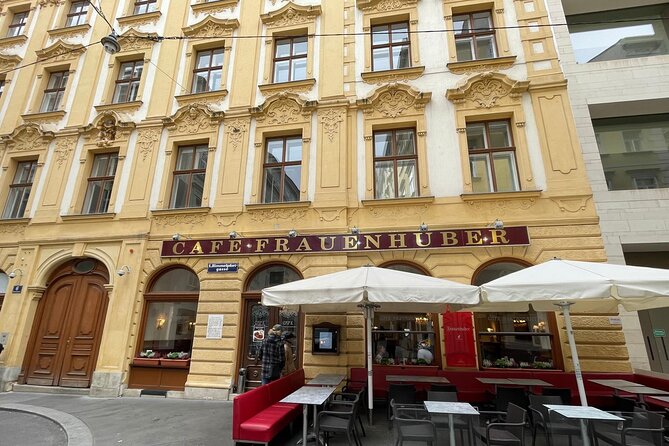
Café Frauenhuber, Beethoven and Mozart performances
Café Frauenhuber is specifically described as a place where both Beethoven and Mozart once performed. This is one of the stops that makes the audio walk feel human, because cafés are where music life often spilled into everyday social spaces. Even if you do not stop for a drink, you are still connecting the story to a setting people actually used.
Mozart death house area (no entry)
You will reach the vicinity of Mozart’s death house, labeled as an essential landmark. The tour does not ask you to enter anything, and that’s fine. You’ll get the significance as you pass by, which is a good approach if you want the walk to stay flowing without ticket lines.
Deutschordenskirche and architectural beauty
Next comes Deutschordenskirche, with the tour calling out its architectural beauty. This is a nice change of pace because your attention shifts from composer stories to visual details of the building itself. Even a quick look up can make the audio feel more grounded.
Blutgassenviertel
You then pass through Blutgassenviertel, described as a district with lots of historical texture. Since you are walking, this area works best if you take a few seconds between steps and notice the lane layout and street feel. It is one of the places where the audio can make the city’s older streets feel more legible.
Helmut Zilk Square again, Wien Museum Mozart apartment and Figaro
The route loops back past Helmut Zilk Square and then toward the Wien Museum Mozart apartment, where the audio notes Mozart composed the tune for Figaro. That connection between a specific apartment and a specific musical work is exactly why these audio walks can be more satisfying than just reading a list of names.
Stephansplatz and the final lead-in
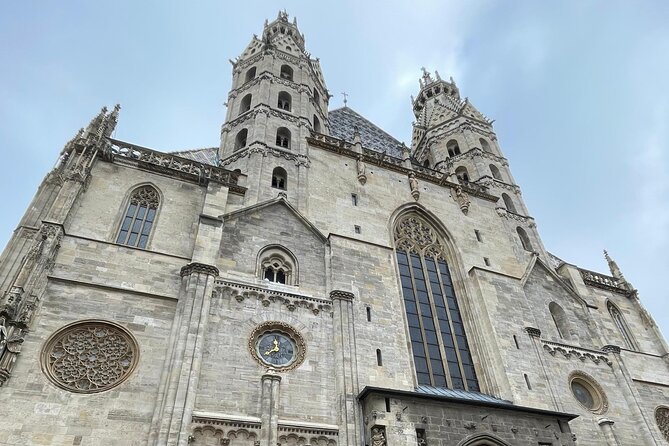
When you arrive at Stephansplatz, the audio shares insights as you pass through the central square. This is where the route starts to feel like a finale. The atmosphere of Stephansplatz makes sense as an ending point, because St Stephen’s Cathedral is right there, giving you a recognizable “you made it” conclusion.
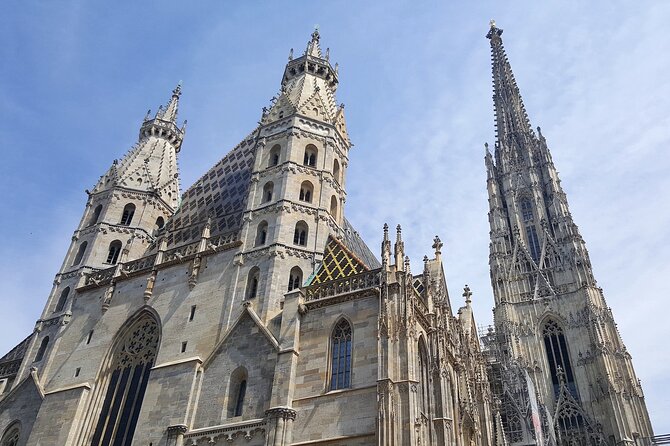
St Stephen’s Cathedral (end point)
The tour ends in front of St Stephen’s Cathedral. Even if you have seen it before, ending at a landmark like this is practical. It is easy to orient yourself, easy to meet a friend later, and easy to keep exploring after the audio finishes.
Set your own pace through the center
- Vienna: Tickets for Mozarthaus Vienna with Audio Guide★ 4.2 · 2,344 reviews
- Vienna: New Hofburg Palace Audio-Guided Tour & Entry Ticket★ 4.1 · 566 reviews
- Vienna: Schlumberger Wine Cellar Guided or Self-Guided Tour★ 4.8 · 285 reviews
- Vienna: Scavenger Hunt Self-Guided Tour★ 4.7 · 83 reviews
Mozart-heavy focus: how that shapes your experience
The tour content is mostly about Mozart, with other composers getting short, pointed moments. That can be a deal-breaker or a perfect fit.
If you are a Mozart fan, you’ll likely enjoy how the route strings together specific places tied to concerts, composition, and the end of his life. You are not just collecting trivia. You’re moving through a spatial map of his Vienna, which can make the name feel less abstract.
If you want a balanced survey of classical music in Vienna across many composers, you might feel like other names get less attention. There is a nod to Beethoven at Café Frauenhuber and a Vivaldi connection at the hospice site tied to Hotel Sacher Wien. Still, the overall rhythm is Mozart-forward.
My advice: decide what you want most right now. If you want a concentrated Mozart walk, this fits. If you want a composer-by-composer overview, you might need a different format or a longer itinerary.
The biggest risk is the app, and how to manage it
One past review was blunt about the VoiceMap app, saying it functioned poorly and the phone drained faster than expected. That is not something I ignore, because this is a self-guided experience where the app is the guide.
Here is how you reduce your odds of a frustrating walk:
- Fully charge your phone before you start
- Use headphones you know work well
- Confirm offline access is actually available in the app before you leave
- If your screen brightness or power saving mode is aggressive, consider adjusting it for the walk
- Download the needed data on Wi-Fi the day before, if the app prompts you
If the app glitches, you may end up with dead time between landmarks. You can still look around, but the audio story layer is what you are paying for.
Who should book this Vienna classical music audio walk
This tour is a good match if:
- You want a short, walkable way to connect Vienna’s musical names to actual streets
- You like Mozart, especially the idea of tracing his Vienna through recognizable spots
- You enjoy independent travel, where you stop when you want and let the audio do the explaining
- You prefer offline tools so your day is less dependent on mobile data
You might skip it if:
- You rely on your phone for multiple tasks and worry about battery life
- You need a lot of composer variety beyond Mozart
- You are not comfortable troubleshooting an app if something goes wrong
Also, since the tour is offered in English and is private for your group, it can work well for couples and small groups who want a shared route without a live guide coordinating everyone.
Should you book? My practical take
Yes, I think it can be a solid booking if Mozart is your main interest and you are comfortable using a phone as your guide. The route is tightly planned, it ends at a natural landmark, and offline access is a big plus for Vienna where signal can vary block to block.
But I would treat the app as the make-or-break factor. One review reported repeated app problems and that it drained their phone quickly. If you have a reliable device and you can test audio and offline maps before you start, you’re in much better shape.
If you’re on the fence, I’d base your decision on two questions. Do you want a Mozart-forward walk through Vienna’s center, and can you confidently run VoiceMap on your phone offline? If both answers are yes, book it. If not, it might be smarter to choose a different music experience with a more traditional setup.
FAQ
How long is the self-guided tour?
It takes about 1 hour to 1 hour 15 minutes, depending on your pace and how often you pause at the stops.
What language is the tour in?
The tour is offered in English.
What is included in the price?
You get lifetime access to the tour in English, the VoiceMap app for Android and iOS, and offline access to audio, maps, and geodata.
What do I need to bring?
You need your own smartphone and headphones. Transportation, food, and drink are not included.
Where does the tour start and end?
The tour starts in front of the Vienna State Opera at Opernring 2, 1010 Wien, Austria. It ends at St Stephen’s Cathedral at Stephansplatz 3, 1010 Wien, Austria.
Is there free cancellation?
Yes. You can cancel for a full refund up to 24 hours in advance of the experience start time. If you cancel less than 24 hours before, the amount paid is not refunded.
Latest Additions
- Wachau Valley Private Wine Tour with Tasting and Gourmet Lunch
★ 5.0 · 1 review - Vienna: Danube Valley Tour with Melk, Dürnstein with wine tasting and boat.
★ 5.0 · 1 review - Private city tour in Vienna
★ 5.0 · 1 review - Inside Freud’s Mind: Self-Guided Mystery Walk in Vienna
★ 4.0 · 1 review - Private Transfer from Vienna to Prague
★ 5.0 · 1 review - Hallstatt Small Group Day Trip from Vienna
★ 3.0 · 1 review - Vienna’s Christmas Market Magic Tour
★ 5.0 · 1 review
Classical Concert Tickets, compared.
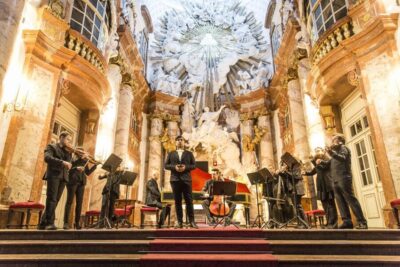
Vivaldi’s Four Seasons Concert in Karlskirche
Read our review →
Classical Concert in the World-Famous Musikverein
Read our review →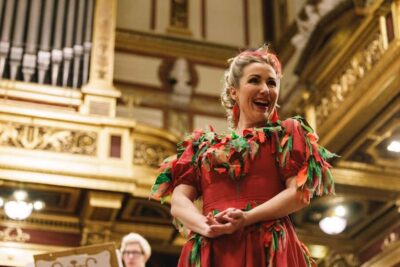
Mozart Concert at the Musikverein – Golden Hall
Read our review →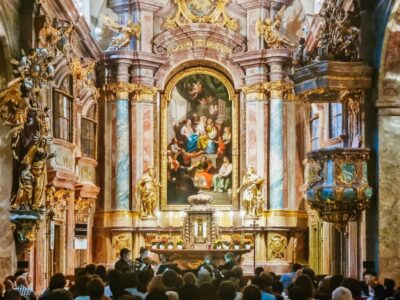
Classical Concert in St. Anne’s Church (Annakirche)
Read our review →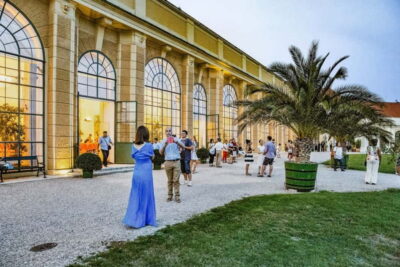
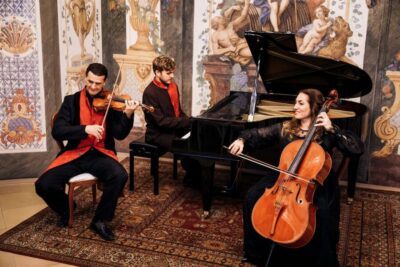
Vienna Classical Concert at St. Peter’s Church
Read our review →Classical Concert in St. Anne’s Church (Annakirche)
Read our review →Browse the lists this tour appears in